 Reviews


PLESIOSAUR FOSSILS & TEETH FOR SALE

Plesiosaurs: Marine Reptiles Of The Mesozoic Seas
Plesiosaurs are among the most iconic marine reptiles that inhabited Earth during the Mesozoic Era, captivating scientists and enthusiasts with their distinctive body structure and fossil legacy. These creatures thrived in oceans worldwide, leaving behind a remarkable fossil record that offers insight into their biology, behavior, and evolution. They first appeared in the Late Triassic period, approximately 215 million years ago, and became more prominent during the Jurassic and Cretaceous periods. They were contemporaries of dinosaurs, dominating marine environments for over 135 million years before their extinction during the Cretaceous-Paleogene mass extinction event, around 66 million years ago.
Plesiosaurs were highly variable in size, ranging from smaller species measuring about 3 meters (10 feet) to massive examples exceeding 15 meters (50 feet) in length. They are distinguished by their unique body plan, which included:
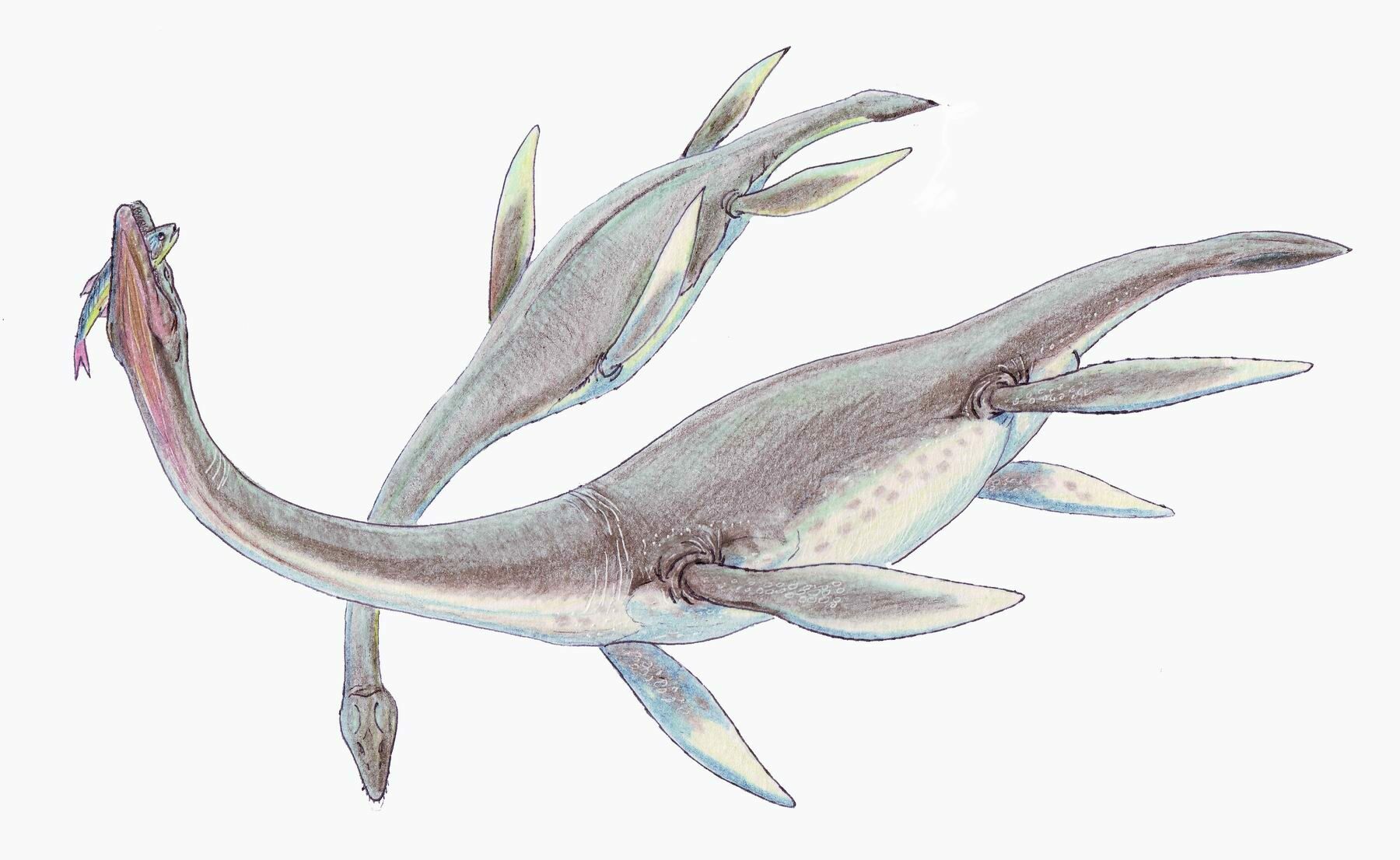
Reconstruction of Plesiosaurus dolichodeirus by Dmitry Bogdanov. Creative Commons License
Behaviorally, plesiosaurs are thought to have been strong swimmers, although they were not built for high-speed chases. Some evidence, such as the contents of fossilized stomachs, suggests that they may have ingested stones (gastroliths) to aid in digestion or buoyancy control. Plesiosaurs exhibited streamlined bodies covered in smooth skin, likely similar to modern marine reptiles like sea turtles. Their coloration is speculative but may have involved countershading—dark on top and light underneath—to camouflage against predators and prey.
Plesiosaurs were apex predators in their ecosystems. Their diets varied based on their morphology:
Plesiosaurs vanished at the end of the Cretaceous period, likely as part of the mass extinction event that also wiped out the dinosaurs. However, their legacy lives on in folklore, including myths of "sea serpents" and the famous Loch Ness Monster, which some enthusiasts have speculated to be a living plesiosaur (a hypothesis unsupported by science). They remain a fascinating subject of study, bridging the gap between ancient marine ecosystems and modern-day marine biology. Their fossils continue to reveal new details, offering a glimpse into a time when these magnificent reptiles ruled the seas.
About Fossil Plesiosaur Teeth
Plesiosaur teeth are some of the most striking—and revealing—remnants of these long-necked marine reptiles. Unlike the serrated, blade-like teeth of many predatory dinosaurs, plesiosaur teeth were typically long, slender, conical, and sharply pointed, built less for slicing and more for gripping, piercing, and holding slippery prey. The enamel is often smooth and glossy, though some species show faint vertical ridges or fluting that strengthened the tooth without creating cutting edges. When found as fossils, they range from rice-grain sized tips to impressive 2–3 inch long crowns, and occasionally even larger in robust-jawed genera.
The shape and wear patterns of plesiosaur teeth tell us a lot about feeding behavior. Their needle-like profile suggests a diet dominated by fish and squid, though stomach-content fossils from related plesiosaurs confirm they also consumed crustaceans, belemnites, and small marine reptiles when the opportunity arose. Microscopic scratches and occasional tip wear indicate that while the teeth weren’t designed to crush, they did sometimes contact harder shells or skeletal material, likely when snapping at armored prey or ingesting grit along the seafloor.
Yes—plesiosaurs shed their teeth, and they did so continuously throughout their lives. They possessed thecodont dentition, meaning their teeth were set in deep sockets, but they were replaced repeatedly, much like modern crocodilians. So while their teeth were anchored firmly, they were not permanent. Fossil evidence strongly supports that plesiosaurs had an active tooth-replacement cycle, with new teeth developing below or beside old ones and migrating into place as predecessors were lost.
Featured Photos
