Reviews


This Specimen has been sold.


1.6" Dinosaur (Thescelosaurus) Toe Ungual (Claw) - Montana
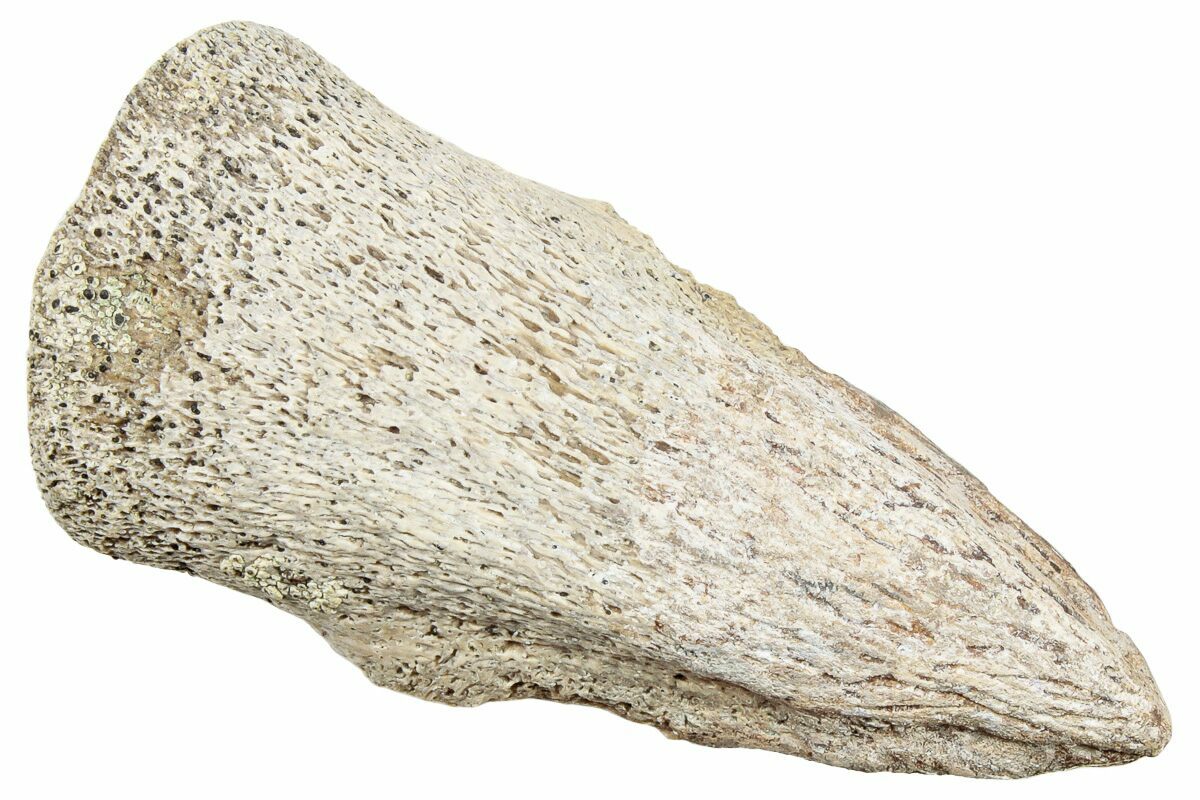
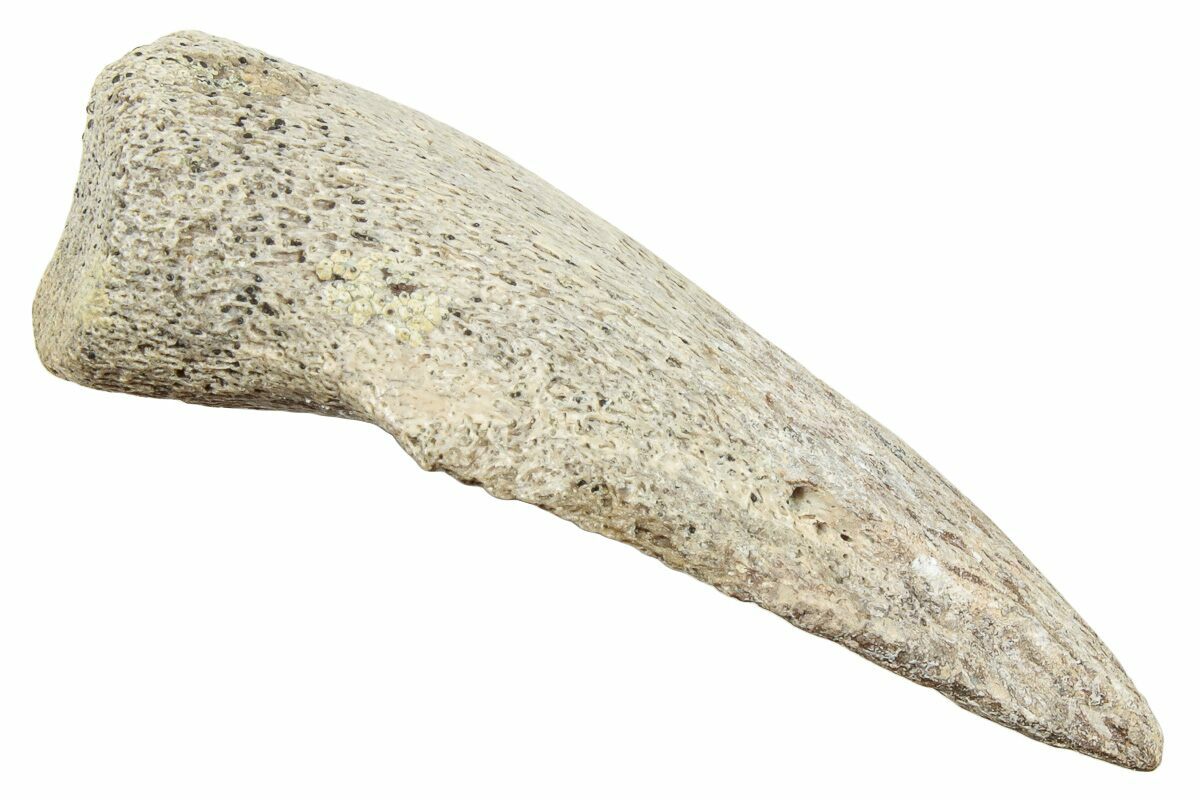
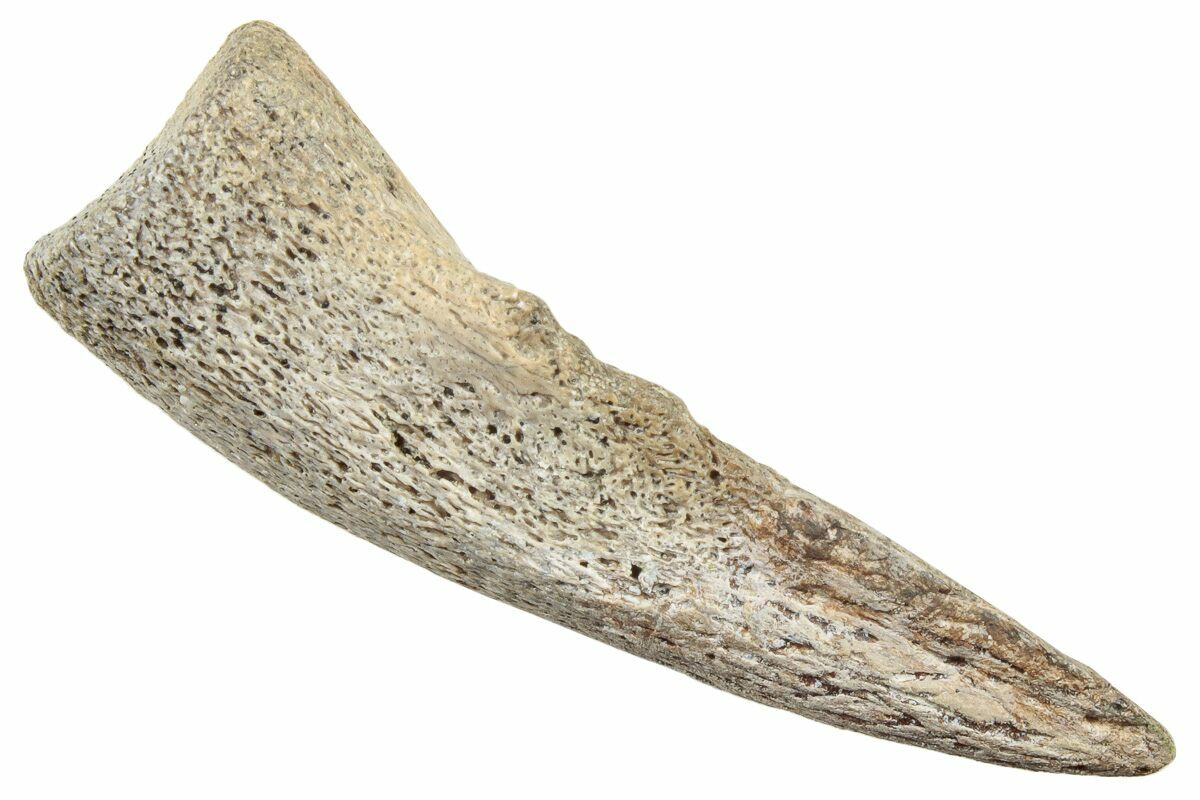
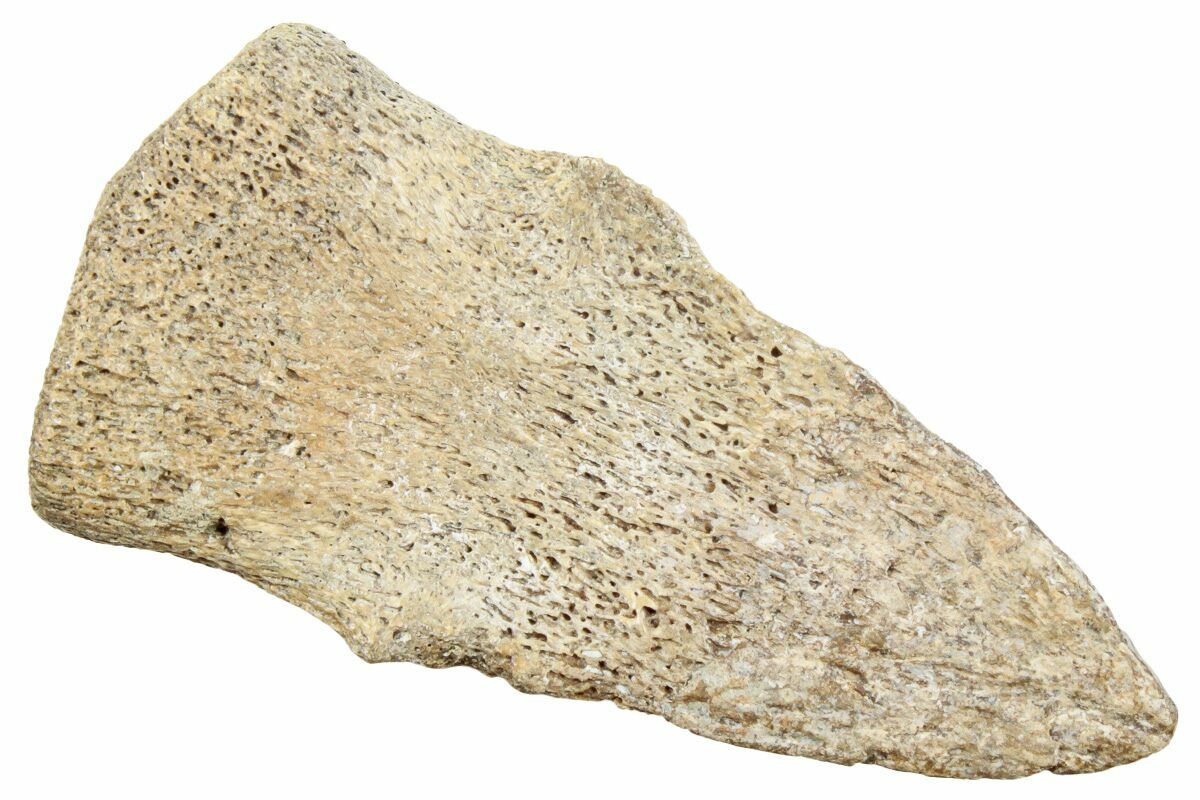
This is a 1.6" long toe ungual (claw) of a dinosaur (Thescelosaurus), collected from the Late Cretaceous Hell Creek Formation in Fallon County, Montana. It's in good condition with no repair or restoration. The lateral ridges of claw have chipped-weathered away in spots.
Isolated bones from Thescelosaurus and Pachycephalosaurus can be difficult to distinguish between, however the flat plantar surface of the claw is characteristic of Thescelosaurus material.
It comes with a floating frame display case.
Isolated bones from Thescelosaurus and Pachycephalosaurus can be difficult to distinguish between, however the flat plantar surface of the claw is characteristic of Thescelosaurus material.
About Thescelosaurus
Thescelosaurus was a small ornithopod dinosaur that appeared at the very end of the Late Cretaceous period in North America. Many specimens' preservation and completeness indicate that Thescelosaurus may have preferred to live near streams.
This bipedal ornithopod is known from several partial skeletons and skulls, all of which indicate adult lengths between 2.5 and 4.0 meters (8.2 to 13.1 feet) on average. It had sturdy hind limbs, small wide hands, and a head with an elongated pointed snout. Their teeth and jaw morphologies suggest a primarily herbivorous diet.
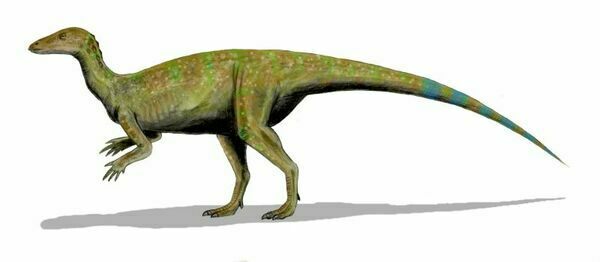
An artist's reconstruction of Thescelosaurus. Creative Commons License
Thescelosaurus was a small ornithopod dinosaur that appeared at the very end of the Late Cretaceous period in North America. Many specimens' preservation and completeness indicate that Thescelosaurus may have preferred to live near streams.
This bipedal ornithopod is known from several partial skeletons and skulls, all of which indicate adult lengths between 2.5 and 4.0 meters (8.2 to 13.1 feet) on average. It had sturdy hind limbs, small wide hands, and a head with an elongated pointed snout. Their teeth and jaw morphologies suggest a primarily herbivorous diet.
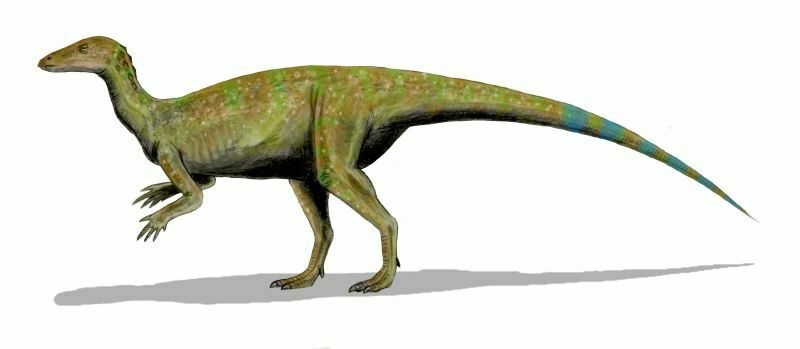
An artist's reconstruction of Thescelosaurus. Creative Commons License
The Hell Creek Formation
Renowned for both its age and rich sedimentary layers, the Hell Creek Formation is one of the most intensively studied fossil-bearing regions on Earth. To date, scientists have documented 158 genera of animals and 64 genera of plants from its rocks, with new finds emerging regularly. Beyond iconic dinosaurs such as tyrannosaurs, ceratopsians, and hadrosaurs, the formation has produced an extraordinary array of life, including amphibians, reptiles, lizards, snakes, turtles, fish, sharks, birds, and early mammals. Together, these fossils provide the most complete picture of the ecosystems that thrived just before the Cretaceous–Paleogene extinction event.
Renowned for both its age and rich sedimentary layers, the Hell Creek Formation is one of the most intensively studied fossil-bearing regions on Earth. To date, scientists have documented 158 genera of animals and 64 genera of plants from its rocks, with new finds emerging regularly. Beyond iconic dinosaurs such as tyrannosaurs, ceratopsians, and hadrosaurs, the formation has produced an extraordinary array of life, including amphibians, reptiles, lizards, snakes, turtles, fish, sharks, birds, and early mammals. Together, these fossils provide the most complete picture of the ecosystems that thrived just before the Cretaceous–Paleogene extinction event.
SPECIES
Thescelosaurus sp.

LOCATION
Fallon County, Montana
FORMATION
Hell Creek Formation
SIZE
1.6 x .7 x .45"
CATEGORY
SUB CATEGORY
ITEM
#245867
We guarantee the authenticity of all of our specimens.