Reviews


This Specimen has been sold.


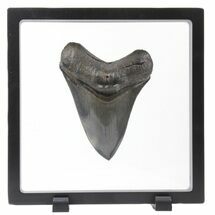
1.6" Fossil Glyptodont (Glyptotherium) Bony Armor Osteoderm - Florida

This is a really cool, 1.6" wide fossil glyptodont (Glyptotherium arizonae) osteoderm (bony armor plate) collected from the Gulf of Mexico, off the coast of Venice, Florida. Glyptotherium is best known to the public through its appearances in popular Ice Age films and frequent features on the Discovery Channel, where its dome-like armor and slow-moving power have made it one of the most recognizable prehistoric mammals. Holding an authentic osteoderm offers a direct, tangible connection to these giants of the Pleistocene.
About Glyptodonts
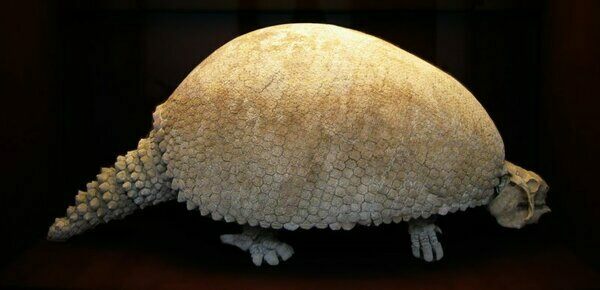
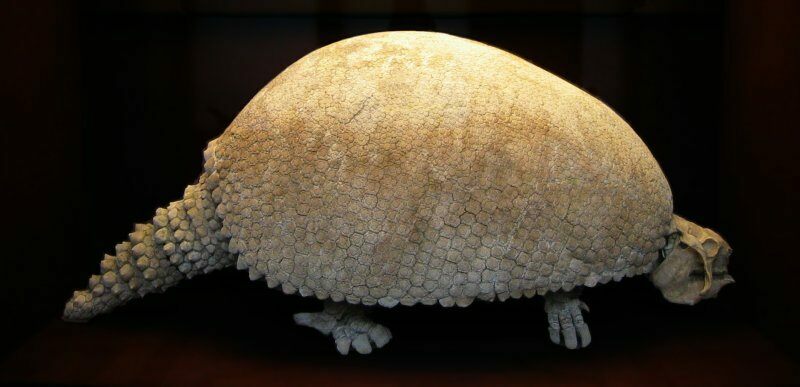
Glyptodon and Glyptotherium are two genera of glyptodonts in the family Chlamyphoridae. They were massive, heavily armored mammals that lived during the Pleistocene epoch and are best known as giant relatives of today’s armadillos. Covered in a rigid, dome-shaped shell made of bony plates called osteoderms, they looked a bit like living tanks and could weigh over a ton. Glyptodon lived primarily in South America, while Glyptotherium ranged into Central America and the southern parts of North America, especially during periods when land bridges allowed animals to move between continents. Both were slow-moving herbivores that fed on low vegetation, using strong jaws and simple teeth to grind tough plant material. Their impressive armor likely protected them from large predators, including early big cats and, eventually, human hunters, before they went extinct around the end of the last Ice Age, or approximately 15,000 years ago.
Glyptodon and Glyptotherium are two genera of glyptodonts in the family Chlamyphoridae. They were massive, heavily armored mammals that lived during the Pleistocene epoch and are best known as giant relatives of today’s armadillos. Covered in a rigid, dome-shaped shell made of bony plates called osteoderms, they looked a bit like living tanks and could weigh over a ton. Glyptodon lived primarily in South America, while Glyptotherium ranged into Central America and the southern parts of North America, especially during periods when land bridges allowed animals to move between continents. Both were slow-moving herbivores that fed on low vegetation, using strong jaws and simple teeth to grind tough plant material. Their impressive armor likely protected them from large predators, including early big cats and, eventually, human hunters, before they went extinct around the end of the last Ice Age, or approximately 15,000 years ago.
SPECIES
Glyptotherium arizonae
AGE

LOCATION
Coast of Venice, Florida
SIZE
1.6" wide
CATEGORY
SUB CATEGORY
ITEM
#351056
We guarantee the authenticity of all of our specimens.