 Reviews


This Specimen has been sold.


11.6" Jurassic Petrified Wood Round - Henry Mountain, Utah


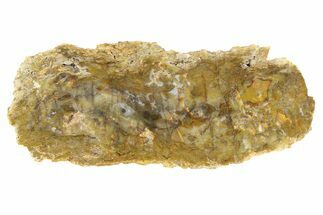
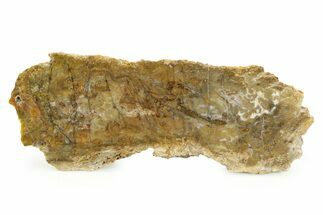
This is a colorful, 11.6" wide, polished round of petrified wood from the Morrison Formation of Utah. One side has been polished to a mirror like finish. Beautiful coloration, particularly the yellow "rind" around the edges. The round has a fiberglass backing for stability and comes with a display stand.
It was collected at Henry Mountain and is part of an old collection I recently purchased with some unique pieces from unusual localities. This beautiful slab of petrified wood is Upper Jurassic in age or approximately 150 million years old. The formation which it comes from the same formation known for producing fossils of well known dinosaurs such as Allosaurus and Diplodocus. So this tree was living at the same time as the dinosaurs!
It comes with an acrylic display stand.
It was collected at Henry Mountain and is part of an old collection I recently purchased with some unique pieces from unusual localities. This beautiful slab of petrified wood is Upper Jurassic in age or approximately 150 million years old. The formation which it comes from the same formation known for producing fossils of well known dinosaurs such as Allosaurus and Diplodocus. So this tree was living at the same time as the dinosaurs!
It comes with an acrylic display stand.
About Henry Mountain Petrified Wood
Petrified wood from the Henry Mountains of Utah is a rare and striking record of ancient forests that grew along river systems and floodplains during the Late Triassic to Early Jurassic, when this region sat much closer to the equator and supported a warm, seasonal, monsoon-influenced climate. Unlike typical flattened fossils, these logs and branches retained their three-dimensional form as they were rapidly buried by sand, silt, and volcanic ash washed in from distant eruptions. Over millions of years, silica-rich groundwater slowly replaced the original wood cell by cell, locking in microscopic anatomical details—growth rings, ray cells, and vascular channels—while filling internal voids with quartz, chalcedony, and iron oxides that now create the stone’s signature palette of caramel reds, ochres, smoky ambers, and jet blacks.
Many Henry Mountain specimens display exceptional contrast, often containing glassy agatized zones, fortification-style banding, and occasional crystalline pockets that sparkle when cut and polished. The mineralization process here was heavily influenced by iron, manganese, and trace elements, producing pieces that can take a mirror polish, reveal fine bark impressions, and sometimes show carbon ghosting where the original organic structure briefly lingered before full replacement. This wood is not simply “fossilized”—it is a geological alchemy that transformed trees into solid quartz stone while preserving the architecture of wood so faithfully that it still resembles timber, grain and all
Petrified wood from the Henry Mountains of Utah is a rare and striking record of ancient forests that grew along river systems and floodplains during the Late Triassic to Early Jurassic, when this region sat much closer to the equator and supported a warm, seasonal, monsoon-influenced climate. Unlike typical flattened fossils, these logs and branches retained their three-dimensional form as they were rapidly buried by sand, silt, and volcanic ash washed in from distant eruptions. Over millions of years, silica-rich groundwater slowly replaced the original wood cell by cell, locking in microscopic anatomical details—growth rings, ray cells, and vascular channels—while filling internal voids with quartz, chalcedony, and iron oxides that now create the stone’s signature palette of caramel reds, ochres, smoky ambers, and jet blacks.
Many Henry Mountain specimens display exceptional contrast, often containing glassy agatized zones, fortification-style banding, and occasional crystalline pockets that sparkle when cut and polished. The mineralization process here was heavily influenced by iron, manganese, and trace elements, producing pieces that can take a mirror polish, reveal fine bark impressions, and sometimes show carbon ghosting where the original organic structure briefly lingered before full replacement. This wood is not simply “fossilized”—it is a geological alchemy that transformed trees into solid quartz stone while preserving the architecture of wood so faithfully that it still resembles timber, grain and all
SPECIES
Araucarioxylon?

LOCATION
Henry Mountains, Utah
FORMATION
Morrison Formation
SIZE
11.6 x 9.6", .75" thick
CATEGORY
SUB CATEGORY
ITEM
#244770
We guarantee the authenticity of all of our specimens.