 Reviews


This Specimen has been sold.


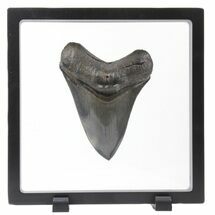
2.07" Tyrannosaur Tooth with Split Carina - Rare Pathology!


This is a truly interesting, 2.07" long serrated tyrannosaur tooth collected this summer from the Judith River Formation of Montana. This formation is approximately 75 million years old, or about 9 million years older than the Hell Creek Formation which produces Tyrannosaurus rex.
What makes this tooth particularly remarkable is the presence of an unusual Y-shaped bifurcation of the carina along its mesial edge. This distinctive morphological feature is exceptionally uncommon and has only been documented in lateral theropod teeth. A 1995 study examining this rare dental anomaly explored several possible explanations, including trauma, abnormal tooth replacement, and genetic polymorphism. Of these hypotheses, genetic polymorphism received the strongest support, although the researchers emphasized that the available evidence remained inconclusive. Other potential causes, including nutritional abnormalities, could not be ruled out. The study ultimately highlighted the need for further investigation into the origins of this unusual trait, making this tooth a particularly intriguing example of atypical theropod dental morphology.
There is a repaired crack about 1/2" from the tip of the tooth and a section of crown is missing from the basal end on one side.
What makes this tooth particularly remarkable is the presence of an unusual Y-shaped bifurcation of the carina along its mesial edge. This distinctive morphological feature is exceptionally uncommon and has only been documented in lateral theropod teeth. A 1995 study examining this rare dental anomaly explored several possible explanations, including trauma, abnormal tooth replacement, and genetic polymorphism. Of these hypotheses, genetic polymorphism received the strongest support, although the researchers emphasized that the available evidence remained inconclusive. Other potential causes, including nutritional abnormalities, could not be ruled out. The study ultimately highlighted the need for further investigation into the origins of this unusual trait, making this tooth a particularly intriguing example of atypical theropod dental morphology.
There is a repaired crack about 1/2" from the tip of the tooth and a section of crown is missing from the basal end on one side.
It comes with a floating frame display case.
Three species of tyrannosaur have been described from the Two Medicine & Judith River Formations: Albertosaurus, Gorgosaurus and Daspletosaurus. Research done on teeth from these three tyrannosaurs has concluded that isolated teeth are statistically impossible to assign to a specific genus because they are so similar.
Morphometry of the teeth of western North American tyrannosaurids and its applicability to quantitative classification
Morphometry of the teeth of western North American tyrannosaurids and its applicability to quantitative classification
About the Judith River Formation
The Judith River Formation is one of the world's most prolific sources of Late Cretaceous vertebrate fossils. At least sixteen Orders containing more than forty Genera are known from the formation. These include fish, amphibians, mammals, and insects in addition to reptiles and avian (birds) and non-avian dinosaurs. Among the more interesting specimens is Leonardo, a mummified and fossilized Brachylophosaurus. This is a hadrosaur, a duck-billed dinosaur found with amazing soft-tissue preservation: skin impressions can be found on 90 percent of its body! The pattern in the skin on its feet is even preserved. In addition to Leonardo, the Judith River Formation contains the remains of the theropod Hesperornis, the only known freshwater Hespernorthid, a penguin-like bird.
The Judith River Formation is one of the world's most prolific sources of Late Cretaceous vertebrate fossils. At least sixteen Orders containing more than forty Genera are known from the formation. These include fish, amphibians, mammals, and insects in addition to reptiles and avian (birds) and non-avian dinosaurs. Among the more interesting specimens is Leonardo, a mummified and fossilized Brachylophosaurus. This is a hadrosaur, a duck-billed dinosaur found with amazing soft-tissue preservation: skin impressions can be found on 90 percent of its body! The pattern in the skin on its feet is even preserved. In addition to Leonardo, the Judith River Formation contains the remains of the theropod Hesperornis, the only known freshwater Hespernorthid, a penguin-like bird.
SPECIES
Albertosaurus, Gorgosaurus, or Daspletosaurus

LOCATION
Hill County, Montana
FORMATION
Judith River Formation
SIZE
2.07" long (straight-line)
CATEGORY
SUB CATEGORY
ITEM
#381206
We guarantee the authenticity of all of our specimens.