 Reviews


This Specimen has been sold.


3.45" Fossil Leaf Nodule - Hell Creek Formation
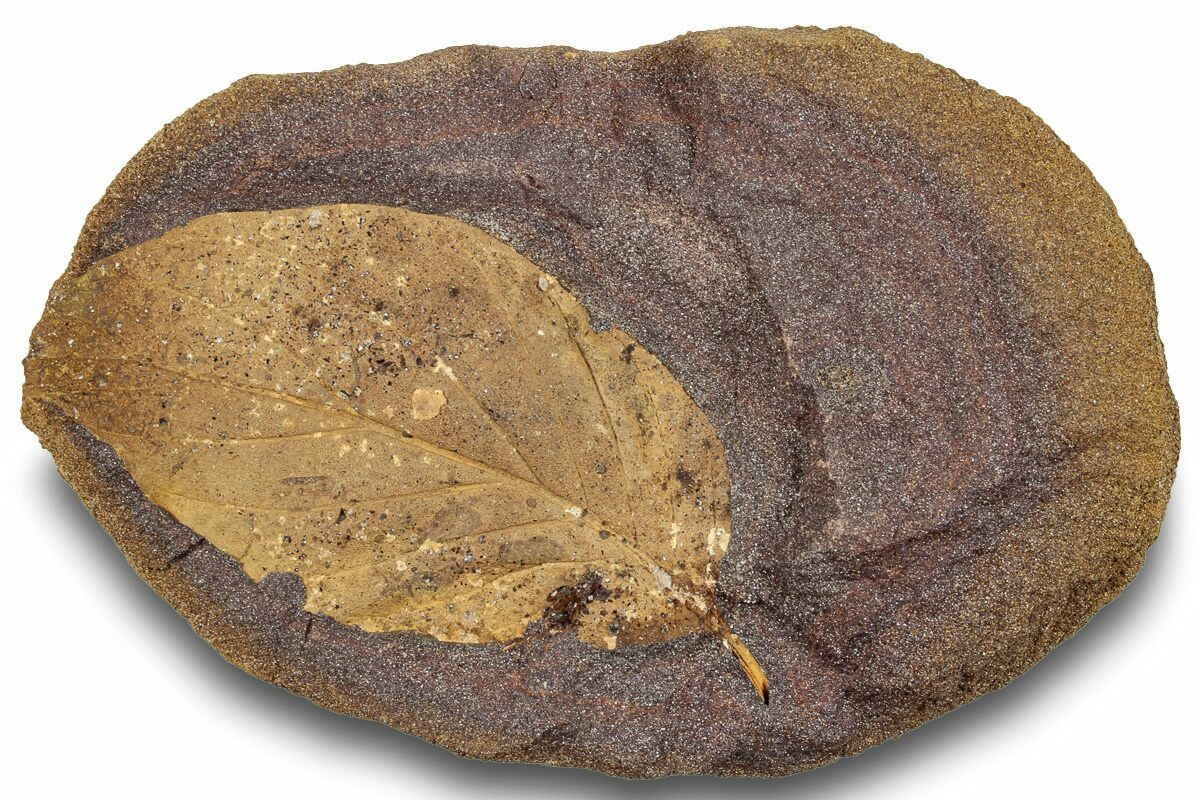
This is a beautiful 3.45" fossil leaf nodule (Magnolia sp.?) from the Late Cretaceous Hell Creek Formation on our partner's private quarry in Bowman, North Dakota. It is preserved inside a sandstone concretion. This specimen comes with an acrylic display stand.
The Magnolia genus of trees contains some of the oldest existing flowering plants in the world. They first appeared in the fossil record around 100 million years ago, evolving even before bees and other common pollinators we see today. Modern magnolias are evergreen, bearing large, cup-shaped and sweet-smelling flowers pollinated by beetles. Their flowers and pollination routines are thought as largely unchanged in the genus's entire history.
The Magnolia genus of trees contains some of the oldest existing flowering plants in the world. They first appeared in the fossil record around 100 million years ago, evolving even before bees and other common pollinators we see today. Modern magnolias are evergreen, bearing large, cup-shaped and sweet-smelling flowers pollinated by beetles. Their flowers and pollination routines are thought as largely unchanged in the genus's entire history.
The Hell Creek Formation
Renowned for both its age and rich sedimentary layers, the Hell Creek Formation is one of the most intensively studied fossil-bearing regions on Earth. To date, scientists have documented 158 genera of animals and 64 genera of plants from its rocks, with new finds emerging regularly. Beyond iconic dinosaurs such as tyrannosaurs, ceratopsians, and hadrosaurs, the formation has produced an extraordinary array of life, including amphibians, reptiles, lizards, snakes, turtles, fish, sharks, birds, and early mammals. Together, these fossils provide the most complete picture of the ecosystems that thrived just before the Cretaceous–Paleogene extinction event.
Renowned for both its age and rich sedimentary layers, the Hell Creek Formation is one of the most intensively studied fossil-bearing regions on Earth. To date, scientists have documented 158 genera of animals and 64 genera of plants from its rocks, with new finds emerging regularly. Beyond iconic dinosaurs such as tyrannosaurs, ceratopsians, and hadrosaurs, the formation has produced an extraordinary array of life, including amphibians, reptiles, lizards, snakes, turtles, fish, sharks, birds, and early mammals. Together, these fossils provide the most complete picture of the ecosystems that thrived just before the Cretaceous–Paleogene extinction event.
SPECIES
Magnolia sp.?

LOCATION
Bowman, North Dakota
FORMATION
Hell Creek Formation
SIZE
3.45" wide
CATEGORY
SUB CATEGORY
ITEM
#253025
We guarantee the authenticity of all of our specimens.