 Reviews


This Specimen has been sold.


3.6" Fossil Nautilus (Cenoceras) With Belemnites - England
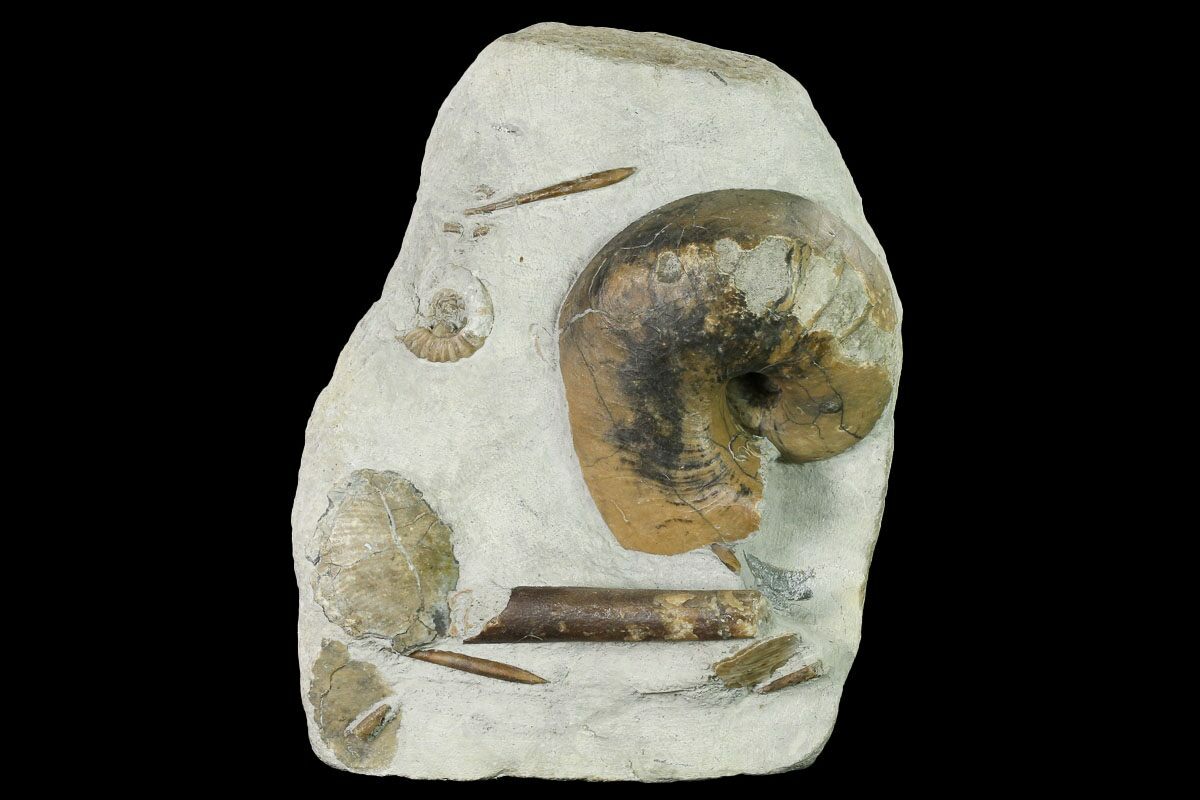
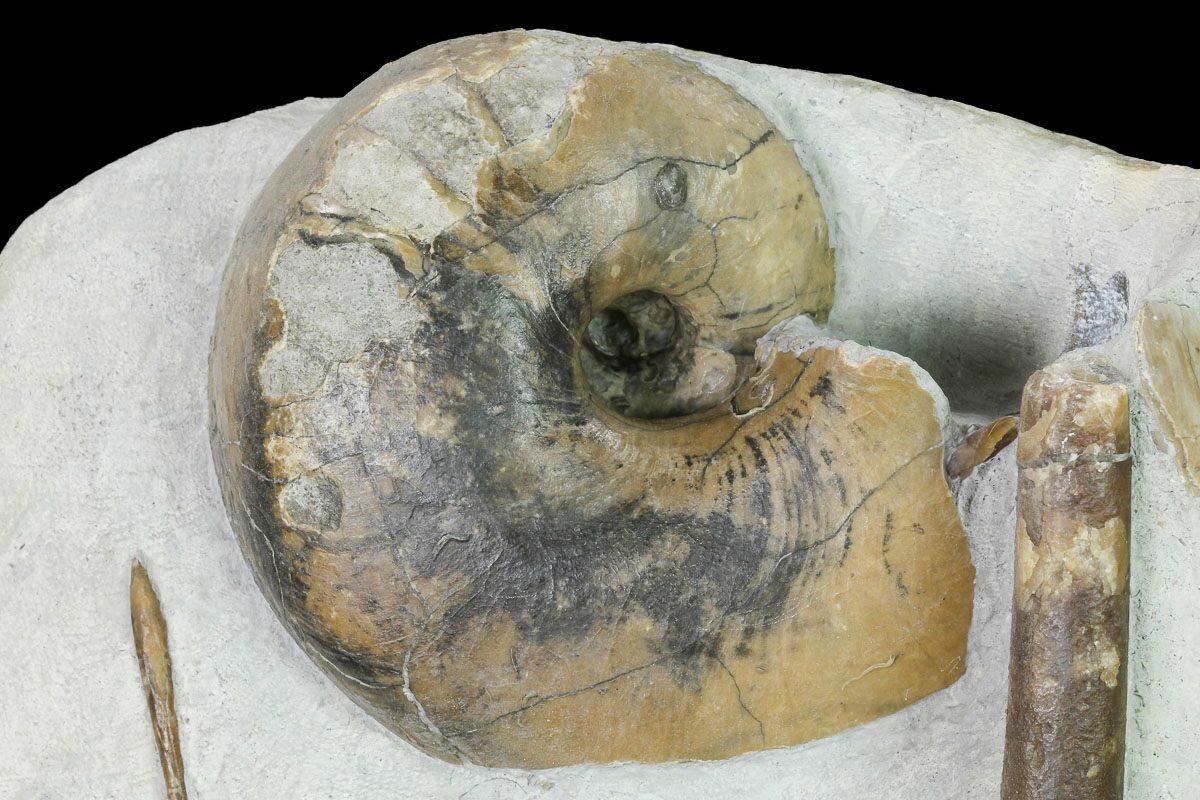
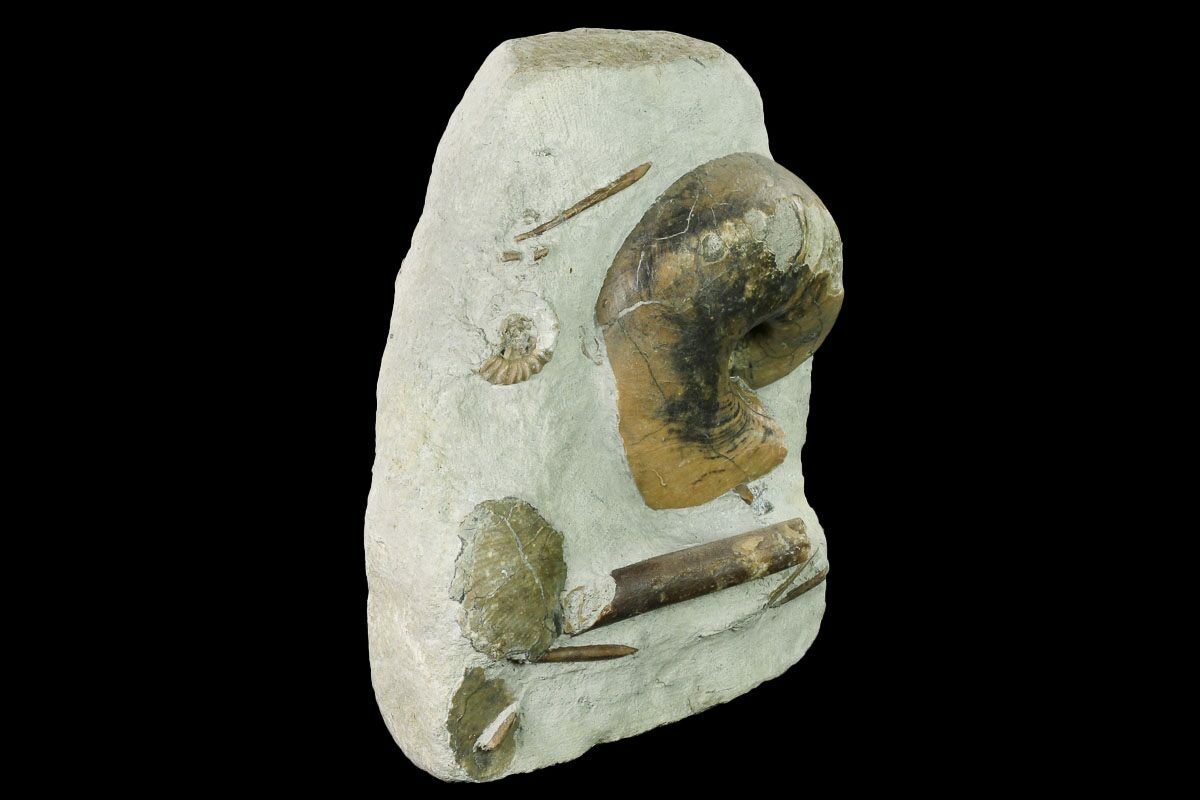
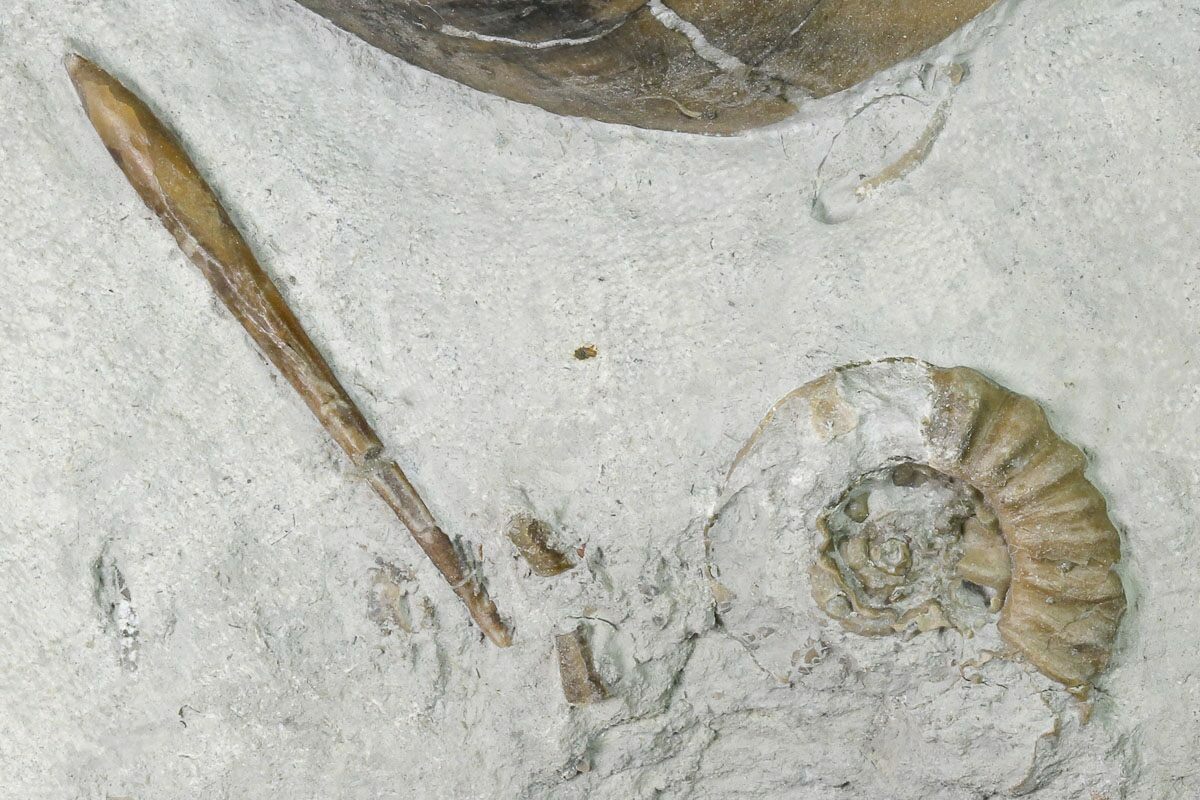
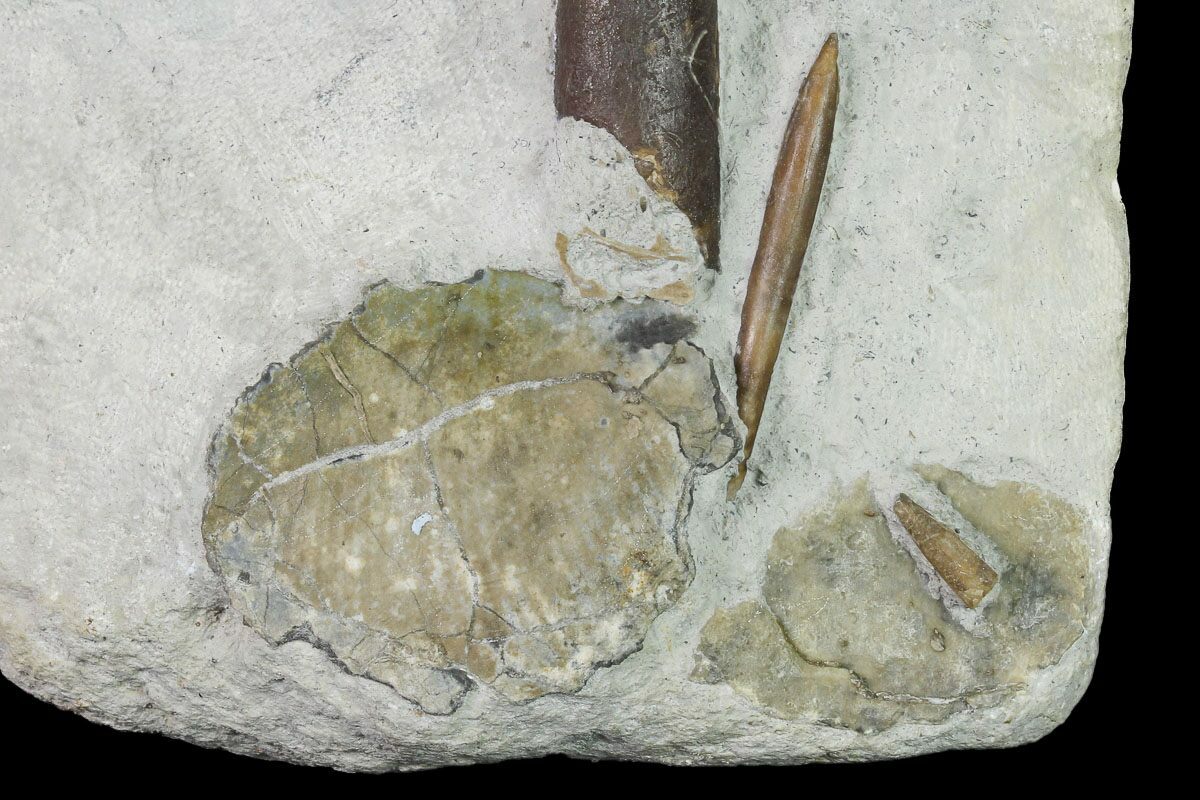
This is a 9" wide section of rock that contains a beautifully preserved nautilus of the genus Cenoceras, multiple belemnite rostrums and a partial ammonite. It was collected from the Lower Jurassic, Lower Lias of Dorset, England. The exposed nautilus is about 3.6" wide and the entire specimen measures 7.1 x 5.5". Comes with an acrylic/metal (gibson) display stand.
About Nautilus Fossils
Nautilus is a classic shelled cephalopod with a fossil history spanning more than 500 million years. Fossil nautilus shells are instantly recognizable by their tightly coiled, chambered structure, created as the animal grew and adjusted buoyancy using a central siphuncle. These fossils often preserve beautiful suture patterns, internal chambers, and sometimes even traces of original nacre. Found in marine deposits worldwide and frequently mineralized with calcite or chalcedony, fossil Nautilus specimens provide a striking glimpse into ancient seas and showcase one of the most enduring designs in natural history.
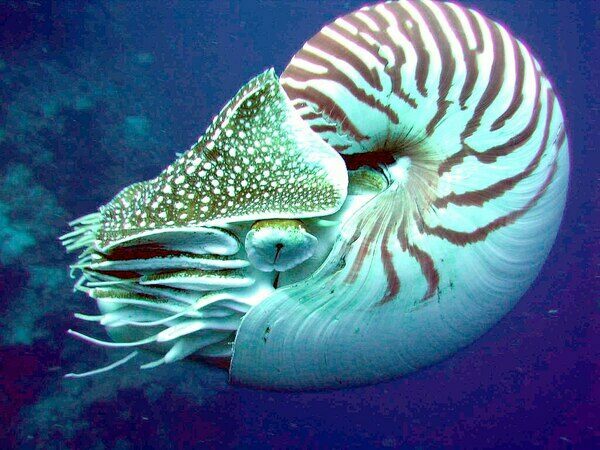
A picture of a modern day Nautilus.
Nautilus is a classic shelled cephalopod with a fossil history spanning more than 500 million years. Fossil nautilus shells are instantly recognizable by their tightly coiled, chambered structure, created as the animal grew and adjusted buoyancy using a central siphuncle. These fossils often preserve beautiful suture patterns, internal chambers, and sometimes even traces of original nacre. Found in marine deposits worldwide and frequently mineralized with calcite or chalcedony, fossil Nautilus specimens provide a striking glimpse into ancient seas and showcase one of the most enduring designs in natural history.
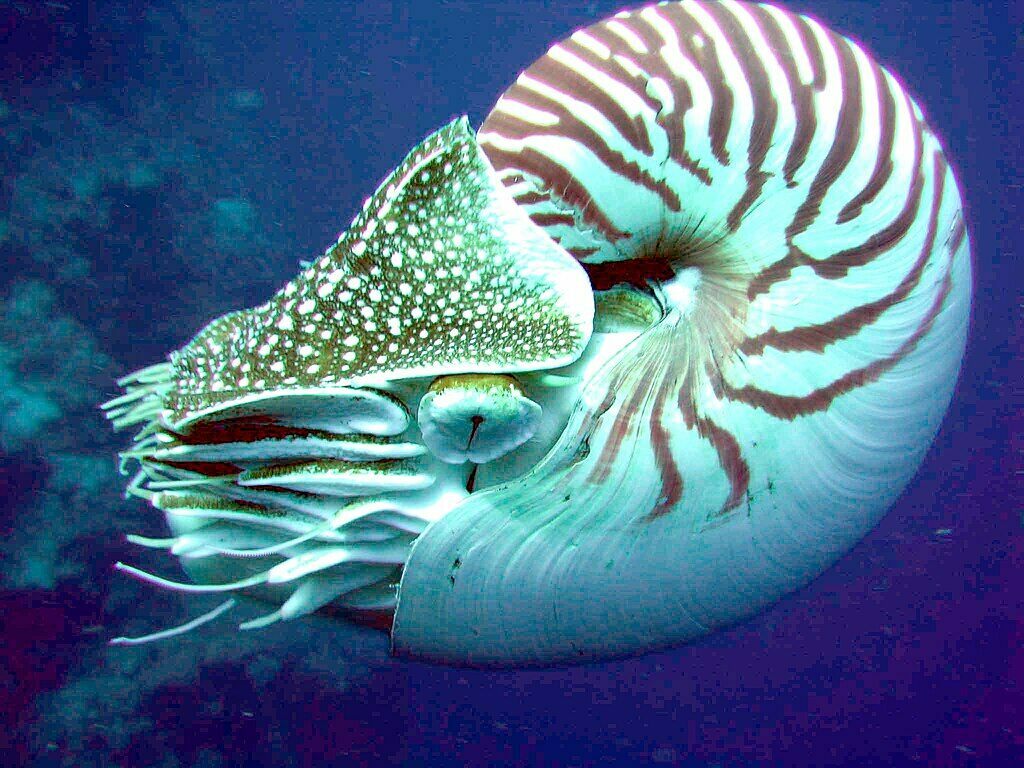
A picture of a modern day Nautilus.
Belemnites are probably the most well known extinct cephalopod after the ammonites. They lived during the Jurassic and Cretaceous periods and are fairly common fossils found throughout the world. They had a hard, internal, cone-shaped structure that is often preserved as a fossil, though it is not technically a shell. They had ten arms but, unlike modern squid, these arms had small hooks instead of suckers.
SPECIES
Cenoceras sp. (Nautilus)

LOCATION
Golden Cap, Charmouth, Lyme Regis, Dorset, England
FORMATION
Lower Lias
SIZE
Nautilus about 3.6" wide, entire specimen is 7.1 x 5.5"
CATEGORY
ITEM
#171259
We guarantee the authenticity of all of our specimens.


