 Reviews


This Specimen has been sold.


4.3" Cut & Polished Ammonite Fossil (Half) - Unusual Black Color
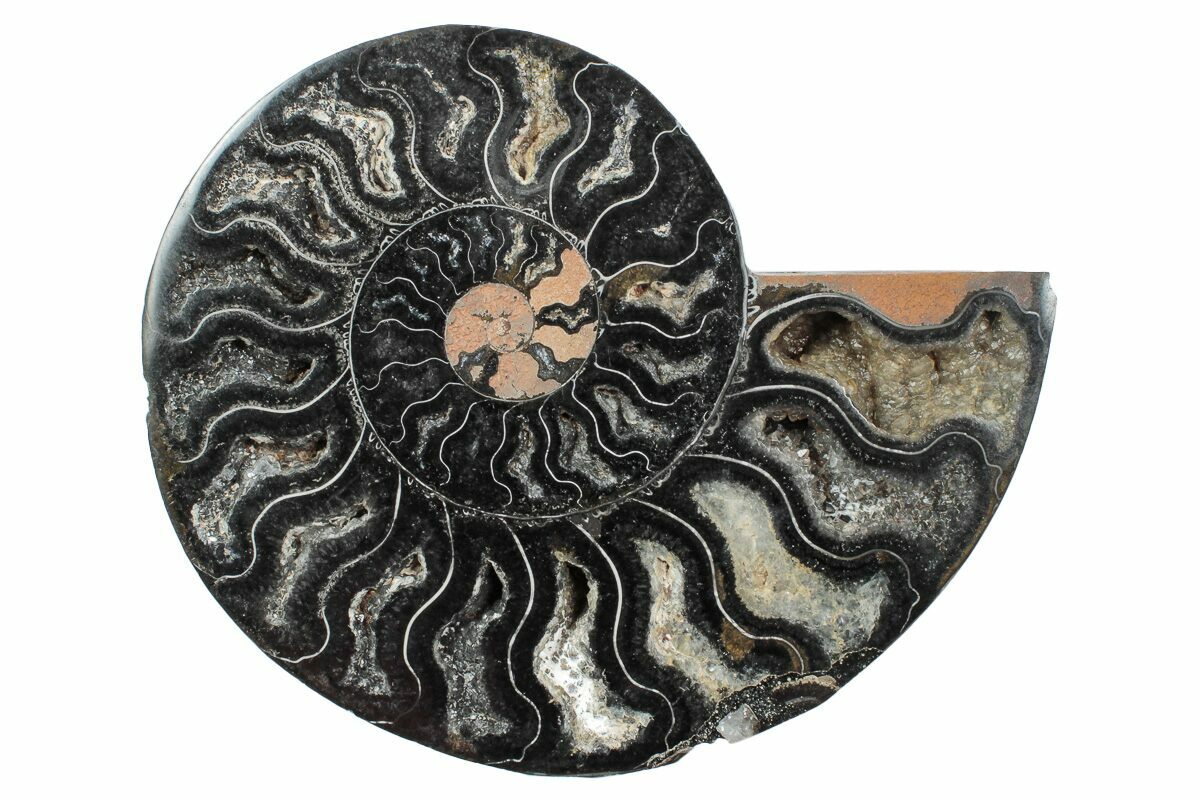
Here is an unusually colored, cut and polished Cleoniceras ammonite fossil from the Mahajanga Province of Madagascar. It's Early Cretaceous (Albian Stage) in age, or approximately 110 million years old.
This pictured half of the ammonite is included along with an acrylic display stand.
This pictured half of the ammonite is included along with an acrylic display stand.
Unusual Black Ammonites?
Most agate-replaced ammonites from Madagascar display warm tones of brown, red, orange, or yellow, which is why this striking orange-and-black coloration stands out as quite uncommon. These specimens come from a different locality where post-fossilization geochemistry altered the original mineralization. The bold hues—particularly the deep blacks—are likely the result of elevated manganese introduced during the fossil’s diagenetic history. We typically are only able to get a limited quantity of these black specimens every couple of years.
Most agate-replaced ammonites from Madagascar display warm tones of brown, red, orange, or yellow, which is why this striking orange-and-black coloration stands out as quite uncommon. These specimens come from a different locality where post-fossilization geochemistry altered the original mineralization. The bold hues—particularly the deep blacks—are likely the result of elevated manganese introduced during the fossil’s diagenetic history. We typically are only able to get a limited quantity of these black specimens every couple of years.
About Ammonites
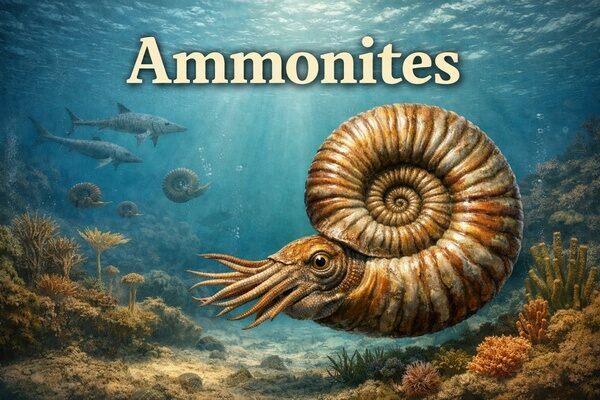
Ammonites were ancient marine cephalopods, similar to today's squids and octopuses, but with a defining feature: their distinctive, tightly coiled spiral shells. These shells, resembling those of modern nautiluses, served as both a protective home and a buoyancy aid, allowing ammonites to navigate the prehistoric seas with ease. First emerging around 240 million years ago in the Triassic Period, ammonites thrived for over 175 million years, adapting through numerous forms and sizes. As predatory creatures, they likely fed on smaller marine organisms, using their tentacles to capture prey. However, their long reign came to an end 65 million years ago at the close of the Cretaceous, coinciding with the mass extinction event that also eliminated the dinosaurs.
Ammonites were ancient marine cephalopods, similar to today's squids and octopuses, but with a defining feature: their distinctive, tightly coiled spiral shells. These shells, resembling those of modern nautiluses, served as both a protective home and a buoyancy aid, allowing ammonites to navigate the prehistoric seas with ease. First emerging around 240 million years ago in the Triassic Period, ammonites thrived for over 175 million years, adapting through numerous forms and sizes. As predatory creatures, they likely fed on smaller marine organisms, using their tentacles to capture prey. However, their long reign came to an end 65 million years ago at the close of the Cretaceous, coinciding with the mass extinction event that also eliminated the dinosaurs.
SPECIES
Cleoniceras sp.

LOCATION
Ambatolafia, Mahajanga Province, Madagascar
SIZE
4.3" wide
CATEGORY
SUB CATEGORY
ITEM
#241512
We guarantee the authenticity of all of our specimens.


