 Reviews


This Specimen has been sold.


6.4" Polished Nautilus and Ammonite Fossil Association - England
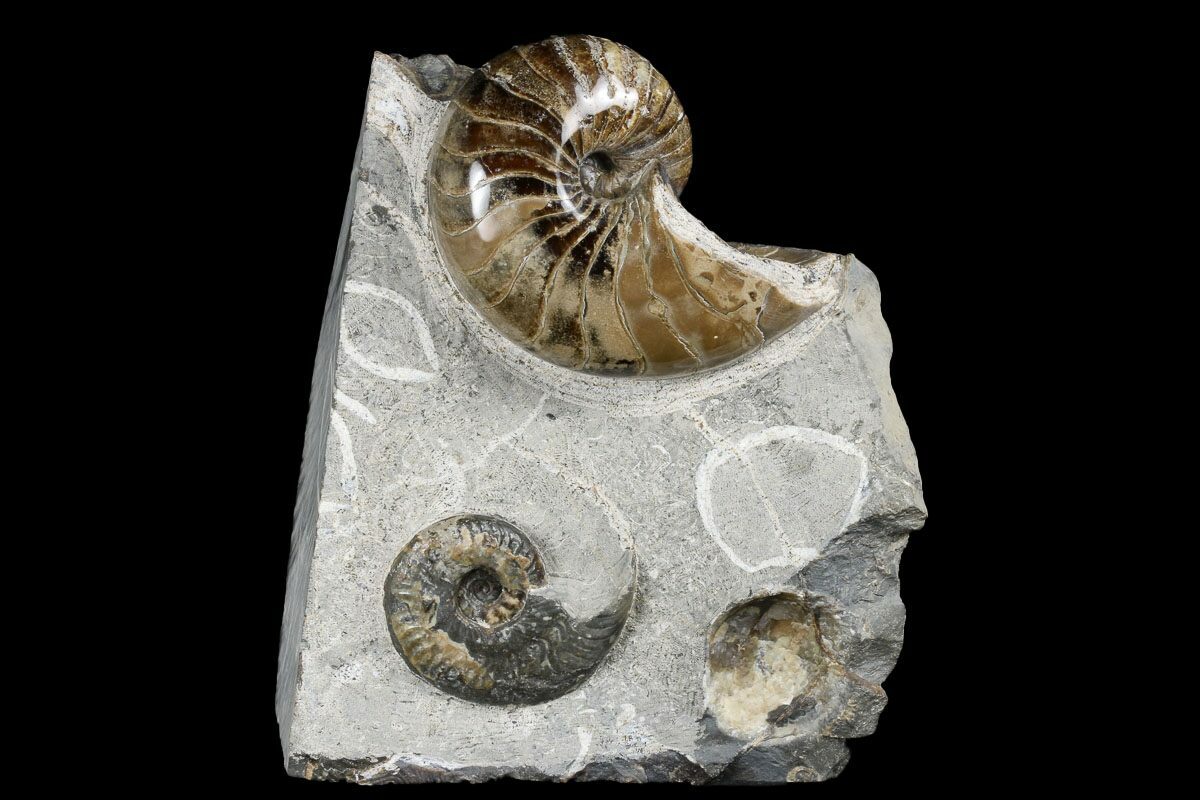
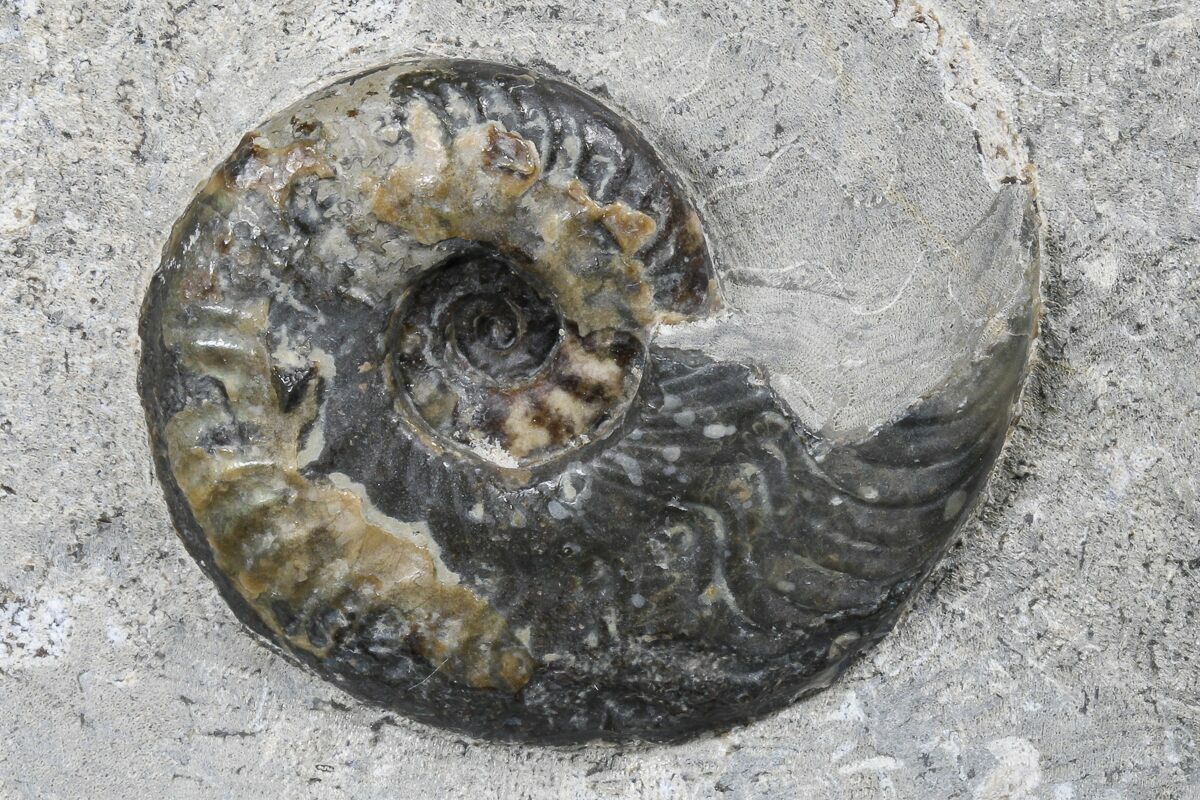
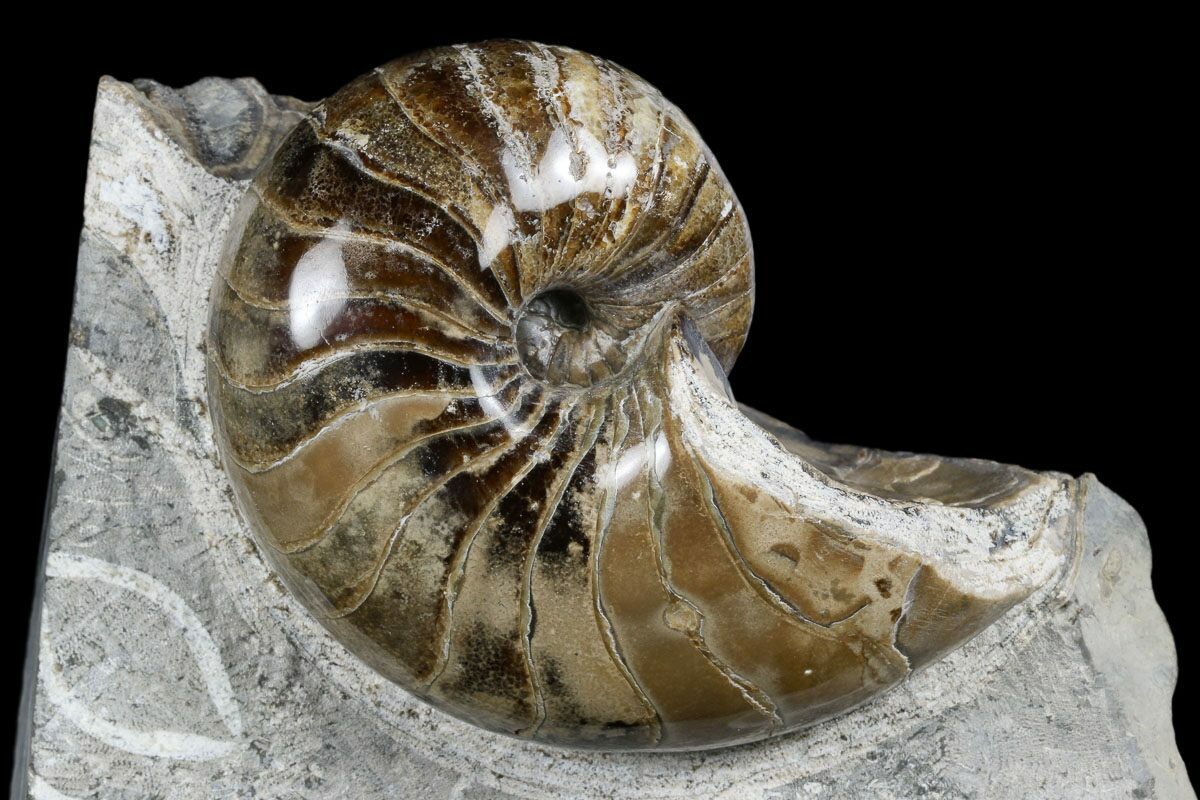
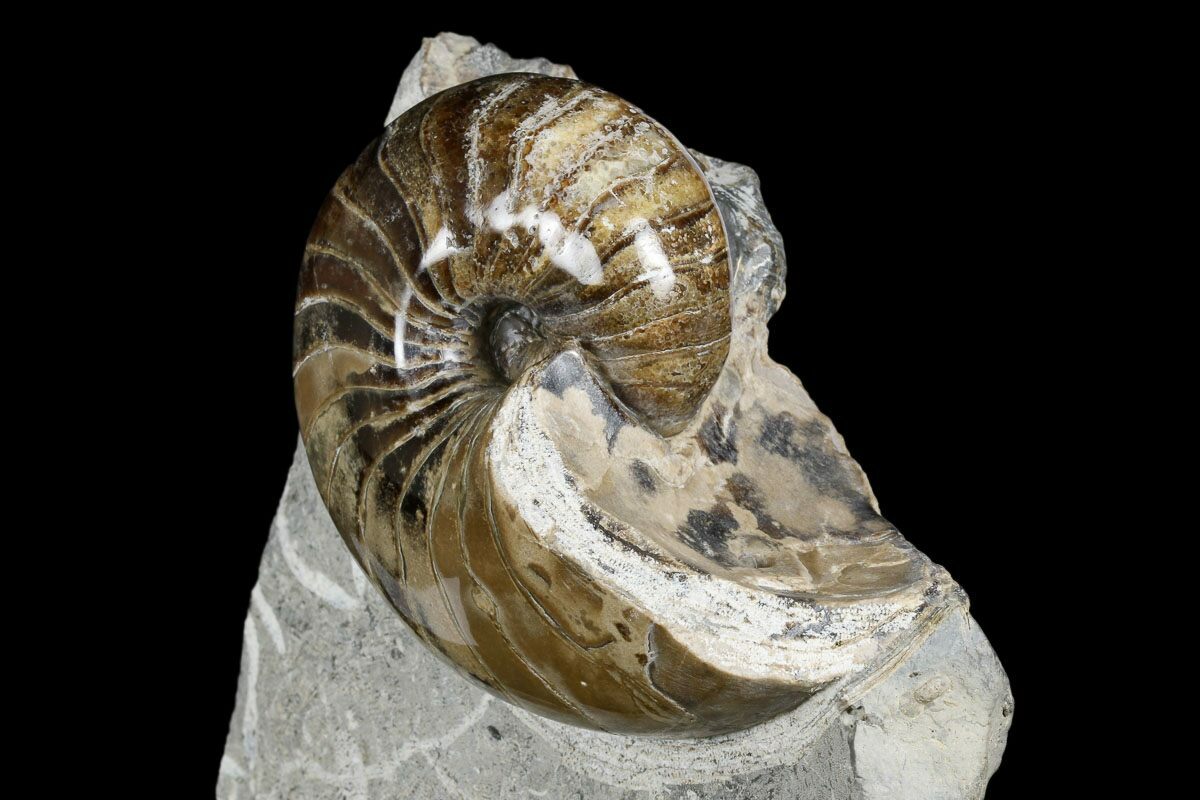
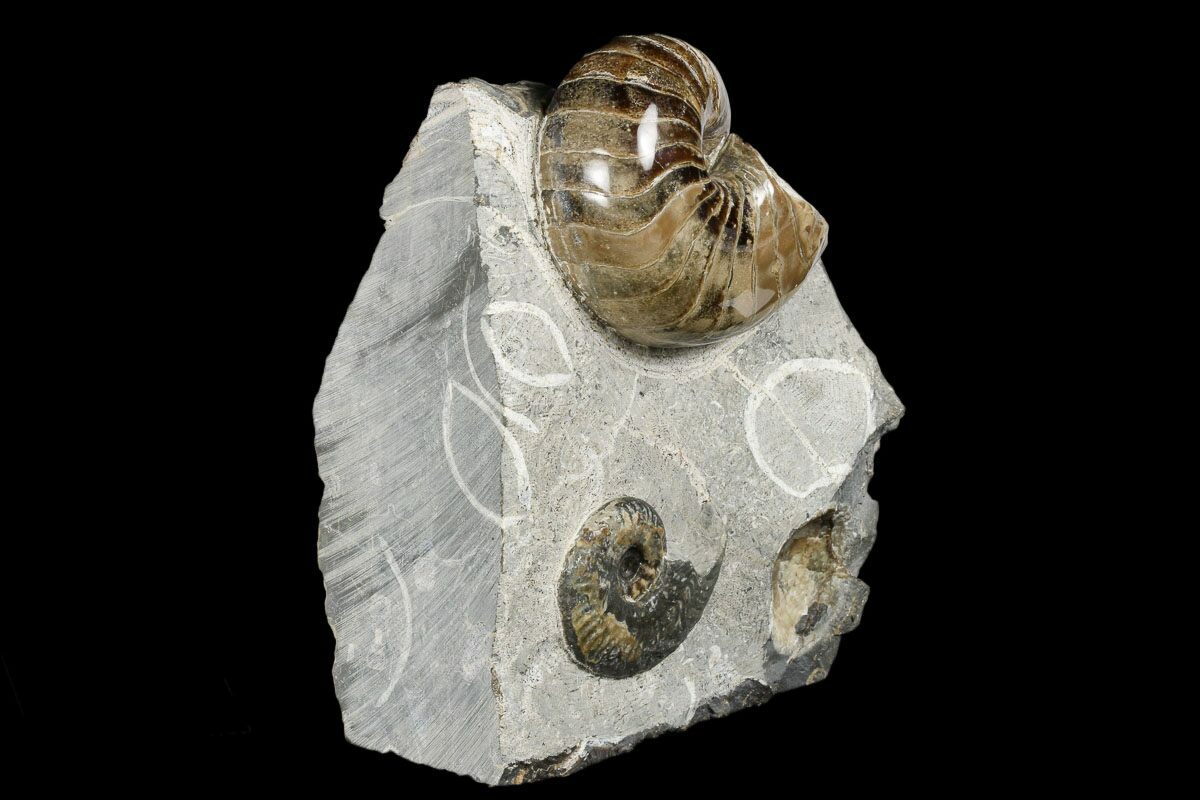
This is a natural nautilus and ammonite fossil association that was collected from the Lower Jurassic age Falciferum Zone near Lincolnshire, England. The nautilus is of the species Cenoceras astacoides and the ammonite is of the species Harpoceras serpentinum. The shell of the nautilus fossil has been polished, away revealing the mineral replaced chambers. The fossils have been partially exposed from the hard limestone that they were found in, creating this aesthetic specimen.
The entire specimen measures 6.4 x 5.4" and the base has been cut flat for presentation purposes. The nautilus measures 3.7" wide and the ammonite is 2.2" wide.
The entire specimen measures 6.4 x 5.4" and the base has been cut flat for presentation purposes. The nautilus measures 3.7" wide and the ammonite is 2.2" wide.
About Ammonites
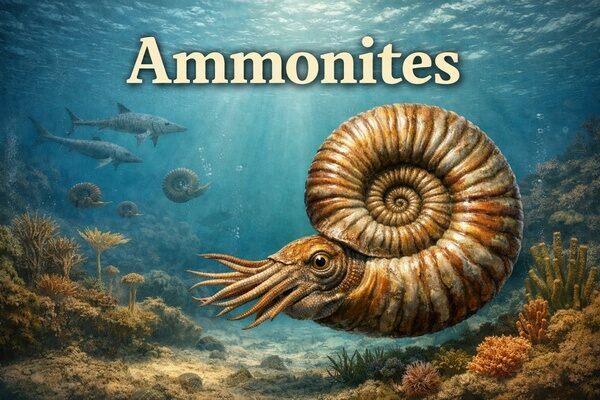
Ammonites were ancient marine cephalopods, similar to today's squids and octopuses, but with a defining feature: their distinctive, tightly coiled spiral shells. These shells, resembling those of modern nautiluses, served as both a protective home and a buoyancy aid, allowing ammonites to navigate the prehistoric seas with ease. First emerging around 240 million years ago in the Triassic Period, ammonites thrived for over 175 million years, adapting through numerous forms and sizes. As predatory creatures, they likely fed on smaller marine organisms, using their tentacles to capture prey. However, their long reign came to an end 65 million years ago at the close of the Cretaceous, coinciding with the mass extinction event that also eliminated the dinosaurs.
Ammonites were ancient marine cephalopods, similar to today's squids and octopuses, but with a defining feature: their distinctive, tightly coiled spiral shells. These shells, resembling those of modern nautiluses, served as both a protective home and a buoyancy aid, allowing ammonites to navigate the prehistoric seas with ease. First emerging around 240 million years ago in the Triassic Period, ammonites thrived for over 175 million years, adapting through numerous forms and sizes. As predatory creatures, they likely fed on smaller marine organisms, using their tentacles to capture prey. However, their long reign came to an end 65 million years ago at the close of the Cretaceous, coinciding with the mass extinction event that also eliminated the dinosaurs.
About Nautilus Fossils
Nautilus is a classic shelled cephalopod with a fossil history spanning more than 500 million years. Fossil nautilus shells are instantly recognizable by their tightly coiled, chambered structure, created as the animal grew and adjusted buoyancy using a central siphuncle. These fossils often preserve beautiful suture patterns, internal chambers, and sometimes even traces of original nacre. Found in marine deposits worldwide and frequently mineralized with calcite or chalcedony, fossil Nautilus specimens provide a striking glimpse into ancient seas and showcase one of the most enduring designs in natural history.
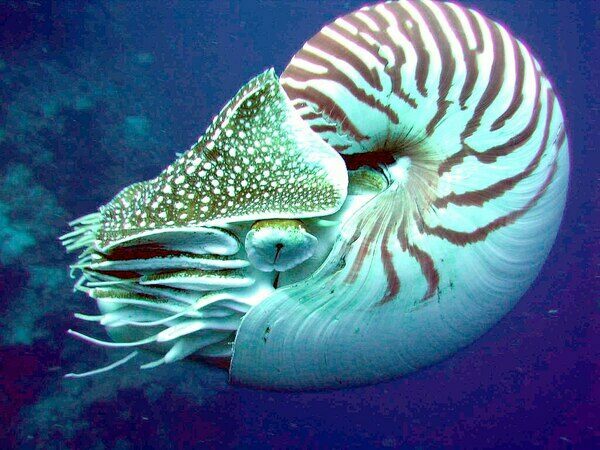
A picture of a modern day Nautilus.
Nautilus is a classic shelled cephalopod with a fossil history spanning more than 500 million years. Fossil nautilus shells are instantly recognizable by their tightly coiled, chambered structure, created as the animal grew and adjusted buoyancy using a central siphuncle. These fossils often preserve beautiful suture patterns, internal chambers, and sometimes even traces of original nacre. Found in marine deposits worldwide and frequently mineralized with calcite or chalcedony, fossil Nautilus specimens provide a striking glimpse into ancient seas and showcase one of the most enduring designs in natural history.
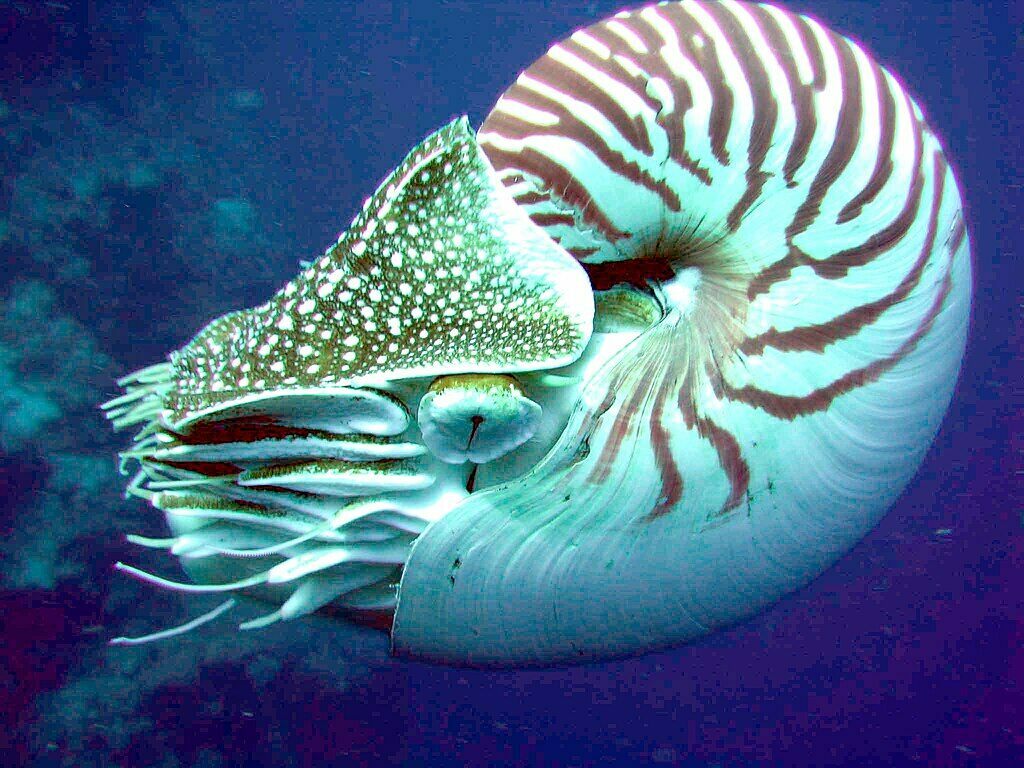
A picture of a modern day Nautilus.
SPECIES
Cenoceras astacoides (Nautilus) & Harpoceras serpentinum (Ammonite)

LOCATION
Lincolnshire, England
FORMATION
Falciferum Zone, Upper Lias
SIZE
Entire specimen 6.4 x 5.4". Nautilus 3.7" wide
CATEGORY
SUB CATEGORY
ITEM
#180258
We guarantee the authenticity of all of our specimens.


