Reviews


This Specimen has been sold.


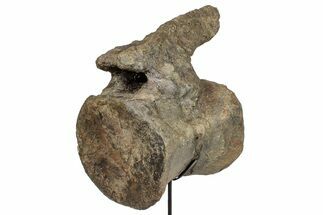
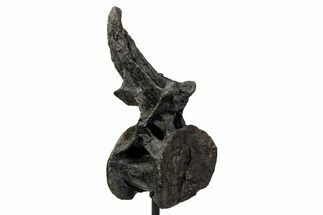
6.6" Fossil Ornithopod Dinosaur (Dryosaurus) Femur - Wyoming


This is a very unusual dinosaur fossil, a femur from Dryosaurus altus, collected from the Late Jurassic aged Morrison Formation on a private ranch (Red Canyon Ranch) in Bighorn County, Wyoming. Seldom is Dryosaurus material seen/available on the market. It measures 6.6" long and based on size, this would have come from a sub-adult animal.
The bone was found fairly compressed, required glue stabilization and gap fill restoration in spots. The femoral head, fourth trochanter, and a good portion of the distal epiphysis has been restored.
The bone was found fairly compressed, required glue stabilization and gap fill restoration in spots. The femoral head, fourth trochanter, and a good portion of the distal epiphysis has been restored.
About Dryosaurus
Dryosaurus was a primitive iguanodont that lived during the Late Jurassic. It had a horny beak and cheek teeth, and like other ornithopods, was an herbivore. It probably reached about 15 feet in length and weighed about 200 lbs. It's fossils have been found in the Upper Morrison Formation of Wyoming and Colorado.
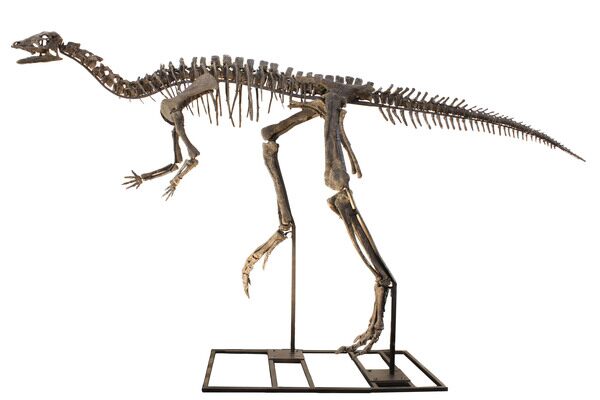
A Dryosaurus altus skeleton collected and prepped by our partner Dinosaurs Of America several years ago.
Dryosaurus was a primitive iguanodont that lived during the Late Jurassic. It had a horny beak and cheek teeth, and like other ornithopods, was an herbivore. It probably reached about 15 feet in length and weighed about 200 lbs. It's fossils have been found in the Upper Morrison Formation of Wyoming and Colorado.
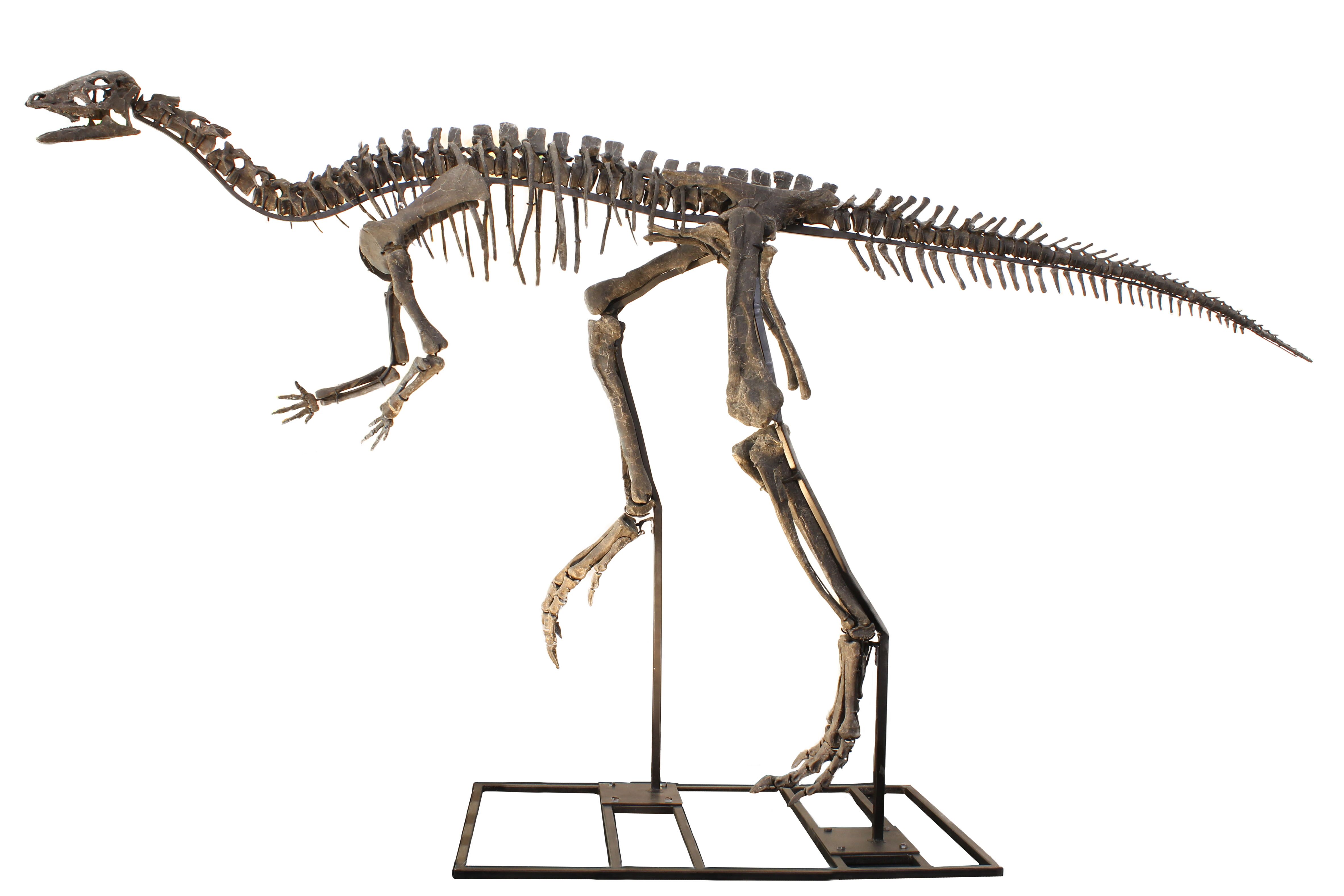
A Dryosaurus altus skeleton collected and prepped by our partner Dinosaurs Of America several years ago.
About The Morrison Formation
Located in the midwestern United States, the Late Jurassic-aged Morrison Formation is an incredibly large and fossiliferous formation that dates back to about 156 to 147 million years old. Named after the small town of Morrison, Colorado, the formation was discovered in 1877, and quickly became the center of one of the biggest rivalries in historical paleontology.
19th century paleontologists Othniel Charles Marsh and Edward Drinker Cope spent 15 years making outstanding strides in the discovery of fossils all throughout the American Midwest, but also resorted to unsavory methods in attempts to discredit or ruin the other's work and reputation, including destruction of specimens.
The total area of the formation is roughly 600,000 square miles, but much of that is inaccessible, deeply buried under prairie land and eroded during the formation of the Rocky Mountains. Even so, many outcroppings across the Front Range and upper Midwest allow paleontologists access to a wealth of information from Late Jurassic North America.
Dinosaurs from the region include large allosaurid dinosaurs, such as the eponymous Allosaurus and its larger relative Saurophaganax. Both exceeded 30 feet in length, making them some of the largest carnivores of their time. They competed with the similarly large megalosaurid Torvosaurus, and the somewhat smaller horned ceratosaurid, Ceratosaurus. On the smaller end of the theropod family tree was the raptor-like Ornitholestes.
For herbivores, Stegosaurus guarded their herds with huge, intimidating backplates and formidable tail spikes. Small, early ankylosaurs like Gargoyleosaurus would have fed on the forested understory, smaller in size than the 30+ foot giant Stegosaurids.
However, the Morrison Formation's main attraction were the giant sauropod dinosaurs, some of the most colossal of dinosaurs and largest land animals of all time. Diplodocus, Camarasaurus, Apatosaurus, Brontosaurus, Brachiosaurus, Barosaurus, and Supersaurus all count themselves among these long-necked titans. None of these herbivores would have been less than 50 feet in length at adult size: the largest of their number would have exceeded 100-115 feet in length, and over 40 tons. For so many sauropods to have lived in roughly the same place and time, they all likely developed different feeding and living strategies to minimize competition. Their massive sizes and herds would have defended them well from any of the numerous predators of the Morrison.
Located in the midwestern United States, the Late Jurassic-aged Morrison Formation is an incredibly large and fossiliferous formation that dates back to about 156 to 147 million years old. Named after the small town of Morrison, Colorado, the formation was discovered in 1877, and quickly became the center of one of the biggest rivalries in historical paleontology.
19th century paleontologists Othniel Charles Marsh and Edward Drinker Cope spent 15 years making outstanding strides in the discovery of fossils all throughout the American Midwest, but also resorted to unsavory methods in attempts to discredit or ruin the other's work and reputation, including destruction of specimens.
The total area of the formation is roughly 600,000 square miles, but much of that is inaccessible, deeply buried under prairie land and eroded during the formation of the Rocky Mountains. Even so, many outcroppings across the Front Range and upper Midwest allow paleontologists access to a wealth of information from Late Jurassic North America.
Dinosaurs from the region include large allosaurid dinosaurs, such as the eponymous Allosaurus and its larger relative Saurophaganax. Both exceeded 30 feet in length, making them some of the largest carnivores of their time. They competed with the similarly large megalosaurid Torvosaurus, and the somewhat smaller horned ceratosaurid, Ceratosaurus. On the smaller end of the theropod family tree was the raptor-like Ornitholestes.
For herbivores, Stegosaurus guarded their herds with huge, intimidating backplates and formidable tail spikes. Small, early ankylosaurs like Gargoyleosaurus would have fed on the forested understory, smaller in size than the 30+ foot giant Stegosaurids.
However, the Morrison Formation's main attraction were the giant sauropod dinosaurs, some of the most colossal of dinosaurs and largest land animals of all time. Diplodocus, Camarasaurus, Apatosaurus, Brontosaurus, Brachiosaurus, Barosaurus, and Supersaurus all count themselves among these long-necked titans. None of these herbivores would have been less than 50 feet in length at adult size: the largest of their number would have exceeded 100-115 feet in length, and over 40 tons. For so many sauropods to have lived in roughly the same place and time, they all likely developed different feeding and living strategies to minimize competition. Their massive sizes and herds would have defended them well from any of the numerous predators of the Morrison.
SPECIES
Dryosaurus altus

LOCATION
Red Canyon Ranch, Shell, Bighorn County, Wyoming
FORMATION
Morrison Formation
SIZE
6.6" long, 1.5" wide
CATEGORY
SUB CATEGORY
ITEM
#342147
We guarantee the authenticity of all of our specimens.