 Reviews


This Specimen has been sold.


6.8" Fossil Woolly Mammoth Lower M2 Molar - Poland


This is a beautifully preserved, 6.8" wide molar (M2) from the lower jaw of a woolly mammoth (Mammuthus primigenius). It is Pleistocene in age, approximately 40,000 years old and was found in southeastern Poland along the San River while dredging. The molar is well preserved with a nice chewing surface. The molar has been heavily stabilized to prevent deterioration.
It with a display stand.
It with a display stand.
About The Woolly Mammoth
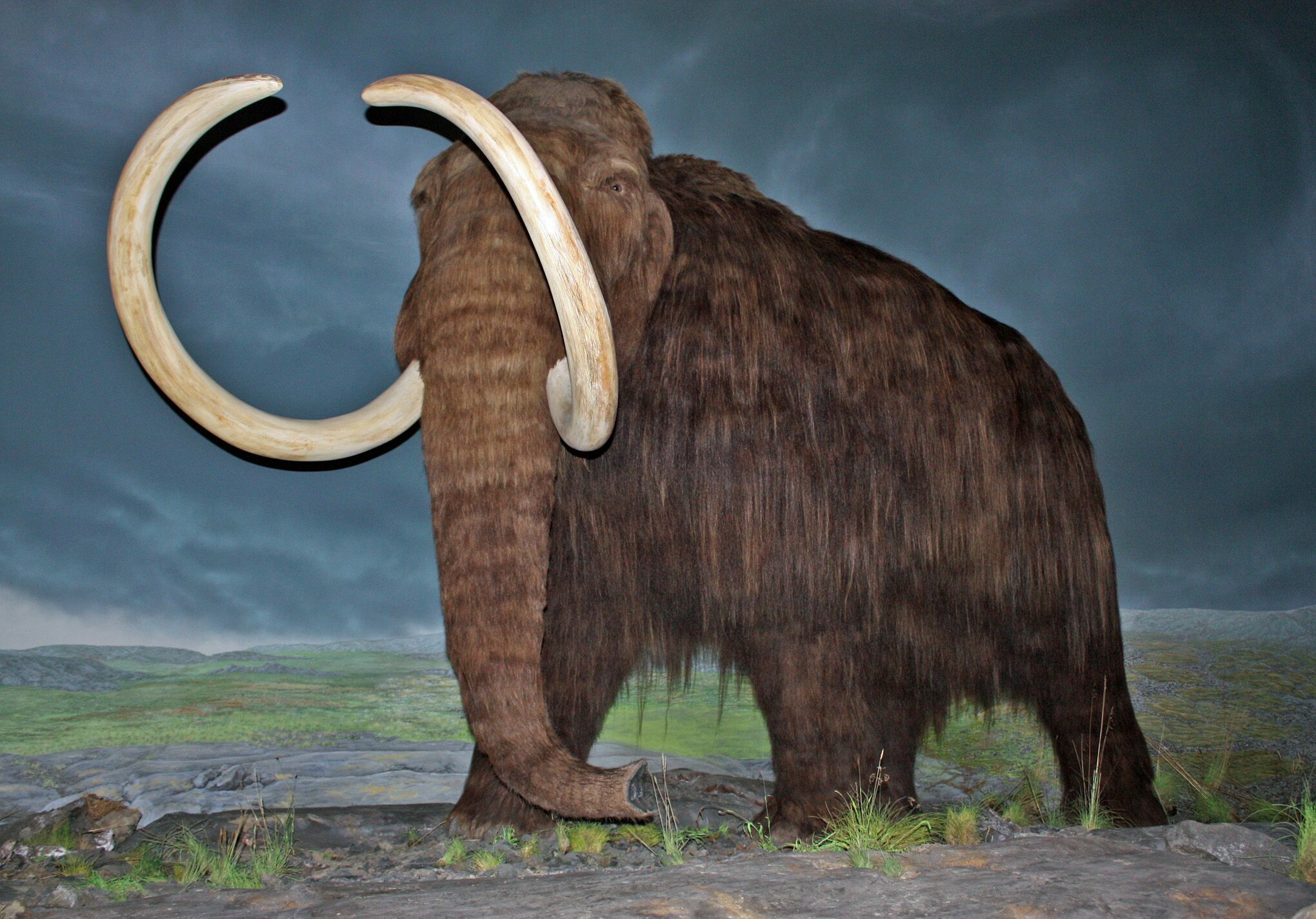
The Woolly Mammoth (Mammuthus primegenius) is an iconic Pleistocene animal. It had long, wooly hair, tusks that extended up to 9 feet, and stood about 12 feet tall. They ranged across the northern hemisphere and were one of the most abundant Pleistocene creatures, ranging from eastern Eurasia throughout most of North America. Their existence overlapped with that of humans: early cave paintings have been discovered depicting these massive mammals, and humans likely hunted them to extinction in some areas.
They are also some of the most studied prehistoric animals in part because many carcasses have been preserved in the Siberian permafrosts, keeping skin, muscle tissues, and even their distinctive woolly hair intact. Recent genomic sequencing of chromosomal DNA in some of these preserved specimens has revealed that Woolly Mammoths are most closely related to African elephants: their chromosomal DNA is up to 99.5 percent identical.
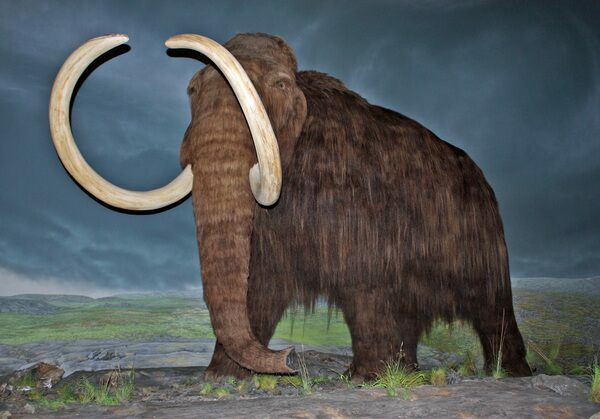
The Woolly Mammoth (Mammuthus primegenius) is an iconic Pleistocene animal. It had long, wooly hair, tusks that extended up to 9 feet, and stood about 12 feet tall. They ranged across the northern hemisphere and were one of the most abundant Pleistocene creatures, ranging from eastern Eurasia throughout most of North America. Their existence overlapped with that of humans: early cave paintings have been discovered depicting these massive mammals, and humans likely hunted them to extinction in some areas.
They are also some of the most studied prehistoric animals in part because many carcasses have been preserved in the Siberian permafrosts, keeping skin, muscle tissues, and even their distinctive woolly hair intact. Recent genomic sequencing of chromosomal DNA in some of these preserved specimens has revealed that Woolly Mammoths are most closely related to African elephants: their chromosomal DNA is up to 99.5 percent identical.
SPECIES
Mammuthus primigenius

LOCATION
San River, Southeastern Poland
SIZE
6.8 x 4 x 2.6"
CATEGORY
SUB CATEGORY
ITEM
#357016
We guarantee the authenticity of all of our specimens.


