 Reviews


6" Fossil Nodosaurid (Denversaurus?) Dinosaur Scute - South Dakota
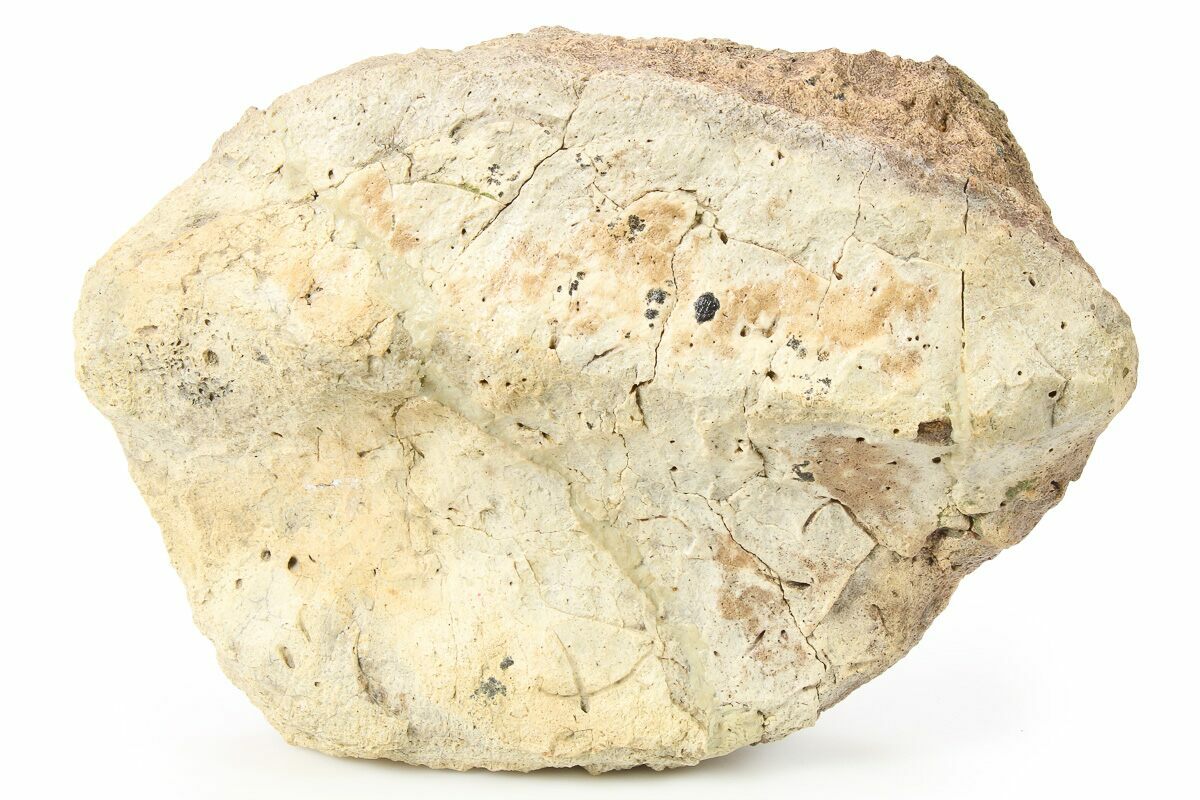
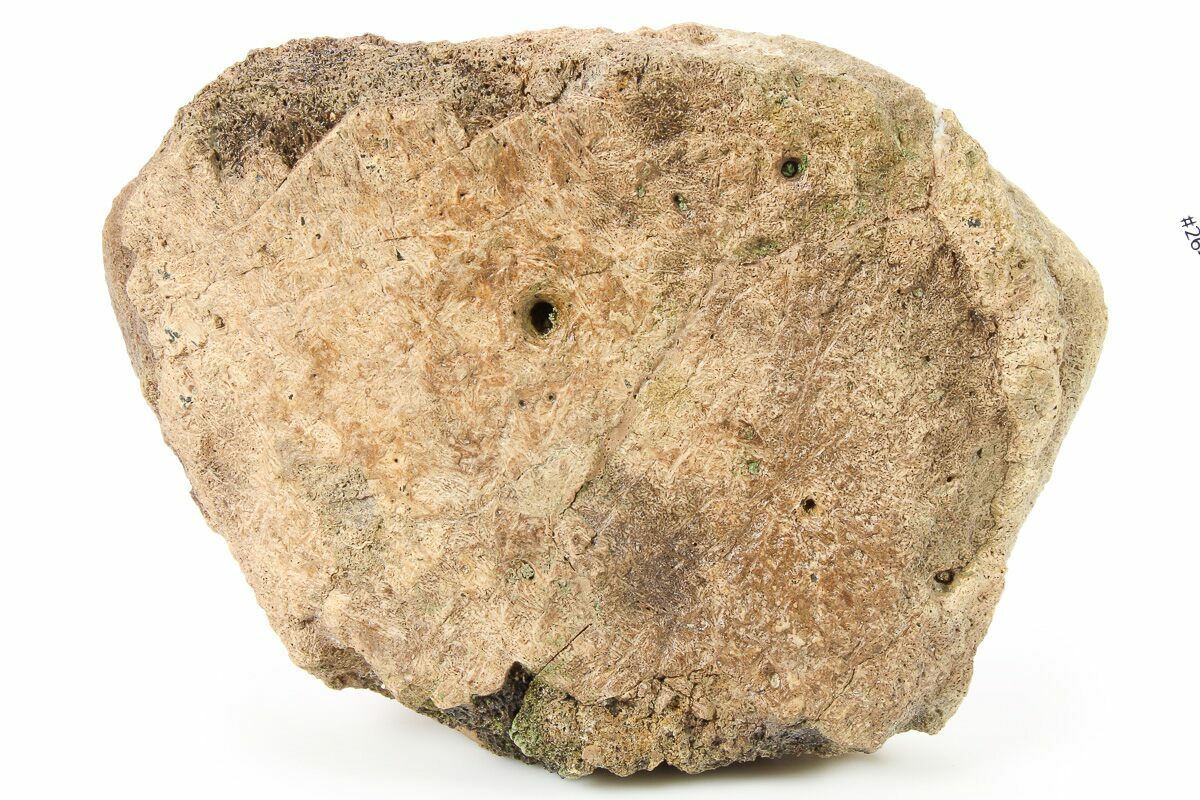
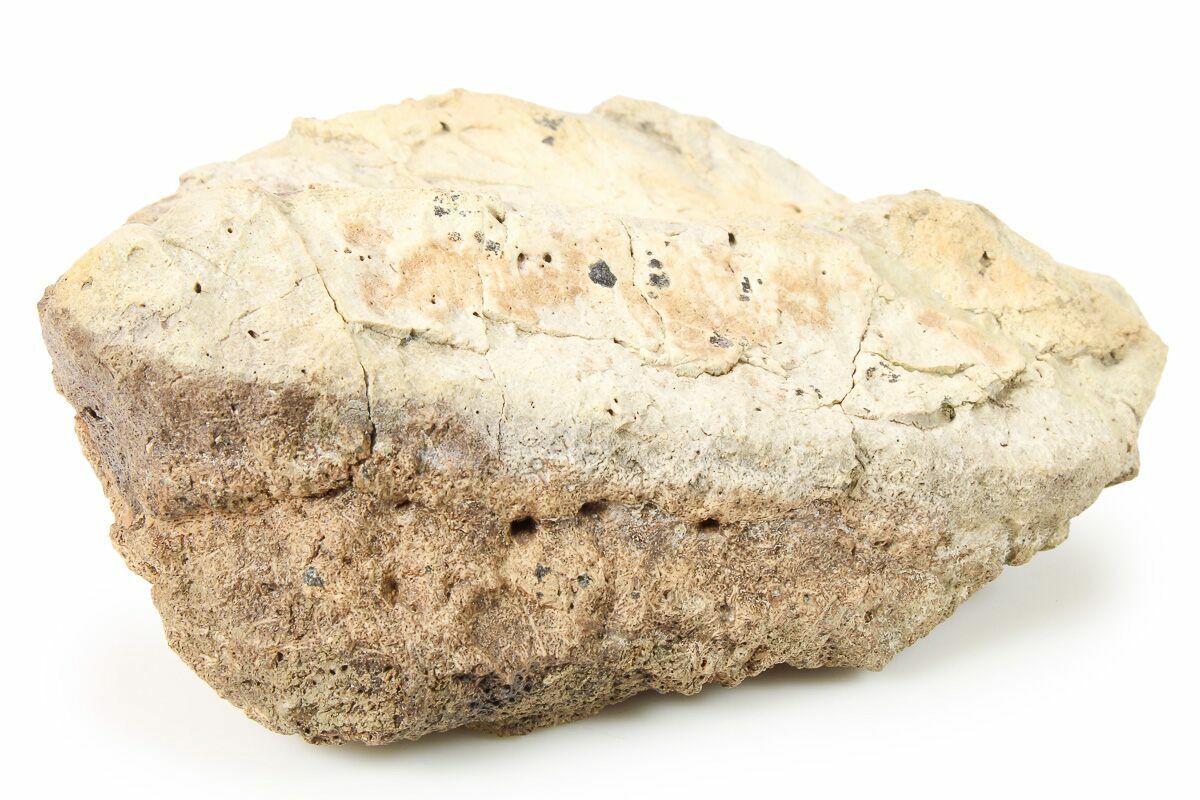
This is a nodosaur scute (armor plate - osteoderm) that was collected from the Hell Creek Formation on a private lease in Perkins County, South Dakota. It measures 6" wide and is accompanied by an acrylic display stand for presentation.
The most common nodosaurid known from the Hell Creek Formation of South Dakota is Denversaurus schlessmani. In most cases, identifying species by an isolated scute can be more guess work than anything. So while we aren't certain this scute comes from D. schlessmani, it's very likely.
There are a couple of repaired cracks through the scute that required gap fill restoration.
The most common nodosaurid known from the Hell Creek Formation of South Dakota is Denversaurus schlessmani. In most cases, identifying species by an isolated scute can be more guess work than anything. So while we aren't certain this scute comes from D. schlessmani, it's very likely.
There are a couple of repaired cracks through the scute that required gap fill restoration.
About Denversaurus
Denversaurus was a panoplosaurin nodosaurid dinosaur from the late Cretaceous, approximately 66 million years ago. Denversaurus was an herbivore like other nodosaurids/ankylosaurids, and measured approximately 20 feet (6 meters) on average. It lived in North America in the midwest alongside more well-known contemporaries such as Tyrannosaurus rex, Triceratops, and Pachycephalosaurus. Like other nodosaurids/ankylosaurids, it had an armored carapace made up of bony scutes all along the dorsal surface of its body.
Denversaurus was a panoplosaurin nodosaurid dinosaur from the late Cretaceous, approximately 66 million years ago. Denversaurus was an herbivore like other nodosaurids/ankylosaurids, and measured approximately 20 feet (6 meters) on average. It lived in North America in the midwest alongside more well-known contemporaries such as Tyrannosaurus rex, Triceratops, and Pachycephalosaurus. Like other nodosaurids/ankylosaurids, it had an armored carapace made up of bony scutes all along the dorsal surface of its body.
The Hell Creek Formation
Renowned for both its age and rich sedimentary layers, the Hell Creek Formation is one of the most intensively studied fossil-bearing regions on Earth. To date, scientists have documented 158 genera of animals and 64 genera of plants from its rocks, with new finds emerging regularly. Beyond iconic dinosaurs such as tyrannosaurs, ceratopsians, and hadrosaurs, the formation has produced an extraordinary array of life, including amphibians, reptiles, lizards, snakes, turtles, fish, sharks, birds, and early mammals. Together, these fossils provide the most complete picture of the ecosystems that thrived just before the Cretaceous–Paleogene extinction event.
Renowned for both its age and rich sedimentary layers, the Hell Creek Formation is one of the most intensively studied fossil-bearing regions on Earth. To date, scientists have documented 158 genera of animals and 64 genera of plants from its rocks, with new finds emerging regularly. Beyond iconic dinosaurs such as tyrannosaurs, ceratopsians, and hadrosaurs, the formation has produced an extraordinary array of life, including amphibians, reptiles, lizards, snakes, turtles, fish, sharks, birds, and early mammals. Together, these fossils provide the most complete picture of the ecosystems that thrived just before the Cretaceous–Paleogene extinction event.
$1,495 $1,250
SPECIES
Denversaurus schlessmani?

LOCATION
Perkins County, South Dakota
FORMATION
Hell Creek Formation
SIZE
6 x 4.4 x 1.9"
CATEGORY
SUB CATEGORY
ITEM
#264946
We guarantee the authenticity of all of our specimens.