 Reviews


This Specimen has been sold.


Disarticulated Mosasaur (Pluridens) Jaw in Situ - Morocco


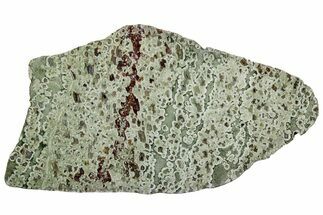
This 13.2" wide section of sandstone from the Phosphate Deposits of Morocco contains a disarticulated mosasaur jaw, along with an assemblage of additional fossils. Four rooted mosasaur teeth can be seen exposed from the rock as well as an Otodus shark tooth, fish vertebrae, and an Enchodus fish fang. There are almost a dozen mosasaurs described from these deposits, but based on the teeth it is most likely from the species Pluridens serpentis.
The specimen is natural and none of the fossils have been mounted within the rock. One of the mosasaur teeth is missing much of its crown. The sandstone has been stabilized and the back has been cut flat and coated in a clear epoxy for structural integrity of the specimen.
It comes with a display stand.
The specimen is natural and none of the fossils have been mounted within the rock. One of the mosasaur teeth is missing much of its crown. The sandstone has been stabilized and the back has been cut flat and coated in a clear epoxy for structural integrity of the specimen.
It comes with a display stand.
Pluridens, meaning "many teeth", is an extinct genus of marine lizard belonging to the family Mosasauridae. It's placed in the subfamily Halisaurinae alongside the genera Phosphorosaurus, Eonatator, and Halisaurus. Compared to related halisaurines, Pluridens had longer jaws with more teeth, and smaller eyes. P. serpentis is found in Maastrichtian deposits in Morocco, in this instance, being the phosphate deposits of Khouribga, Morocco. It was briefly synonymized with Halisaurus by Lindgren and Siverson (2005), but subsequent studies rejected the synonymy.
About the Oulad Abdoun Basin
The Oulad Abdoun Basin in central Morocco is one of the most famous phosphate deposit regions in the world, not only for its economic importance but also for its extraordinary fossil wealth. Formed during the Late Cretaceous to Paleogene, these marine phosphate layers record a time when northern Africa was covered by a warm, shallow sea teeming with life.
What makes the Oulad Abdoun deposits especially significant is the remarkable preservation and diversity of vertebrate fossils found within the phosphate beds. The basin is renowned for producing abundant remains of marine reptiles such as mosasaurs and plesiosaurs, along with fossil sharks, rays, bony fish, and turtles. These fossils typically occur as isolated teeth, bones, and partial skeletons concentrated within the phosphatic sediments. Today, many of these specimens are collected as a byproduct of large-scale phosphate mining operations—rescued before the rock is processed and crushed—ultimately saving them from certain destruction in the rock crushers and preserving an extraordinary record of ancient marine life.
The Oulad Abdoun Basin in central Morocco is one of the most famous phosphate deposit regions in the world, not only for its economic importance but also for its extraordinary fossil wealth. Formed during the Late Cretaceous to Paleogene, these marine phosphate layers record a time when northern Africa was covered by a warm, shallow sea teeming with life.
What makes the Oulad Abdoun deposits especially significant is the remarkable preservation and diversity of vertebrate fossils found within the phosphate beds. The basin is renowned for producing abundant remains of marine reptiles such as mosasaurs and plesiosaurs, along with fossil sharks, rays, bony fish, and turtles. These fossils typically occur as isolated teeth, bones, and partial skeletons concentrated within the phosphatic sediments. Today, many of these specimens are collected as a byproduct of large-scale phosphate mining operations—rescued before the rock is processed and crushed—ultimately saving them from certain destruction in the rock crushers and preserving an extraordinary record of ancient marine life.
SPECIES
Pluridens serpentis

LOCATION
Oulad Abdoun Basin, Morocco
FORMATION
Phosphate Deposits
SIZE
Specimen: 13.2 x 11.7"
CATEGORY
SUB CATEGORY
ITEM
#334781
We guarantee the authenticity of all of our specimens.