Reviews


This Specimen has been sold.


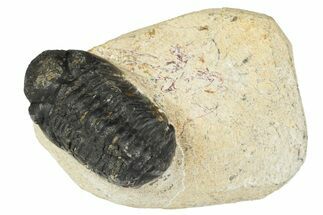
Plate of Inflated Isotelus Trilobite - Walcott-Rust Quarry, NY


This specimen features a striking pair of fully inflated Isotelus gigas trilobites from the renowned Walcott-Rust Quarry in upstate New York. While this species is also found elsewhere in New York and Canada, examples from this quarry are exceptional for their unmatched level of preservation. The site has not yielded new material in several years and is unlikely to do so in the future, making trilobites from this classic locality increasingly scarce.
Both trilobites display beautiful jet-black shell preservation and are well-positioned on a natural limestone matrix. One specimen is complete, measuring 2.6" long, with minor restoration present on each eye. The second trilobite is partially preserved, with its cephalon extending off the edge of the rock; a small area of restoration is present across the cephalon.
Both trilobites display beautiful jet-black shell preservation and are well-positioned on a natural limestone matrix. One specimen is complete, measuring 2.6" long, with minor restoration present on each eye. The second trilobite is partially preserved, with its cephalon extending off the edge of the rock; a small area of restoration is present across the cephalon.
The
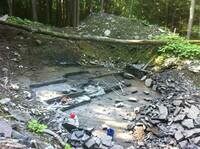
Collecting the Walcott-Rust Quarry in Summer 2013
Walcott-Rust quarry, located near Russia, NY, is one of the most historic trilobite collecting localities in the world. It was first worked by famed paleontologist Charles Doolittle Walcott along with William Rust in 1870. It was where Walcott was first introduced to trilobites; he later went on to make many amazing discoveries with the arthropods across North America, including the famed Burgess Shale. This quarry was lost for over a century, but later rediscovered in the 1990s by Thomas Whitely, who dug and researched the site heavily. It's now leased by Trilobites of America, LLC. Not only does it produce some of the most amazing trilobites found in the US, but outstanding new contributions continue to be made to science.
The limestones of this quarry produce arguably the best preserved trilobites in the United States, many of them perfectly three-dimensional with no compaction at all. These include types like Ceraurus, Isotelus, Flexicalymene, Sphaerocoryphe, and many more. Collecting the Walcott-Rust quarry is brutally hard. It requires extracting large blocks of solid limestone, often weighing several hundred pounds, using massive pry bars, 20-pound sledge hammers, wedges, a lot of brute force, and rock quarrying know-how. These large blocks are then broken down into smaller and smaller pieces, looking for cross sections of the black trilobites in the black rock (a nearly impossible task). When a trilobite is found the real work begins, painstakingly extracting it from its limestone tomb under high-powered microscope using air scribes and abrasives.
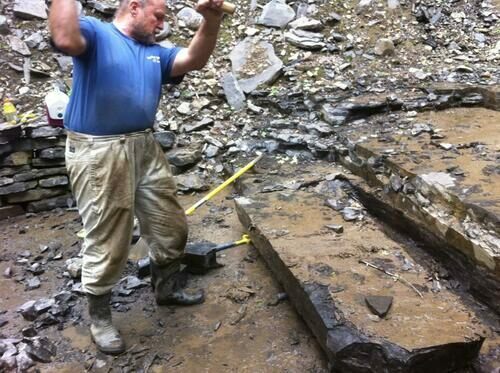
Dan Cooper breaks up a block of limestone with a 20-pound sledge in search of Isotelus
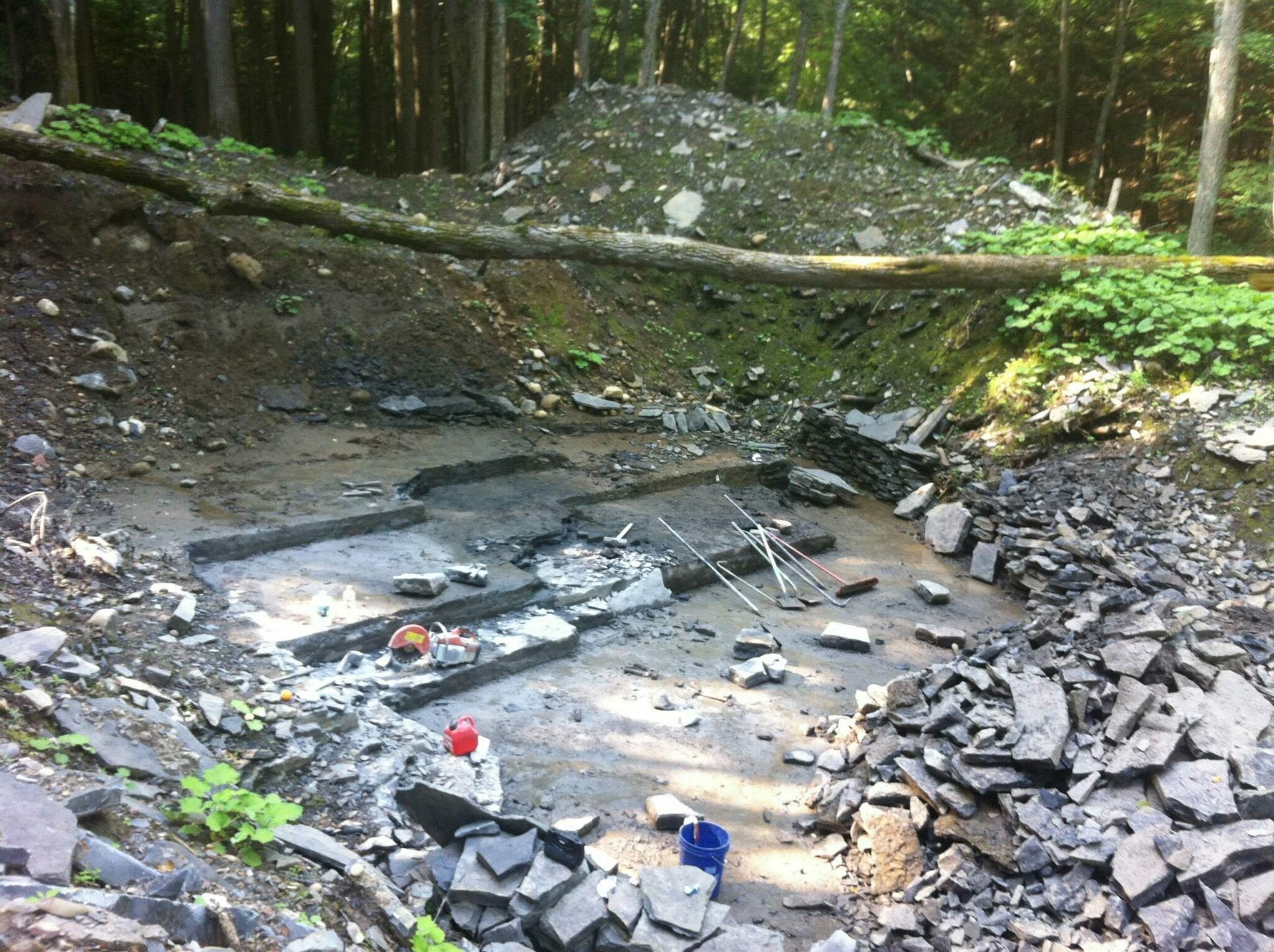
Collecting the Walcott-Rust Quarry in Summer 2013
The limestones of this quarry produce arguably the best preserved trilobites in the United States, many of them perfectly three-dimensional with no compaction at all. These include types like Ceraurus, Isotelus, Flexicalymene, Sphaerocoryphe, and many more. Collecting the Walcott-Rust quarry is brutally hard. It requires extracting large blocks of solid limestone, often weighing several hundred pounds, using massive pry bars, 20-pound sledge hammers, wedges, a lot of brute force, and rock quarrying know-how. These large blocks are then broken down into smaller and smaller pieces, looking for cross sections of the black trilobites in the black rock (a nearly impossible task). When a trilobite is found the real work begins, painstakingly extracting it from its limestone tomb under high-powered microscope using air scribes and abrasives.
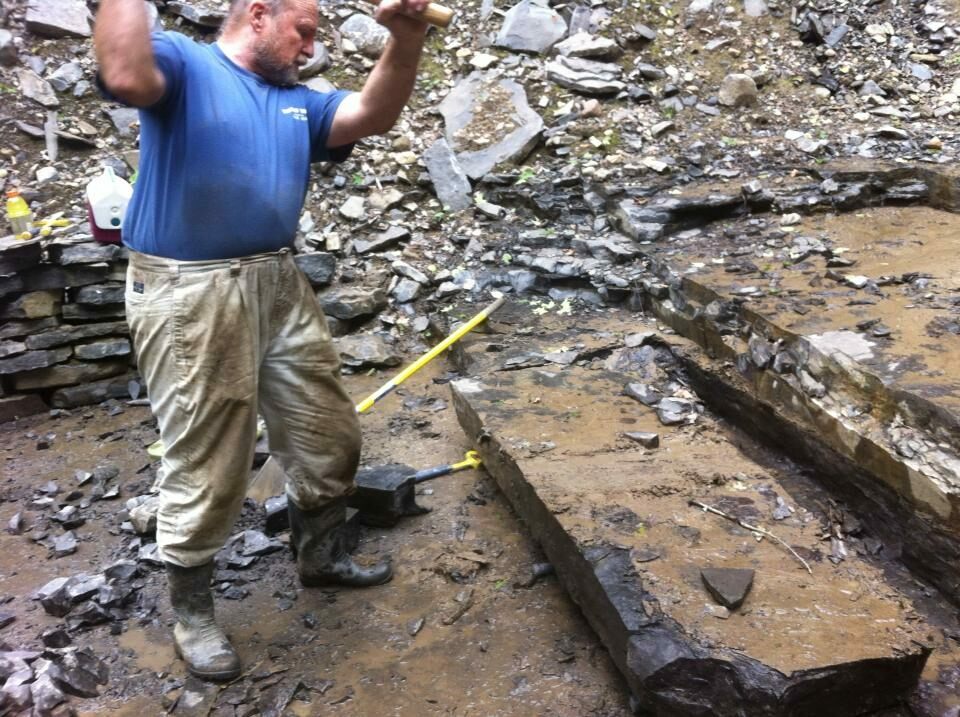
Dan Cooper breaks up a block of limestone with a 20-pound sledge in search of Isotelus
SPECIES
Isotelus gigas
AGE

LOCATION
Walcott-Rust Quarry, Russia, New York
FORMATION
Trenton Group, Rust Formation, Spillway Member
SIZE
Complete Trilobite: 2.6" long, Limestone: 6.1 x 3.6"
CATEGORY
SUB CATEGORY
ITEM
#355364
We guarantee the authenticity of all of our specimens.