 Reviews


This Specimen has been sold.


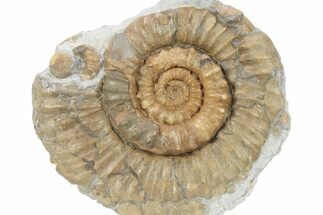
Rare, 1.63" Fossil Ichthyosaur (T. platyodon) Tooth in Situ - England


This is a truly fascinating 1.63" long tooth of Temnodontosaurus (Ichthyosaurus) platyodon that's still attached to the rock in which it was found. The tooth has been masterfully exposed and is in exceptional condition. A partial crinoid stem has also been exposed from the rock along one edge. It was collected from the Lower Jurassic-aged Obtusum Zone in Dorset England.
It comes with a riker mount display case.
It comes with a riker mount display case.
About Temnodontosaurus
Temnodontosaurus was a massive, dolphin-shaped marine reptile that ruled the seas during the Early Jurassic, around 200 million years ago. Belonging to the ichthyosaurs, it was built for speed, with a streamlined body, powerful tail, and huge eyes, among the largest relative to body size of any known vertebrate, suggesting it was a formidable hunter even in low-light conditions. Fossils found mainly in Europe show it could grow over 10 meters long, making it one of the largest ichthyosaurs ever discovered. With its long snout lined with sharp teeth, Temnodontosaurus preyed on fish and squid, occupying a top-predator role in ancient marine ecosystems long before dinosaurs dominated the land.
Temnodontosaurus was a massive, dolphin-shaped marine reptile that ruled the seas during the Early Jurassic, around 200 million years ago. Belonging to the ichthyosaurs, it was built for speed, with a streamlined body, powerful tail, and huge eyes, among the largest relative to body size of any known vertebrate, suggesting it was a formidable hunter even in low-light conditions. Fossils found mainly in Europe show it could grow over 10 meters long, making it one of the largest ichthyosaurs ever discovered. With its long snout lined with sharp teeth, Temnodontosaurus preyed on fish and squid, occupying a top-predator role in ancient marine ecosystems long before dinosaurs dominated the land.
Ichthyosaurs were swordfish-like marine reptiles of the order Ichthyosauria. They had torpedo-shaped bodies with long, narrowly pointed jaws, large pectoral fins, and crescent-shaped tails. They were the high-speed predators of the Jurassic seas, indicating they ate a fish diet. This is confirmed by analysis of coprolites (fossil feces). They evolved about 250 million years ago, hitting their diversity apex during the Jurassic: there are currently 97 known genera. They may be descended from diapsids like dinosaurs and birds, but a recent theory suggests they may have descended from a distant relative of turtles. Ichthyosaurus had disappeared from the fossil record by about 90 million years ago. It is not known why they died out.
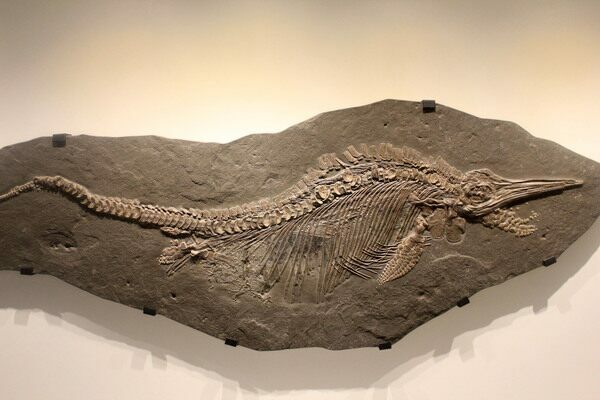
A fossil of the Ichthyosaur Stenopterygius. Creative Commons License
Ichthyosaurs are not fish. Their resemblance to them is an example of two groups adapting to their environment with similar adaptations without having a common ancestor, otherwise known as convergent evolution. Ichthyosaurs were reptiles with lungs that had to surface to breathe, while fish have gills that take dissolved oxygen from water. Ichthyosaurs looked like swordfish or dolphins: their bodies were larger near the head and tapered to a sleek, crescent-shaped tail.
Ichthyosaurs had one of the largest eyes relative to body size of any organism. This may allowed them to better move throughout the water column to find prey, reaching tremendous speeds with their crescent tails. Some estimates put the top speed of the fastest species above 30 miles per hour. Like most fish living today, Ichthyosaurus was likely dark colored on its back and sides and light on its belly as a form of camouflage.
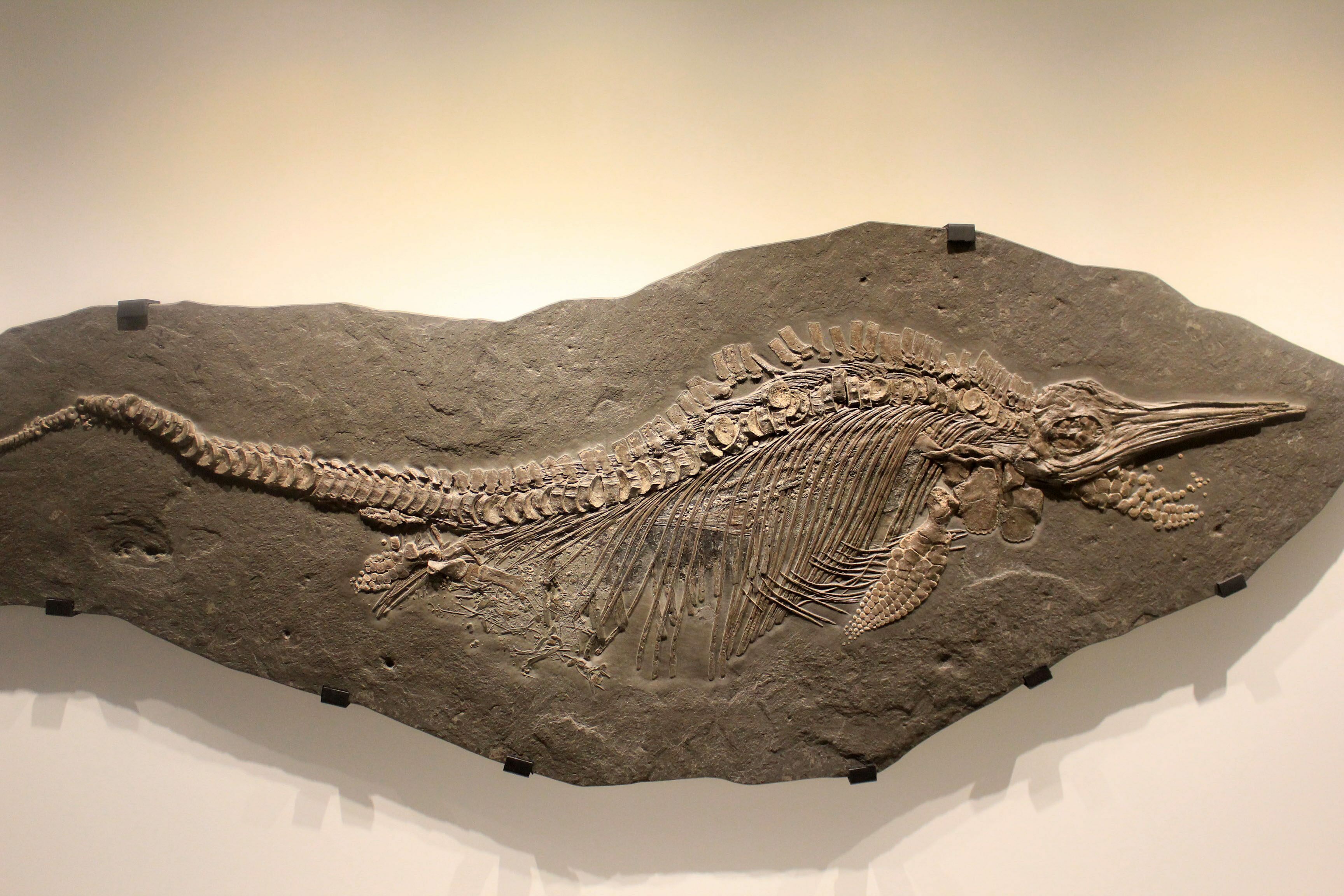
A fossil of the Ichthyosaur Stenopterygius. Creative Commons License
Ichthyosaurs are not fish. Their resemblance to them is an example of two groups adapting to their environment with similar adaptations without having a common ancestor, otherwise known as convergent evolution. Ichthyosaurs were reptiles with lungs that had to surface to breathe, while fish have gills that take dissolved oxygen from water. Ichthyosaurs looked like swordfish or dolphins: their bodies were larger near the head and tapered to a sleek, crescent-shaped tail.
Ichthyosaurs had one of the largest eyes relative to body size of any organism. This may allowed them to better move throughout the water column to find prey, reaching tremendous speeds with their crescent tails. Some estimates put the top speed of the fastest species above 30 miles per hour. Like most fish living today, Ichthyosaurus was likely dark colored on its back and sides and light on its belly as a form of camouflage.
SPECIES
Temnodontosaurus (Ichthyosaurus) platyodon

LOCATION
Black Ven, Charmouth, Lyme Regis, Dorset, England
FORMATION
Obtusum Zone
SIZE
Tooth: 1.63" long, Entire Specimen: 2.7 x 1.6"
CATEGORY
SUB CATEGORY
ITEM
#351034
We guarantee the authenticity of all of our specimens.


