 Reviews


Rare Hypsilophodontid Dinosaur Bone Assortment - England


British dinosaur material is fairly hard to acquire as there is remarkably little of it on the market, and specimens from this species are even more uncommon to come across. This is a nicely preserved assortment of bones from the hypsilophodontid ornithopod dinosaur, Hypsilophodon foxii. The specimens include a mixture of in situ bone clusters and prepped free bones, all of which were collected from the Isle of Wight in England.
All six specimens are included along with a riker mount display case.
All six specimens are included along with a riker mount display case.
About Vectidromeus insularis
Vectidromeus insularis is a small ornithopod dinosaur from the Early Cretaceous of southern England, discovered on the Isle of Wight. Described in 2023, it is known from partial skeletal remains recovered from the Wessex Formation, a unit famous for its diverse assemblage of dinosaurs and other vertebrates. The name reflects both its place of discovery, “Vectis” being the Roman name for the Isle of Wight, and its likely lifestyle, with “dromeus” meaning “runner.” The species name insularis highlights its island provenance.
This dinosaur is interpreted as a lightly built, fast-moving herbivore that lived approximately 125 million years ago. Like other small ornithopods, Vectidromeus would have been bipedal, with long hind limbs adapted for running and a beaked mouth suited for cropping low-growing vegetation. Its remains were found within a distinctive burrow structure, making it one of the few dinosaurs potentially associated with burrowing behavior. If this interpretation is correct, Vectidromeus adds to growing evidence that some small ornithopods were capable of digging or using subterranean refuges, an unusual behavior among dinosaurs that offers insight into how these animals may have coped with predators and seasonal environmental changes in their Cretaceous ecosystems.
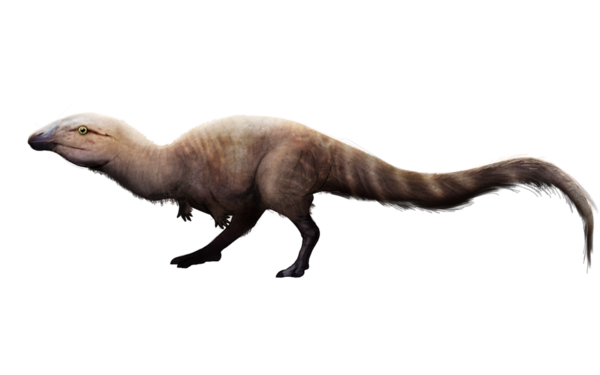
An artists reconstruction of V. insularis. Creative commons artist "Stegotyranno"
Vectidromeus insularis is a small ornithopod dinosaur from the Early Cretaceous of southern England, discovered on the Isle of Wight. Described in 2023, it is known from partial skeletal remains recovered from the Wessex Formation, a unit famous for its diverse assemblage of dinosaurs and other vertebrates. The name reflects both its place of discovery, “Vectis” being the Roman name for the Isle of Wight, and its likely lifestyle, with “dromeus” meaning “runner.” The species name insularis highlights its island provenance.
This dinosaur is interpreted as a lightly built, fast-moving herbivore that lived approximately 125 million years ago. Like other small ornithopods, Vectidromeus would have been bipedal, with long hind limbs adapted for running and a beaked mouth suited for cropping low-growing vegetation. Its remains were found within a distinctive burrow structure, making it one of the few dinosaurs potentially associated with burrowing behavior. If this interpretation is correct, Vectidromeus adds to growing evidence that some small ornithopods were capable of digging or using subterranean refuges, an unusual behavior among dinosaurs that offers insight into how these animals may have coped with predators and seasonal environmental changes in their Cretaceous ecosystems.
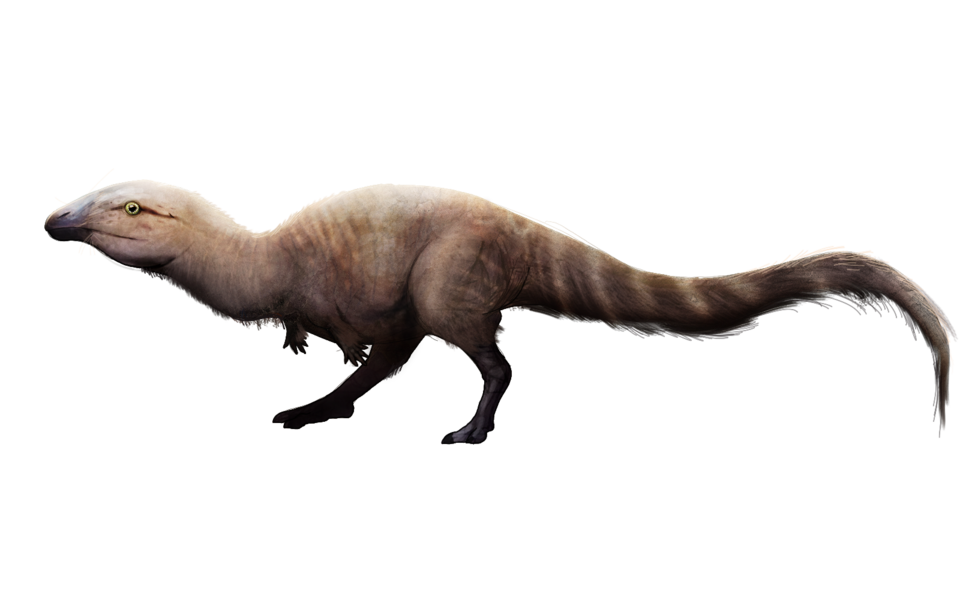
An artists reconstruction of V. insularis. Creative commons artist "Stegotyranno"
$1,450
SPECIES
Vectidromeus insularis

LOCATION
Atherfield, Isle of Wight, England
FORMATION
Wessex Formation - Wealden Clays
SIZE
Range from 1" to 2.2" wide
CATEGORY
SUB CATEGORY
ITEM
#351269
We guarantee the authenticity of all of our specimens.


