 Reviews


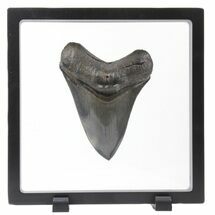
Serrated, .67" Fossil Theropod (Richardoestesia) Tooth - Montana


This is a .67" long, serrated theropod tooth from the Hell Creek Formation in Dawson County, Montana. The tooth appears to be from Richardoestesia. This genus has yet to be provided a species in the Hell Creek Formation.
The serrations on this tooth are extremely small and best viewed under magnification.
The serrations on this tooth are extremely small and best viewed under magnification.
It comes with a floating frame display case.
About Richardoestesia
Richardoestesia is a small, lightly built theropod dinosaur that lived during the Late Cretaceous period, about 75 - 66 million years ago, in what is now North America. It is best known from numerous small, serrated teeth found in formations such as the Dinosaur Park Formation of Alberta and the Hell Creek Formation of Montana and the Dakotas. Because most fossils attributed to Richardoestesia consist of isolated teeth, its exact appearance and relationships are somewhat uncertain, though it is generally thought to have been a swift, bird-like predator or omnivore, possibly related to dromaeosaurids or troodontids. Its narrow, recurved teeth suggest it fed on small prey such as lizards, mammals, insects, or even fish. Despite the fragmentary nature of its remains, Richardoestesia provides valuable insight into the diversity of small theropods that lived alongside famous dinosaurs like Tyrannosaurus and Triceratops.
Richardoestesia is a small, lightly built theropod dinosaur that lived during the Late Cretaceous period, about 75 - 66 million years ago, in what is now North America. It is best known from numerous small, serrated teeth found in formations such as the Dinosaur Park Formation of Alberta and the Hell Creek Formation of Montana and the Dakotas. Because most fossils attributed to Richardoestesia consist of isolated teeth, its exact appearance and relationships are somewhat uncertain, though it is generally thought to have been a swift, bird-like predator or omnivore, possibly related to dromaeosaurids or troodontids. Its narrow, recurved teeth suggest it fed on small prey such as lizards, mammals, insects, or even fish. Despite the fragmentary nature of its remains, Richardoestesia provides valuable insight into the diversity of small theropods that lived alongside famous dinosaurs like Tyrannosaurus and Triceratops.
The Hell Creek Formation
Renowned for both its age and rich sedimentary layers, the Hell Creek Formation is one of the most intensively studied fossil-bearing regions on Earth. To date, scientists have documented 158 genera of animals and 64 genera of plants from its rocks, with new finds emerging regularly. Beyond iconic dinosaurs such as tyrannosaurs, ceratopsians, and hadrosaurs, the formation has produced an extraordinary array of life, including amphibians, reptiles, lizards, snakes, turtles, fish, sharks, birds, and early mammals. Together, these fossils provide the most complete picture of the ecosystems that thrived just before the Cretaceous–Paleogene extinction event.
Renowned for both its age and rich sedimentary layers, the Hell Creek Formation is one of the most intensively studied fossil-bearing regions on Earth. To date, scientists have documented 158 genera of animals and 64 genera of plants from its rocks, with new finds emerging regularly. Beyond iconic dinosaurs such as tyrannosaurs, ceratopsians, and hadrosaurs, the formation has produced an extraordinary array of life, including amphibians, reptiles, lizards, snakes, turtles, fish, sharks, birds, and early mammals. Together, these fossils provide the most complete picture of the ecosystems that thrived just before the Cretaceous–Paleogene extinction event.
$125
SPECIES
Richardoestesia sp.

LOCATION
Dawson County, Montana
FORMATION
Hell Creek Formation
SIZE
.67" long (straightline measurement)
CATEGORY
SUB CATEGORY
ITEM
#352041
We guarantee the authenticity of all of our specimens.