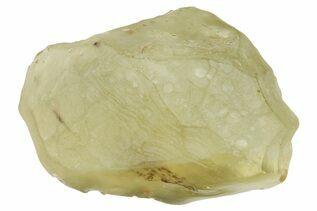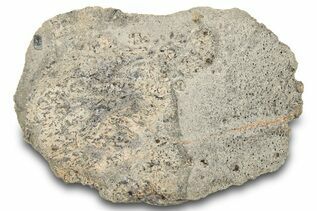

LUNAR METEORITES FOR SALE
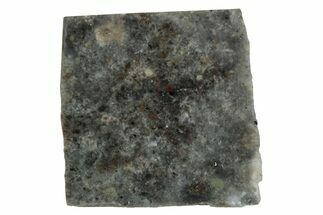
Lunar meteorites are rocks from the moon's surface that were ejected by asteroid impacts. Lunar meteorites are pretty rare to find on Earth: the vast majority of meteorites are from the asteroid belt, and less than 1 percent of all classified meteorites are lunar in origin. The total mass of all known lunar meteorites is thought to be less than 1,000 kilograms. Owning a piece of the moon is a pretty rare accomplishment, so check out our selection of authentic, lunar meteorites for sale!
All About Lunar Meteorites
Meteorites have been impacting Earth since it formed over 4 billion years ago. Most meteorites are mixtures of stone or nickel-iron that fell to Earth from the asteroid belt, but some meteorites can be traced back to impacts on other celestial bodies. Meteorites don’t just hit Earth!
Mars, the Moon, and certain large planetoids in the asteroid belt are the sources of some achondritic meteorites. Meteorites from these planets are created when meteorites hit their surfaces and blast material out into space past escape velocity. Meteorites from these sources are incredibly rare! Lunar meteorites are meteorites that originated from our very own moon in this way: they were blasted off of its surface by an asteroid or meteoroid impact.
Lunar meteorites are quite rare. Of the 70,000 or so known meteorites on Earth, only about 600 of them are of lunar origin. That averages to just under 1 lunar meteorite per 1,000 meteorites found!
What are lunar meteorites composed of?
Lunar meteorites’ compositions can tell us a lot about the overall composition of the Moon’s crust. Look at its surface, either with the naked eye or a telescope, and you’ll find that the near side of the Moon has two distinctly colored regions: darker, igneous basaltic ‘seas’, also called maria, and lighter feldspathic highlands. The basaltic seas were formed after magma erupted onto the Moon’s surface early in its formation, filling craters and other gaps made by impacts. These areas tend to be iron-rich, and contain many iron-bearing minerals such as pyroxene. The highlands are noticeably lighter, and are mostly composed of a calcium and aluminum-rich type of feldspar called anorthite. Material from the highlands is often called anorthosite, since anorthite is so prevalent. The far side of the Moon is also largely anorthosite. By determining how much iron, calcite, or aluminum a lunar meteorite has, one can narrow down which region on the Moon that meteorite came from.
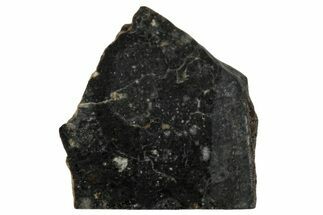
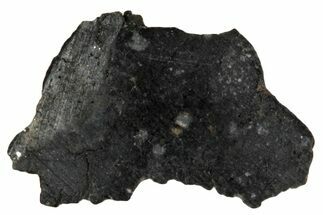
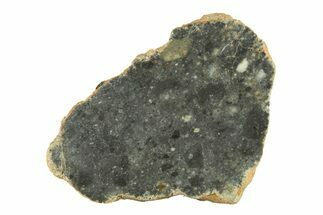
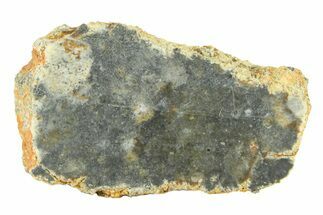
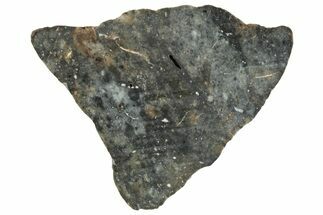
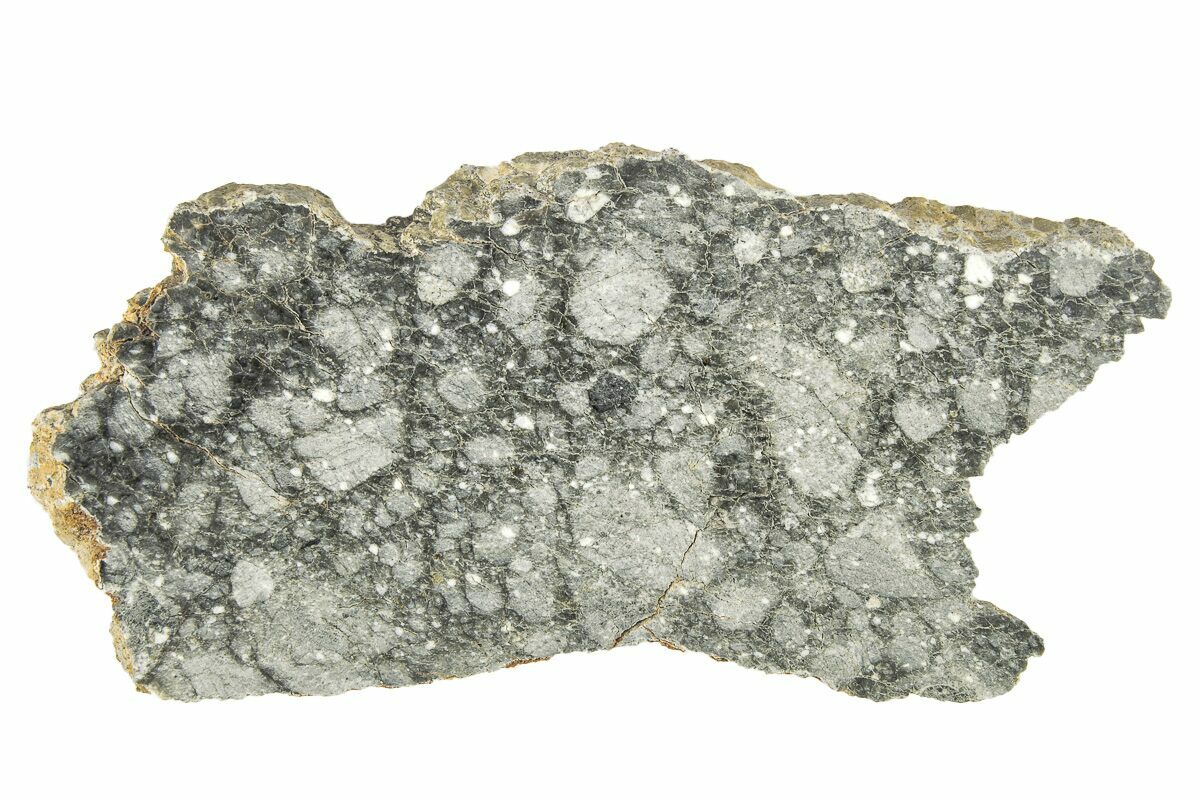
However, since the Moon has no atmosphere, meteorites heading for its surface are not slowed or vaporized by air resistance. This means that the Moon likely receives meteorite impacts every day. This frequent contact on the surface has, over billions of years, created a layer of fine-grained material on the surface called regolith. Regolith is what we consider soil: fine-grained particles of rock and dust, from gravel to silt or clay-like textures. Sometimes, impacts are strong enough to melt this regolith, which can cool around fractured pieces of the Moon’s crust to create a unique type of rock called breccia. Nearly every lunar meteorite known is a breccia formed by this kind of impact melt, and often show an assortment of clasts within melted or compacted regolith.
How long does it take a lunar meteorite to reach the Earth?
Once a meteorite is launched from its parent body, it can be in outer space for only a few days to millions of years. Meteorites launched from the Moon usually orbit the Earth or the Sun until gravity pulls it into the atmosphere.
Most known lunar meteorites have only been launched within the past 20 million years, which is incredibly recent given how old the Moon and Earth are. Scientists also believe that most meteorites come not from the largest known craters on the Moon, but from smaller mid-size impacts, likely causing craters only a few kilometers wide. The argument is that no large enough impacts have occurred on the Moon in that time to account for the sheer variety of rock types lunar meteorites are composed of.
We can estimate how long a meteorite has been in space quite accurately by measuring the amounts of certain isotopes contained within them called nuclides. These nuclides react when exposed to cosmic radiation from the Sun, and begin decaying in Earth’s atmosphere where that radiation is reduced. Lunar meteorites contain many of the same measurable nuclides found on Earth, especially Carbon-14. Thus, meteorites can be carbon-dated with good accuracy since Carbon-14 decays at a half life of about 5,700 years. Because of this, we know that the oldest lunar meteorites have only been on Earth for about 20 million years.
Where and how are lunar meteorites found on Earth?
Meteorites can land anywhere on Earth, but few places have the right conditions to keep them from weathering past the point of recognition. Those places tend to be deserts, where moisture is minimal and the only weathering mechanics tend to be wind ablation (sandblasting). Thus, most known lunar meteorites are sourced from the Sahara Desert, the Arabian Peninsula, and Antarctica. Meteorites in Antarctica are found on scientific surveys, while desert-sourced meteorites are often found by locals or professional meteorite hunters.
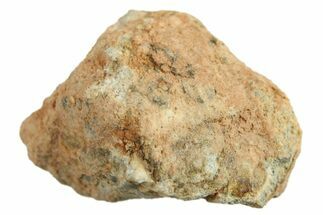
Lunar meteorites can be tricky to find, since they are achondrites: they contain mostly stone, and little to no iron. Plus, since the Moon and Earth have similar geological compositions, lunar meteorites can be easily mistaken for terrestrial rocks. However, one feature that sets lunar meteorites apart from other meteorites is their unusual fusion crust. These are fairly rare to find intact since this outer layer is often weathered away before discovery, but intact fusion crusts on lunar meteorites are often vesicular: they contain tiny bubbles on their surface. Slicing can also reveal shock features common among meteorites.
Perhaps the easiest way to find a meteorite is to witness its fall, and plenty of witnessed falls have been recorded throughout history. However, no lunar meteorite has ever had a witnessed fall! Meteorite researcher Randy Korotev believes this might be due to smaller masses and lower speeds upon entering the atmosphere, so they are not as bright in the sky as other, larger witnessed falls. Moon rocks don’t have as far to travel to the Earth as meteorites from Mars or the Asteroid Belt. In most cases, lunar meteorites are extremely difficult to distinguish from terrestrial rocks. Often, the only way to verify their lunar origin is to perform chemical analysis in a laboratory setting.
How long have we been finding lunar meteorites?
The first lunar meteorite to be officially found was Yamato 791197, found in Antarctica by Japan’s National Institute of Polar Research in 1979. However, it was not officially classified as lunar until 1982: another meteorite, Alan Hills (ALHA) 81005, was classified as possibly lunar by geochemist Brian Mason, which prompted Japanese researchers to reassess Yamato 791197’s origins. Debate still continues over whether Yamato or ALHA deserves the title as the first lunar meteorite. Since 1979, however, the rest of the current 600 or so known lunar meteorites have been found and classified.
How much are lunar meteorites worth?
Due to their rarity and origin, lunar meteorite specimens often fetch very high prices from collectors. Multiple factors can determine a meteorite’s value, including its status as a witnessed fall, its composition, its beauty, and the rarity of its material.
Lunar meteorites are especially valuable because they are also the only Moon rocks available for the public to purchase. Over 380 kilograms of material were taken from the Moon during the Apollo missions, but that material is owned and controlled by NASA and other governing bodies that samples were distributed to. Many governments also forbid the sale of meteorites found on their soil, so lunar meteorites can only be sourced from countries that allow sale. Hence, though lunar meteorites have likely landed everywhere on Earth, they can only be purchased from certain countries, driving up their demand and prices.
The most expensive lunar meteorite ever sold is also one of the largest: in 2021, a piece of the Tisserlittine 001 lunar meteorite, recovered near Timbuktu in 2021, sold at auction for $525,000. The piece in question was part of nearly 60 kilograms of material, making it the fourth-largest lunar meteorite on Earth. Most lunar meteorites are not that large, however: the most common specimens on the market are slices, end-cuts, and small fragments, but still sell for hundreds of dollars per gram.
What can we learn from lunar meteorites?
Lunar meteorites offer a wealth of information about the Moon’s geology and history. As described above, their compositions tell us a great deal about the lunar crust, how it formed, and what minerals it contains. They also do a better job of describing the lunar surface than rocks brought back by the Apollo missions, since they can be launched from anywhere on the surface.
Moon rocks from the Apollo missions are unique: they were collected in an anomalous ‘hot zone’ of radioactivity known as the Procellarum KREEP Terrane (PKT), a region covering about 10 percent of the lunar surface that all of the Apollo missions landed on or near. This site is unusual because it contains a high amount of thorium, rare earth elements, and phosphorus, known as KREEPs. Thus, most of the Apollo rocks contain these higher concentrations of naturally radioactive material. However, most lunar meteorites have little to no thorium, which means they came from outside the PKT, and give scientists a better idea of the remaining 90 percent of the lunar surface.
Featured Photos
Related Categories
Reviews