Reviews

WULFENITE CRYSTALS FOR SALE

Wulfenite: The Vibrant Mineral Of Lead Deposits
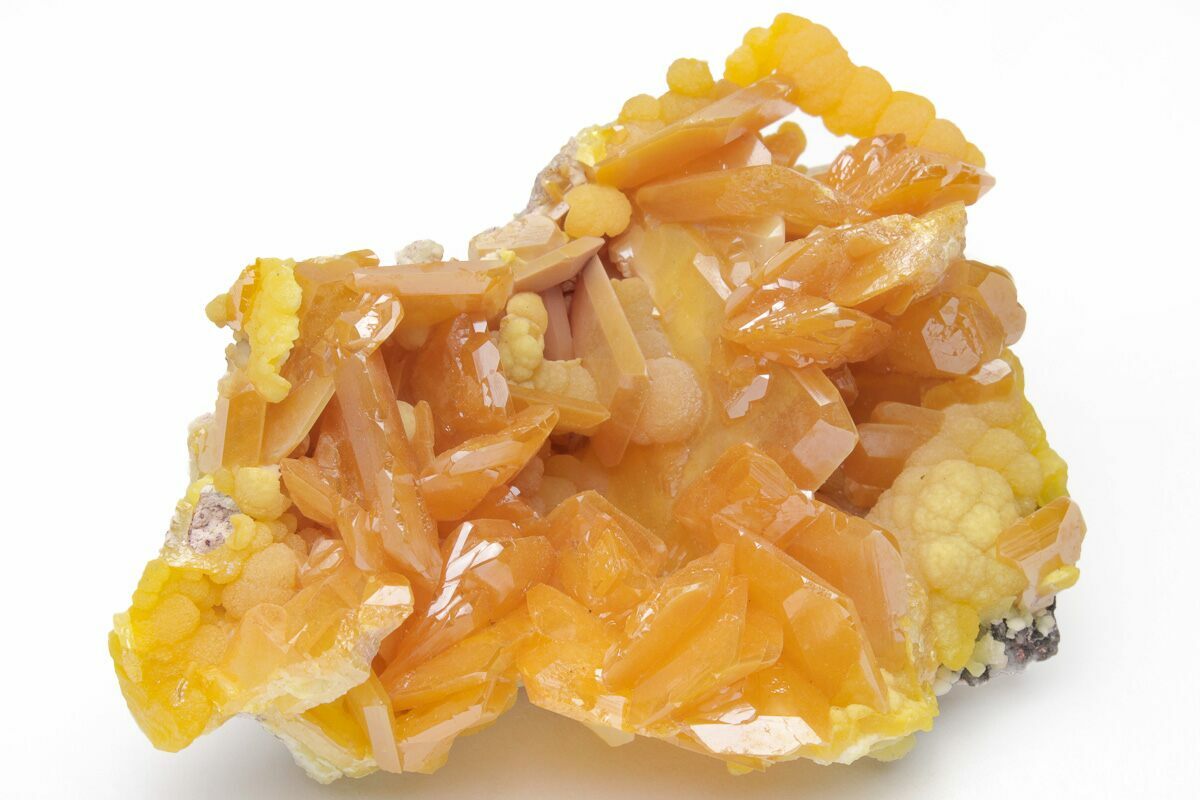
Wulfenite is a distinctive mineral known for its bright colors and fascinating crystal structures. Belonging to the molybdate family, it is composed of lead molybdate and is valued for its vibrant hues, which range from fiery orange and golden yellow to deep red. This mineral is a popular choice among collectors and mineral enthusiasts alike, not only for its beauty but also for its unique geological properties and mineral associations.
It crystallizes in the tetragonal system, which gives it a characteristic tabular or square crystal habit. Its thin, plate-like crystals often have sharp, square edges, and it can also form prismatic crystals under certain conditions. Its luster varies from resinous to adamantine, lending it a glassy, reflective surface that enhances its vibrant colors. Wulfenite's transparency ranges from translucent to nearly opaque, and its color is generally attributed to the presence of lead in its structure.
The mineral has a Mohs hardness of 2.5-3, making it relatively soft and somewhat brittle. Because of this softness, wulfenite crystals can be fragile and are prone to scratching and breaking if not handled carefully. Its density is fairly high, owing to its lead content, and it has a specific gravity between 6.5 and 7.0.
Key Locations and Where Wulfenite is Found
Wulfenite is commonly found in the oxidized zones of lead deposits, where it forms as a secondary mineral as a result of chemical reactions between lead-bearing minerals and molybdenum-rich fluids. It is often found in association with other secondary lead minerals such as cerussite, anglesite, and mimetite. Some of the most renowned locations for wulfenite include:
Crystal Habits and Variability
Wulfenite typically forms as thin, tabular crystals, which give it a "bladed" or "leaf-like" appearance. The crystals are often square or rectangular due to their tetragonal structure, but they can also appear in elongated prismatic forms, depending on the environment of formation. Variations in color can occur due to trace impurities or environmental conditions during formation, contributing to wulfenite’s aesthetic diversity.
In some localities, wulfenite can form more unusual habits, such as pyramid-like crystals or hollow, skeletal structures. These variations are highly prized by collectors, as they offer a glimpse into the complex processes that occur within oxidized lead zones.
Mineral Associations with Wulfenite
Wulfenite frequently occurs alongside other secondary lead minerals in the oxidized zones of lead-rich ore deposits. Common mineral associations include:
Wulfenite's association with these minerals makes it a valuable mineralogical specimen, showcasing a range of colors and crystal habits in a single piece. Collectors often seek wulfenite specimens that highlight contrasting colors or rare crystal associations, such as wulfenite with cerussite or mimetite inclusions.
Safety and Handling of Wulfenite
Due to its lead content, wulfenite should be handled with care, especially if there is any risk of dust or debris. Lead is a toxic heavy metal, and while wulfenite poses minimal risk in solid form, caution should be taken if the mineral is being cut, ground, or otherwise processed. If you handle wulfenite frequently, it is advisable to wash your hands afterward and avoid ingesting any dust particles that may be generated.
For storage, wulfenite should be kept in a dry environment, as moisture can degrade the mineral over time, especially if associated minerals are prone to alteration. A protective display case is ideal for preventing accidental breakage and exposure to contaminants. When properly cared for, wulfenite specimens can retain their vivid colors and luster for many years.
Featured Photos