 Reviews

This Specimen has been sold.


2.1" Cubic Pyrite, Sphalerite, Quartz and Calcite Association - Peru
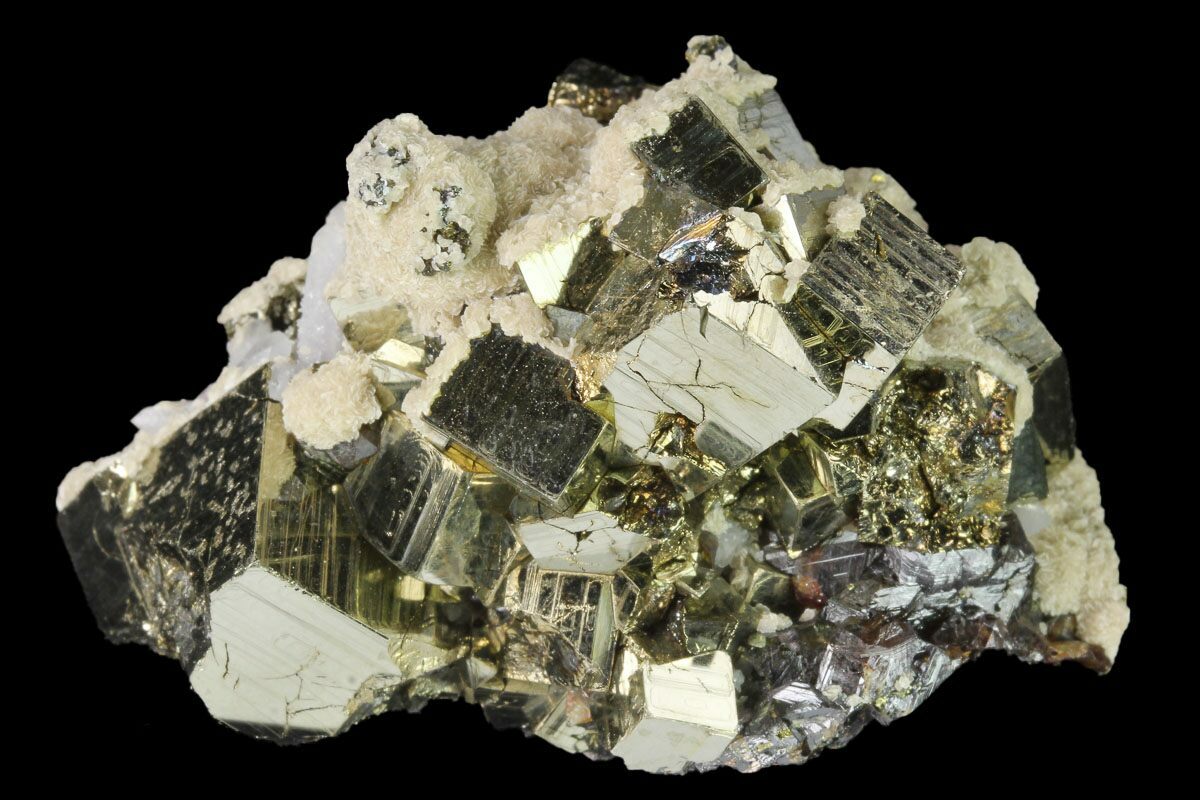
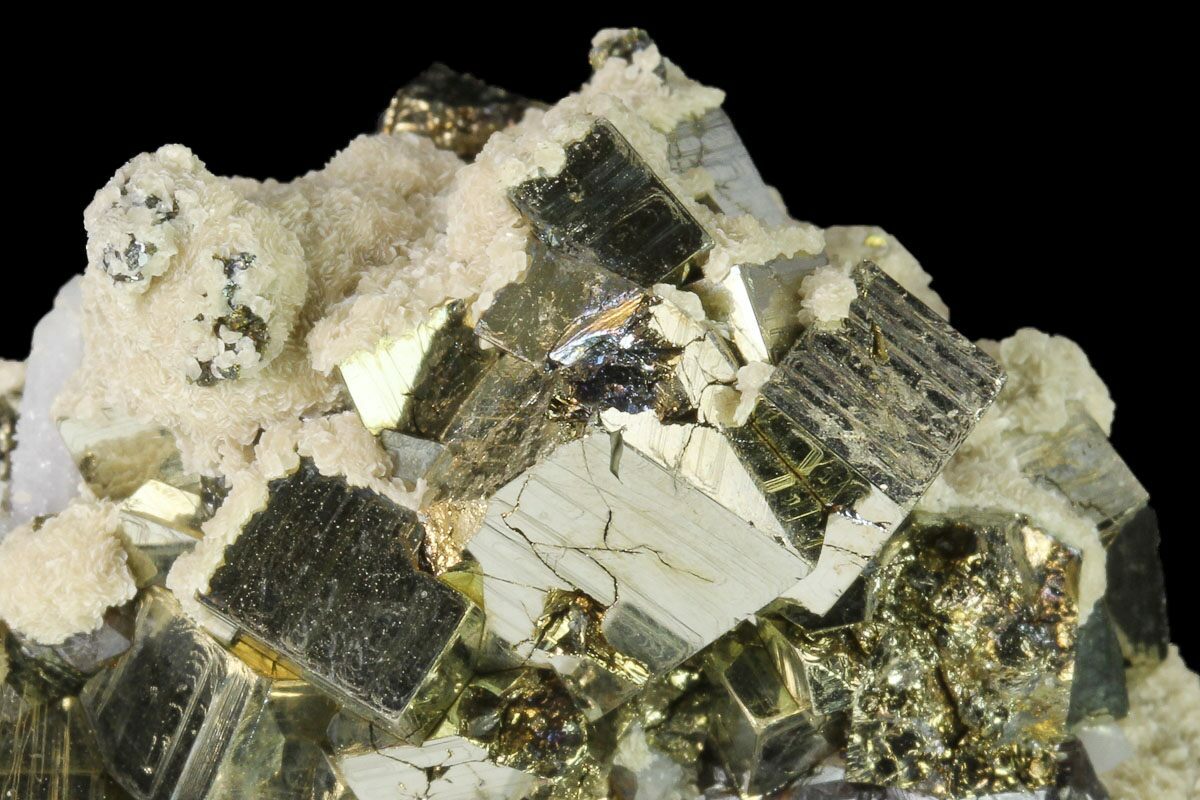
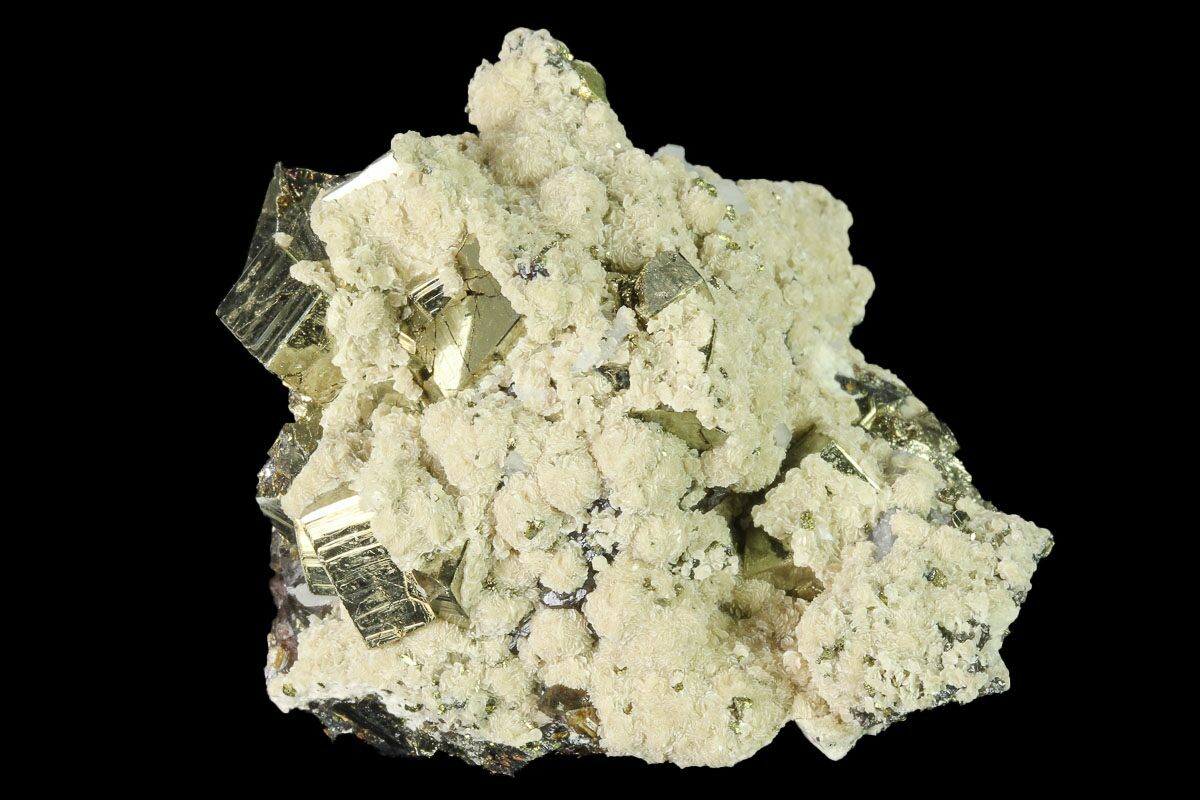
This is a beautiful association of cubic pyrite, calcite, quartz and sphalerite crystals. It comes from the Huanzala Mine in Peru and the entire specimen measures 2.1" long.
About Sphalerite
Sphalerite is the most important ore of zinc and a striking mineral prized for its brilliant luster and wide range of colors. Composed of zinc sulfide (ZnS), it commonly forms in cubic or tetrahedral crystals and is found in hydrothermal veins, sedimentary deposits, and metamorphic environments around the world.
Although often brown to black, sphalerite can also occur in shades of honey-yellow, red, orange, and even green. Lighter-colored varieties are sometimes transparent to translucent and can display exceptional dispersion—meaning they separate light into spectral colors more intensely than diamond—giving well-cut specimens a fiery, eye-catching sparkle. Darker specimens are typically opaque with a resinous to submetallic luster.
Sphalerite is the most important ore of zinc and a striking mineral prized for its brilliant luster and wide range of colors. Composed of zinc sulfide (ZnS), it commonly forms in cubic or tetrahedral crystals and is found in hydrothermal veins, sedimentary deposits, and metamorphic environments around the world.
Although often brown to black, sphalerite can also occur in shades of honey-yellow, red, orange, and even green. Lighter-colored varieties are sometimes transparent to translucent and can display exceptional dispersion—meaning they separate light into spectral colors more intensely than diamond—giving well-cut specimens a fiery, eye-catching sparkle. Darker specimens are typically opaque with a resinous to submetallic luster.
What Is Chalcopyrite?
Chalcopyrite is a brass-yellow colored mineral and an important copper ore. When weathered, chalcopyrite loses its metallic luster, turning a gray-green color. When exposed to acids, the tarnish can develop a red, blue, or purple iridescence: this acid-treated material is often sold under the name peacock ore.
Chalcopyrite is a brass-yellow colored mineral and an important copper ore. When weathered, chalcopyrite loses its metallic luster, turning a gray-green color. When exposed to acids, the tarnish can develop a red, blue, or purple iridescence: this acid-treated material is often sold under the name peacock ore.
About Calcite Crystals
Calcite crystals are a form of calcium carbonate (CaCO₃) known for their diverse shapes, transparency, and vibrant range of colors. They typically form in rhombohedral, scalenohedral, or prismatic shapes, often with well-defined, sharp edges and glossy surfaces. Calcite crystals are often translucent or transparent, sometimes displaying a double refraction effect where objects viewed through the crystal appear doubled. They can appear in various colors—white, clear, yellow, pink, blue, green, and orange—depending on impurities or trace minerals.
A notable characteristic of calcite is its reaction with weak acids like vinegar, which causes it to effervesce, or fizz, as it releases carbon dioxide. This property makes calcite crystals a key tool in geological identification and studies. Calcite forms in many environments, from sedimentary rocks like limestone and marble to hydrothermal veins.
Calcite crystals are a form of calcium carbonate (CaCO₃) known for their diverse shapes, transparency, and vibrant range of colors. They typically form in rhombohedral, scalenohedral, or prismatic shapes, often with well-defined, sharp edges and glossy surfaces. Calcite crystals are often translucent or transparent, sometimes displaying a double refraction effect where objects viewed through the crystal appear doubled. They can appear in various colors—white, clear, yellow, pink, blue, green, and orange—depending on impurities or trace minerals.
A notable characteristic of calcite is its reaction with weak acids like vinegar, which causes it to effervesce, or fizz, as it releases carbon dioxide. This property makes calcite crystals a key tool in geological identification and studies. Calcite forms in many environments, from sedimentary rocks like limestone and marble to hydrothermal veins.
SPECIES
Pyrite, Sphalerite, Quartz & Calcite
LOCATION
Huanzala Mine, Bolognesi, Peru
SIZE
2.1" wide
CATEGORY
SUB CATEGORY
ITEM
#141838


