 Reviews

This Specimen has been sold.


2.3" Andradite (Melanite), Calcite & Biotite Association - Morocco
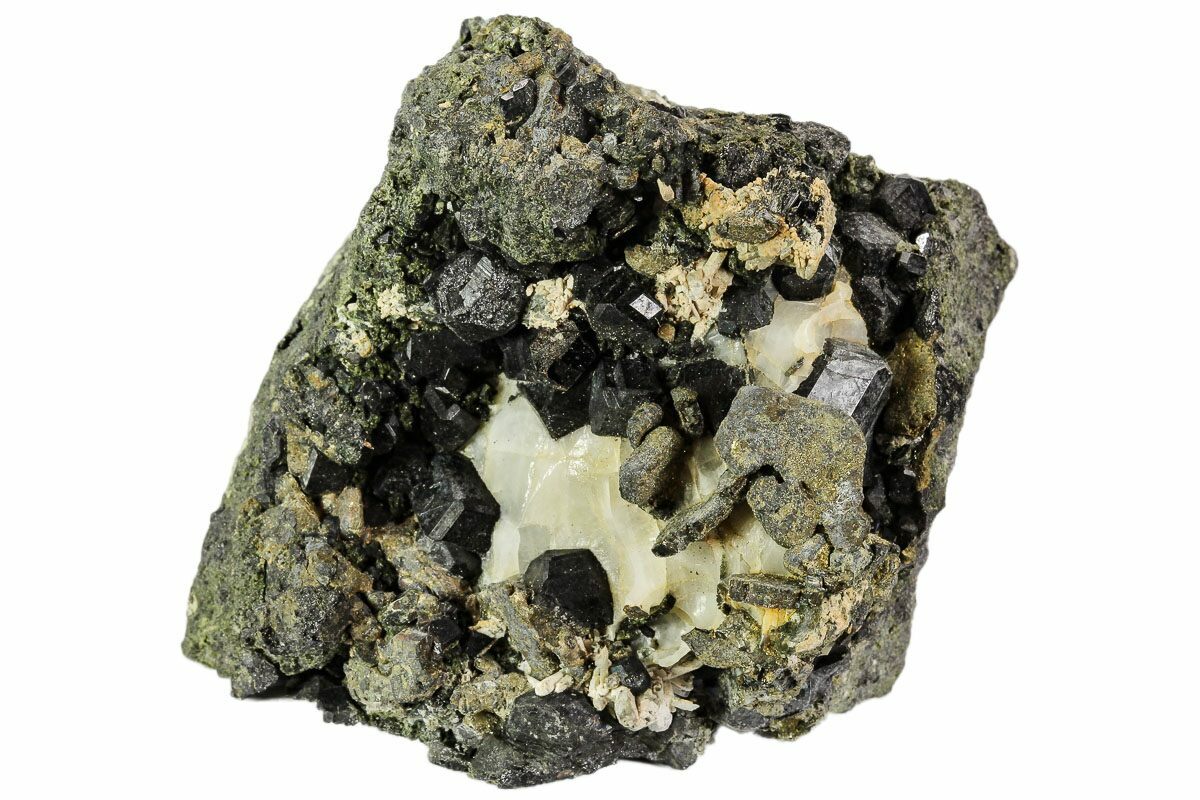
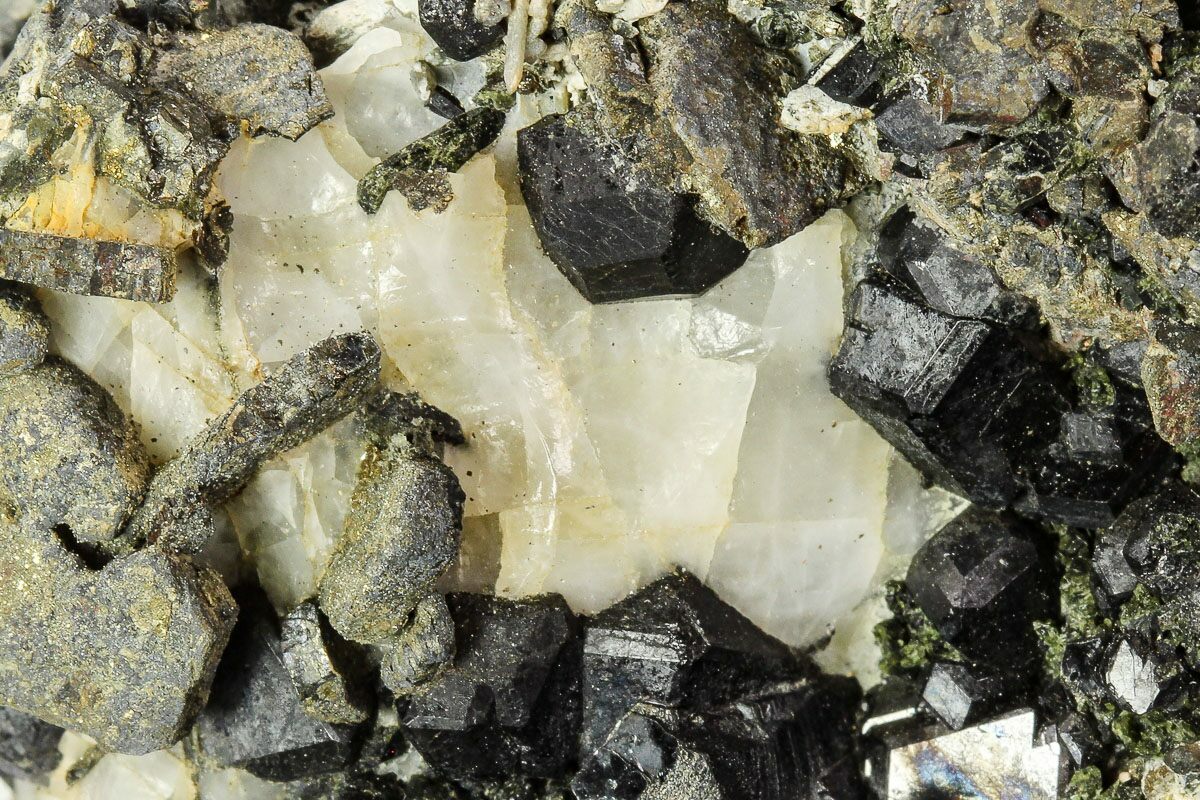
This is a beautiful andradite garnet cluster of the melanite variety. This melanite cluster was collected near Imilchil, Morocco. Small aggregations of what look to be pyrite can be found through the specimen, though the crystals also resemble marcasite and chalcopyrite. The garnets are also associated with small aggregations of biotite and calcite which can be found between the garnets.
About Melanite Garnets
Melanite garnet is a striking black variety of andradite garnet, prized for its deep, glossy luster and well-formed crystal shapes. Its rich black color comes from a high titanium content within the crystal structure, which distinguishes melanite from other andradite varieties like demantoid. Often forming sharp dodecahedral or trapezohedral crystals, melanite garnets are found in alkaline igneous and metamorphic environments and have long been valued both as mineral specimens and as an unusual, elegant gemstone.
Melanite garnet is a striking black variety of andradite garnet, prized for its deep, glossy luster and well-formed crystal shapes. Its rich black color comes from a high titanium content within the crystal structure, which distinguishes melanite from other andradite varieties like demantoid. Often forming sharp dodecahedral or trapezohedral crystals, melanite garnets are found in alkaline igneous and metamorphic environments and have long been valued both as mineral specimens and as an unusual, elegant gemstone.
About Pyrite
The mineral pyrite, also known as iron pyrite, is commonly referred to as Fool's Gold because its metallic luster and pale brass-yellow hue give it a superficial resemblance to gold. In the old mining days, pyrite was sometimes mistaken for gold.
It is the most common of the sulfide minerals with the chemical formula FeS2. Pyrite crystals occur in many shapes and habits, including cubes of all sizes, penetration twin cubes, pyritohedral clusters and as small druzy crystals that can exhibit a beautiful glistening effect.
The mineral pyrite, also known as iron pyrite, is commonly referred to as Fool's Gold because its metallic luster and pale brass-yellow hue give it a superficial resemblance to gold. In the old mining days, pyrite was sometimes mistaken for gold.
It is the most common of the sulfide minerals with the chemical formula FeS2. Pyrite crystals occur in many shapes and habits, including cubes of all sizes, penetration twin cubes, pyritohedral clusters and as small druzy crystals that can exhibit a beautiful glistening effect.
About Calcite Crystals
Calcite crystals are a form of calcium carbonate (CaCO₃) known for their diverse shapes, transparency, and vibrant range of colors. They typically form in rhombohedral, scalenohedral, or prismatic shapes, often with well-defined, sharp edges and glossy surfaces. Calcite crystals are often translucent or transparent, sometimes displaying a double refraction effect where objects viewed through the crystal appear doubled. They can appear in various colors—white, clear, yellow, pink, blue, green, and orange—depending on impurities or trace minerals.
A notable characteristic of calcite is its reaction with weak acids like vinegar, which causes it to effervesce, or fizz, as it releases carbon dioxide. This property makes calcite crystals a key tool in geological identification and studies. Calcite forms in many environments, from sedimentary rocks like limestone and marble to hydrothermal veins.
Calcite crystals are a form of calcium carbonate (CaCO₃) known for their diverse shapes, transparency, and vibrant range of colors. They typically form in rhombohedral, scalenohedral, or prismatic shapes, often with well-defined, sharp edges and glossy surfaces. Calcite crystals are often translucent or transparent, sometimes displaying a double refraction effect where objects viewed through the crystal appear doubled. They can appear in various colors—white, clear, yellow, pink, blue, green, and orange—depending on impurities or trace minerals.
A notable characteristic of calcite is its reaction with weak acids like vinegar, which causes it to effervesce, or fizz, as it releases carbon dioxide. This property makes calcite crystals a key tool in geological identification and studies. Calcite forms in many environments, from sedimentary rocks like limestone and marble to hydrothermal veins.
SPECIES
Andradite var. Melanite
LOCATION
Imilchil, Morocco
SIZE
2.3" wide
CATEGORY
ITEM
#107910


