 Reviews

This Specimen has been sold.


2.5" Galena, Sphalerite and Quartz Association - Peru
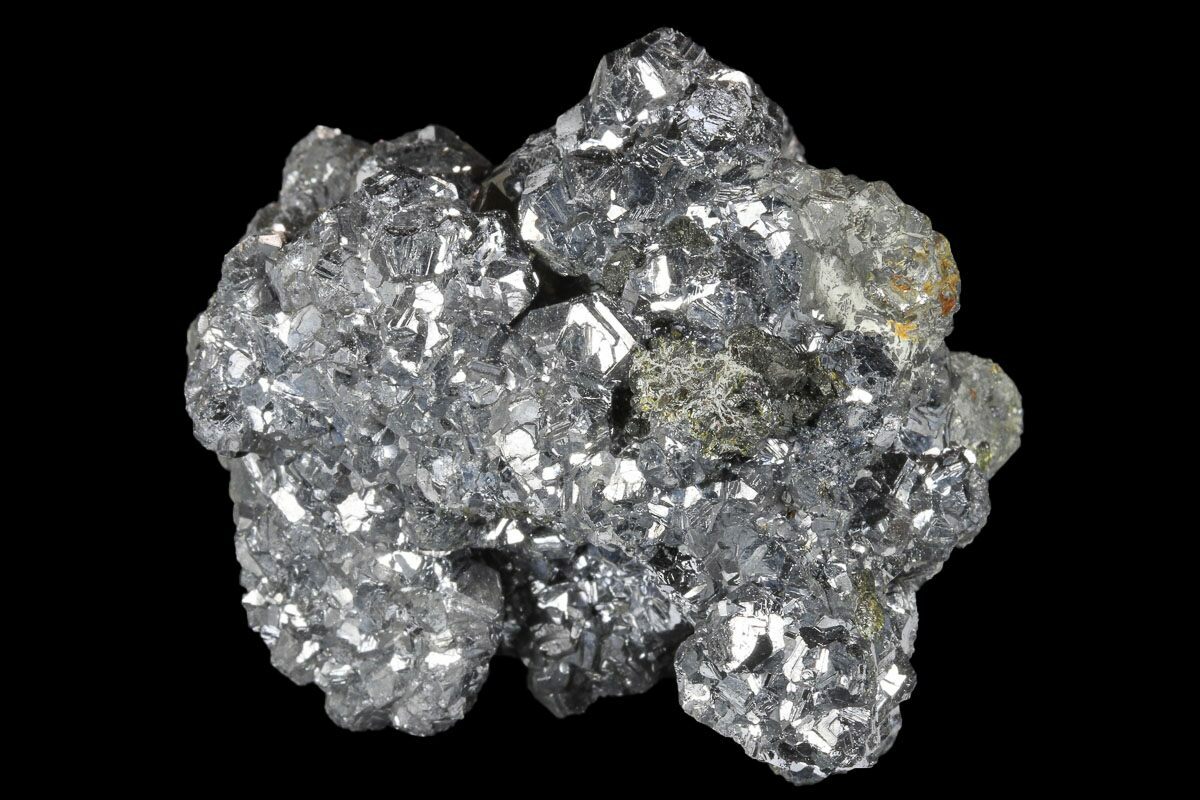
This beautiful specimen contains an association of galena, sphalerite and quartz crystals. It comes from the Huanzala Mine in Peru and the entire piece measures 2.5" wide.
About Galena
Galena is a lead-based mineral and the primary ore of lead, and has been used for its lead content for thousands of years. Galena typically displays a gray metallic luster and forms cubes or octahedral crystals. The chemical composition of galena is PbS.
While galena will not pose a health hazard by sitting on the shelf or even from casual handling, we suggest washing hands following handling due to the mineral's lead content.
Galena is a lead-based mineral and the primary ore of lead, and has been used for its lead content for thousands of years. Galena typically displays a gray metallic luster and forms cubes or octahedral crystals. The chemical composition of galena is PbS.
While galena will not pose a health hazard by sitting on the shelf or even from casual handling, we suggest washing hands following handling due to the mineral's lead content.
About Sphalerite
Sphalerite is the most important ore of zinc and a striking mineral prized for its brilliant luster and wide range of colors. Composed of zinc sulfide (ZnS), it commonly forms in cubic or tetrahedral crystals and is found in hydrothermal veins, sedimentary deposits, and metamorphic environments around the world.
Although often brown to black, sphalerite can also occur in shades of honey-yellow, red, orange, and even green. Lighter-colored varieties are sometimes transparent to translucent and can display exceptional dispersion—meaning they separate light into spectral colors more intensely than diamond—giving well-cut specimens a fiery, eye-catching sparkle. Darker specimens are typically opaque with a resinous to submetallic luster.
Sphalerite is the most important ore of zinc and a striking mineral prized for its brilliant luster and wide range of colors. Composed of zinc sulfide (ZnS), it commonly forms in cubic or tetrahedral crystals and is found in hydrothermal veins, sedimentary deposits, and metamorphic environments around the world.
Although often brown to black, sphalerite can also occur in shades of honey-yellow, red, orange, and even green. Lighter-colored varieties are sometimes transparent to translucent and can display exceptional dispersion—meaning they separate light into spectral colors more intensely than diamond—giving well-cut specimens a fiery, eye-catching sparkle. Darker specimens are typically opaque with a resinous to submetallic luster.
About Quartz
Quartz is the name given to silicon dioxide (SiO2) and is the second most abundant mineral in the Earth's crust. Quartz crystals generally grow in silica-rich environments--usually igneous rocks or hydrothermal environments like geothermal waters--at temperatures between 100°C and 450°C, and usually under very high pressure. In either case, crystals will precipitate as temperatures cool, just as ice gradually forms when water freezes. Quartz veins are formed when open fissures are filled with hot water during the closing stages of mountain formation: these veins can be hundreds of millions of years old.
Quartz is the name given to silicon dioxide (SiO2) and is the second most abundant mineral in the Earth's crust. Quartz crystals generally grow in silica-rich environments--usually igneous rocks or hydrothermal environments like geothermal waters--at temperatures between 100°C and 450°C, and usually under very high pressure. In either case, crystals will precipitate as temperatures cool, just as ice gradually forms when water freezes. Quartz veins are formed when open fissures are filled with hot water during the closing stages of mountain formation: these veins can be hundreds of millions of years old.
SPECIES
Galena, Sphalerite and Quartz
LOCATION
Huanzala Mine, Bolognesi, Peru
SIZE
2.5" wide
CATEGORY
ITEM
#173342


