 Reviews

This Specimen has been sold.


2.7" Spessartine Garnet, Smoky Quartz & Feldspar - China
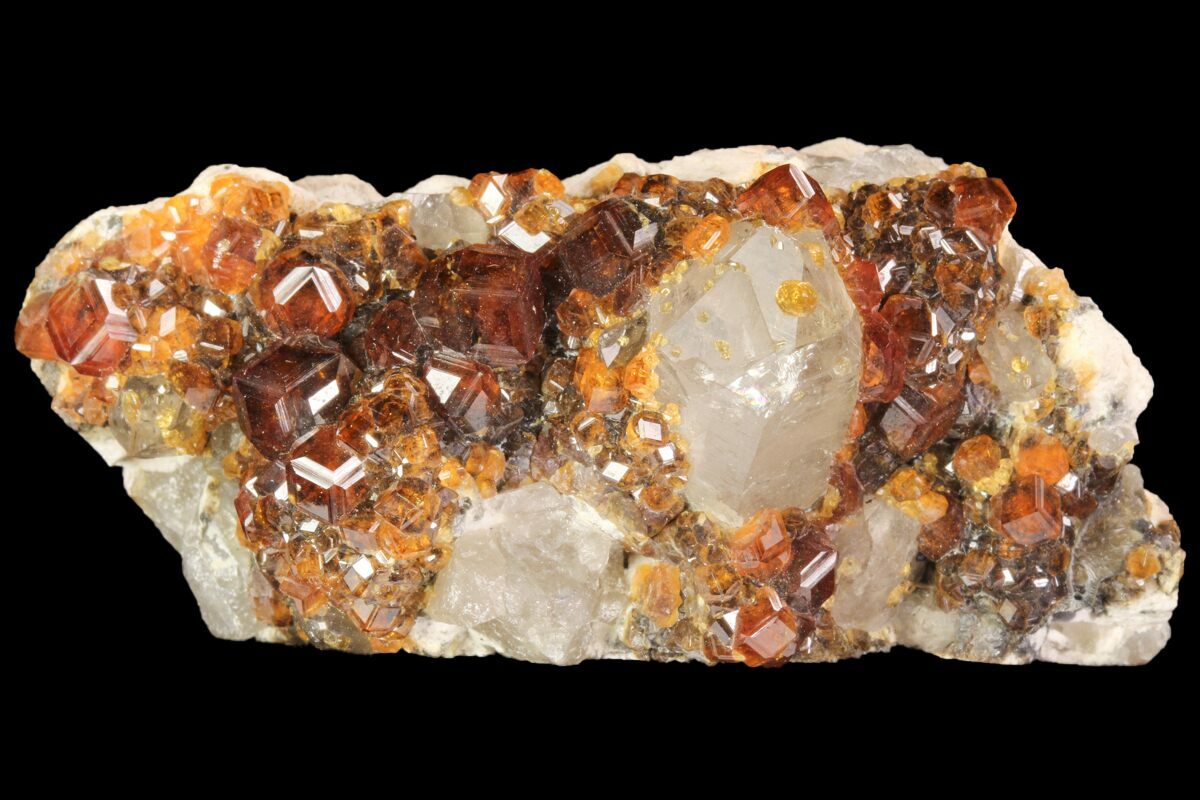
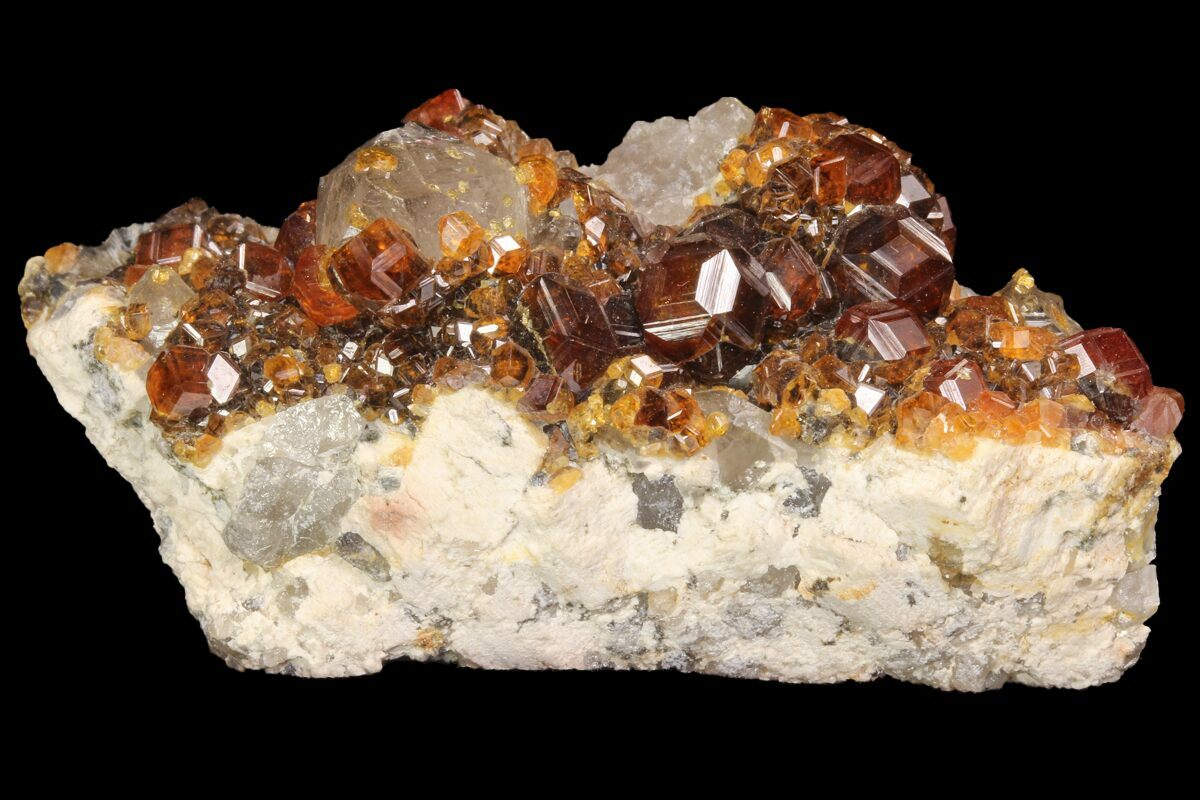
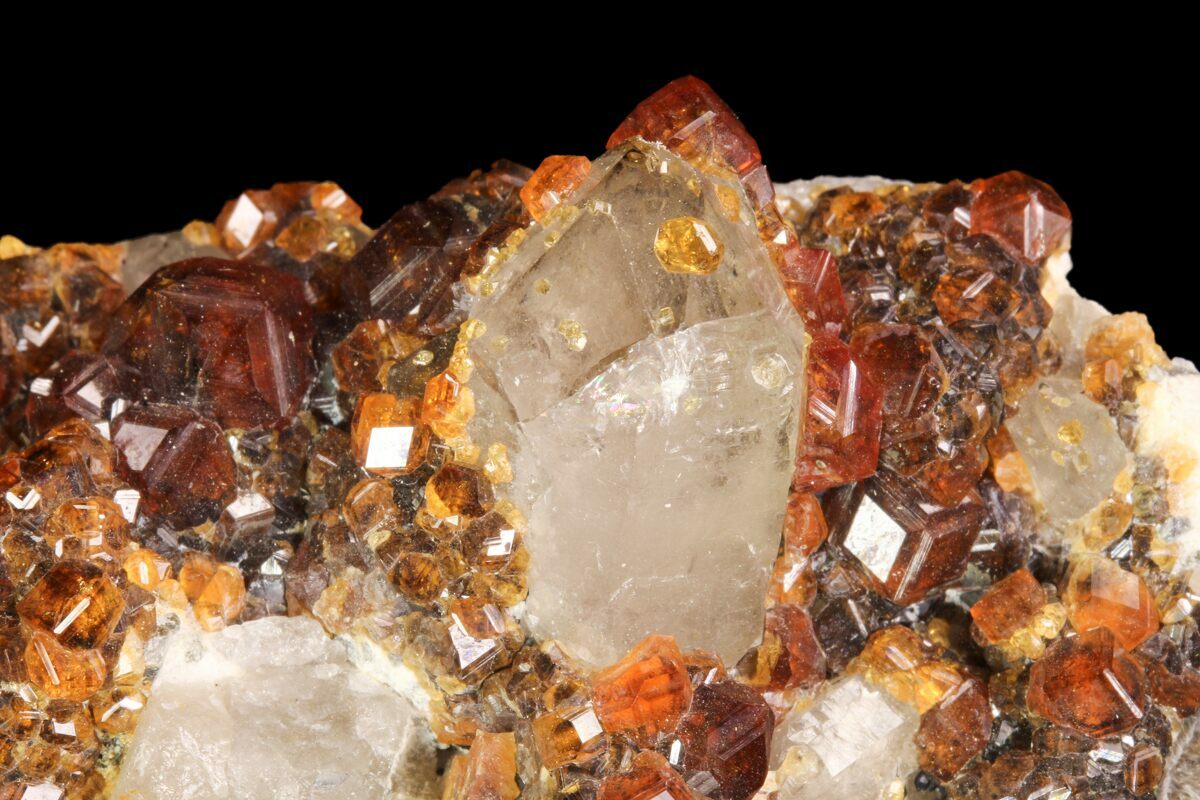
Here is a beautiful 2.7" long specimen that contains spessartine garnets on smoky quartz that formed from a bed of feldspar, collected from Fujiang, China.
Feldspars are a group of rock-forming tectosilicate minerals. They are the most common minerals on Earth, making up nearly 60% of the crust.
About Quartz
Quartz is the name given to silicon dioxide (SiO2) and is the second most abundant mineral in the Earth's crust. Quartz crystals generally grow in silica-rich environments--usually igneous rocks or hydrothermal environments like geothermal waters--at temperatures between 100°C and 450°C, and usually under very high pressure. In either case, crystals will precipitate as temperatures cool, just as ice gradually forms when water freezes. Quartz veins are formed when open fissures are filled with hot water during the closing stages of mountain formation: these veins can be hundreds of millions of years old.
Quartz is the name given to silicon dioxide (SiO2) and is the second most abundant mineral in the Earth's crust. Quartz crystals generally grow in silica-rich environments--usually igneous rocks or hydrothermal environments like geothermal waters--at temperatures between 100°C and 450°C, and usually under very high pressure. In either case, crystals will precipitate as temperatures cool, just as ice gradually forms when water freezes. Quartz veins are formed when open fissures are filled with hot water during the closing stages of mountain formation: these veins can be hundreds of millions of years old.
About Smoky Quartz
Smoky quartz is a variety of quartz distinguished by its smoky gray to deep brown or nearly black coloration, a name inspired by the hazy, smoke-like appearance within the crystal. While some specimens can appear very dark or even opaque, most smoky quartz remains at least partially translucent, allowing light to pass through its internal veils and zoning. The color develops when trace amounts of aluminum within the quartz lattice are exposed to natural irradiation over geologic time, subtly altering the crystal structure and producing its characteristic smoky tones.
Smoky quartz is a variety of quartz distinguished by its smoky gray to deep brown or nearly black coloration, a name inspired by the hazy, smoke-like appearance within the crystal. While some specimens can appear very dark or even opaque, most smoky quartz remains at least partially translucent, allowing light to pass through its internal veils and zoning. The color develops when trace amounts of aluminum within the quartz lattice are exposed to natural irradiation over geologic time, subtly altering the crystal structure and producing its characteristic smoky tones.
Garnets are nesosilicates with the general formula X3Y2(SiO4)3. Garnets come in many species, including pyrope, almandine (the most common species), spessartine, uvarovite, andradite and grossular, varieties of which are hessonite, cinnamon-stone, and tsavorite. Garnets are found in a wide variety of colors including red, orange, yellow, green, purple, brown, blue, black, pink, and colorless, though reddish shades are the most common.
SPECIES
Spessartine Garnet, Quartz var. Smoky & Feldspar
LOCATION
Tongbei, Yunxiao County, Fujiang, China
SIZE
2.7" long, 1.2" wide
CATEGORY
SUB CATEGORY
ITEM
#93635


