 Reviews

This Specimen has been sold.


2.85" Aquamarine, Schorl, Smoky Quartz & Feldspar - Namibia
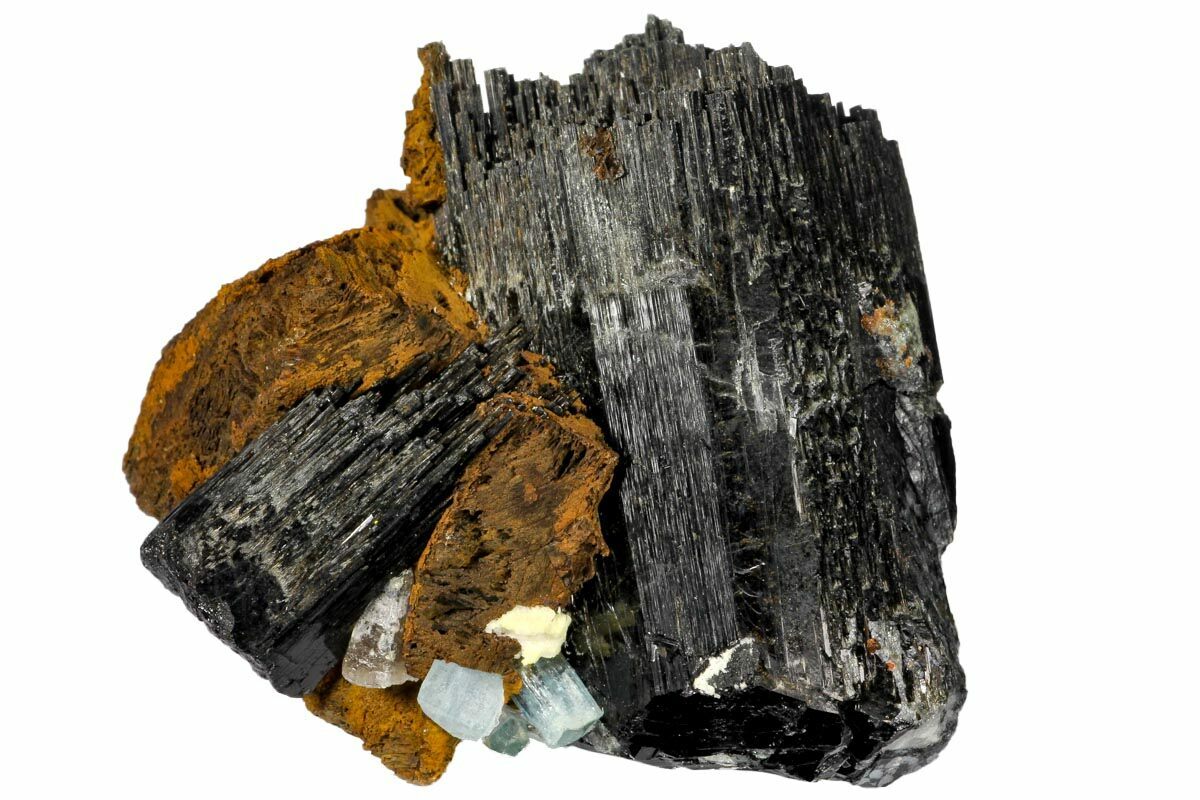
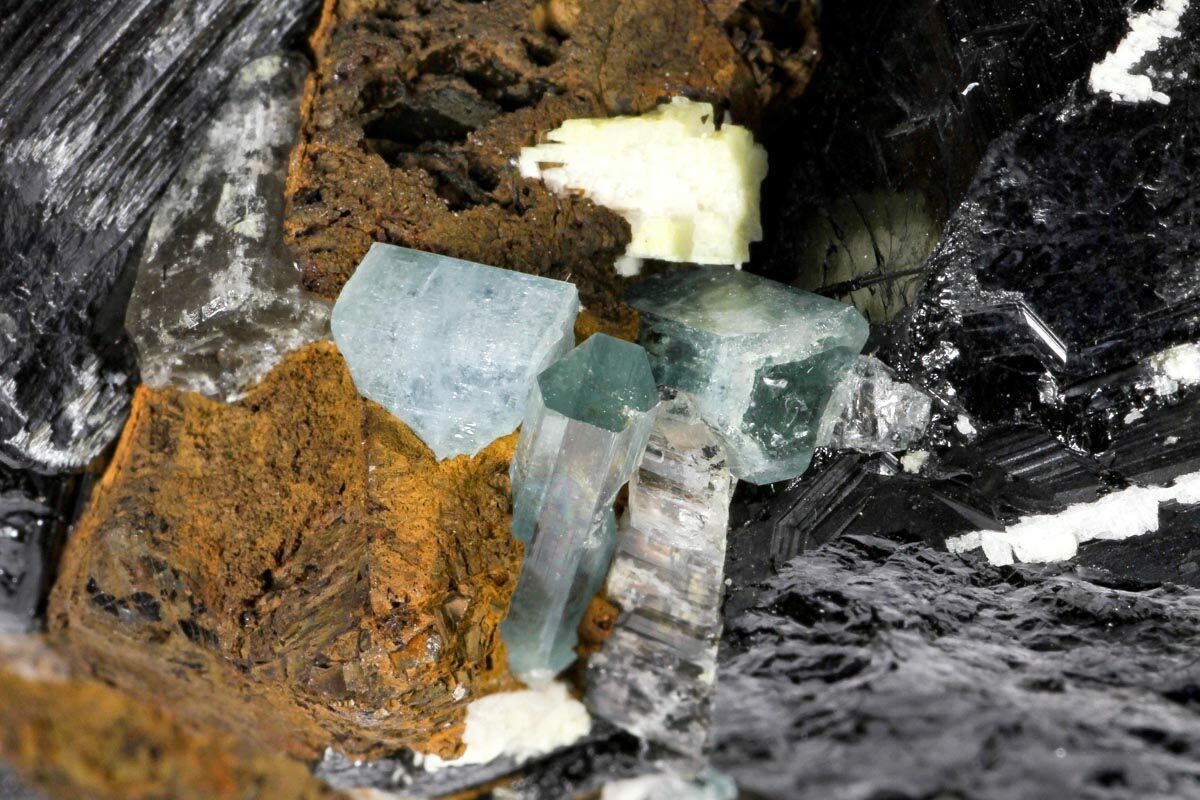
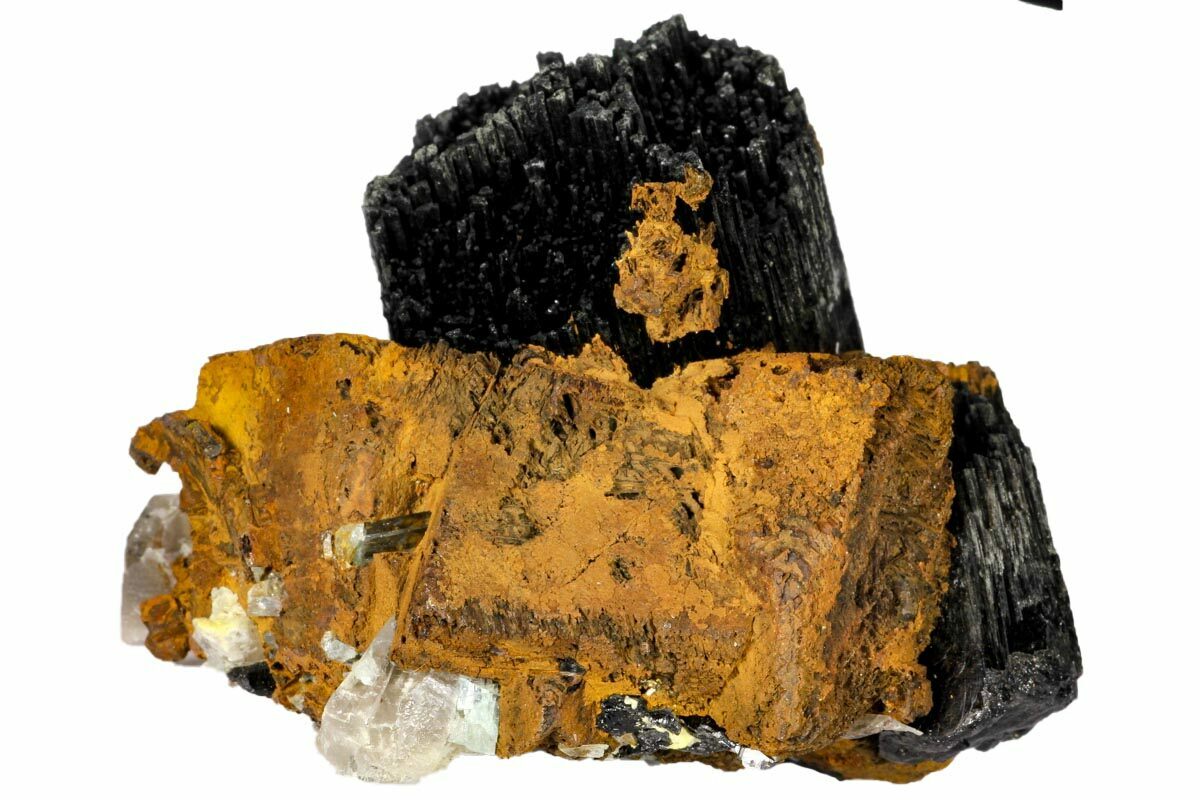
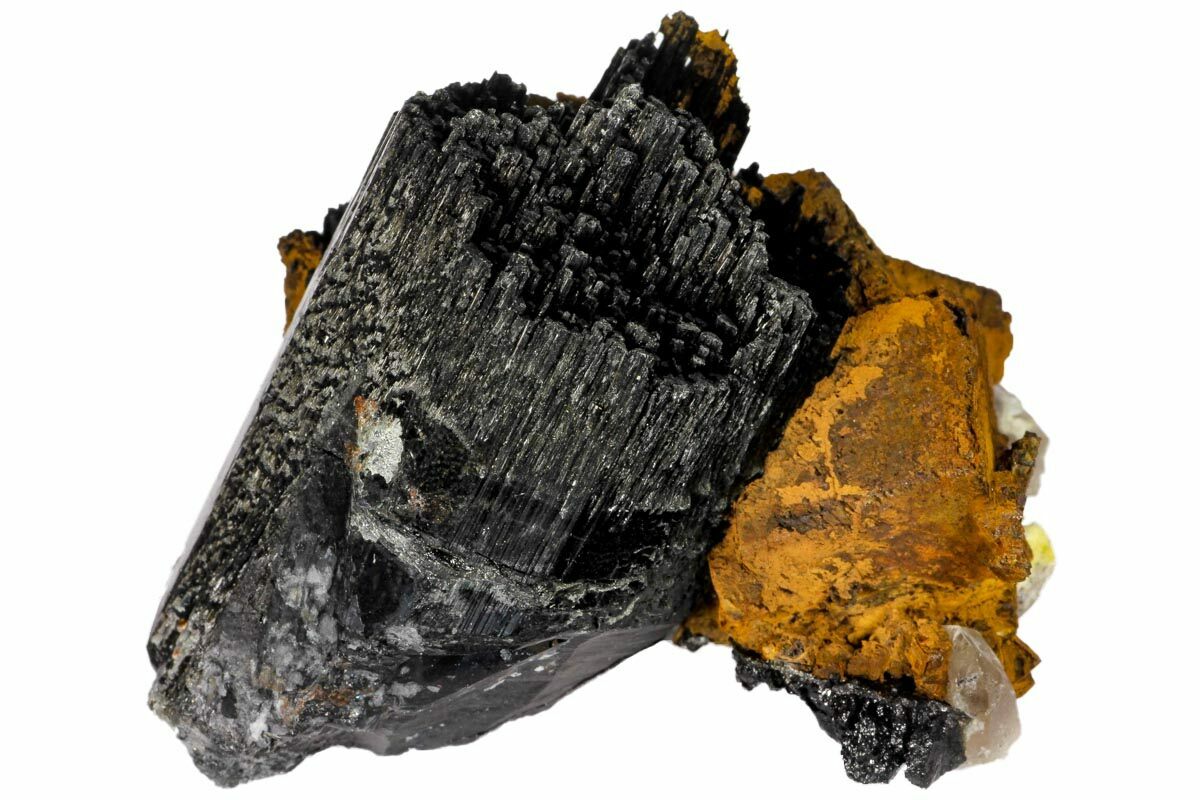
This is a gorgeous association of aquamarine crystals, black tourmaline (schorl), smoky quartz, goethite after siderite and small amounts of orthoclase feldspar, collected from the Erongo Mountains in Namibia. This is a truly breathtaking mineral association.
Schorl, also known as "black tourmaline" or "black schorl", is a black form of tourmaline that often occurs as lustrous prismatic crystals. The crystals can be stubby or elongated and typically feature lengthwise striations. Many schorl crystals have flattened pyramidal terminations. They can also form in radiating, columnar, and stalactitic aggregations, as well as small, needle-like inclusions within quartz (tourmalinated quartz) and in massive form.
Schorl is a basic sodium iron aluminum boro-silicate with the generic chemical formula NaFe2 + 3Al6(BO3)3Si6O18(OH)4 . It has been used for everything from jewelry to piezoelectric guitar pickups.
Schorl is a basic sodium iron aluminum boro-silicate with the generic chemical formula NaFe2 + 3Al6(BO3)3Si6O18(OH)4 . It has been used for everything from jewelry to piezoelectric guitar pickups.
Feldspars are a group of rock-forming tectosilicate minerals. They are the most common minerals on Earth, making up nearly 60% of the crust.
Orthoclase is a feldspar mineral with the chemical formula KAlSi₃O₈ and a hardness of 6 - 6.5 on the Mohs hardness scale. It is considered a key component in many igneous rock formations and is one of the most abundant minerals throughout the continental crust. It can form individual crystals, but it is most commonly known for its pink coloration within granite rock. It has many commercial uses, including application in the production of a wide variety of ceramics, and is sometimes used in the manufacturing of glass.
Beryl is a mineral composed of beryllium aluminum cyclosilicate, with the chemical formula Be3Al2(SiO3)6. Naturally occurring beryl tends to form hexagonal crystals that can reach several meters in size if given the right conditions. Completely pure beryl (goshenite) will be transparent and colorless, while mineral impurities frequently tint the crystals color in most specimens.
Well known varieties of beryl include aquamarine and emerald, although beryl can also be colorless, yellow, white, and red, depending on the incorporated impurities during formation. Red beryl is its rarest form, and can currently only be found in New Mexico and Utah.
Well known varieties of beryl include aquamarine and emerald, although beryl can also be colorless, yellow, white, and red, depending on the incorporated impurities during formation. Red beryl is its rarest form, and can currently only be found in New Mexico and Utah.
About Smoky Quartz
Smoky quartz is a variety of quartz distinguished by its smoky gray to deep brown or nearly black coloration, a name inspired by the hazy, smoke-like appearance within the crystal. While some specimens can appear very dark or even opaque, most smoky quartz remains at least partially translucent, allowing light to pass through its internal veils and zoning. The color develops when trace amounts of aluminum within the quartz lattice are exposed to natural irradiation over geologic time, subtly altering the crystal structure and producing its characteristic smoky tones.
Smoky quartz is a variety of quartz distinguished by its smoky gray to deep brown or nearly black coloration, a name inspired by the hazy, smoke-like appearance within the crystal. While some specimens can appear very dark or even opaque, most smoky quartz remains at least partially translucent, allowing light to pass through its internal veils and zoning. The color develops when trace amounts of aluminum within the quartz lattice are exposed to natural irradiation over geologic time, subtly altering the crystal structure and producing its characteristic smoky tones.
SPECIES
Aquamarine, Schorl, Smoky Quartz, Goethite & Orthoclase
LOCATION
Erongo Mountains, Karibib, Erongo Region, Namibia
SIZE
2.85 x 2.7"
CATEGORY
SUB CATEGORY
ITEM
#132156


