 Reviews

This Specimen has been sold.


3.8" Blue-Green Plumbogummite on Quartz - Yangshuo Mine, China
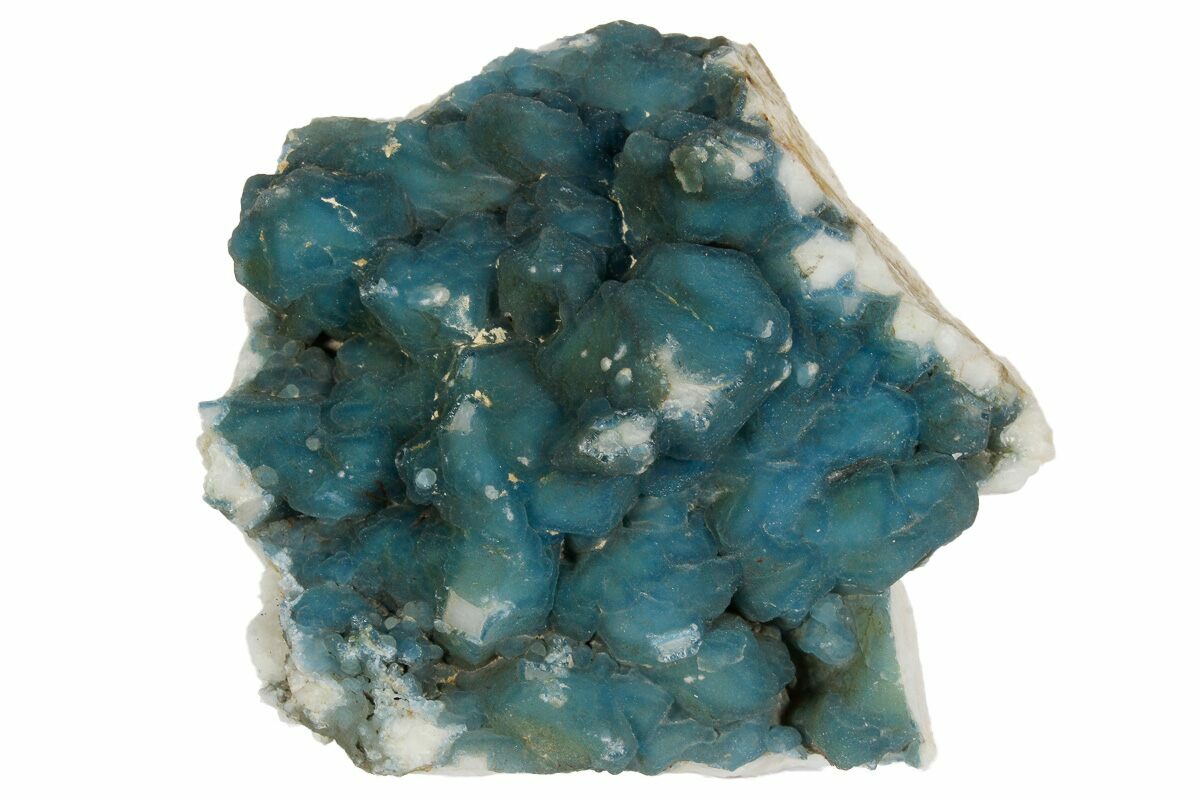
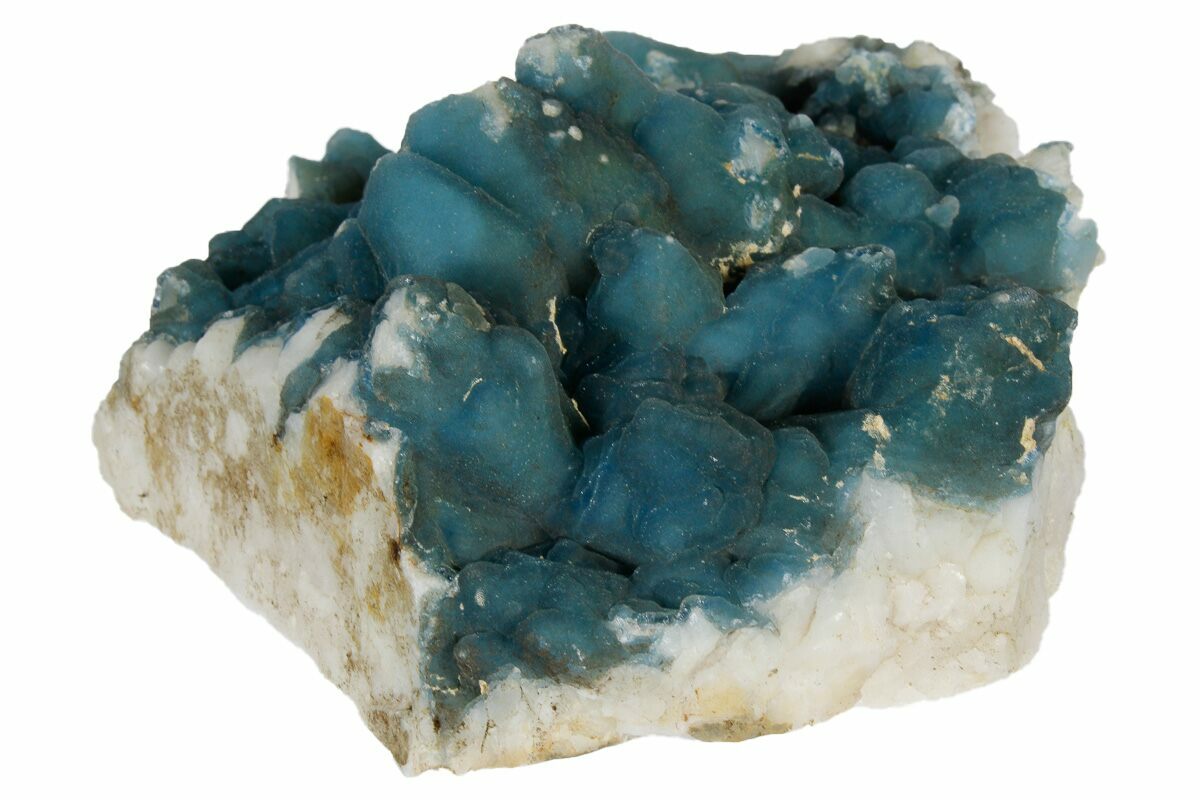

This is a gorgeous specimen of blue-green, botryoidal plumbogummite that formed over quartz crystals. This mineral association was collected from the Yangshuo Mine that's located in the Guangxi Zhuang Autonomous Region of China.
It comes with an acrylic display stand.
It comes with an acrylic display stand.
About Plumbogummite
Plumbogummite is a fascinating secondary lead aluminum phosphate mineral that forms in the oxidation zones of lead ore deposits, where minerals like galena slowly break down and recombine with phosphate-rich groundwater. Known for its sculptural botryoidal and reniform masses, it often shows a soft resinous glow despite its typically earthy appearance. Its name reflects this dual personality—plumbo for lead and gummite, a historic term for gum-like secondary lead minerals. Part of the crandallite group, plumbogummite is a notorious mineralogical look-alike, often requiring lab testing to distinguish it from relatives like crandallite or florencite.
Collectors prize plumbogummite for its unique chemistry and its frequent role as the “canvas” in composite specimens, where brighter minerals such as mimetite or pyromorphite form sparkling islands atop its rounded nodules. It commonly occurs with mimetite, pyromorphite, galena, goethite, cerussite, and limonite. Notable sources for fine specimens include China, Australia, Germany, France, England, and the United States, though quality pieces remain relatively uncommon on the market.
Plumbogummite is a fascinating secondary lead aluminum phosphate mineral that forms in the oxidation zones of lead ore deposits, where minerals like galena slowly break down and recombine with phosphate-rich groundwater. Known for its sculptural botryoidal and reniform masses, it often shows a soft resinous glow despite its typically earthy appearance. Its name reflects this dual personality—plumbo for lead and gummite, a historic term for gum-like secondary lead minerals. Part of the crandallite group, plumbogummite is a notorious mineralogical look-alike, often requiring lab testing to distinguish it from relatives like crandallite or florencite.
Collectors prize plumbogummite for its unique chemistry and its frequent role as the “canvas” in composite specimens, where brighter minerals such as mimetite or pyromorphite form sparkling islands atop its rounded nodules. It commonly occurs with mimetite, pyromorphite, galena, goethite, cerussite, and limonite. Notable sources for fine specimens include China, Australia, Germany, France, England, and the United States, though quality pieces remain relatively uncommon on the market.
About Quartz
Quartz is the name given to silicon dioxide (SiO2) and is the second most abundant mineral in the Earth's crust. Quartz crystals generally grow in silica-rich environments--usually igneous rocks or hydrothermal environments like geothermal waters--at temperatures between 100°C and 450°C, and usually under very high pressure. In either case, crystals will precipitate as temperatures cool, just as ice gradually forms when water freezes. Quartz veins are formed when open fissures are filled with hot water during the closing stages of mountain formation: these veins can be hundreds of millions of years old.
Quartz is the name given to silicon dioxide (SiO2) and is the second most abundant mineral in the Earth's crust. Quartz crystals generally grow in silica-rich environments--usually igneous rocks or hydrothermal environments like geothermal waters--at temperatures between 100°C and 450°C, and usually under very high pressure. In either case, crystals will precipitate as temperatures cool, just as ice gradually forms when water freezes. Quartz veins are formed when open fissures are filled with hot water during the closing stages of mountain formation: these veins can be hundreds of millions of years old.
SPECIES
Plumbogummite & Quartz
LOCATION
Yangshuo Mine, Yangshuo Co., Guilin, Guangxi Zhuang AR, China
SIZE
3.8 x 3.5"
CATEGORY
ITEM
#177172


