 Reviews

This Specimen has been sold.


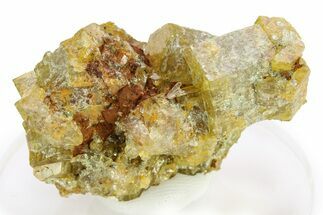
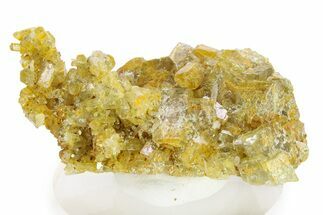
4" Fluorescent Hyalite Opal w/ Aquamarine, Schorl, and Feldspar


This is a beautiful cluster of aquamarine crystals that formed in association with hyalite opal, black tourmaline (schorl), and feldspar, collected from the Erongo Mountains of Namibia. The aquamarine at the center of the specimen is quite large. The specimen measures 4" wide and is accompanied by an acrylic display stand.
Under shortwave ultraviolet light, the opal exhibits a vibrant green fluorescence which can be seen in one of the photos above.
Under shortwave ultraviolet light, the opal exhibits a vibrant green fluorescence which can be seen in one of the photos above.
About the Erongo Region of Namibia
The Erongo Region in Namibia is renowned for its diverse and high-quality mineral specimens, particularly gemstones and collector minerals from pegmatites. These popular minerals include fine aquamarine, tourmaline (schorl, elbaite), quartz (smoky, hyalite opal), fluorite, jeremejevite (aluminium borate mineral), and siderite pseudomorphs, alongside significant uranium, gold, salt, granite, and marble deposits, making it a hub for both artisanal and industrial mining.
The Erongo Region in Namibia is renowned for its diverse and high-quality mineral specimens, particularly gemstones and collector minerals from pegmatites. These popular minerals include fine aquamarine, tourmaline (schorl, elbaite), quartz (smoky, hyalite opal), fluorite, jeremejevite (aluminium borate mineral), and siderite pseudomorphs, alongside significant uranium, gold, salt, granite, and marble deposits, making it a hub for both artisanal and industrial mining.
About Hyalite Opal
Hyalite is a transparent to translucent variety of opal that commonly forms smooth, glassy globules or botryoidal coatings. An amorphous form of silica (SiO₂), hyalite is classified as a mineraloid and typically forms as a volcanic sublimate in volcanic or pegmatitic environments, where silica-rich vapors condense and solidify. It is also known as water opal, jalite, or Müller’s glass, named after its describer, Franz-Joseph Müller von Reichenstein.
One of hyalite’s most distinctive features is its intense fluorescence: under shortwave ultraviolet light, many specimens glow a vivid neon green. This striking effect is caused by trace amounts of uranium, present as uranyl ions, incorporated into the opal’s structure during formation. In normal lighting, hyalite often appears colorless and glass-like, making its dramatic UV response especially surprising and highly prized by mineral collectors.
Hyalite is a transparent to translucent variety of opal that commonly forms smooth, glassy globules or botryoidal coatings. An amorphous form of silica (SiO₂), hyalite is classified as a mineraloid and typically forms as a volcanic sublimate in volcanic or pegmatitic environments, where silica-rich vapors condense and solidify. It is also known as water opal, jalite, or Müller’s glass, named after its describer, Franz-Joseph Müller von Reichenstein.
One of hyalite’s most distinctive features is its intense fluorescence: under shortwave ultraviolet light, many specimens glow a vivid neon green. This striking effect is caused by trace amounts of uranium, present as uranyl ions, incorporated into the opal’s structure during formation. In normal lighting, hyalite often appears colorless and glass-like, making its dramatic UV response especially surprising and highly prized by mineral collectors.
SPECIES
Beryl var. Aquamarine, Tourmaline var. Schorl, Feldspar & Opal var. Hyalite
LOCATION
Erongo Mountains, Namibia
SIZE
4 x 2.7"
CATEGORY
SUB CATEGORY
ITEM
#354940