Reviews

This Specimen has been sold.


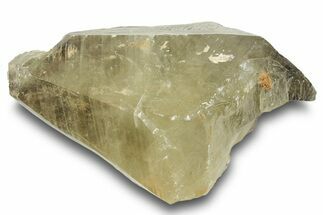
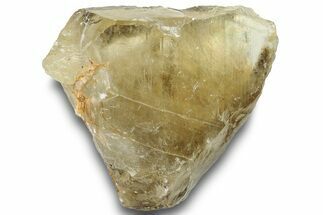
8.4" Beam Calcite Crystal Cluster with Phantoms - Morocco


This is a beautiful, honey colored beam calcite crystal cluster that's part of a new find from the Atlas Mountains of Morocco. It features a bed of sharp calcite crystals that contain phantoms and a few large, darker yellow dipyramidal crystals. The terminations of the crystals are filled to the brim with sparkling inclusions that gathered near the end of the crystals formation. This is quite an intriguing piece that looks great in any collection. This piece has some minor damage to a few of the terminations, though this does not detract from the overall quality of the specimen.
The entire specimen measures 8.4" by 7.2" and has a relatively flat base that allows for aesthetic presentation of without the need for a display stand.
The entire specimen measures 8.4" by 7.2" and has a relatively flat base that allows for aesthetic presentation of without the need for a display stand.
About Calcite Crystals
Calcite crystals are a form of calcium carbonate (CaCO₃) known for their diverse shapes, transparency, and vibrant range of colors. They typically form in rhombohedral, scalenohedral, or prismatic shapes, often with well-defined, sharp edges and glossy surfaces. Calcite crystals are often translucent or transparent, sometimes displaying a double refraction effect where objects viewed through the crystal appear doubled. They can appear in various colors—white, clear, yellow, pink, blue, green, and orange—depending on impurities or trace minerals.
A notable characteristic of calcite is its reaction with weak acids like vinegar, which causes it to effervesce, or fizz, as it releases carbon dioxide. This property makes calcite crystals a key tool in geological identification and studies. Calcite forms in many environments, from sedimentary rocks like limestone and marble to hydrothermal veins.
Calcite crystals are a form of calcium carbonate (CaCO₃) known for their diverse shapes, transparency, and vibrant range of colors. They typically form in rhombohedral, scalenohedral, or prismatic shapes, often with well-defined, sharp edges and glossy surfaces. Calcite crystals are often translucent or transparent, sometimes displaying a double refraction effect where objects viewed through the crystal appear doubled. They can appear in various colors—white, clear, yellow, pink, blue, green, and orange—depending on impurities or trace minerals.
A notable characteristic of calcite is its reaction with weak acids like vinegar, which causes it to effervesce, or fizz, as it releases carbon dioxide. This property makes calcite crystals a key tool in geological identification and studies. Calcite forms in many environments, from sedimentary rocks like limestone and marble to hydrothermal veins.