 Reviews

Nanotyrannus: The Tyrannosaur Dwarf Tyrant
Picture Late Cretaceous North America in its final chapter. Broad river systems wind across lush coastal plains. Forests of flowering plants and conifers line muddy channels that drain toward a warm inland sea. Triceratops herds move across floodplains, duck-billed dinosaurs browse in the distance, and crocodilians lurk in slow water. Somewhere in this world, two animals clash—one a horned dinosaur, the other a lean tyrannosaur—locked together in combat and preserved for 66 million years.
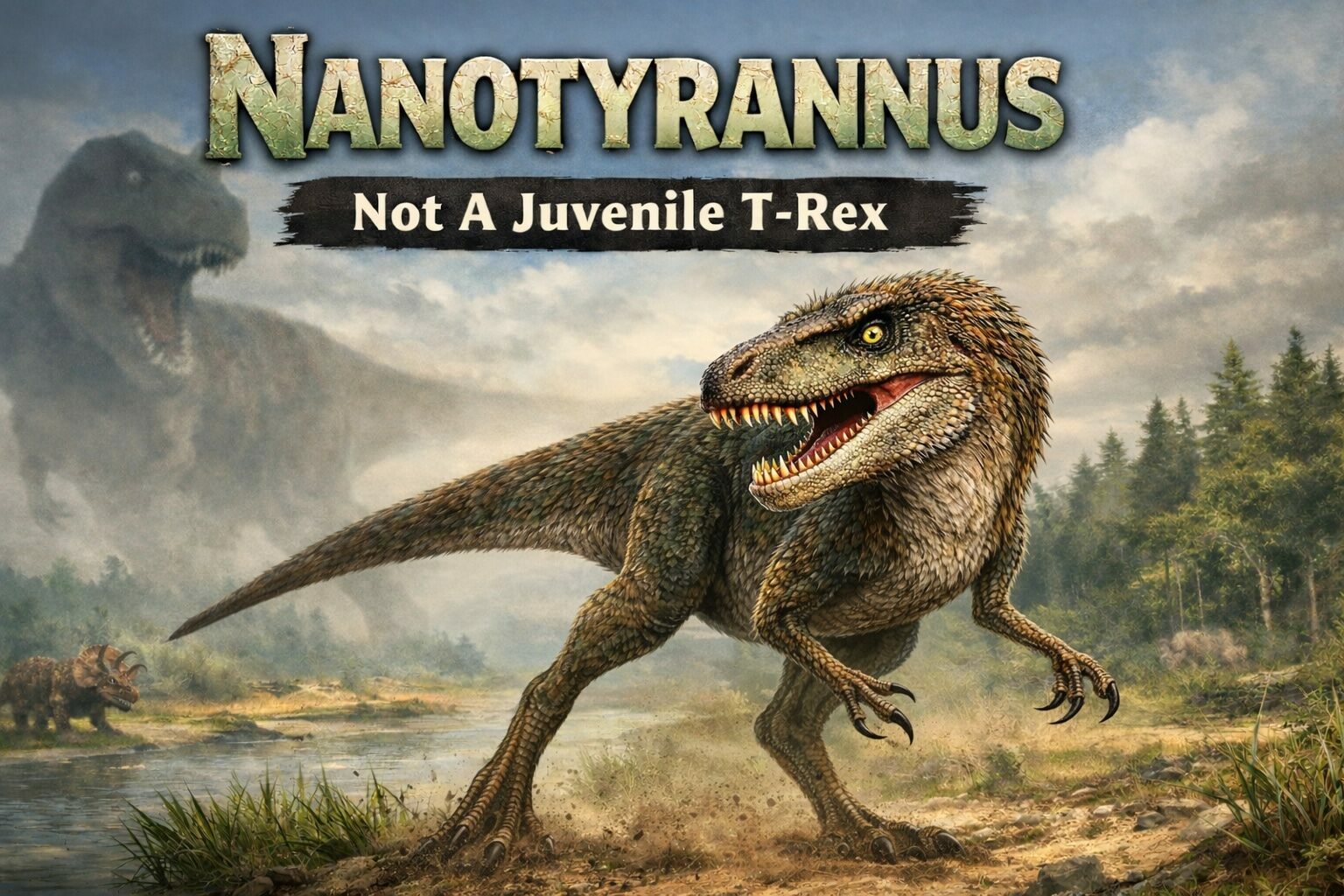
That fossil, the famous “Dueling Dinosaurs” specimen, would ultimately help resolve one of the longest-running and most emotionally charged debates in dinosaur paleontology. At the center of that debate was a name many people had heard, dismissed, resurrected, and argued over for decades: Nanotyrannus.
For much of the late 20th and early 21st century, Nanotyrannus was widely portrayed as a misunderstanding—a juvenile Tyrannosaurus rex, not a dinosaur in its own right. But the bones kept telling a different story. The skull was too narrow. The tooth count was too high. The arms were too long. And the supposed “growth trajectory” required to turn this animal into a full adult T. rex began to look biologically implausible.
In 2025, a comprehensive study centered on the Dueling Dinosaurs tyrannosaur finally tipped the balance. The animal was mature—around 20 years old—yet still dramatically smaller than T. rex, with anatomical traits that could not be explained away as youth. The conclusion was unavoidable: Nanotyrannus was real.
Nanotyrannus is a small-to-medium-sized predatory dinosaur from the very end of the Cretaceous Period, best known for being at the center of one of paleontology’s longest identity disputes. For decades, the name hovered in scientific limbo—sometimes accepted, often rejected, and frequently dismissed as nothing more than a teenage T. rex.
At its core, Nanotyrannus represents a tyrannosaur-line predator that lived alongside Tyrannosaurus rex in Late Maastrichtian North America, particularly within the Hell Creek ecosystem. It shared the same rivers, floodplains, and prey animals—but it did not share the same body plan. With a lighter build, proportionally longer arms, a narrower skull, and a much higher tooth count, Nanotyrannus has always looked fundamentally different, even when it was being explained away as a growth stage.
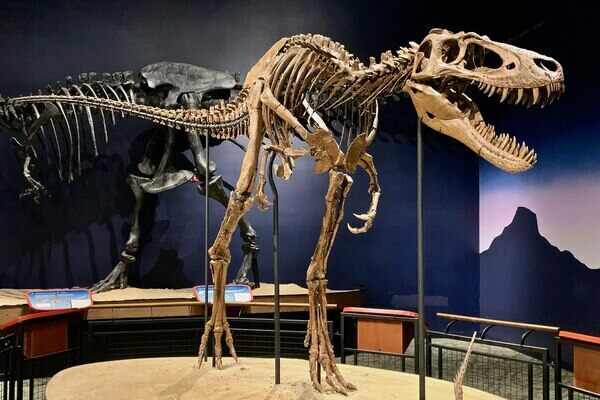
Skeletal mount of “Jane,” the holotype of Nanotyrannus lethaeus, on display at the Burpee Museum of Natural History in Rockford, Illinois.
The name means “dwarf tyrant”, but that label can be misleading. Nanotyrannus was not small in any absolute sense—it was still a multi-meter, multi-ton carnivore capable of killing large dinosaurs. It only appears “small” when compared to T. rex, the largest land predator of all time. Where T. rex was built like a living battering ram, Nanotyrannus appears sleeker: longer-legged, more lightly built, and likely faster.
What truly defines Nanotyrannus today is its ecological significance. If it is a valid genus—as argued in the 2025 study—then the Hell Creek Formation hosted more than one large tyrannosaur-line predator at the same time. That realization reshapes how scientists think about predator diversity, niche partitioning, and even how juvenile T. rex actually lived and hunted.
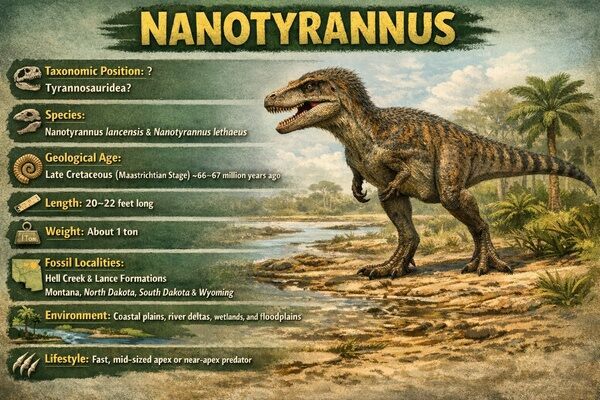
Infographic: About Nanotyrannus
Taxonomic position: Tyrannosauroidea (outside Tyrannosauridae, per 2025 analysis)
Species: Nanotyrannus lancensis & Nanotyrannus lethaeus
Geological age: Late Cretaceous (Maastrichtian Stage) - ~66–67 million years ago
Length: 20-22 feet long
Weight: About 1 ton
Fossil localities: Hell Creek & Lance Formations of Montana, North Dakota, South Dakota & Wyoming
Environment: Coastal plains, river deltas, wetlands, and floodplains
Lifestyle: Fast, mid-sized apex or near-apex predator
Few dinosaurs have generated as much sustained controversy as Nanotyrannus. Its history is not merely a scientific disagreement, but a case study in how personalities, specimen access, and entrenched assumptions can shape consensus.
The story begins in 1946, when paleontologist Charles W. Gilmore described a small tyrannosaur skull from the Hell Creek Formation and named it Gorgosaurus lancensis. Tyrannosaur taxonomy at the time was broad and imprecise, and the skull’s unusual proportions were noted but not deeply explored.
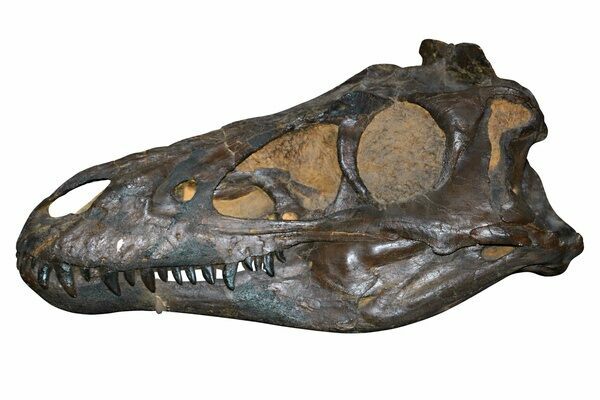
Nanotyrannus lancensis skull (60 cm), Late Cretaceous of Montana, USA. CMNH 5741, Cleveland Museum of Natural History.
In 1988, Robert Bakker reexamined the skull and proposed the new genus Nanotyrannus, envisioning it as a fast, lightly built predator living alongside T. rex. The idea was provocative—and immediately controversial.
By the 1990s, attention shifted toward dinosaur growth and ontogeny. In 1999, paleontologist Thomas Carr argued that the traits attributed to Nanotyrannus—narrow skull, large eye sockets, high tooth count—were consistent with juvenile T. rex. This interpretation gained strength with the discovery of the skeleton nicknamed “Jane” in 2001, which appeared juvenile and closely resembled the Cleveland skull.
Jack Horner, a leading authority on dinosaur growth, strongly supported this view and became one of the most vocal critics of Nanotyrannus, frequently dismissing it as a media-driven misunderstanding. By the mid-2000s, the juvenile-rex hypothesis had become the dominant interpretation in museums, textbooks, and much of the academic literature.
Yet dissent persisted. Pete Larson, president of the Black Hills Institute and deeply involved in tyrannosaur research and collecting, remained one of the most vocal defenders of Nanotyrannus as a valid genus. Larson and colleagues argued that the differences went beyond what could reasonably be explained by growth alone—particularly:
Tooth counts that were consistently higher than in T. rex
Forelimbs and hands that were absolutely longer, not just proportionally longer
Skull proportions that did not trend smoothly toward T. rex morphology
Robert Bakker also continued to support the idea of a distinct, more lightly built tyrannosaur living alongside T. rex, framing it as a fast, mid-sized predator occupying a different ecological role. However, many of the key specimens were either fragmentary or held in private collections, limiting access for broader study. This fueled skepticism and, at times, hardened positions on both sides. The debate became increasingly polarized—not just scientifically, but culturally within paleontology.
As research continued, a quiet tension emerged. The “juvenile rex” hypothesis required something unusual: that T. rex underwent an exceptionally radical anatomical transformation during growth. Critics noted that this would require:
Massive tooth loss during maturation
Significant shortening of the forelimbs
Extreme reshaping of the skull far beyond typical theropod ontogeny
Everything changed in 2025 with the detailed study of the tyrannosaur preserved in the Dueling Dinosaurs fossil. This individual showed clear signs of near skeletal maturity—around 20 years old—yet retained all the controversial Nanotyrannus traits and would never have approached T. rex size. The study concluded that these animals represent a distinct tyrannosaur-line genus, not juvenile T. rex.
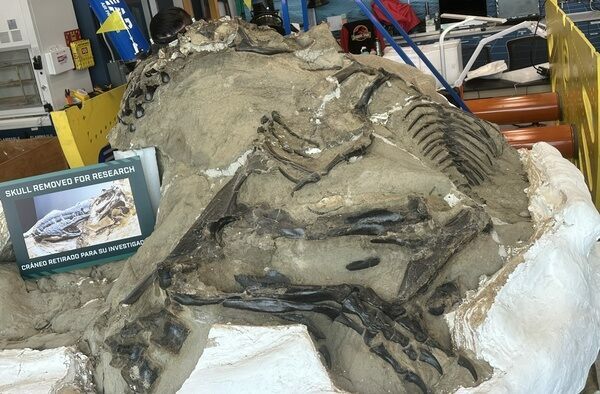
The Dueling Dinosaurs specimen undergoing preparation at the North Carolina Museum of Natural Sciences
The implication was profound: much of what scientists believed about juvenile T. rex anatomy may have been based on a different animal entirely.
A full-grown Tyrannosaurus rex was among the largest terrestrial predators in Earth’s history. Well-preserved adult specimens indicate lengths of approximately 40–43 feet (12–13 meters) from snout to tail, with mass estimates commonly ranging from 8 to 9 metric tons (and sometimes higher for the very largest individuals).
Nanotyrannus was dramatically smaller—but still formidable. Mature individuals are estimated at 20–22 feet (6–6.7 m) long, roughly half the length of a large adult T. rex. Due to scaling effects, this translated to a mass of about 0.8–1 ton, or one-tenth the weight of T. rex.
This disparity implies very different hunting strategies. T. rex was a heavyweight predator built for bone-crushing force, while Nanotyrannus occupied a middle ground, emphasizing speed and agility over brute strength.
The anatomy of Nanotyrannus is the foundation upon which the entire debate rests. While individual traits can sometimes be dismissed as juvenile features, the combination of skull structure, dentition, limb proportions, and overall body plan forms a coherent anatomical profile that does not align cleanly with known growth patterns of Tyrannosaurus rex.
The skull of Nanotyrannus is long, narrow, and relatively lightly built compared to the deep, power-optimized skull of T. rex. The snout is proportionally elongated, giving the animal a more gracile facial profile. The orbits (eye openings) are large, and the skull lacks the massive posterior broadening seen in adult T. rex.
Crucially, the differences are not merely a matter of scale. The internal architecture of the skull—such as the proportions of the facial bones and the overall geometry of the jaws—suggests a design optimized for speed and precision rather than maximum bite force. Transforming this skull into the massive, boxy cranium of T. rex would require extreme reshaping during growth, far beyond what is observed in other large theropods.
Dentally, Nanotyrannus stands apart. Specimens attributed to the genus consistently exhibit a higher tooth count than typical T. rex, particularly in the maxilla and dentary. This is not a subtle difference. The juvenile-T. rex hypothesis requires that T. rex lost a large number of teeth as it matured—an unusually dramatic pattern that is not well supported by tyrannosaur growth series.
The teeth themselves are generally more slender and laterally compressed than the famously thick, “banana-shaped” teeth of adult T. rex. Nanotyrannus teeth also tend to have much finer serrations and are significantly smaller overall, maxing out around 2½ inches in length, with most specimens closer to an inch or less. In contrast, T. rex teeth frequently reach sizes in the 3–5 inch range. This lighter, more finely edged morphology is better suited for slicing and gripping rather than crushing bone, reinforcing the idea that Nanotyrannus relied less on raw bite force and more on rapid, repeated bites.
Perhaps the most anatomically decisive feature is the forelimb. Nanotyrannus possesses arms and hands that are absolutely longer than those of T. rex, not just longer in proportion to body size. This distinction is critical: as animals grow, limb bones lengthen—they do not shorten.
The hands appear more functional than the famously reduced arms of T. rex, suggesting a greater role in prey handling or stabilization. While still small relative to body size, the forelimbs of Nanotyrannus fit a predator that retained more versatility in its front limbs.
The hind limbs of Nanotyrannus are long and relatively slender, with proportions consistent with an agile, cursorial predator. Compared to T. rex, which became increasingly robust and heavy-bodied with age, Nanotyrannus appears better suited for speed and maneuverability.
These proportions support interpretations of a more active pursuit-based hunting style, especially in open floodplains or along river margins where acceleration and endurance would have been advantageous.
Taken as a whole, Nanotyrannus presents a coherent anatomical package: a lightly built tyrannosaur-line predator with a narrow skull, numerous slicing teeth, relatively long arms, and long legs. This is not simply a “smaller T. rex,” but a distinct body plan optimized for a different ecological role.
Importantly, the 2025 analysis argues that these traits persist in individuals that were near skeletal maturity. This eliminates the need to invoke extreme, undocumented growth transformations and supports the interpretation of Nanotyrannus as a separate genus rather than a transient developmental stage.
In life, Nanotyrannus would have looked—and functioned—very differently from T. rex: less a living sledgehammer, and more a fast, cutting predator built to exploit speed, agility, and precision at the end of the Age of Dinosaurs.
This size disparity has important biological implications. T. rex was built as a heavyweight apex predator, relying on enormous bite force and sheer mass to overpower prey. Nanotyrannus, by contrast, occupied a middle ground: large enough to tackle substantial animals, but light enough to favor speed, agility, and pursuit over brute force.
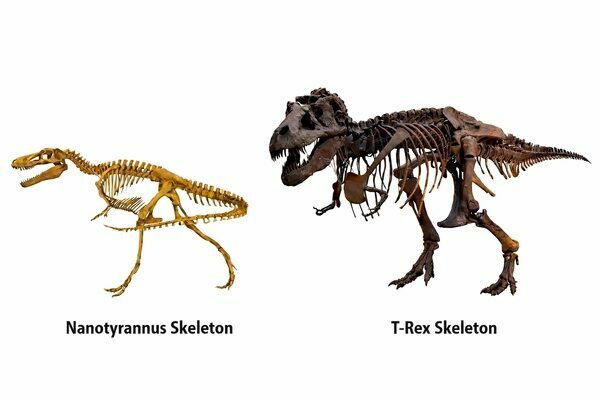
A cast of a adult Nanotyrannus skeleton next to a T-Rex skeleton. Notice how much more robust the bones of the T-Rex are.
Understanding the paleobiology of Nanotyrannus—how it moved, hunted, and interacted with its environment—is essential to appreciating why it was not simply a smaller version of Tyrannosaurus rex. Its anatomy points toward a predator with a very different lifestyle, one shaped by speed, agility, and precision rather than overwhelming force.
The limb proportions of Nanotyrannus strongly suggest it was a relatively fast-moving theropod. Its long, slender hind limbs indicate a cursorial build, optimized for efficient running rather than sheer power. While exact speed estimates are difficult and vary depending on modeling assumptions, Nanotyrannus was almost certainly faster than adult T. rex, which was constrained by its enormous mass.
Rather than sustained high-speed chases, Nanotyrannus likely relied on short bursts of acceleration—ideal for ambush or pursuit over open floodplains and along river margins. Its lighter body mass would have reduced stress on bones and joints, allowing greater maneuverability and quicker directional changes.
In contrast to T. rex, which possessed one of the most powerful bites ever measured for a terrestrial animal, Nanotyrannus likely had a significantly weaker bite force—though still formidable by any modern standard. Its narrower skull and more slender teeth suggest a feeding strategy focused on slicing flesh rather than crushing bone.
This does not imply inefficiency. Many successful predators rely on repeated, well-placed bites rather than a single catastrophic strike. The higher tooth count in Nanotyrannus would have produced a cutting edge capable of inflicting rapid blood loss, particularly against smaller or more lightly built prey.
Taken together, the evidence points toward Nanotyrannus as an active hunter, rather than a predator dependent on ambush alone or scavenging dominance. It likely targeted:
Fuvenile and subadult dinosaurs
Smaller ornithopods
Lightly armored ceratopsians
Possibly sick or isolated individuals of larger species.
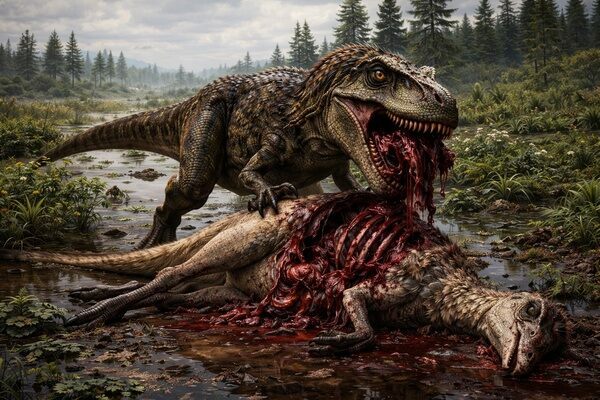
Nanotyrannus feeding on a Struthiomimus in the swampy wetlands of what is now the Hell Creek Formation.
Rather than overpowering prey through brute force, Nanotyrannus may have relied on speed, repeated attacks, and precision biting—harrying prey until exhaustion or blood loss set in. This strategy would have allowed it to coexist alongside T. rex without direct competition for the largest carcasses.
Nanotyrannus lived during the final million years of the Cretaceous Period, within one of the most intensively studied fossil ecosystems on Earth: the Hell Creek paleoenvironment of western North America. This was not a harsh or barren landscape, but a rich, dynamic coastal plain shaped by rivers, forests, seasonal flooding, and proximity to the Western Interior Seaway.
The Hell Creek region was a low-lying, humid coastal plain situated between rising highlands to the west and the retreating Western Interior Seaway to the east. The climate was warm and seasonally wet, supporting extensive river systems that meandered across broad floodplains. These rivers regularly overflowed their banks, depositing layers of sand, silt, and mud. This process not only created fertile soils that sustained dense plant growth, but also produced the sedimentary conditions that make Hell Creek one of the most fossil-rich formations in the world.
The landscape was a mosaic of habitats rather than a uniform environment. Forests dominated much of the terrain, composed of flowering plants (angiosperms), conifers, ferns, and understory vegetation. Open floodplains, riverbanks, wetlands, and swampy lowlands broke up the forested areas, creating ecological diversity across relatively short distances. For a predator like Nanotyrannus, this patchwork environment offered numerous hunting opportunities. Forest edges and river margins would have been ideal zones for ambush and pursuit, while open floodplains allowed space for short, fast chases.
The Hell Creek ecosystem supported a remarkably diverse fauna. Large herbivores included Triceratops, Edmontosaurus, and Ankylosaurus, while smaller dinosaurs—ornithomimosaurs, pachycephalosaurs, and juvenile individuals of larger species—provided a range of potential prey sizes. Non-dinosaurian animals were also abundant. Crocodilians inhabited rivers and wetlands, turtles were widespread, and small mammals occupied burrows and forest undergrowth. This abundance of medium-sized vertebrates would have been particularly important for Nanotyrannus, whose size and hunting style were well suited to prey smaller than the massive adults targeted by T. rex.
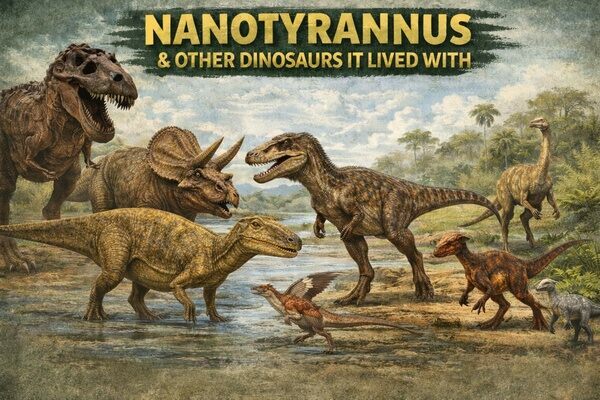
Nanotyrannus along with some of the other dinosaurs it lived with including T-Rex, Triceratops, Edmontosaurus, Thescelosaurus, Pachycephalosaurus and others.
Seasonal flooding, shifting river channels, and periodic environmental stress would have created fluctuating conditions for predators and prey alike. During times of abundance, Nanotyrannus may have hunted actively across floodplains and forest edges. During leaner periods, it may have relied more heavily on opportunistic feeding, including scavenging. These pressures favored adaptable predators—animals capable of switching strategies depending on conditions. The anatomical and behavioral flexibility inferred for Nanotyrannus fits well within this dynamic, ever-changing landscape.
This realization has far-reaching implications. It suggests that some fossils once used to reconstruct juvenile T. rex behavior may instead record the life history of a different animal entirely. In that sense, Nanotyrannus does not just add another name to the tyrannosaur family tree—it reshapes how scientists understand the final ecosystems of the dinosaur era.
That fossil, the famous “Dueling Dinosaurs” specimen, would ultimately help resolve one of the longest-running and most emotionally charged debates in dinosaur paleontology. At the center of that debate was a name many people had heard, dismissed, resurrected, and argued over for decades: Nanotyrannus.
For much of the late 20th and early 21st century, Nanotyrannus was widely portrayed as a misunderstanding—a juvenile Tyrannosaurus rex, not a dinosaur in its own right. But the bones kept telling a different story. The skull was too narrow. The tooth count was too high. The arms were too long. And the supposed “growth trajectory” required to turn this animal into a full adult T. rex began to look biologically implausible.
In 2025, a comprehensive study centered on the Dueling Dinosaurs tyrannosaur finally tipped the balance. The animal was mature—around 20 years old—yet still dramatically smaller than T. rex, with anatomical traits that could not be explained away as youth. The conclusion was unavoidable: Nanotyrannus was real.
What is Nanotyrannus?
Nanotyrannus is a small-to-medium-sized predatory dinosaur from the very end of the Cretaceous Period, best known for being at the center of one of paleontology’s longest identity disputes. For decades, the name hovered in scientific limbo—sometimes accepted, often rejected, and frequently dismissed as nothing more than a teenage T. rex.
At its core, Nanotyrannus represents a tyrannosaur-line predator that lived alongside Tyrannosaurus rex in Late Maastrichtian North America, particularly within the Hell Creek ecosystem. It shared the same rivers, floodplains, and prey animals—but it did not share the same body plan. With a lighter build, proportionally longer arms, a narrower skull, and a much higher tooth count, Nanotyrannus has always looked fundamentally different, even when it was being explained away as a growth stage.
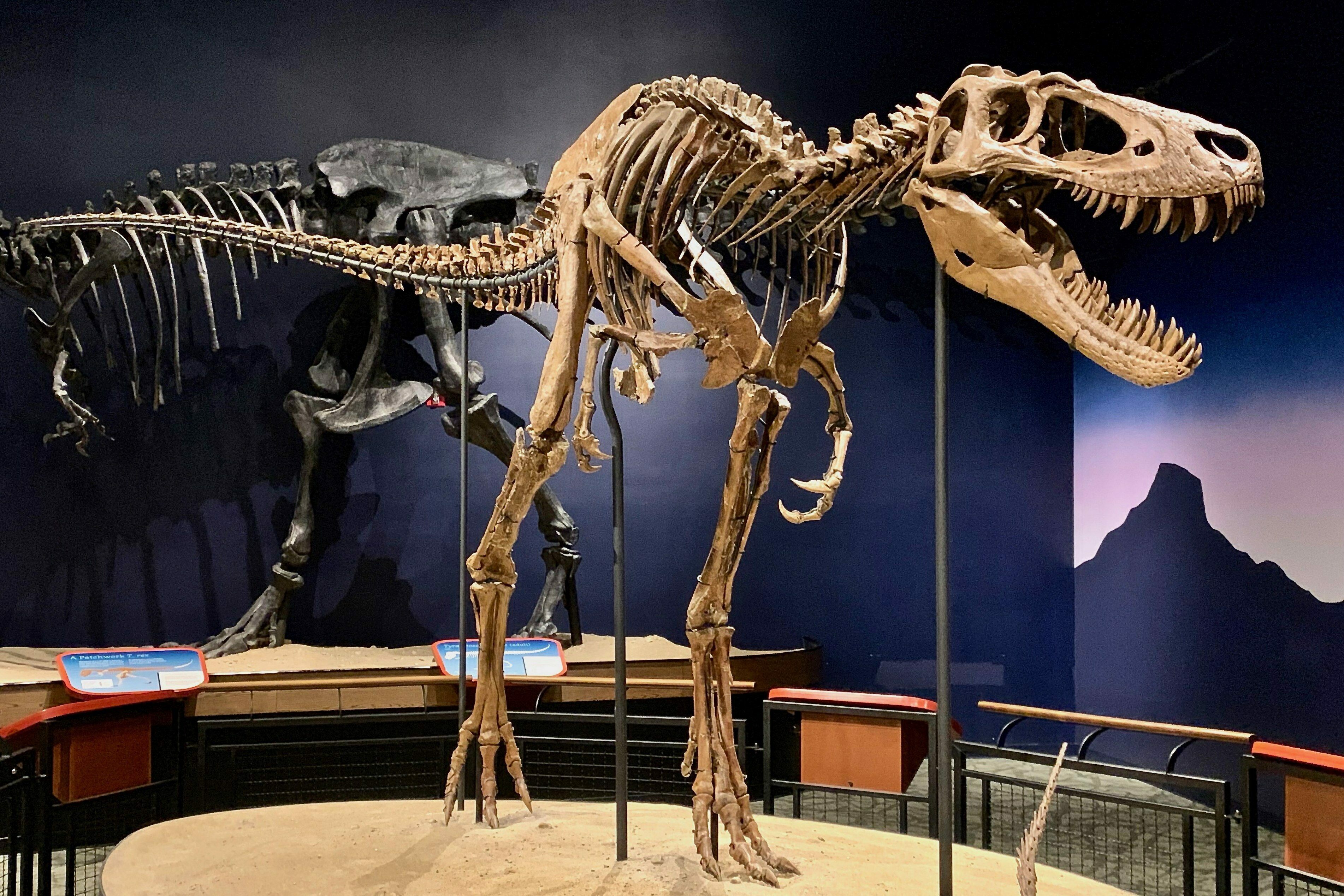
Skeletal mount of “Jane,” the holotype of Nanotyrannus lethaeus, on display at the Burpee Museum of Natural History in Rockford, Illinois.
The name means “dwarf tyrant”, but that label can be misleading. Nanotyrannus was not small in any absolute sense—it was still a multi-meter, multi-ton carnivore capable of killing large dinosaurs. It only appears “small” when compared to T. rex, the largest land predator of all time. Where T. rex was built like a living battering ram, Nanotyrannus appears sleeker: longer-legged, more lightly built, and likely faster.
What truly defines Nanotyrannus today is its ecological significance. If it is a valid genus—as argued in the 2025 study—then the Hell Creek Formation hosted more than one large tyrannosaur-line predator at the same time. That realization reshapes how scientists think about predator diversity, niche partitioning, and even how juvenile T. rex actually lived and hunted.
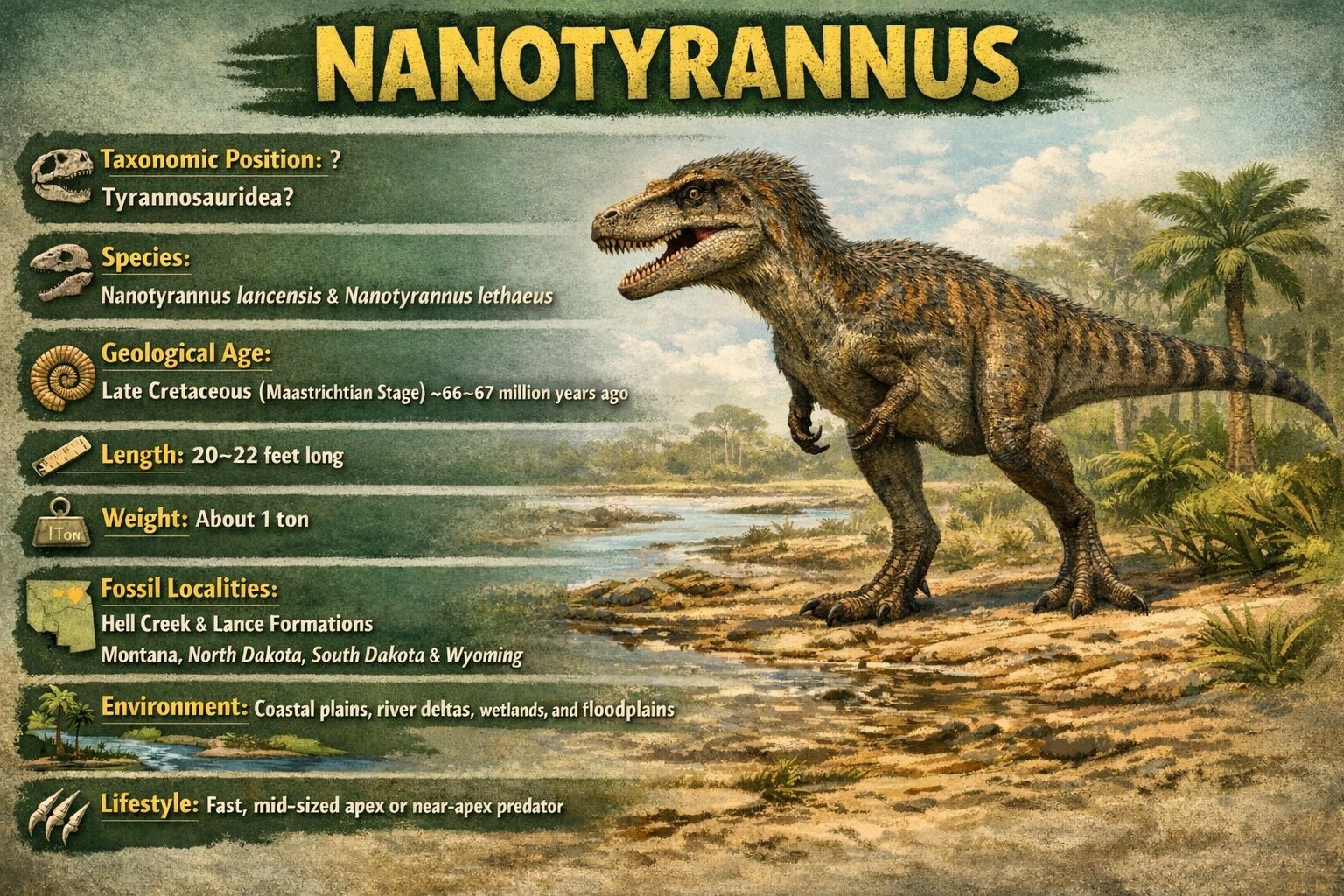
Infographic: About Nanotyrannus
Key Attributes
A Long & Contentious History of The Genus
Few dinosaurs have generated as much sustained controversy as Nanotyrannus. Its history is not merely a scientific disagreement, but a case study in how personalities, specimen access, and entrenched assumptions can shape consensus.
The story begins in 1946, when paleontologist Charles W. Gilmore described a small tyrannosaur skull from the Hell Creek Formation and named it Gorgosaurus lancensis. Tyrannosaur taxonomy at the time was broad and imprecise, and the skull’s unusual proportions were noted but not deeply explored.
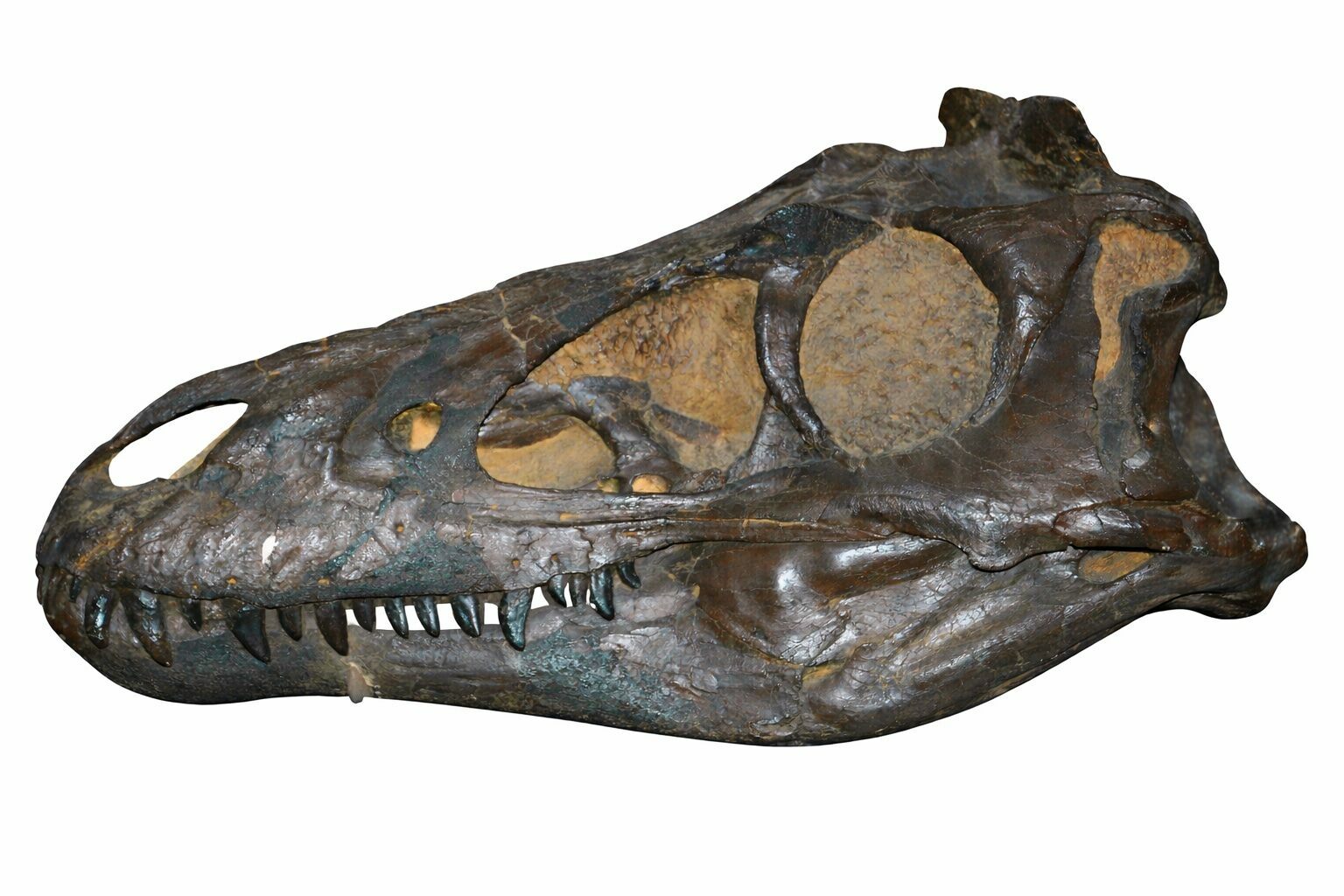
Nanotyrannus lancensis skull (60 cm), Late Cretaceous of Montana, USA. CMNH 5741, Cleveland Museum of Natural History.
In 1988, Robert Bakker reexamined the skull and proposed the new genus Nanotyrannus, envisioning it as a fast, lightly built predator living alongside T. rex. The idea was provocative—and immediately controversial.
By the 1990s, attention shifted toward dinosaur growth and ontogeny. In 1999, paleontologist Thomas Carr argued that the traits attributed to Nanotyrannus—narrow skull, large eye sockets, high tooth count—were consistent with juvenile T. rex. This interpretation gained strength with the discovery of the skeleton nicknamed “Jane” in 2001, which appeared juvenile and closely resembled the Cleveland skull.
Jack Horner, a leading authority on dinosaur growth, strongly supported this view and became one of the most vocal critics of Nanotyrannus, frequently dismissing it as a media-driven misunderstanding. By the mid-2000s, the juvenile-rex hypothesis had become the dominant interpretation in museums, textbooks, and much of the academic literature.
Yet dissent persisted. Pete Larson, president of the Black Hills Institute and deeply involved in tyrannosaur research and collecting, remained one of the most vocal defenders of Nanotyrannus as a valid genus. Larson and colleagues argued that the differences went beyond what could reasonably be explained by growth alone—particularly:
Robert Bakker also continued to support the idea of a distinct, more lightly built tyrannosaur living alongside T. rex, framing it as a fast, mid-sized predator occupying a different ecological role. However, many of the key specimens were either fragmentary or held in private collections, limiting access for broader study. This fueled skepticism and, at times, hardened positions on both sides. The debate became increasingly polarized—not just scientifically, but culturally within paleontology.
As research continued, a quiet tension emerged. The “juvenile rex” hypothesis required something unusual: that T. rex underwent an exceptionally radical anatomical transformation during growth. Critics noted that this would require:
Everything changed in 2025 with the detailed study of the tyrannosaur preserved in the Dueling Dinosaurs fossil. This individual showed clear signs of near skeletal maturity—around 20 years old—yet retained all the controversial Nanotyrannus traits and would never have approached T. rex size. The study concluded that these animals represent a distinct tyrannosaur-line genus, not juvenile T. rex.
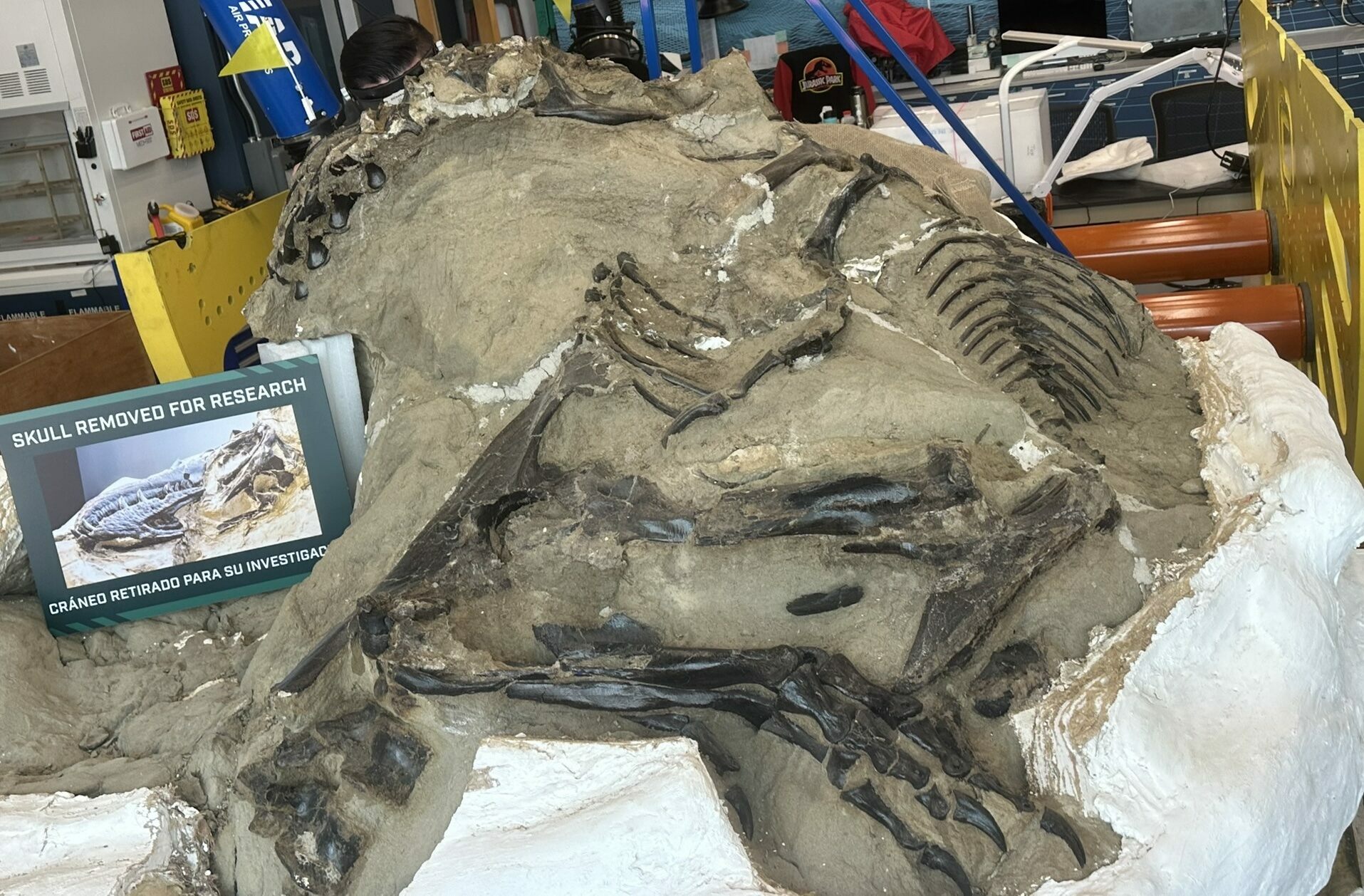
The Dueling Dinosaurs specimen undergoing preparation at the North Carolina Museum of Natural Sciences
The implication was profound: much of what scientists believed about juvenile T. rex anatomy may have been based on a different animal entirely.
Size: Nanotyrannus versus Tyrannosaurus rex
A full-grown Tyrannosaurus rex was among the largest terrestrial predators in Earth’s history. Well-preserved adult specimens indicate lengths of approximately 40–43 feet (12–13 meters) from snout to tail, with mass estimates commonly ranging from 8 to 9 metric tons (and sometimes higher for the very largest individuals).
Nanotyrannus was dramatically smaller—but still formidable. Mature individuals are estimated at 20–22 feet (6–6.7 m) long, roughly half the length of a large adult T. rex. Due to scaling effects, this translated to a mass of about 0.8–1 ton, or one-tenth the weight of T. rex.
This disparity implies very different hunting strategies. T. rex was a heavyweight predator built for bone-crushing force, while Nanotyrannus occupied a middle ground, emphasizing speed and agility over brute strength.
Anatomy: Skull, Teeth, and Body
The anatomy of Nanotyrannus is the foundation upon which the entire debate rests. While individual traits can sometimes be dismissed as juvenile features, the combination of skull structure, dentition, limb proportions, and overall body plan forms a coherent anatomical profile that does not align cleanly with known growth patterns of Tyrannosaurus rex.
Skull Morphology
The skull of Nanotyrannus is long, narrow, and relatively lightly built compared to the deep, power-optimized skull of T. rex. The snout is proportionally elongated, giving the animal a more gracile facial profile. The orbits (eye openings) are large, and the skull lacks the massive posterior broadening seen in adult T. rex.
Crucially, the differences are not merely a matter of scale. The internal architecture of the skull—such as the proportions of the facial bones and the overall geometry of the jaws—suggests a design optimized for speed and precision rather than maximum bite force. Transforming this skull into the massive, boxy cranium of T. rex would require extreme reshaping during growth, far beyond what is observed in other large theropods.
Dentition and Jaws
Dentally, Nanotyrannus stands apart. Specimens attributed to the genus consistently exhibit a higher tooth count than typical T. rex, particularly in the maxilla and dentary. This is not a subtle difference. The juvenile-T. rex hypothesis requires that T. rex lost a large number of teeth as it matured—an unusually dramatic pattern that is not well supported by tyrannosaur growth series.
The teeth themselves are generally more slender and laterally compressed than the famously thick, “banana-shaped” teeth of adult T. rex. Nanotyrannus teeth also tend to have much finer serrations and are significantly smaller overall, maxing out around 2½ inches in length, with most specimens closer to an inch or less. In contrast, T. rex teeth frequently reach sizes in the 3–5 inch range. This lighter, more finely edged morphology is better suited for slicing and gripping rather than crushing bone, reinforcing the idea that Nanotyrannus relied less on raw bite force and more on rapid, repeated bites.

Forelimbs and Hands
Perhaps the most anatomically decisive feature is the forelimb. Nanotyrannus possesses arms and hands that are absolutely longer than those of T. rex, not just longer in proportion to body size. This distinction is critical: as animals grow, limb bones lengthen—they do not shorten.
The hands appear more functional than the famously reduced arms of T. rex, suggesting a greater role in prey handling or stabilization. While still small relative to body size, the forelimbs of Nanotyrannus fit a predator that retained more versatility in its front limbs.
Hind Limbs and Locomotion
The hind limbs of Nanotyrannus are long and relatively slender, with proportions consistent with an agile, cursorial predator. Compared to T. rex, which became increasingly robust and heavy-bodied with age, Nanotyrannus appears better suited for speed and maneuverability.
These proportions support interpretations of a more active pursuit-based hunting style, especially in open floodplains or along river margins where acceleration and endurance would have been advantageous.
Overall Body Plan
Taken as a whole, Nanotyrannus presents a coherent anatomical package: a lightly built tyrannosaur-line predator with a narrow skull, numerous slicing teeth, relatively long arms, and long legs. This is not simply a “smaller T. rex,” but a distinct body plan optimized for a different ecological role.
Importantly, the 2025 analysis argues that these traits persist in individuals that were near skeletal maturity. This eliminates the need to invoke extreme, undocumented growth transformations and supports the interpretation of Nanotyrannus as a separate genus rather than a transient developmental stage.
In life, Nanotyrannus would have looked—and functioned—very differently from T. rex: less a living sledgehammer, and more a fast, cutting predator built to exploit speed, agility, and precision at the end of the Age of Dinosaurs.
This size disparity has important biological implications. T. rex was built as a heavyweight apex predator, relying on enormous bite force and sheer mass to overpower prey. Nanotyrannus, by contrast, occupied a middle ground: large enough to tackle substantial animals, but light enough to favor speed, agility, and pursuit over brute force.
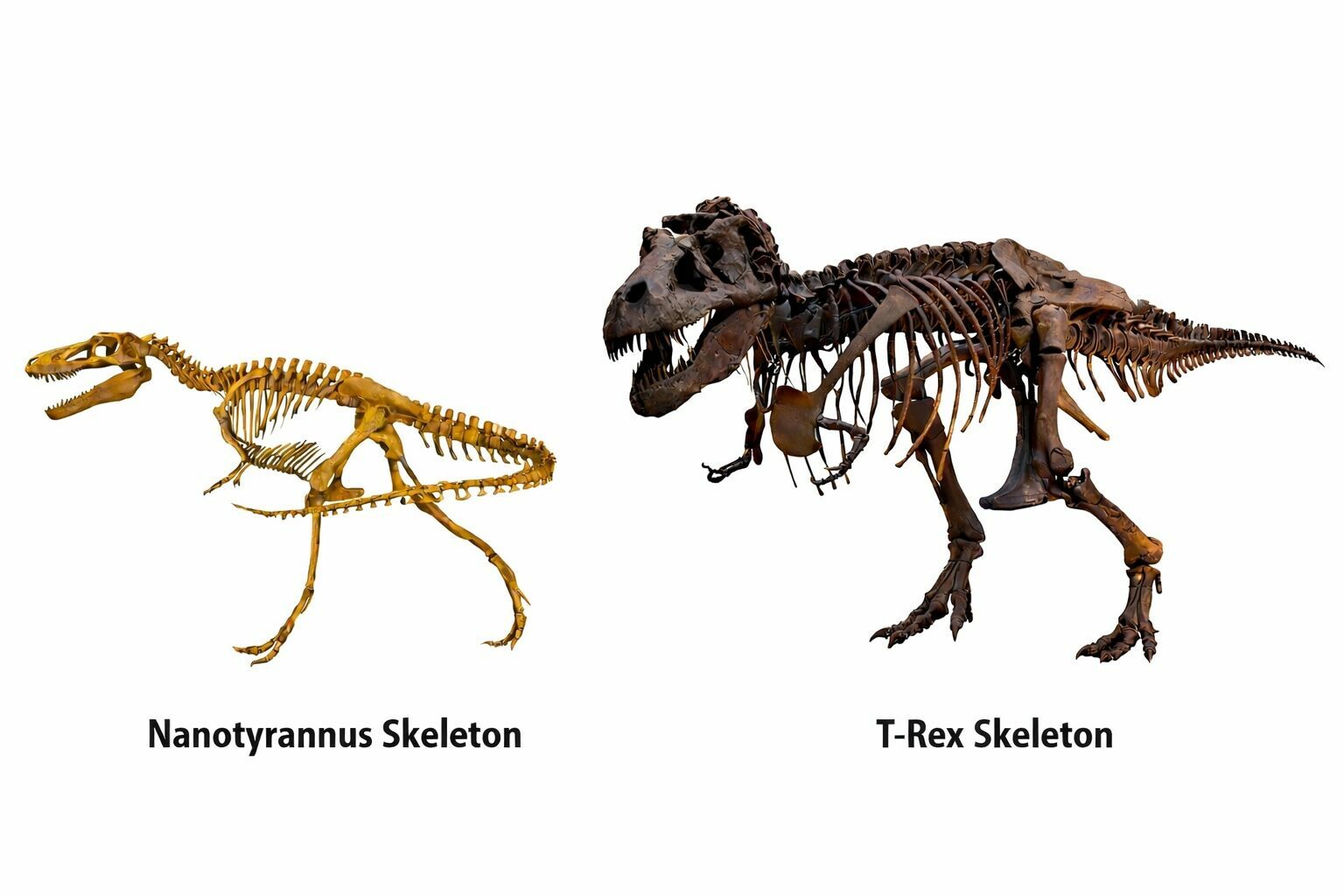
A cast of a adult Nanotyrannus skeleton next to a T-Rex skeleton. Notice how much more robust the bones of the T-Rex are.
Behavior
Understanding the paleobiology of Nanotyrannus—how it moved, hunted, and interacted with its environment—is essential to appreciating why it was not simply a smaller version of Tyrannosaurus rex. Its anatomy points toward a predator with a very different lifestyle, one shaped by speed, agility, and precision rather than overwhelming force.
Speed and Locomotion
The limb proportions of Nanotyrannus strongly suggest it was a relatively fast-moving theropod. Its long, slender hind limbs indicate a cursorial build, optimized for efficient running rather than sheer power. While exact speed estimates are difficult and vary depending on modeling assumptions, Nanotyrannus was almost certainly faster than adult T. rex, which was constrained by its enormous mass.
Rather than sustained high-speed chases, Nanotyrannus likely relied on short bursts of acceleration—ideal for ambush or pursuit over open floodplains and along river margins. Its lighter body mass would have reduced stress on bones and joints, allowing greater maneuverability and quicker directional changes.
Bite Force and Feeding Mechanics
In contrast to T. rex, which possessed one of the most powerful bites ever measured for a terrestrial animal, Nanotyrannus likely had a significantly weaker bite force—though still formidable by any modern standard. Its narrower skull and more slender teeth suggest a feeding strategy focused on slicing flesh rather than crushing bone.
This does not imply inefficiency. Many successful predators rely on repeated, well-placed bites rather than a single catastrophic strike. The higher tooth count in Nanotyrannus would have produced a cutting edge capable of inflicting rapid blood loss, particularly against smaller or more lightly built prey.
Hunting Strategy
Taken together, the evidence points toward Nanotyrannus as an active hunter, rather than a predator dependent on ambush alone or scavenging dominance. It likely targeted:
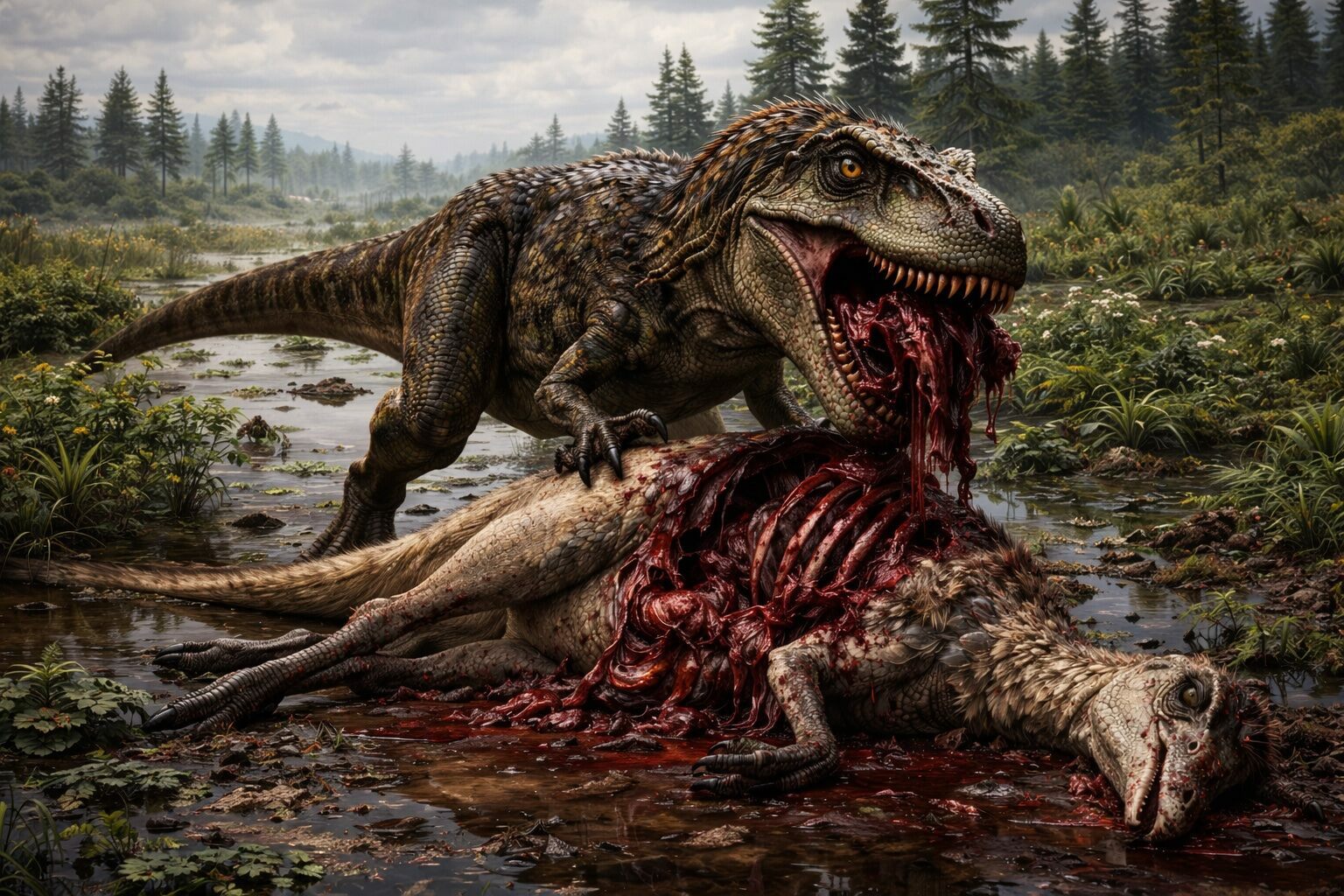
Nanotyrannus feeding on a Struthiomimus in the swampy wetlands of what is now the Hell Creek Formation.
Rather than overpowering prey through brute force, Nanotyrannus may have relied on speed, repeated attacks, and precision biting—harrying prey until exhaustion or blood loss set in. This strategy would have allowed it to coexist alongside T. rex without direct competition for the largest carcasses.
Paleoecology: The World Nanotyrannus Lived In
Nanotyrannus lived during the final million years of the Cretaceous Period, within one of the most intensively studied fossil ecosystems on Earth: the Hell Creek paleoenvironment of western North America. This was not a harsh or barren landscape, but a rich, dynamic coastal plain shaped by rivers, forests, seasonal flooding, and proximity to the Western Interior Seaway.
The Hell Creek region was a low-lying, humid coastal plain situated between rising highlands to the west and the retreating Western Interior Seaway to the east. The climate was warm and seasonally wet, supporting extensive river systems that meandered across broad floodplains. These rivers regularly overflowed their banks, depositing layers of sand, silt, and mud. This process not only created fertile soils that sustained dense plant growth, but also produced the sedimentary conditions that make Hell Creek one of the most fossil-rich formations in the world.
The landscape was a mosaic of habitats rather than a uniform environment. Forests dominated much of the terrain, composed of flowering plants (angiosperms), conifers, ferns, and understory vegetation. Open floodplains, riverbanks, wetlands, and swampy lowlands broke up the forested areas, creating ecological diversity across relatively short distances. For a predator like Nanotyrannus, this patchwork environment offered numerous hunting opportunities. Forest edges and river margins would have been ideal zones for ambush and pursuit, while open floodplains allowed space for short, fast chases.
The Hell Creek ecosystem supported a remarkably diverse fauna. Large herbivores included Triceratops, Edmontosaurus, and Ankylosaurus, while smaller dinosaurs—ornithomimosaurs, pachycephalosaurs, and juvenile individuals of larger species—provided a range of potential prey sizes. Non-dinosaurian animals were also abundant. Crocodilians inhabited rivers and wetlands, turtles were widespread, and small mammals occupied burrows and forest undergrowth. This abundance of medium-sized vertebrates would have been particularly important for Nanotyrannus, whose size and hunting style were well suited to prey smaller than the massive adults targeted by T. rex.
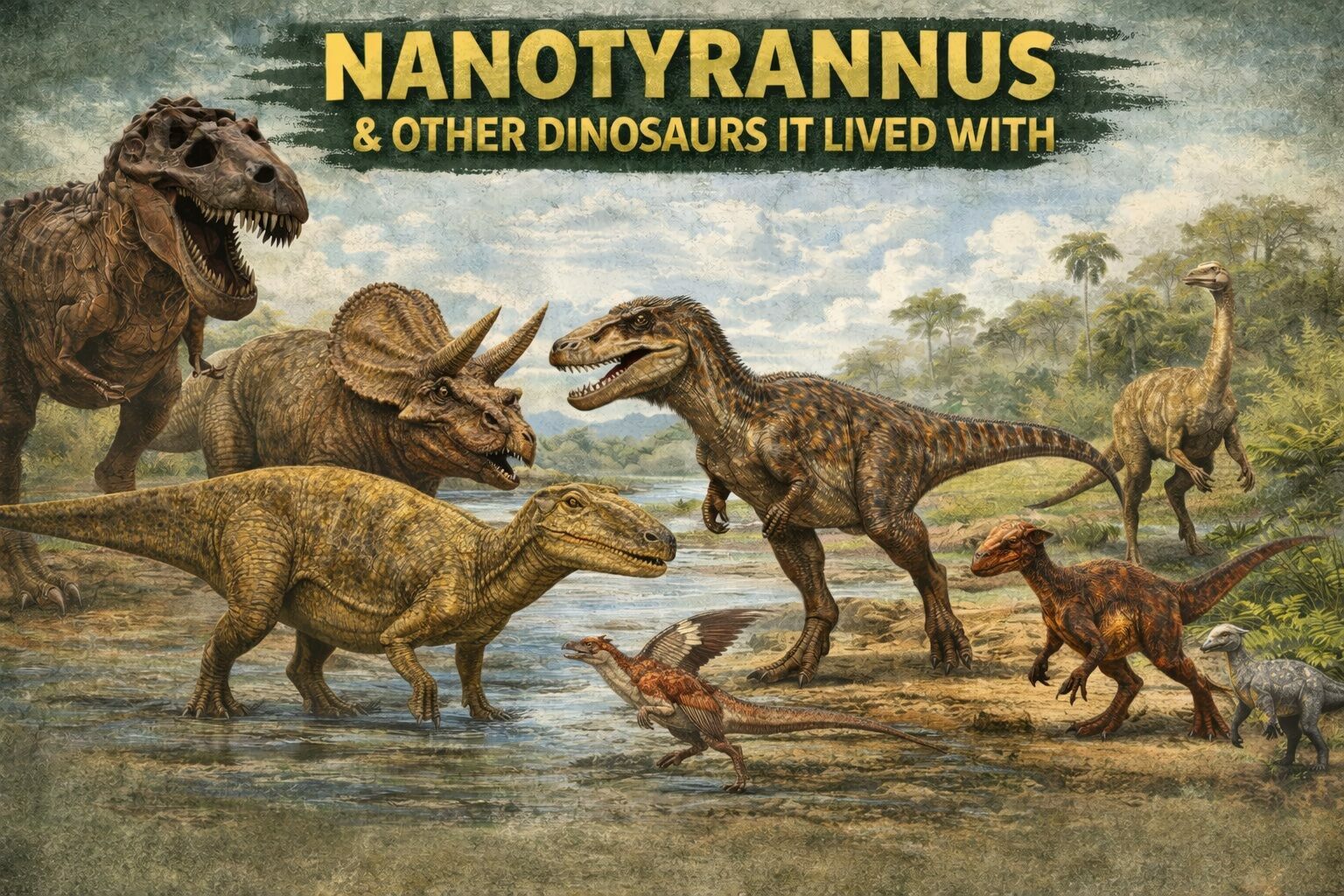
Nanotyrannus along with some of the other dinosaurs it lived with including T-Rex, Triceratops, Edmontosaurus, Thescelosaurus, Pachycephalosaurus and others.
Seasonal flooding, shifting river channels, and periodic environmental stress would have created fluctuating conditions for predators and prey alike. During times of abundance, Nanotyrannus may have hunted actively across floodplains and forest edges. During leaner periods, it may have relied more heavily on opportunistic feeding, including scavenging. These pressures favored adaptable predators—animals capable of switching strategies depending on conditions. The anatomical and behavioral flexibility inferred for Nanotyrannus fits well within this dynamic, ever-changing landscape.
This realization has far-reaching implications. It suggests that some fossils once used to reconstruct juvenile T. rex behavior may instead record the life history of a different animal entirely. In that sense, Nanotyrannus does not just add another name to the tyrannosaur family tree—it reshapes how scientists understand the final ecosystems of the dinosaur era.
RELATED ARTICLES
The Ultimate Guide To Tyrannosaurs

Allosaurus: The Apex Predator of the Jurassic

Nanotyrannus Returns: New Research Proves It Wasn’t a Baby T. rex

Giganotosaurus: Cretaceous Terror Of Argentina

Tyrannosaurus Rex (T-Rex) - The Last King of the Dinosaurs

Dinosaurs Set To Appear In Jurassic World: Dominion