 Reviews

Top 10 Most Iconic Dinosaurs
Dinosaurs have captured human imagination for centuries, towering over our dreams as symbols of power, mystery, and prehistoric wonder. From the terrifying predators that ruled ancient landscapes to the peaceful giants that wandered lush forests, these creatures have become some of the most recognizable icons in natural history. Their fossils fill museum halls, their names dominate pop culture, and their appearances in movies, books, and toys have made them legendary across generations.
But among the hundreds of dinosaur species discovered, only a select few have reached true superstar status. These are the dinosaurs that almost everyone can name—the ones instantly recognized by their horns, armor, crests, or sheer size. They are iconic not just because of what they were, but because of what they represent: the awe-inspiring world of Earth’s deep past.
Below are the Top 10 Most Iconic Dinosaurs of All Time, each one a prehistoric legend with a lasting legacy.
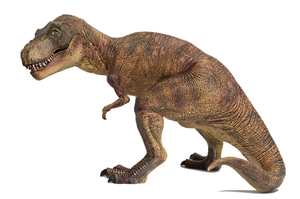
No dinosaur is more famous than Tyrannosaurus rex, often called the “King of the Dinosaurs.” With its massive skull, bone-crushing bite, and towering presence, T. rex has become the ultimate symbol of prehistoric power. Living about 68 to 66 million years ago during the Late Cretaceous, this predator ruled what is now North America.
T. rex was enormous, stretching up to 40 feet long and weighing as much as nine tons. Its jaws were lined with serrated teeth the size of bananas, capable of delivering one of the strongest bites of any land animal in history. Even its small arms, often joked about, were incredibly muscular and may have helped it grip prey.
What makes T. rex so iconic is its dominance in both science and pop culture. Fossil discoveries like “Sue,” one of the most complete specimens ever found, have given researchers remarkable insight into its biology. Meanwhile, movies like Jurassic Park cemented its role as the face of dinosaurs worldwide.
T. rex represents raw strength, survival, and mystery. Whether seen towering in museums or roaring on screen, it remains the most legendary dinosaur ever discovered.
Few dinosaurs are as instantly recognizable as Triceratops, the famous three-horned herbivore. Living alongside T. rex during the Late Cretaceous, Triceratops was one of the last dinosaurs to exist before the mass extinction.
This dinosaur measured up to 30 feet long and weighed as much as a small elephant. Its most striking feature was its massive skull, adorned with two long brow horns, a shorter nose horn, and a large bony frill. These features weren’t just for show—they likely played roles in defense, display, and even battles between rivals.
Triceratops is iconic because it embodies the classic prehistoric showdown: predator versus prey. It’s often imagined facing off against T. rex, using its horns like spears. Fossil evidence even suggests such encounters may have happened.
Beyond its dramatic appearance, Triceratops is one of the most commonly found large dinosaurs, meaning it has been studied extensively. Its fossils are museum favorites, and its bold silhouette makes it a staple in dinosaur books and toys.
Triceratops stands as one of the greatest symbols of dinosaur strength—not as a hunter, but as a powerful survivor built for defense.
Among the strangest and most fascinating dinosaurs ever discovered is Spinosaurus, the sail-backed predator that continues to spark debate and curiosity. Living about 100 million years ago in what is now North Africa, Spinosaurus may have been the largest carnivorous dinosaur of all time—possibly even bigger than T. rex.
Its most iconic feature was the enormous sail along its back, formed by tall spines extending from its vertebrae. Scientists believe this sail could have been used for display, temperature regulation, or intimidation. Spinosaurus also had a long, crocodile-like snout filled with conical teeth, suggesting it specialized in catching fish.
What makes Spinosaurus so legendary is its uniqueness. Unlike most theropods, it was semi-aquatic, adapted for life both on land and in water. Recent research indicates it may have swum through ancient rivers, hunting prey in a way no other giant dinosaur did.
Spinosaurus became a pop culture star after appearing in Jurassic Park III, where it was portrayed as a terrifying rival to T. rex. That portrayal, combined with its mysterious fossil history—much of the original skeleton was destroyed in World War II—adds to its mythical reputation.
Spinosaurus remains one of the most iconic dinosaurs because it challenges what we think we know about prehistoric predators.
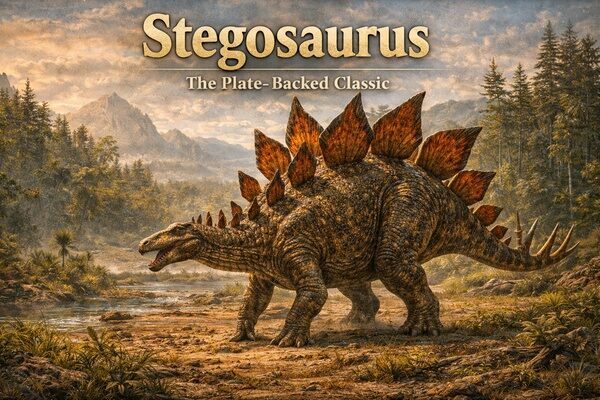
Stegosaurus — The Plate-Backed Classic
With its spiked tail and distinctive back plates, Stegosaurus is one of the most recognizable dinosaurs ever discovered. Living about 150 million years ago during the Late Jurassic, Stegosaurus roamed western North America, browsing on low-growing plants.
Stegosaurus was a heavily built herbivore, about 30 feet long, with a small head and a brain famously compared in size to a walnut. But what it lacked in intelligence, it made up for in defense. Its tail was armed with four deadly spikes, known as the “thagomizer,” capable of delivering powerful blows to predators like Allosaurus.
The dinosaur’s iconic plates—large, flat structures rising from its back—remain one of paleontology’s greatest mysteries. They may have helped regulate body temperature, served as display structures, or made Stegosaurus appear larger and more intimidating.
Stegosaurus has become a symbol of dinosaurs in general, often appearing in children’s books, cartoons, and museum exhibits. Its unusual shape makes it instantly memorable, even to people who know little about prehistoric life.
Stegosaurus represents the strange creativity of evolution. Its armor-like design and unmistakable outline have secured its place as one of the most beloved dinosaurs of all time.
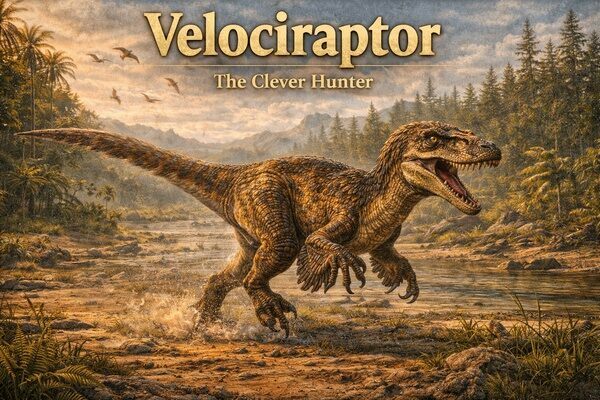
Velociraptor — The Clever Hunter
Few dinosaurs have enjoyed as much modern fame as Velociraptor, thanks largely to its starring role in the Jurassic Park franchise. Though the real Velociraptor was much smaller than its movie counterpart, it was still a formidable predator that lived about 75 million years ago in Mongolia.
Velociraptor was roughly the size of a turkey, but it was fast, agile, and equipped with deadly weapons. Its most famous feature was the large sickle-shaped claw on each foot, used to slash and pin down prey. Fossils also show that Velociraptor was covered in feathers, linking it closely to modern birds.
What makes Velociraptor so iconic is its reputation for intelligence. While pack hunting remains debated, its anatomy suggests it was an active and strategic predator. Pop culture has transformed it into the ultimate “smart dinosaur,” making it a fan favorite worldwide.
Velociraptor symbolizes speed, cunning, and danger. Its blend of scientific intrigue and Hollywood fame ensures it remains one of the most recognizable dinosaurs ever discovered.
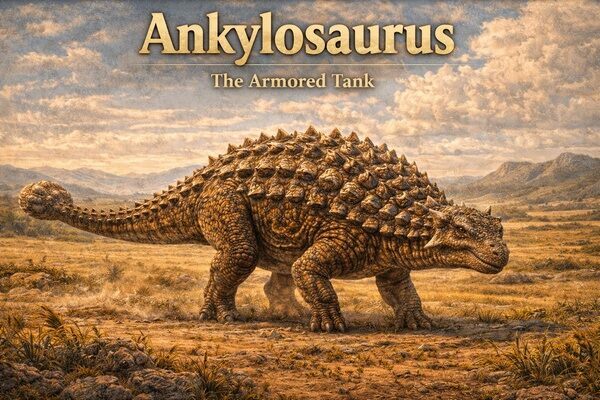
Ankylosaurus — The Armored Tank
If dinosaurs had medieval knights, Ankylosaurus would be among them. This heavily armored herbivore lived about 68 million years ago and is famous for its tank-like body and massive club tail.
Ankylosaurus was covered in thick bony plates called osteoderms, providing protection from predators. Its tail ended in a powerful bone club capable of breaking bones with a single strike. Even the mighty T. rex would have thought twice before attacking such a well-defended creature.
Its low, wide build made it nearly impossible to flip over, and its armor acted as a shield against bites. Ankylosaurus is iconic because it represents defense perfected by evolution—one of the ultimate survivors of the dinosaur world.
Its unique appearance has made it a favorite in museums, documentaries, and dinosaur media. Ankylosaurus proves that not all legendary dinosaurs were hunters—some became icons by being nearly unstoppable prey.
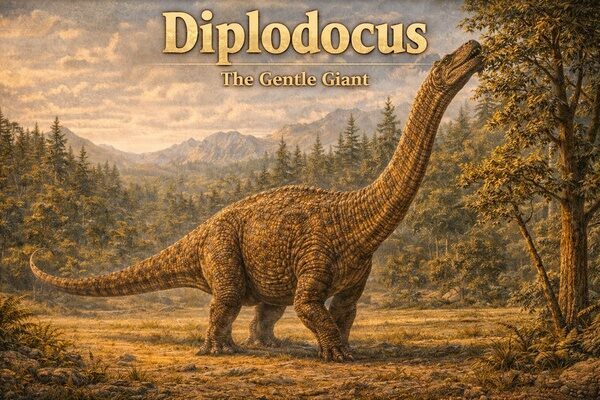
Diplodocus — The Gentle Giant
Among the most famous long-necked dinosaurs is Diplodocus, a true icon of museum halls and prehistoric imagination. Living during the Late Jurassic, Diplodocus was one of the longest dinosaurs ever, reaching lengths of up to 90 feet.
Despite its enormous size, Diplodocus was a peaceful herbivore, feeding on ferns and low vegetation. Its whip-like tail may have been used for defense or communication, and its long neck allowed it to graze across wide areas without moving much.
Diplodocus became iconic partly because of its early discovery and widespread display. Casts of Diplodocus skeletons were gifted to museums around the world in the early 1900s, making it one of the first dinosaurs to achieve global fame.
Diplodocus represents the awe of dinosaur scale—proof that Earth once hosted creatures beyond anything alive today.
Before T. rex, there was Allosaurus, the dominant predator of the Late Jurassic. Living around 150 million years ago, Allosaurus hunted large herbivores like Stegosaurus and Diplodocus.
Allosaurus was about 30 feet long, with sharp teeth and powerful jaws designed for slicing flesh. Unlike the bone-crushing bite of T. rex, Allosaurus may have used a hatchet-like attack style, tearing into prey with repeated strikes.
Its fossils are among the most common theropod finds, giving scientists an excellent understanding of its anatomy and behavior. Allosaurus is iconic because it represents the classic Jurassic-era carnivore, often featured in documentaries and dinosaur battles.
It may not have the fame of T. rex, but Allosaurus remains one of the most important predators in dinosaur history.
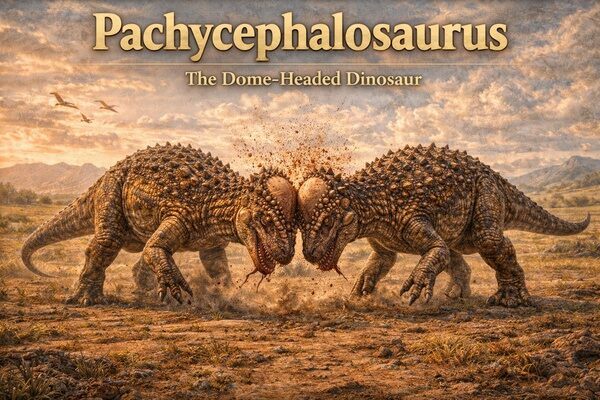
Pachycephalosaurus — The Dome-Headed Dinosaur
With its thick, rounded skull, Pachycephalosaurus stands out as one of the most unusual dinosaurs ever discovered. Living during the Late Cretaceous, this herbivore is best known for its helmet-like dome head.
Scientists believe Pachycephalosaurus may have used its skull for head-butting contests, similar to modern rams, though this behavior is still debated. Its skull could be up to 10 inches thick, one of the most extreme adaptations among dinosaurs.
Pachycephalosaurus is iconic because of its uniqueness. Few dinosaurs look anything like it, and its mysterious behavior makes it a favorite among dinosaur fans.
Its dome-headed silhouette ensures it remains unforgettable in both science and popular media.
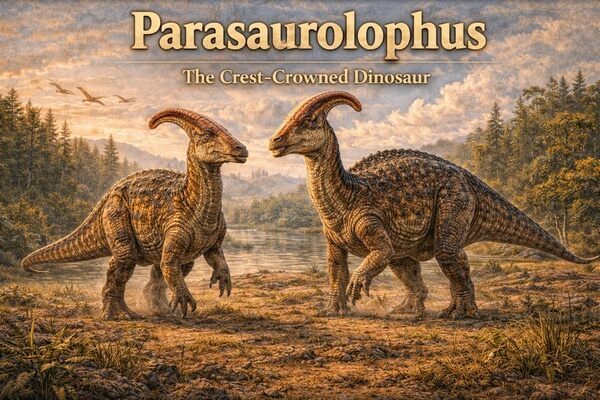
Parasaurolophus — The Crest-Crowned Dinosaur
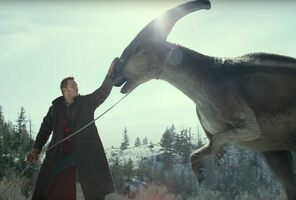
Few dinosaurs are as elegant and instantly recognizable as Parasaurolophus, the crested hadrosaur of the Late Cretaceous. Its long, curved head crest is one of the most distinctive features in dinosaur history.
Scientists believe the crest may have been used for communication, producing resonating sounds, or for visual display. Parasaurolophus was a herbivore that traveled in herds, grazing on plants across ancient North America.
Parasaurolophus is iconic because it combines beauty, mystery, and uniqueness. Its crest has made it a favorite in documentaries, books, and dinosaur art.
It represents the diversity of dinosaur life—not just monsters and giants, but creatures with complex social behaviors and striking forms.
But among the hundreds of dinosaur species discovered, only a select few have reached true superstar status. These are the dinosaurs that almost everyone can name—the ones instantly recognized by their horns, armor, crests, or sheer size. They are iconic not just because of what they were, but because of what they represent: the awe-inspiring world of Earth’s deep past.
Below are the Top 10 Most Iconic Dinosaurs of All Time, each one a prehistoric legend with a lasting legacy.
1. Tyrannosaurus rex — The Dinosaur Tyrant King

No dinosaur is more famous than Tyrannosaurus rex, often called the “King of the Dinosaurs.” With its massive skull, bone-crushing bite, and towering presence, T. rex has become the ultimate symbol of prehistoric power. Living about 68 to 66 million years ago during the Late Cretaceous, this predator ruled what is now North America.
T. rex was enormous, stretching up to 40 feet long and weighing as much as nine tons. Its jaws were lined with serrated teeth the size of bananas, capable of delivering one of the strongest bites of any land animal in history. Even its small arms, often joked about, were incredibly muscular and may have helped it grip prey.
What makes T. rex so iconic is its dominance in both science and pop culture. Fossil discoveries like “Sue,” one of the most complete specimens ever found, have given researchers remarkable insight into its biology. Meanwhile, movies like Jurassic Park cemented its role as the face of dinosaurs worldwide.
T. rex represents raw strength, survival, and mystery. Whether seen towering in museums or roaring on screen, it remains the most legendary dinosaur ever discovered.
2. Triceratops — The Three-Horned Defender

Few dinosaurs are as instantly recognizable as Triceratops, the famous three-horned herbivore. Living alongside T. rex during the Late Cretaceous, Triceratops was one of the last dinosaurs to exist before the mass extinction.
This dinosaur measured up to 30 feet long and weighed as much as a small elephant. Its most striking feature was its massive skull, adorned with two long brow horns, a shorter nose horn, and a large bony frill. These features weren’t just for show—they likely played roles in defense, display, and even battles between rivals.
Triceratops is iconic because it embodies the classic prehistoric showdown: predator versus prey. It’s often imagined facing off against T. rex, using its horns like spears. Fossil evidence even suggests such encounters may have happened.
Beyond its dramatic appearance, Triceratops is one of the most commonly found large dinosaurs, meaning it has been studied extensively. Its fossils are museum favorites, and its bold silhouette makes it a staple in dinosaur books and toys.
Triceratops stands as one of the greatest symbols of dinosaur strength—not as a hunter, but as a powerful survivor built for defense.
3. Spinosaurus — The Sail-Backed River Monster

Among the strangest and most fascinating dinosaurs ever discovered is Spinosaurus, the sail-backed predator that continues to spark debate and curiosity. Living about 100 million years ago in what is now North Africa, Spinosaurus may have been the largest carnivorous dinosaur of all time—possibly even bigger than T. rex.
Its most iconic feature was the enormous sail along its back, formed by tall spines extending from its vertebrae. Scientists believe this sail could have been used for display, temperature regulation, or intimidation. Spinosaurus also had a long, crocodile-like snout filled with conical teeth, suggesting it specialized in catching fish.
What makes Spinosaurus so legendary is its uniqueness. Unlike most theropods, it was semi-aquatic, adapted for life both on land and in water. Recent research indicates it may have swum through ancient rivers, hunting prey in a way no other giant dinosaur did.
Spinosaurus became a pop culture star after appearing in Jurassic Park III, where it was portrayed as a terrifying rival to T. rex. That portrayal, combined with its mysterious fossil history—much of the original skeleton was destroyed in World War II—adds to its mythical reputation.
Spinosaurus remains one of the most iconic dinosaurs because it challenges what we think we know about prehistoric predators.
4. Stegosaurus — The Plate-Backed Classic
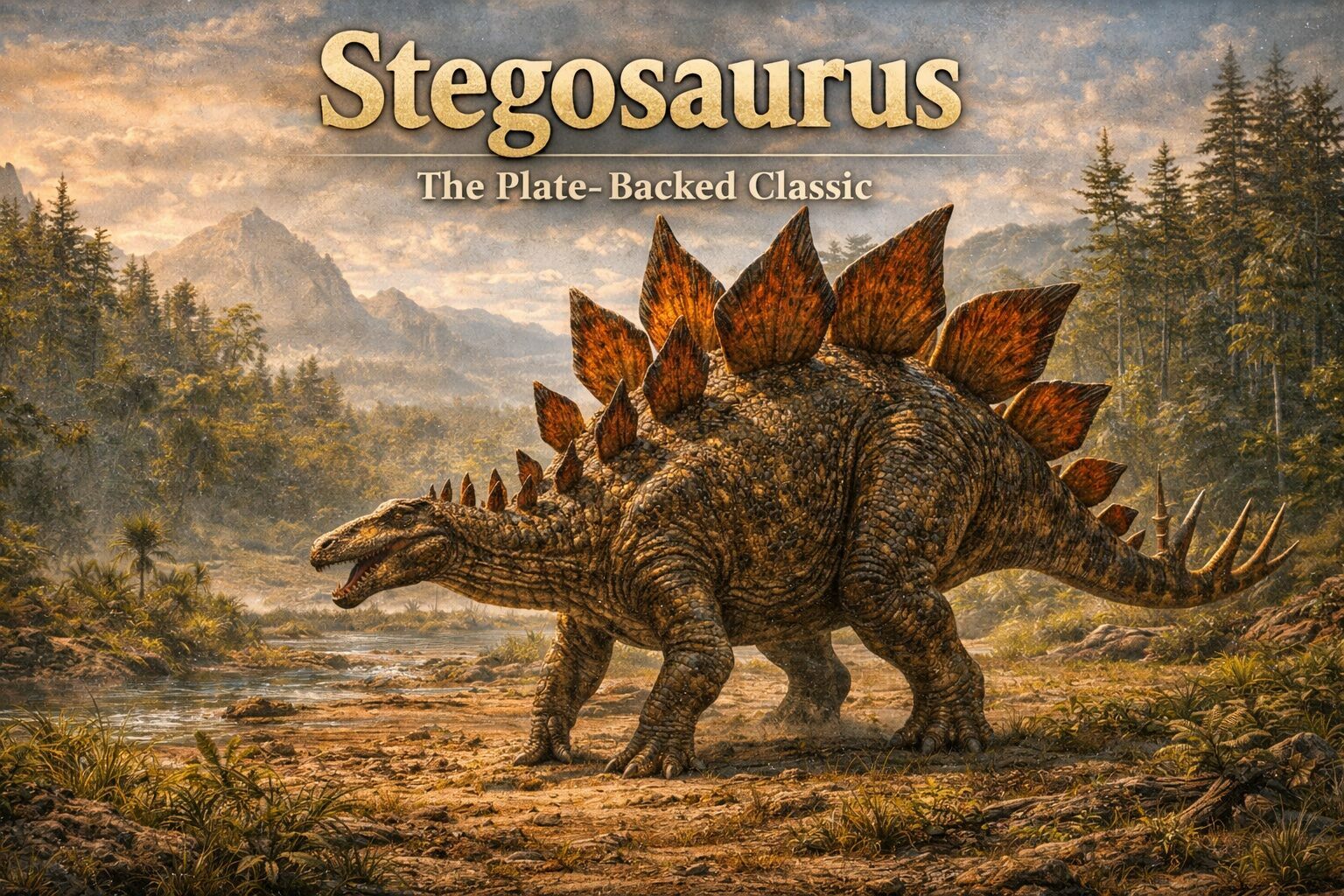
Stegosaurus — The Plate-Backed Classic
With its spiked tail and distinctive back plates, Stegosaurus is one of the most recognizable dinosaurs ever discovered. Living about 150 million years ago during the Late Jurassic, Stegosaurus roamed western North America, browsing on low-growing plants.
Stegosaurus was a heavily built herbivore, about 30 feet long, with a small head and a brain famously compared in size to a walnut. But what it lacked in intelligence, it made up for in defense. Its tail was armed with four deadly spikes, known as the “thagomizer,” capable of delivering powerful blows to predators like Allosaurus.
The dinosaur’s iconic plates—large, flat structures rising from its back—remain one of paleontology’s greatest mysteries. They may have helped regulate body temperature, served as display structures, or made Stegosaurus appear larger and more intimidating.
Stegosaurus has become a symbol of dinosaurs in general, often appearing in children’s books, cartoons, and museum exhibits. Its unusual shape makes it instantly memorable, even to people who know little about prehistoric life.
Stegosaurus represents the strange creativity of evolution. Its armor-like design and unmistakable outline have secured its place as one of the most beloved dinosaurs of all time.
5. Velociraptor — The Clever Hunter
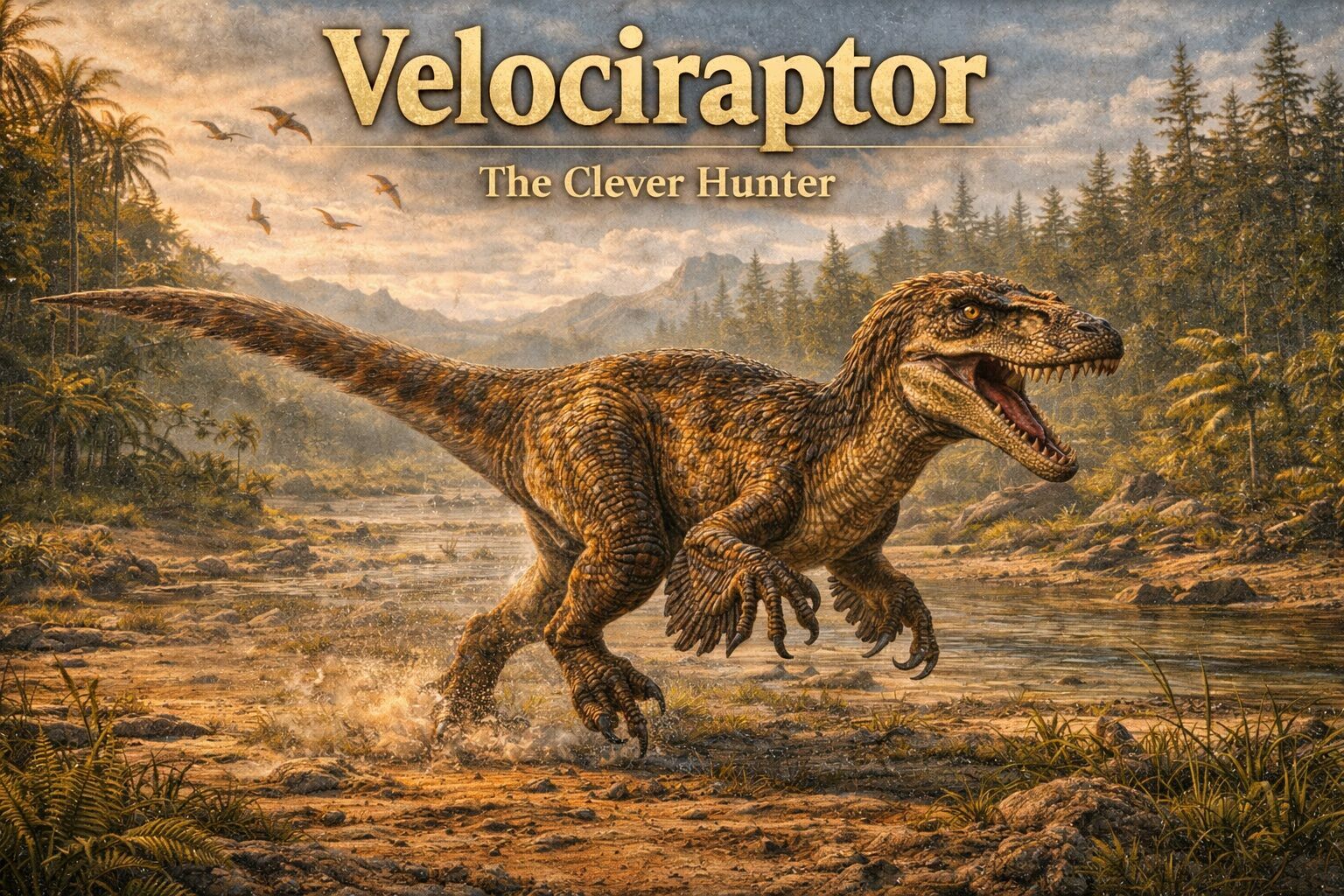
Velociraptor — The Clever Hunter
Few dinosaurs have enjoyed as much modern fame as Velociraptor, thanks largely to its starring role in the Jurassic Park franchise. Though the real Velociraptor was much smaller than its movie counterpart, it was still a formidable predator that lived about 75 million years ago in Mongolia.
Velociraptor was roughly the size of a turkey, but it was fast, agile, and equipped with deadly weapons. Its most famous feature was the large sickle-shaped claw on each foot, used to slash and pin down prey. Fossils also show that Velociraptor was covered in feathers, linking it closely to modern birds.
What makes Velociraptor so iconic is its reputation for intelligence. While pack hunting remains debated, its anatomy suggests it was an active and strategic predator. Pop culture has transformed it into the ultimate “smart dinosaur,” making it a fan favorite worldwide.
Velociraptor symbolizes speed, cunning, and danger. Its blend of scientific intrigue and Hollywood fame ensures it remains one of the most recognizable dinosaurs ever discovered.
6. Ankylosaurus — The Armored Tank
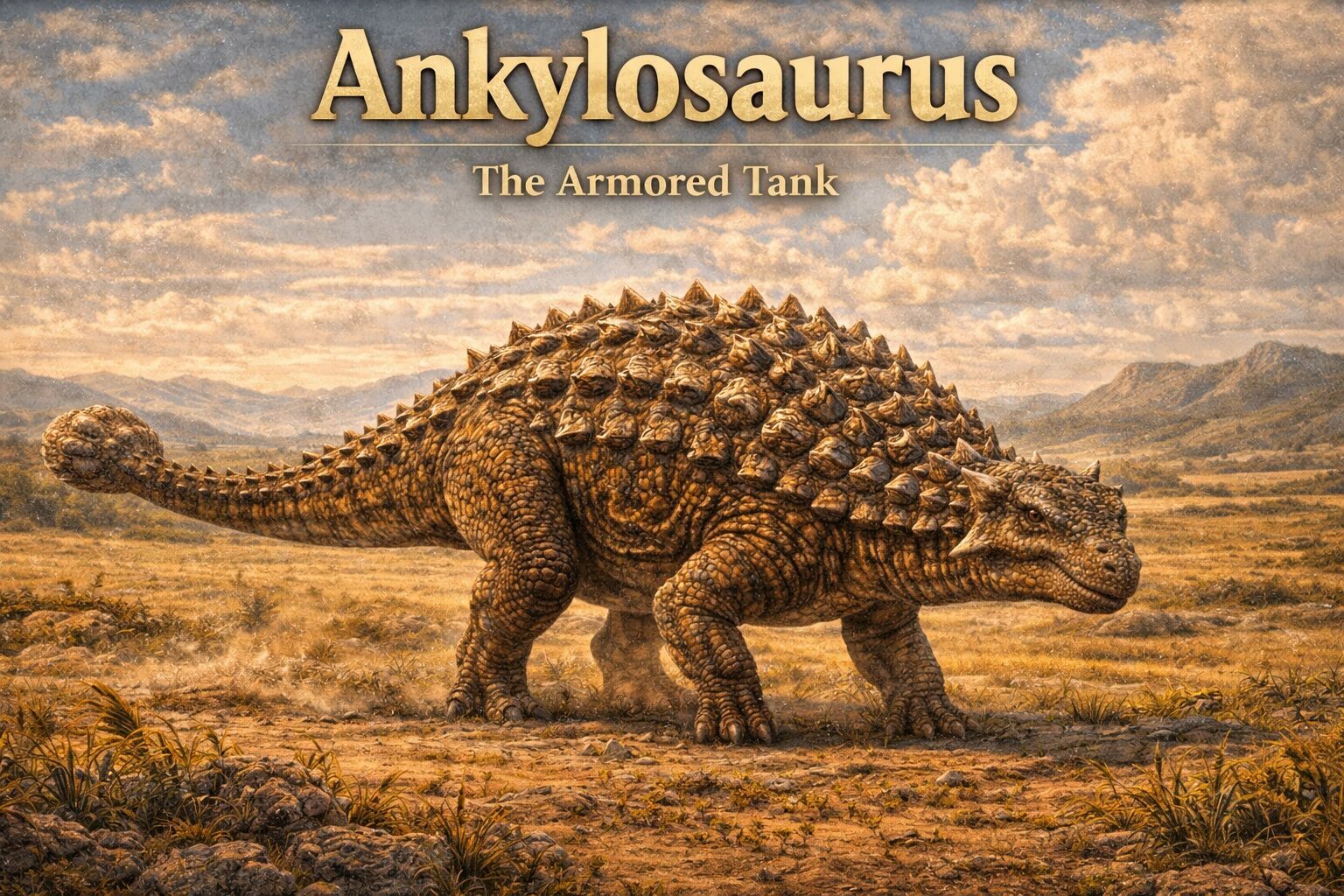
Ankylosaurus — The Armored Tank
If dinosaurs had medieval knights, Ankylosaurus would be among them. This heavily armored herbivore lived about 68 million years ago and is famous for its tank-like body and massive club tail.
Ankylosaurus was covered in thick bony plates called osteoderms, providing protection from predators. Its tail ended in a powerful bone club capable of breaking bones with a single strike. Even the mighty T. rex would have thought twice before attacking such a well-defended creature.
Its low, wide build made it nearly impossible to flip over, and its armor acted as a shield against bites. Ankylosaurus is iconic because it represents defense perfected by evolution—one of the ultimate survivors of the dinosaur world.
Its unique appearance has made it a favorite in museums, documentaries, and dinosaur media. Ankylosaurus proves that not all legendary dinosaurs were hunters—some became icons by being nearly unstoppable prey.
7. Diplodocus — The Gentle Giant
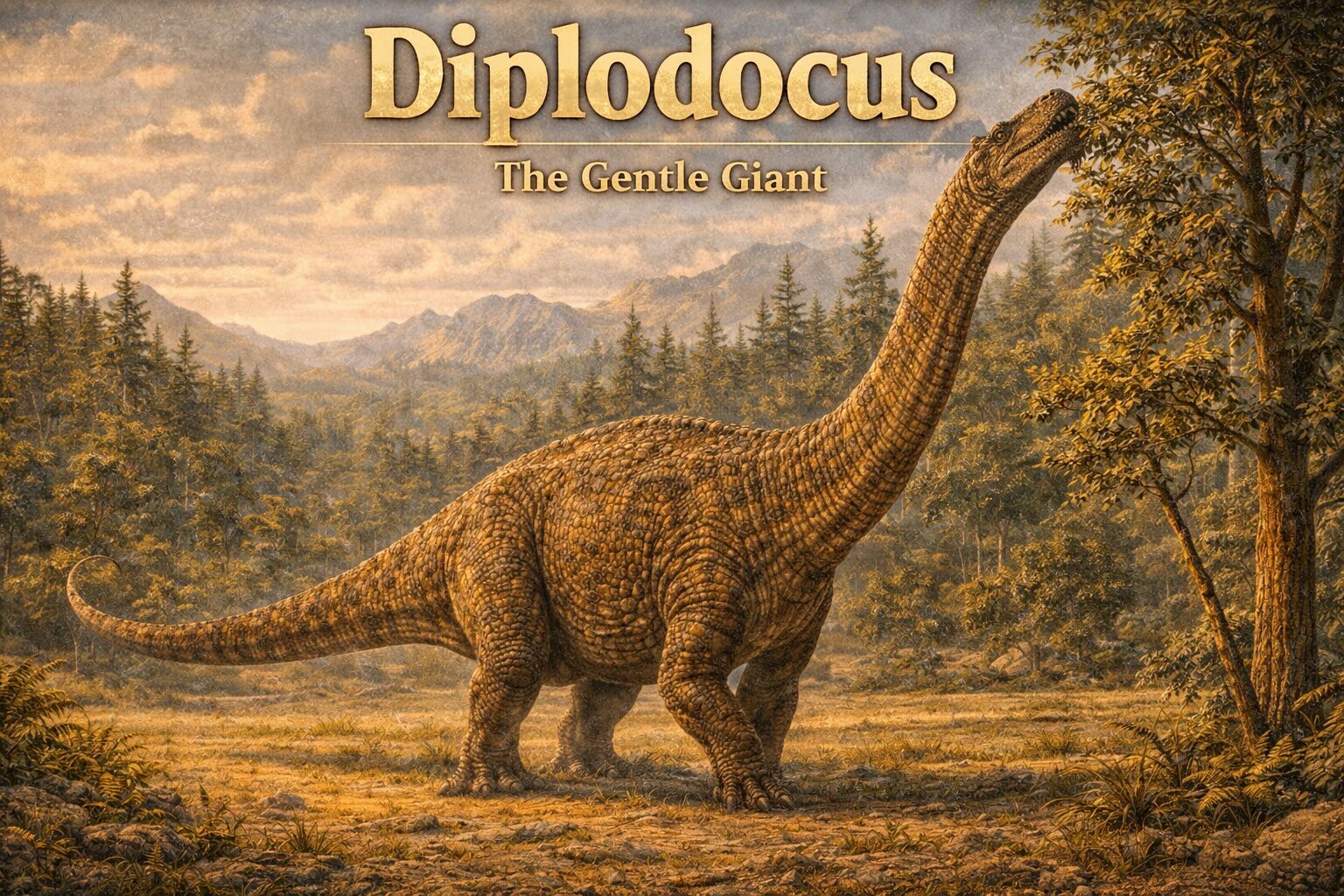
Diplodocus — The Gentle Giant
Among the most famous long-necked dinosaurs is Diplodocus, a true icon of museum halls and prehistoric imagination. Living during the Late Jurassic, Diplodocus was one of the longest dinosaurs ever, reaching lengths of up to 90 feet.
Despite its enormous size, Diplodocus was a peaceful herbivore, feeding on ferns and low vegetation. Its whip-like tail may have been used for defense or communication, and its long neck allowed it to graze across wide areas without moving much.
Diplodocus became iconic partly because of its early discovery and widespread display. Casts of Diplodocus skeletons were gifted to museums around the world in the early 1900s, making it one of the first dinosaurs to achieve global fame.
Diplodocus represents the awe of dinosaur scale—proof that Earth once hosted creatures beyond anything alive today.
8. Allosaurus — The Jurassic Predator

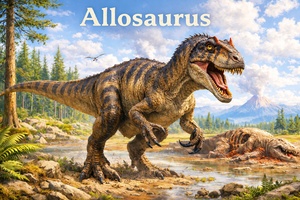
Before T. rex, there was Allosaurus, the dominant predator of the Late Jurassic. Living around 150 million years ago, Allosaurus hunted large herbivores like Stegosaurus and Diplodocus.
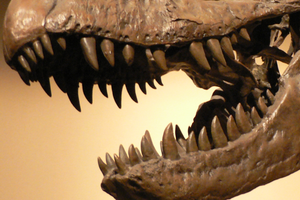
Allosaurus was about 30 feet long, with sharp teeth and powerful jaws designed for slicing flesh. Unlike the bone-crushing bite of T. rex, Allosaurus may have used a hatchet-like attack style, tearing into prey with repeated strikes.
Its fossils are among the most common theropod finds, giving scientists an excellent understanding of its anatomy and behavior. Allosaurus is iconic because it represents the classic Jurassic-era carnivore, often featured in documentaries and dinosaur battles.
It may not have the fame of T. rex, but Allosaurus remains one of the most important predators in dinosaur history.
9. Pachycephalosaurus — The Dome-Headed Dinosaur
Pachycephalosaurus — The Dome-Headed Dinosaur
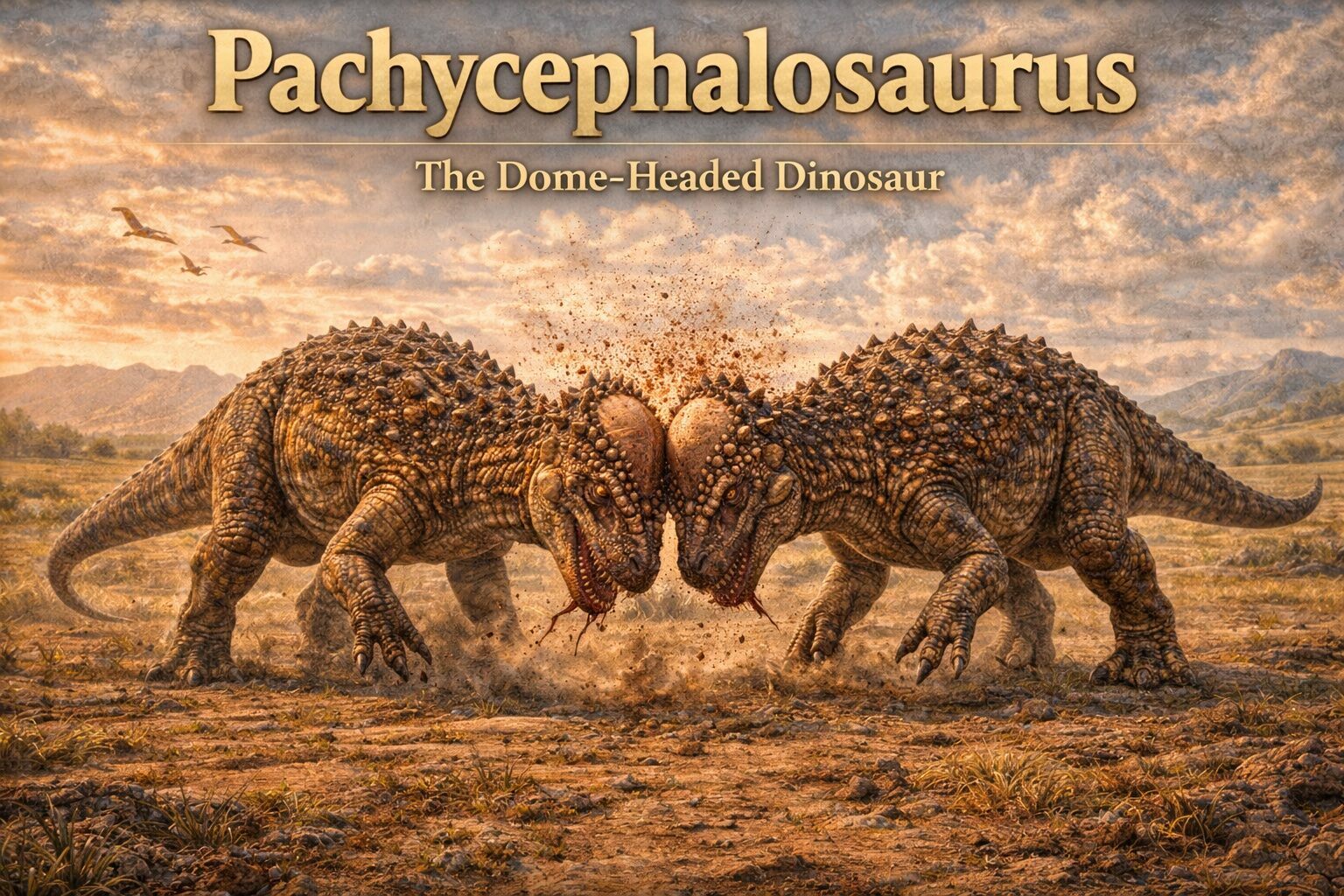
With its thick, rounded skull, Pachycephalosaurus stands out as one of the most unusual dinosaurs ever discovered. Living during the Late Cretaceous, this herbivore is best known for its helmet-like dome head.
Scientists believe Pachycephalosaurus may have used its skull for head-butting contests, similar to modern rams, though this behavior is still debated. Its skull could be up to 10 inches thick, one of the most extreme adaptations among dinosaurs.
Pachycephalosaurus is iconic because of its uniqueness. Few dinosaurs look anything like it, and its mysterious behavior makes it a favorite among dinosaur fans.
Its dome-headed silhouette ensures it remains unforgettable in both science and popular media.
10. Parasaurolophus — The Crest-Crowned Dinosaur
Parasaurolophus — The Crest-Crowned Dinosaur
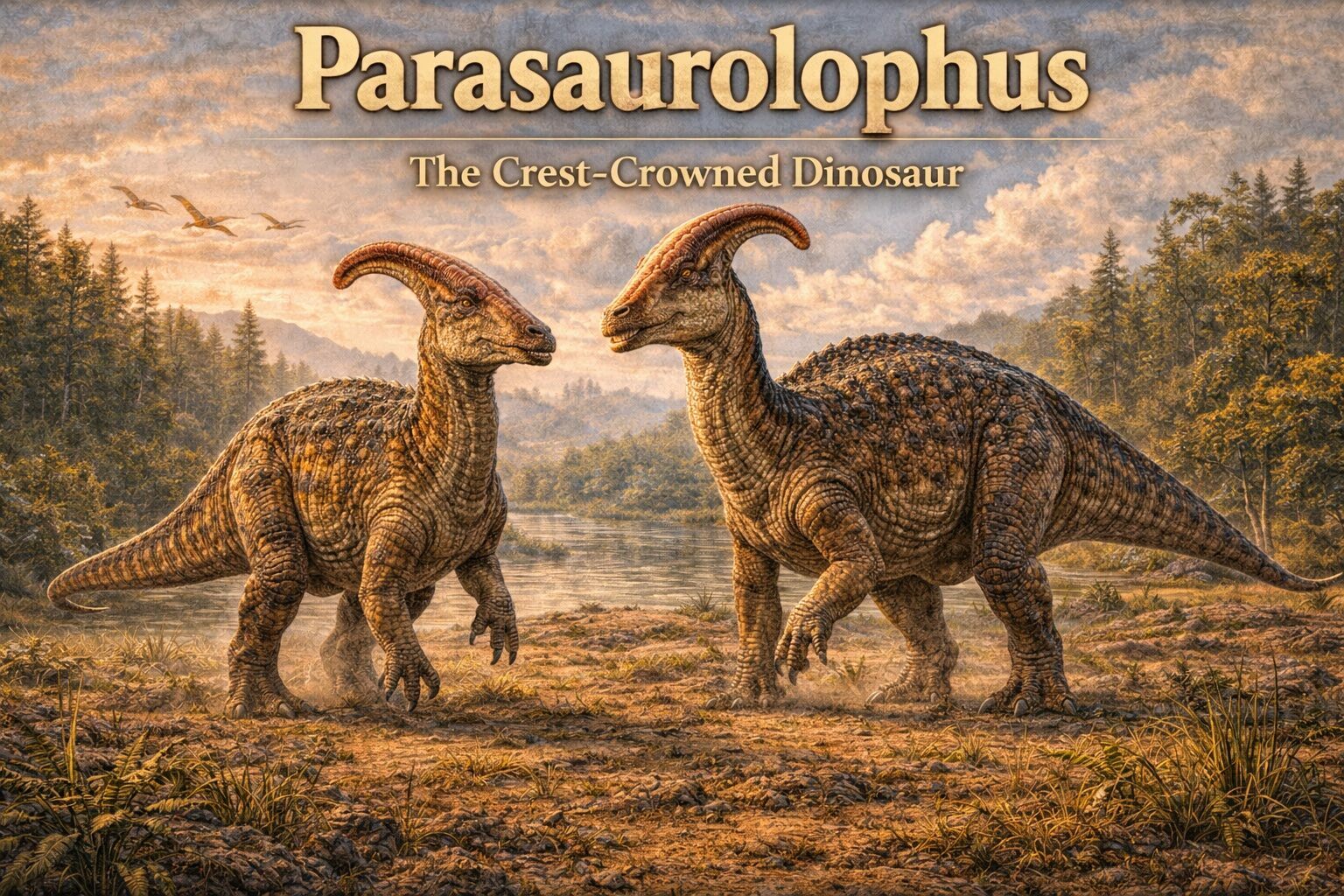
Few dinosaurs are as elegant and instantly recognizable as Parasaurolophus, the crested hadrosaur of the Late Cretaceous. Its long, curved head crest is one of the most distinctive features in dinosaur history.
Scientists believe the crest may have been used for communication, producing resonating sounds, or for visual display. Parasaurolophus was a herbivore that traveled in herds, grazing on plants across ancient North America.
Parasaurolophus is iconic because it combines beauty, mystery, and uniqueness. Its crest has made it a favorite in documentaries, books, and dinosaur art.
It represents the diversity of dinosaur life—not just monsters and giants, but creatures with complex social behaviors and striking forms.