AMBER FOR SALE
Amber can be found in many places around the world, including Northern Myanmar (Burma), Mexico and the Dominican Republic, but 90 percent of the world's supply comes from the Baltic Sea region in northern Europe. You have to be very wary of fake amber on the market, particularly amber containing larger insect inclusions: make sure to buy from a trusted dealer like FossilEra.
How Is Amber Formed?
Amber is fossilized tree resin, commonly known as pitch. Resin is a viscous liquid exuded by the tree to protect itself from disease or injury. It seals and creates a barrier to protect healthy tissue underneath. Once the tree secretes the resin, the volatile compounds it contains dissipate, causing the resin to harden. If a hardened resin nodule is buried, heat and pressure begin to polymerize the resin. Given enough time, heat, and pressure, the resin polymerizes into what we know as amber.
What Is The Difference Between Copal And Amber?
Copal is tree resin that has not yet become amber. The big difference is time: copal is an intermediate stage of polymerization between resin and amber, and can be as little as tens of thousands of years old, while amber is formed after millions of years. Copal is highly aromatic and flammable where amber is not. Because of its smell, it is used primarily as incense. Copal is frequently marketed as amber: if you see references to amber from Columbia or Madagascar, it is actually copal.
Where Is Amber Found?
Amber can be found all over the world. Today it can be found in almost every country and in almost any region. The majority of the world's commercially available amber comes from the Baltic Sea region, Myanmar, Mexico, and the Dominican Republic. About 90 percent of the world's amber comes from the Baltic States of Poland, Latvia, Lithuania, Estonia, Russia and Sweden.
In the US, amber has been found in about a dozen different states: the most well known deposit is in New Jersey. To our knowledge, however, none of these deposits have been commercially collected in years.
How Do Organisms Become Preserved In Amber?
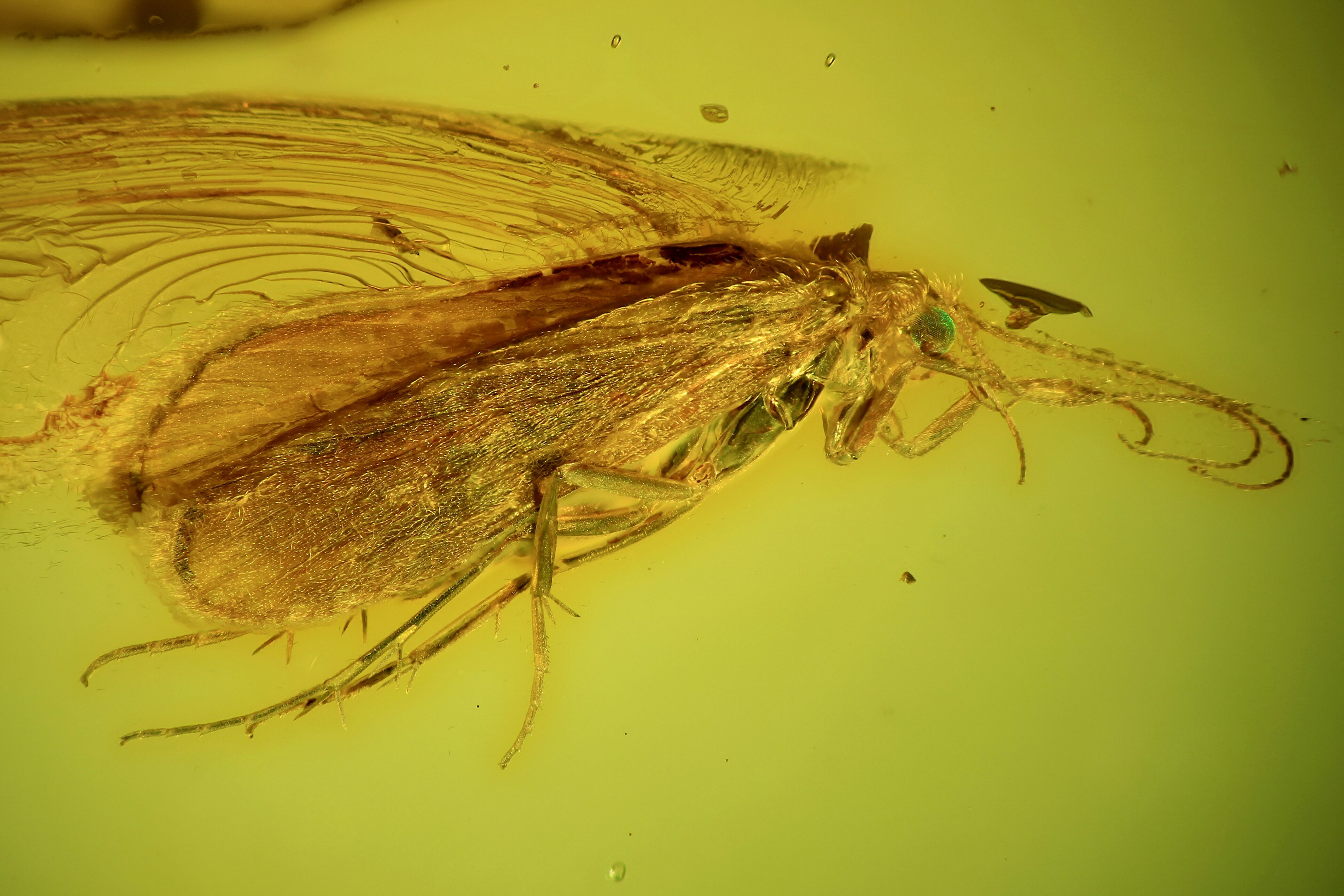
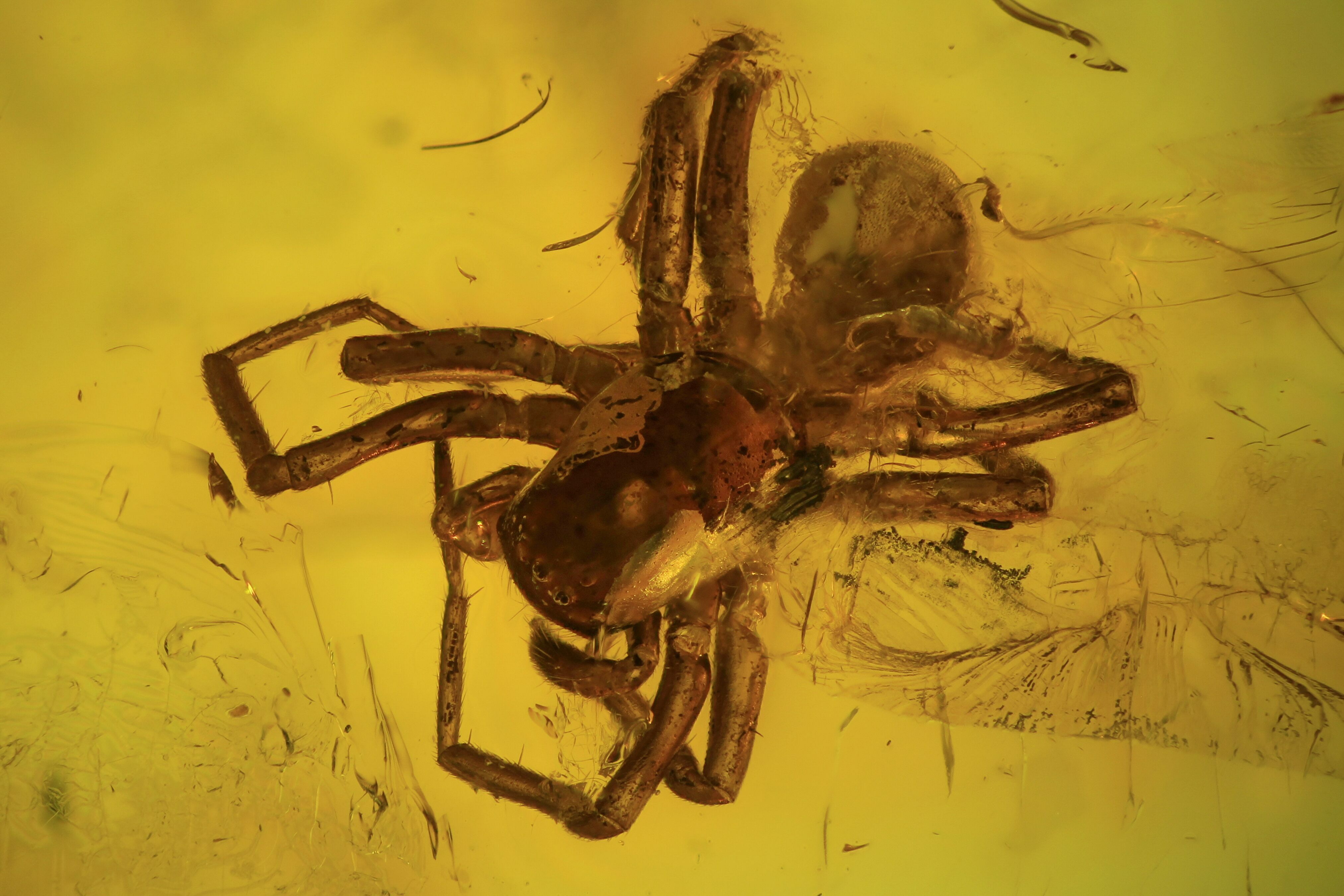
Amber is an amazing source of preserved extinct and living species. When insects came in contact with viscous resin excreted by trees, they were often trapped in it and covered in an airtight, watertight environment, preserving them over time. The soft inner parts of the insects often decompose, but in many cases the hard exoskeletons are preserved.
Are Insects Preserved In Amber Rare?
Even in locations where amber is found in large quantity, preserved insects, particularly identifiable ones, can be quite rare. For example, only about 1 in 1000 pieces of Baltic amber may have an insect in it, and out of those maybe only 10 percent may be preserved well enough to be identified.
Why Are Mostly Small Organisms Preserved In Amber?
It is very unlikely to find organisms larger than small insects trapped in amber. Organisms bigger than medium-sized bees or flies would simply have the strength to extract themselves from resin before it hardens. Amber also occurs in relatively small quantities. This is not to say that no larger organisms have been preserved in amber, but they are extremely rare.
How Do You Tell If Amber Is Authentic?
Amber might be the most frequently faked fossil. With the invention of plastics it has become even easier: amber polymerizes in a way very similar to plastic, and has a very similar texture. Sometimes holes will even be drilled in real amber, filled with modern insects, and then filled back in with resin. Copal and fresher resins can also be artificially aged. Be very suspicious of large insects and other fossils preserved in amber, since larger insects can typically struggle free.
For those interested in purchasing amber, determining authenticity is important. To determine if the amber you are interested in buying is authentic first, buy only from reputable dealers. If you still are not sure the amber you are interested in is authentic, simply rub it on a natural cloth and see if it builds a static charge. If it does, it is likely authentic: if it does not, it is not. Amber will also heat quickly when held in the hand.
What Color Is Amber?
Amber comes in a variety of colors. Most are in the range of pale yellow to orange, red, or brown and even black, but green and blue amber do exist. The darkness of a color is a function of the amber's chemical composition and age: as amber ages, it darkens. In addition to color, amber can vary from nearly transparent to opaque. It also fluoresces under ultraviolet light: fluorescent color and brightness varies with chemical composition and age. Some ambers are so energetic they continues to glow even after the UV source has been removed, showing a phenomenon known as phosphoresce.
Does Amber Float?
Amber is buoyant in saltwater. You probably will not find it bobbing the surface, but this property helps to keep it on top of the beach substrate. A significant amount of Baltic amber is gathered from water by stoking seabeds and scooping up what floats: this is referred to as Sea Stone or Scoopstone amber.
Does Amber Conduct Electricity?
The Greek word for amber is electron which is the root of the modern word electricity. Amber will generate static electricity when rubbed against a natural fibre; this property is likely what gave it its Greek name. Amber is negatively charged, which means it attracts electrons when rubbed with a positively charged material: this is how things stick to it!
Can Dna Be Extracted From Insects Preserved In Amber?
It is infeasible that DNA could be extracted from an insect preserved in amber and used to clone a dinosaur. DNA has a limited half-life of 521 years, even under the best preservation conditions. This means that after 521 years, one half of the DNA will be useless and 521 years after that three quarters of the original DNA is gone. At that rate, after 6.8 million years, all usable DNA will be gone, even under the best preservation. Non-avian dinosaurs died out 66 million years ago, almost sixty million years longer than DNA could survive.
What Interesting Things Have Been Found In Amber?
Many extinct insect species have been described from fossils and there are a number that defy description and may lead to the discovery of new families of insects. Bird feathers, baby birds, lizards, and amphibians have also been found in amber. Plant leaves and seeds are also regularly found. Among the rarest and most interesting things found in amber are footprints of reptiles and amphibians and, in one striking case, an ammonite shell.
How Is The Age Of Amber Determined?
The most common method of determining amber’s age is looking at the known geologic formations that surround it. The Law of Superposition describes that layers increase in age the lower they are in a formation. For example, if a rock layer is known to be 20 million years old, the layer below it is considered to be older because it had to be laid down before the 20-million-year-old layer. Amber is also studied in this way, and is considered to be the age of the rock formation it is found in. As technology has progressed, more technical methods of dating amber have been developed. Spectroscopy and differential scanning calorimetry have all been used to confirm the older, relative dating methods.
Reviews