 Reviews


This Specimen has been sold.


11.5" Beautiful Fish Fossil (Mioplosus) - Uncommon Species


This is a nice, 11.5" long fossil fish (Mioplosus labracoides) from the Green River Formation of Wyoming. Mioplosus is one of the more uncommon species from this formation.
This stunning fish has dark, detailed preservation and is located on a 15 x 8", rectangularly cut slab of shale. It comes with a display stand.
This stunning fish has dark, detailed preservation and is located on a 15 x 8", rectangularly cut slab of shale. It comes with a display stand.
Mioplosus is a genus of large extinct perciform fish that lived through the Eocene epoch. This genus is easily distinguished by an elongate fusiform body, double dorsal fins, and forked tail. Mioplosus was a solitary predator with large teeth: a few fossil specimens have been collected with other, smaller fish lodged in their throats. Most fossils of this genus are from the Tertiary-aged Green River Formation in Wyoming, though relatives of this genus are known to range throughout Asia and New Zealand. Mioplosus is also believed to be related to the modern pike-perch of the genus Sander (Stizostedion).
About The 18 Inch Layer Of Fossil Lake
Specimens like this come from the coveted 18 inch layer of the Green River Formation, which produces darker and more detailed fish than the majority on the market. The rock from this layer is much harder and more durable than other layers in the formation, likely due to its initial deposition conditions in deep water. Because of these conditions, fish found in the 18-inch layer can be extracted whole and in excellent condition. This layer is typically collected at night using low-angle light to see the bump in the rock that the fish's backbone creates. They then cut these fish out and take them to a lab where the fish, which may be up to an inch under the surface of the rock, are meticulously extracted under microscope with hand tools.
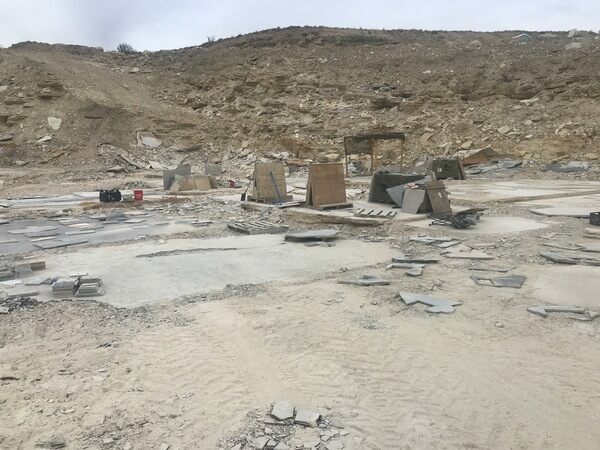
A view of the 18 inch layer of the Green River Formation at the Lindgren quarry near Kemmerer, Wyoming.
Specimens like this come from the coveted 18 inch layer of the Green River Formation, which produces darker and more detailed fish than the majority on the market. The rock from this layer is much harder and more durable than other layers in the formation, likely due to its initial deposition conditions in deep water. Because of these conditions, fish found in the 18-inch layer can be extracted whole and in excellent condition. This layer is typically collected at night using low-angle light to see the bump in the rock that the fish's backbone creates. They then cut these fish out and take them to a lab where the fish, which may be up to an inch under the surface of the rock, are meticulously extracted under microscope with hand tools.
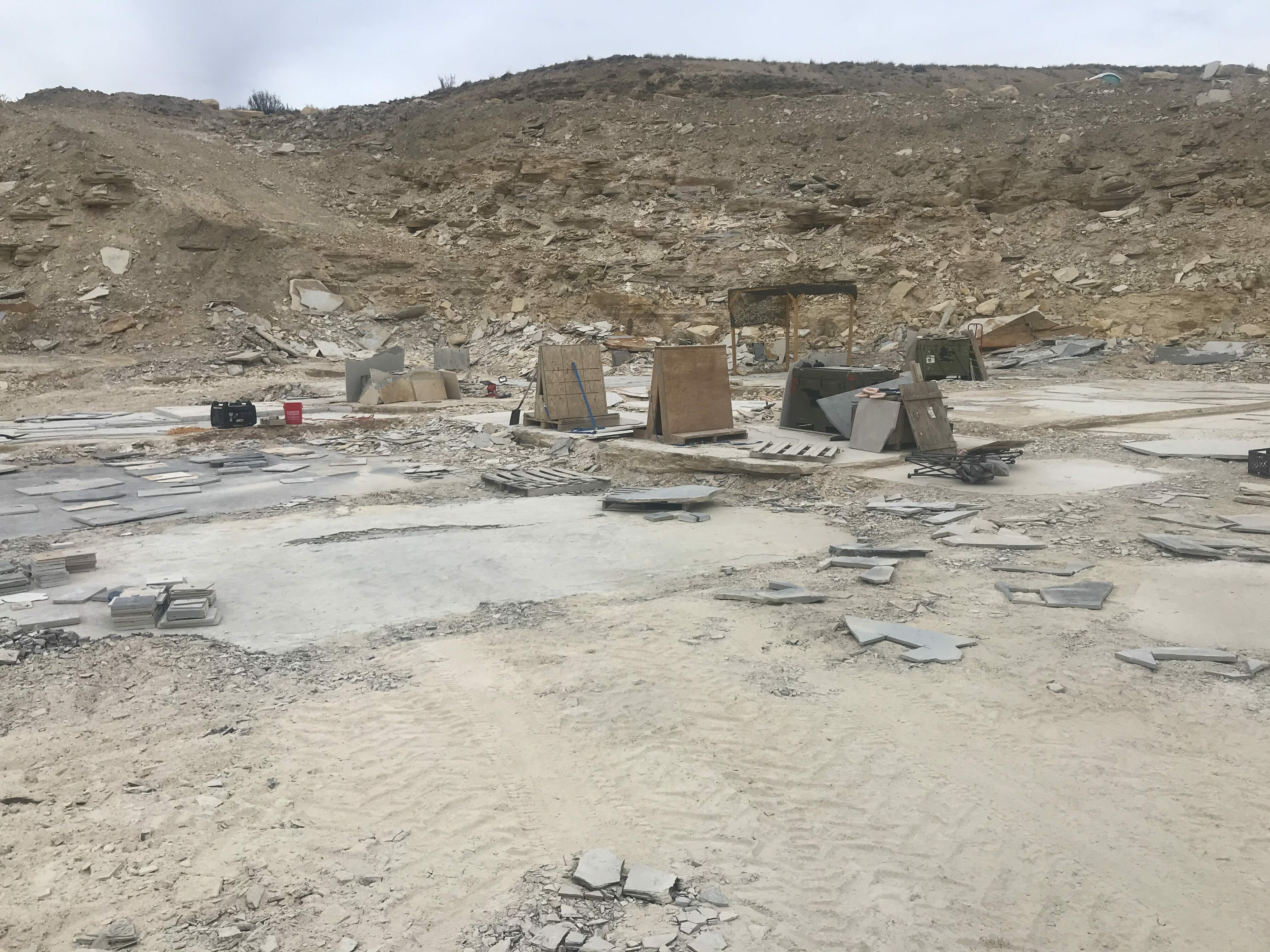
A view of the 18 inch layer of the Green River Formation at the Lindgren quarry near Kemmerer, Wyoming.
SPECIES
Mioplosus labracoides

LOCATION
Clear Creek Quarry, Kemmerer, Wyoming
FORMATION
Green River Formation - 18 Inch Layer
SIZE
Fish: 11.5" long Shale: 15 x 8"
CATEGORY
SUB CATEGORY
ITEM
#342474
We guarantee the authenticity of all of our specimens.


