 Reviews


This Specimen has been sold.


13" Fossil Plesiosaur (Zarafasaura) Cervical Vertebrae - Morocco


This is a gorgeous cluster of naturally associated cervical vertebrae from the Late Cretaceous-aged plesiosaur, Zarafasaura oceanis. It was collected from the phosphate deposits in the Oulad Abdoun Basin of Morocco. These vertebrae would have come from the same animal, and a relatively large one at that. They're beautifully intact and still attached to a section of rock in the exact positions they were found within the ground. The entire specimen stands 13" tall and the center vertebra measures 7.5" wide.
A false rock has been included at the bottom to act as a base. Another partial vertebra can be seen within the rock.
There is some repair work to the transverse process of the upper vertebra. Areas of minor gap fill restoration can be found around the centrums, with the majority of the restoration on the upper vertebra.
A false rock has been included at the bottom to act as a base. Another partial vertebra can be seen within the rock.
There is some repair work to the transverse process of the upper vertebra. Areas of minor gap fill restoration can be found around the centrums, with the majority of the restoration on the upper vertebra.
About The Plesiosaur Zarafasaura
Zarafasaura is a genus of plesiosaur that lived during the Late Cretaceous period, around 70 million years ago. Known primarily from fossils found in the phosphates of the Ouled Abdoun Basin in Morocco, Zarafasaura is notable for being one of the last plesiosaurs to exist before the mass extinction that ended the age of dinosaurs.
This marine reptile belonged to the family Elasmosauridae, known for their long necks and small heads, adapted to snatch prey in the open ocean. Zarafasaura had a moderately long neck, although not as extreme as some other elasmosaurs, and a streamlined body with powerful flippers that allowed it to move gracefully through the water. It likely fed on fish and squid, using quick, precise strikes to catch its prey.
Zarafasaura's skull is distinctive, with robust jaws and sharp, conical teeth that indicate it was a predator capable of grasping slippery prey. Its fossils provide important insights into the diversity of marine reptiles in the North African region during the Cretaceous and highlight the adaptations of elasmosaurs to a range of marine environments.
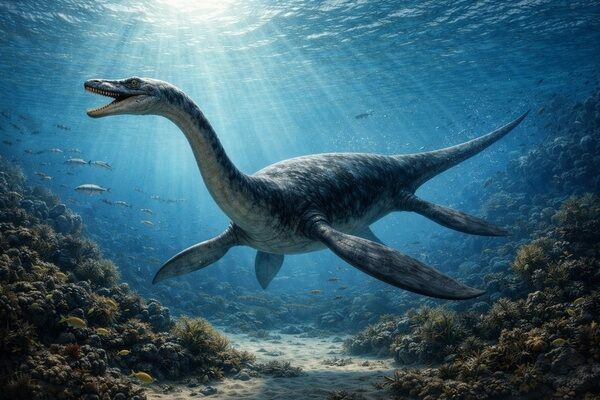
A reconstruction of a swimming Plesiosaur.
This species of of Plesiosaur was redescribed from Plesiosaurus mauritanicus to Zarafasaura oceanis in a 2011 paper which can be found at:
A NEW SPECIMEN OF THE ELASMOSAURID PLESIOSAUR ZARAFASAURA OCEANIS FROM THE UPPER CRETACEOUS (MAASTRICHTIAN)OF MOROCCO
Zarafasaura is a genus of plesiosaur that lived during the Late Cretaceous period, around 70 million years ago. Known primarily from fossils found in the phosphates of the Ouled Abdoun Basin in Morocco, Zarafasaura is notable for being one of the last plesiosaurs to exist before the mass extinction that ended the age of dinosaurs.
This marine reptile belonged to the family Elasmosauridae, known for their long necks and small heads, adapted to snatch prey in the open ocean. Zarafasaura had a moderately long neck, although not as extreme as some other elasmosaurs, and a streamlined body with powerful flippers that allowed it to move gracefully through the water. It likely fed on fish and squid, using quick, precise strikes to catch its prey.
Zarafasaura's skull is distinctive, with robust jaws and sharp, conical teeth that indicate it was a predator capable of grasping slippery prey. Its fossils provide important insights into the diversity of marine reptiles in the North African region during the Cretaceous and highlight the adaptations of elasmosaurs to a range of marine environments.
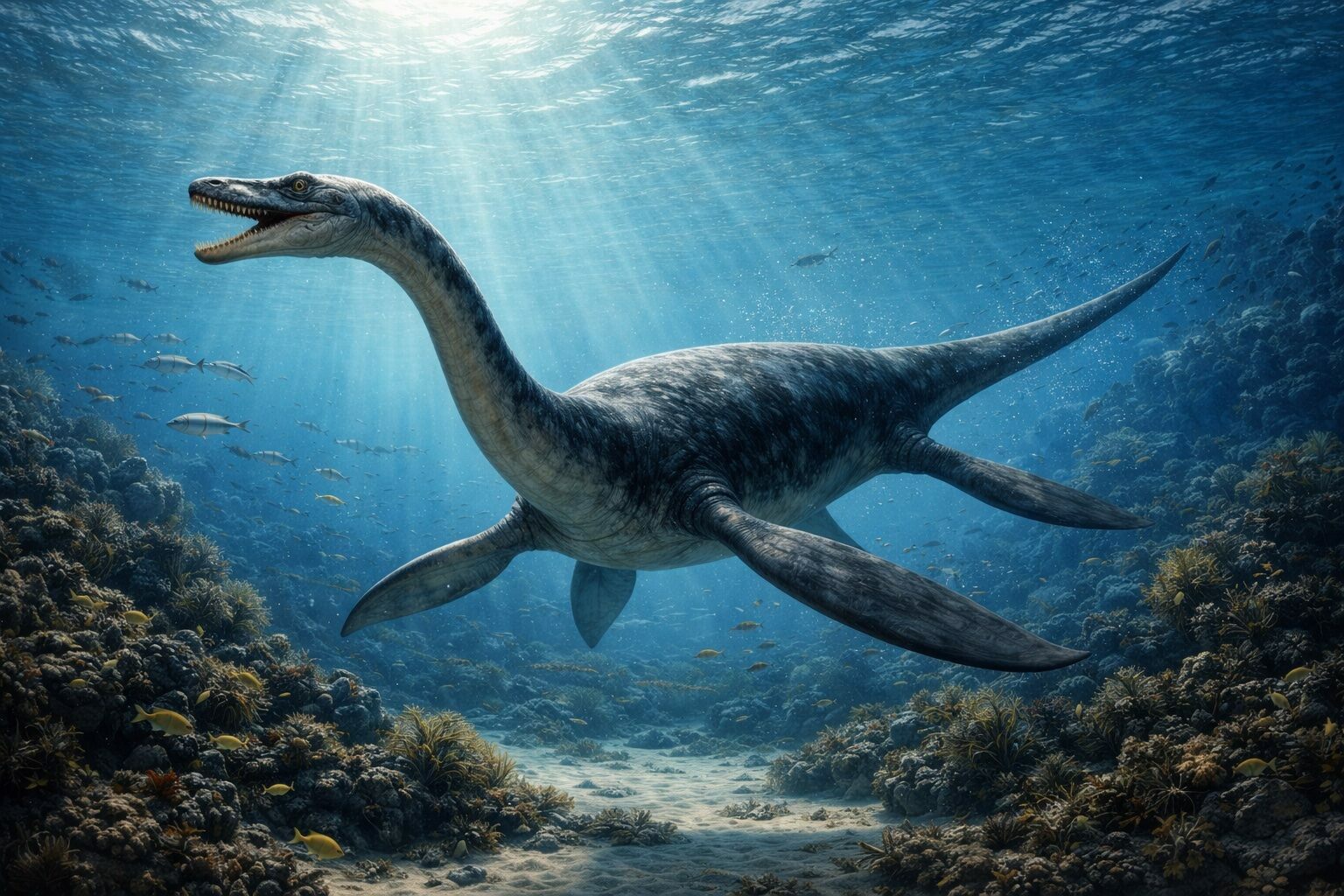
A reconstruction of a swimming Plesiosaur.
This species of of Plesiosaur was redescribed from Plesiosaurus mauritanicus to Zarafasaura oceanis in a 2011 paper which can be found at:
A NEW SPECIMEN OF THE ELASMOSAURID PLESIOSAUR ZARAFASAURA OCEANIS FROM THE UPPER CRETACEOUS (MAASTRICHTIAN)OF MOROCCO
It comes from the massive phosphate deposits in the Oulad Abdoun Basin near Khouribga, Morocco. These deposits are mined for phosphate, one of Morocco's biggest exports. The fossils are collected as a byproduct of the mining operations, saving them from certain destruction by the rock crusher.
SPECIES
Zarafasaura oceanis
AGE

LOCATION
Oulad Abdoun Basin, Morocco
FORMATION
Phosphate Deposits
SIZE
Entire Specimen: 13 x 11.3 x 8.5"
CATEGORY
SUB CATEGORY
ITEM
#334777
We guarantee the authenticity of all of our specimens.