 Reviews


This Specimen has been sold.


.60" Juvenile Tyrannosaur (Nanotyrannus) Premax Tooth - Wyoming


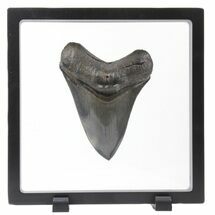
This is a .60" long sub-adult tyrannosaur premaxillary tooth from the genus Nanotyrannus, collected from the Lance (Creek) Formation in Wyoming. The tooth is free of repair and is accompanied by an acrylic display case.
About Nanotyrannus
Nanotyrannus is a controversial theropod dinosaur from the Late Cretaceous of North America, known from a small number of fossils including the famous skull “Jane.” It was a relatively small, lightly built predator—about 15–20 feet long—with long legs, a narrow snout, and sharp teeth, suggesting speed and agility compared to the massive Tyrannosaurus rex. What makes Nanotyrannus especially intriguing is the debate over whether it represents a distinct genus or is simply a juvenile T. rex, with differences in skull shape, tooth count, and bone structure fueling ongoing discussion among paleontologists.
Nanotyrannus is a controversial theropod dinosaur from the Late Cretaceous of North America, known from a small number of fossils including the famous skull “Jane.” It was a relatively small, lightly built predator—about 15–20 feet long—with long legs, a narrow snout, and sharp teeth, suggesting speed and agility compared to the massive Tyrannosaurus rex. What makes Nanotyrannus especially intriguing is the debate over whether it represents a distinct genus or is simply a juvenile T. rex, with differences in skull shape, tooth count, and bone structure fueling ongoing discussion among paleontologists.

About The Lance Formation
The Lance Formation of eastern Wyoming is a Late Cretaceous (69–66 million years old) unit that represents the same geologic age as the famous Hell Creek Formation of Montana and the Dakotas. Although they are time-equivalent, the Lance and Hell Creek preserve subtly different environments. Hell Creek reflects a humid, forested coastal plain punctuated by volcanic ash deposits, while the Lance records a slightly drier, more open floodplain landscape with broader river systems and fewer ash layers. Together, they provide a complementary view of life in the final chapter of the dinosaur era.
Perhaps the most famous Lance resident would be Tyrannosaurus rex, the largest North American carnivore to ever live. However, other smaller theropods also roamed the American midwest in this subtropical coastal stream system, including the beaked Ornithomimus, a lanky running theropod with a build similar to a modern ostrich, as well as several small predatory troodonts such as Paronychodon and Pectinodon.
Herbivorous dinosaurs also took advantage of the abundance offered by this unique era. Armored ankylosaurs dwelt in herds, their safety assured by their numbers, their heavy bone plating protecting most of their bodies and even their eyelids, and huge bone clubs on the ends of their tails providing them with powerful offensive capabilities. Ceratopsians like the famous Triceratops also formed protective herds, guarding their necks with frills and horns. Their smaller relatives, the dome-headed pachycephalosaurs, were also well represented in the area. Hadrosaurs, duck-billed titans with huge batteries of plant-grinding teeth in elongated snouts, are also well known from the region.
In addition to dinosaurs, a wide variety of fishes, amphibians, lizards, snakes, turtles, champsosaurs, crocodilians, and pterosaurs have been found in the formation.
The Lance Formation of eastern Wyoming is a Late Cretaceous (69–66 million years old) unit that represents the same geologic age as the famous Hell Creek Formation of Montana and the Dakotas. Although they are time-equivalent, the Lance and Hell Creek preserve subtly different environments. Hell Creek reflects a humid, forested coastal plain punctuated by volcanic ash deposits, while the Lance records a slightly drier, more open floodplain landscape with broader river systems and fewer ash layers. Together, they provide a complementary view of life in the final chapter of the dinosaur era.
Perhaps the most famous Lance resident would be Tyrannosaurus rex, the largest North American carnivore to ever live. However, other smaller theropods also roamed the American midwest in this subtropical coastal stream system, including the beaked Ornithomimus, a lanky running theropod with a build similar to a modern ostrich, as well as several small predatory troodonts such as Paronychodon and Pectinodon.
Herbivorous dinosaurs also took advantage of the abundance offered by this unique era. Armored ankylosaurs dwelt in herds, their safety assured by their numbers, their heavy bone plating protecting most of their bodies and even their eyelids, and huge bone clubs on the ends of their tails providing them with powerful offensive capabilities. Ceratopsians like the famous Triceratops also formed protective herds, guarding their necks with frills and horns. Their smaller relatives, the dome-headed pachycephalosaurs, were also well represented in the area. Hadrosaurs, duck-billed titans with huge batteries of plant-grinding teeth in elongated snouts, are also well known from the region.
In addition to dinosaurs, a wide variety of fishes, amphibians, lizards, snakes, turtles, champsosaurs, crocodilians, and pterosaurs have been found in the formation.
SPECIES
Nanotyrannus sp.

LOCATION
Wyoming
FORMATION
Lance (Creek) Formation
SIZE
.60" long (straightline)
CATEGORY
SUB CATEGORY
ITEM
#350570
We guarantee the authenticity of all of our specimens.