 Reviews


8.6" Fossil Spinosaurid (Sigilmassasaurus?) Cervical Vertebra - Morocco


This is an outstanding 8.6" tall fossil spinosaurid vertebra, likely representing the controversial genus/species, Sigilmassasaurus brevicollis, collected from the Kem Kem Beds of Morocco. It is a posterior cervical vertebra, meaning it would have been located near the base of the dinosaur's neck. There are three large theropods known from the Kem Kem Beds, Spinosaurus, Sigilmassasaurus, and Carcharodontosaurus. All have very similar anatomy at the bone level, though spinosaurids are known for their massive sail-like dorsal structures. The convex anterior end of the centrum indicates that this is in fact from a spinosaurid.
While there are some repaired cracks and glue stabilized fractures, there is no significant gap fill restoration on this incredible specimen. The largest notable area of gap fill is at the base of the spinous process.
A thread regarding Kem Kem vertebrae can be found at the link below.
Kem Kem Vertebrae ID Thread
While there are some repaired cracks and glue stabilized fractures, there is no significant gap fill restoration on this incredible specimen. The largest notable area of gap fill is at the base of the spinous process.
A thread regarding Kem Kem vertebrae can be found at the link below.
Kem Kem Vertebrae ID Thread
About Sigilmassasaurus brevicollis
Sigilmassasaurus brevicollis is one of the most debated theropod dinosaurs from the Late Cretaceous of North Africa, largely because it is known from fragmentary remains and sits at the center of a long-running taxonomic dispute. Described in 1996 from isolated cervical vertebrae found in Morocco, it was initially distinguished by its unusually short, robust neck vertebrae—hence the name brevicollis, meaning “short-necked.” Almost immediately, however, paleontologists questioned whether these fossils truly represented a distinct genus or instead belonged to the better-known spinosaurid Spinosaurus aegyptiacus. Some researchers argue that the differences in vertebral anatomy reflect real taxonomic separation or even indicate multiple spinosaurid taxa living side by side, while others suggest the material falls within normal variation along the neck of Spinosaurus or between individuals of different ages. As a result, Sigilmassasaurus has become a touchstone example of the challenges of naming dinosaurs from incomplete fossils and of how limited material can fuel decades of scientific controversy.
Sigilmassasaurus brevicollis is one of the most debated theropod dinosaurs from the Late Cretaceous of North Africa, largely because it is known from fragmentary remains and sits at the center of a long-running taxonomic dispute. Described in 1996 from isolated cervical vertebrae found in Morocco, it was initially distinguished by its unusually short, robust neck vertebrae—hence the name brevicollis, meaning “short-necked.” Almost immediately, however, paleontologists questioned whether these fossils truly represented a distinct genus or instead belonged to the better-known spinosaurid Spinosaurus aegyptiacus. Some researchers argue that the differences in vertebral anatomy reflect real taxonomic separation or even indicate multiple spinosaurid taxa living side by side, while others suggest the material falls within normal variation along the neck of Spinosaurus or between individuals of different ages. As a result, Sigilmassasaurus has become a touchstone example of the challenges of naming dinosaurs from incomplete fossils and of how limited material can fuel decades of scientific controversy.
The Kem Kem Group
The Kem Kem Group, also known as the Kem Kem Beds, is a significant geological formation located in southeastern Morocco, specifically in the region of the Anti-Atlas Mountains. This formation dates back to the late Cretaceous period, approximately 95 million years ago. The Kem Kem Beds are primarily composed of sandstone, siltstone, and claystone, interspersed with various sedimentary features that indicate a fluvial to deltaic environment.
The Kem Kem Group is renowned for its rich fossil deposits, which include a diverse array of prehistoric fauna. It has yielded a wide variety of dinosaur fossils, including theropods like Spinosaurus and Carcharodontosaurus, as well as large sauropod dinosaurs such as Rebbachisaurus. Additionally, the beds are home to many other fossilized creatures, including crocodiles, pterosaurs, fish, and a range of invertebrates.
Paleontologists consider the Kem Kem Group an important site for studying late Cretaceous ecosystems and the evolution of vertebrate life. The fossils found in this region have provided valuable insights into the diversity and behavior of prehistoric species, making it a key location for both scientific research and fossil collecting. The striking landscapes of the Kem Kem Beds, with their colorful rock formations and dramatic geological features, also attract geologists and tourists interested in the natural history of the area.
A paper on this assemblage can be found at: Vertebrate assemblages from the early Late Cretaceous of southeastern Morocco: An overview
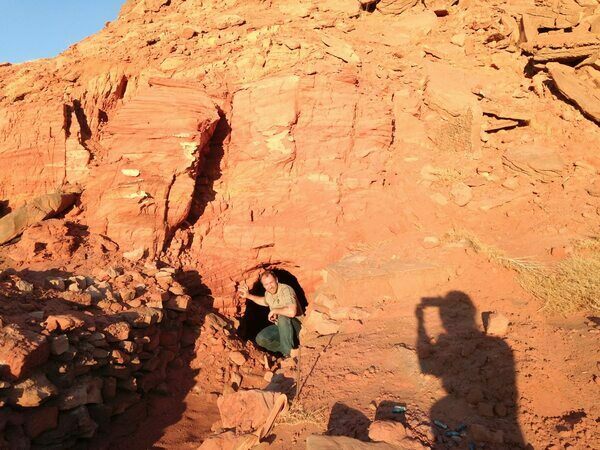
One of the tunnels dug into the Kem Kem beds by local miners following the productive fossil beds.
The Kem Kem Group, also known as the Kem Kem Beds, is a significant geological formation located in southeastern Morocco, specifically in the region of the Anti-Atlas Mountains. This formation dates back to the late Cretaceous period, approximately 95 million years ago. The Kem Kem Beds are primarily composed of sandstone, siltstone, and claystone, interspersed with various sedimentary features that indicate a fluvial to deltaic environment.
The Kem Kem Group is renowned for its rich fossil deposits, which include a diverse array of prehistoric fauna. It has yielded a wide variety of dinosaur fossils, including theropods like Spinosaurus and Carcharodontosaurus, as well as large sauropod dinosaurs such as Rebbachisaurus. Additionally, the beds are home to many other fossilized creatures, including crocodiles, pterosaurs, fish, and a range of invertebrates.
Paleontologists consider the Kem Kem Group an important site for studying late Cretaceous ecosystems and the evolution of vertebrate life. The fossils found in this region have provided valuable insights into the diversity and behavior of prehistoric species, making it a key location for both scientific research and fossil collecting. The striking landscapes of the Kem Kem Beds, with their colorful rock formations and dramatic geological features, also attract geologists and tourists interested in the natural history of the area.
A paper on this assemblage can be found at: Vertebrate assemblages from the early Late Cretaceous of southeastern Morocco: An overview
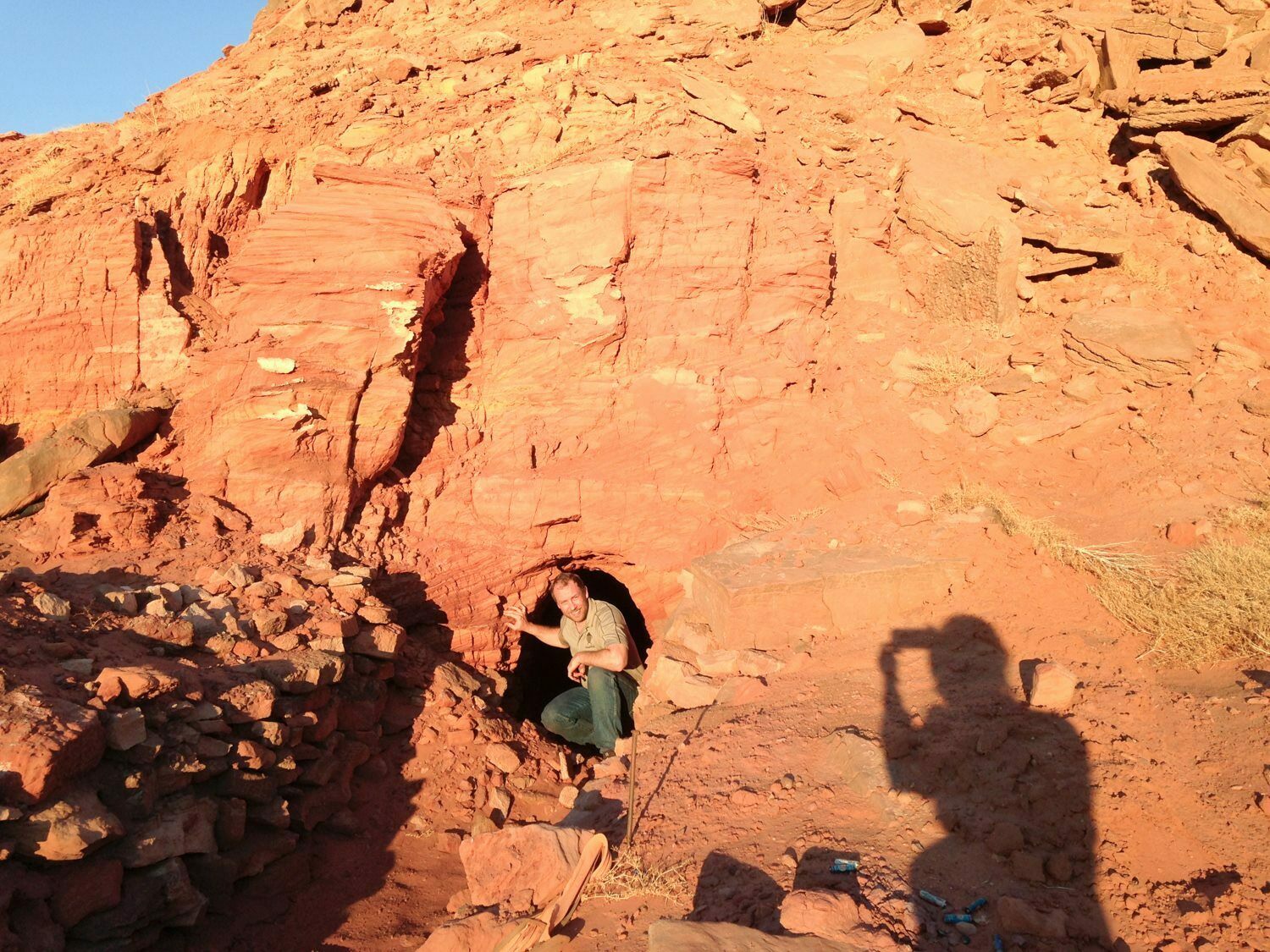
One of the tunnels dug into the Kem Kem beds by local miners following the productive fossil beds.
$2,750
SPECIES
Sigilmassasaurus brevicollis?

LOCATION
Kem Kem Basin, Taouz, Morocco
FORMATION
Kem Kem Beds
SIZE
Vertebra: 8.6 x 8.5 x 6"
CATEGORY
SUB CATEGORY
ITEM
#350888
We guarantee the authenticity of all of our specimens.


