 Reviews


This Specimen has been sold.


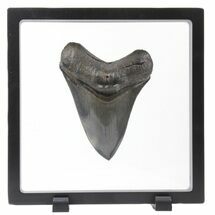
Gorgeous, 1.60" Rooted Triceratops Tooth - Montana


This is an authentic tooth from the iconic horned dinosaur, Triceratops horridus, collected from the Hell Creek Formation of Montana. Triceratops possessed a massive “dental battery” made up of hundreds of tightly packed teeth, perfectly designed for slicing and grinding tough, fibrous plants. As these teeth wore down, they were continuously replaced—collectors often refer to the shed examples like this as “spitters.”
This tooth has a nearly complete root as well as a feeding surface, making it a much more uncommon find. The polished chewing surface can be seen at the apical end of the tooth, showing clear evidence of the wear that came from processing vegetation millions of years ago. It measures 1.60" long and is accompanied by a riker mount display case.
There are two repaired cracks through the tooth.
This tooth has a nearly complete root as well as a feeding surface, making it a much more uncommon find. The polished chewing surface can be seen at the apical end of the tooth, showing clear evidence of the wear that came from processing vegetation millions of years ago. It measures 1.60" long and is accompanied by a riker mount display case.
There are two repaired cracks through the tooth.
About Triceratops
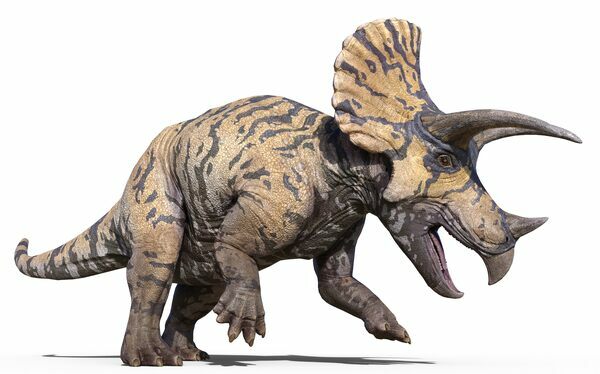
Triceratops was one of the most iconic North American dinosaurs, living during the Late Cretaceous around 68–66 million years ago. With its enormous frilled skull and three horns, it was an impressive sight and may have used its headgear for display as much as for defense against predators like Tyrannosaurus rex. Adults could grow up to 9 meters (29.5 feet) long, stand about 3 meters (9.8 feet) tall, and weigh as much as 26,000 pounds. Its sturdy build and powerful horns made it a formidable herbivore capable of standing its ground against large predators.
Triceratops had highly specialized teeth arranged in groups called dental batteries, with dozens of tooth columns lining each side of its jaws. Each column contained several stacked teeth that were constantly replaced, giving it hundreds of teeth over its lifetime. This unique system allowed Triceratops to efficiently chew tough, fibrous plants such as ferns, cycads, and palms. Triceratops was designated as the state fossil of South Dakota in 1988.
Triceratops was one of the most iconic North American dinosaurs, living during the Late Cretaceous around 68–66 million years ago. With its enormous frilled skull and three horns, it was an impressive sight and may have used its headgear for display as much as for defense against predators like Tyrannosaurus rex. Adults could grow up to 9 meters (29.5 feet) long, stand about 3 meters (9.8 feet) tall, and weigh as much as 26,000 pounds. Its sturdy build and powerful horns made it a formidable herbivore capable of standing its ground against large predators.
Triceratops had highly specialized teeth arranged in groups called dental batteries, with dozens of tooth columns lining each side of its jaws. Each column contained several stacked teeth that were constantly replaced, giving it hundreds of teeth over its lifetime. This unique system allowed Triceratops to efficiently chew tough, fibrous plants such as ferns, cycads, and palms. Triceratops was designated as the state fossil of South Dakota in 1988.
The Hell Creek Formation
Renowned for both its age and rich sedimentary layers, the Hell Creek Formation is one of the most intensively studied fossil-bearing regions on Earth. To date, scientists have documented 158 genera of animals and 64 genera of plants from its rocks, with new finds emerging regularly. Beyond iconic dinosaurs such as tyrannosaurs, ceratopsians, and hadrosaurs, the formation has produced an extraordinary array of life, including amphibians, reptiles, lizards, snakes, turtles, fish, sharks, birds, and early mammals. Together, these fossils provide the most complete picture of the ecosystems that thrived just before the Cretaceous–Paleogene extinction event.
Renowned for both its age and rich sedimentary layers, the Hell Creek Formation is one of the most intensively studied fossil-bearing regions on Earth. To date, scientists have documented 158 genera of animals and 64 genera of plants from its rocks, with new finds emerging regularly. Beyond iconic dinosaurs such as tyrannosaurs, ceratopsians, and hadrosaurs, the formation has produced an extraordinary array of life, including amphibians, reptiles, lizards, snakes, turtles, fish, sharks, birds, and early mammals. Together, these fossils provide the most complete picture of the ecosystems that thrived just before the Cretaceous–Paleogene extinction event.
SPECIES
Triceratops horridus

LOCATION
Montana
FORMATION
Hell Creek Formation
SIZE
1.60" long
CATEGORY
SUB CATEGORY
ITEM
#350731
We guarantee the authenticity of all of our specimens.