 Reviews

This Specimen has been sold.


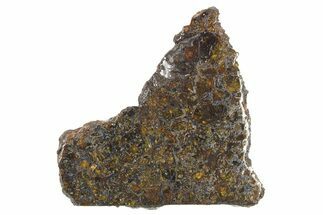
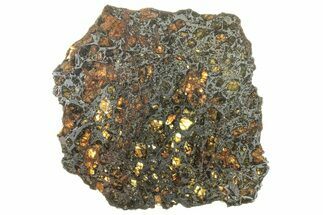
2.46" Polished Imilac Pallasite Meteorite (20.87 g) Slice


This is a 2.46" wide (20.87 gram) slice of the Imilac pallasite meteorite. Discovered in 1822 the Imilac pallasite is one of the most sought after of all pallasites due to it's large olivine crystals and rarity. Comes in an acrylic display case.
Pallasite Care - Important!
Pallasites are more susceptible to rust and deterioration from atmospheric moisture than most iron meteorites. Proper care is essential and includes avoiding direct handling with bare hands, as natural skin oils can affect the metal, and keeping the specimen in a moisture-free environment. This is especially important in high-humidity regions such as Florida. All pallasite material we sell has been stabilized and coated, which will help reduce the risk of corrosion; however, ongoing care is still necessary to preserve your specimen. We recommend storing pallasites in a dry environment, ideally with a corrosion inhibitor such as an enclosed display case equipped with a dehumidifier or desiccants.
Regular inspection is also advised. Check your specimen periodically for any discoloration, particularly brown or yellow spots, which may indicate the onset of rust. If rust is detected, prompt action is required to prevent further spread. Light rust can be treated by gently rubbing the affected area with a cotton swab dipped in CLR (Calcium, Lime, and Rust remover). Repeat as needed until the discoloration is removed, then rinse the area thoroughly with alcohol—100% pure alcohol is preferred.
After treatment, the meteorite can be baked for approximately one hour at 150°F (or 200°F for iron-only meteorites) to remove any remaining moisture. Use caution when removing it from the oven, as the metal will be hot. While still warm, a light coating bath of ATF (automatic transmission fluid) or a high-quality light oil is recommended. Once cooled, wipe away any excess oil and return the specimen to its moisture-free storage environment.
Pallasites are more susceptible to rust and deterioration from atmospheric moisture than most iron meteorites. Proper care is essential and includes avoiding direct handling with bare hands, as natural skin oils can affect the metal, and keeping the specimen in a moisture-free environment. This is especially important in high-humidity regions such as Florida. All pallasite material we sell has been stabilized and coated, which will help reduce the risk of corrosion; however, ongoing care is still necessary to preserve your specimen. We recommend storing pallasites in a dry environment, ideally with a corrosion inhibitor such as an enclosed display case equipped with a dehumidifier or desiccants.
Regular inspection is also advised. Check your specimen periodically for any discoloration, particularly brown or yellow spots, which may indicate the onset of rust. If rust is detected, prompt action is required to prevent further spread. Light rust can be treated by gently rubbing the affected area with a cotton swab dipped in CLR (Calcium, Lime, and Rust remover). Repeat as needed until the discoloration is removed, then rinse the area thoroughly with alcohol—100% pure alcohol is preferred.
After treatment, the meteorite can be baked for approximately one hour at 150°F (or 200°F for iron-only meteorites) to remove any remaining moisture. Use caution when removing it from the oven, as the metal will be hot. While still warm, a light coating bath of ATF (automatic transmission fluid) or a high-quality light oil is recommended. Once cooled, wipe away any excess oil and return the specimen to its moisture-free storage environment.
The Imilac Pallasite
Imilac is the name of a PMG pallasite found in the Atacama Desert of Chile in 1822. The meteorite likely fell sometime in the 14th Century, but the arid desert conditions kept the pallasite in quite good condition until its discovery.
Like many pallasites, Imilac is a stunner. Its large olivines in a fairly scant nickel-iron matrix are well-suited for slicing and translucent displays, even more so than most pallasites, thus it is one of the world's most coveted pallasites for collections.
Meteoritical Bulletin: Imilac Pallasite Meteorite
Imilac is the name of a PMG pallasite found in the Atacama Desert of Chile in 1822. The meteorite likely fell sometime in the 14th Century, but the arid desert conditions kept the pallasite in quite good condition until its discovery.
Like many pallasites, Imilac is a stunner. Its large olivines in a fairly scant nickel-iron matrix are well-suited for slicing and translucent displays, even more so than most pallasites, thus it is one of the world's most coveted pallasites for collections.
Meteoritical Bulletin: Imilac Pallasite Meteorite
About Pallasites
Pallasite meteorites are a class of stony-iron meteorites. They were once believed to have originated at the core-mantle boundary of asteroids that shattered through impacts, but a recent hypothesis is that they are a mixture of core and mantle minerals.
Pallasite meteorites consist of olivine (peridot) crystals surrounded by iron-nickel matrix. Upon acid etching, some pallasites display interweaving structures known as Widmanstätten patterns (or Thomson lines) in the metallic matrix. These structures are iron-nickel alloy crystals, typically kamacite and taenite, that cooled over millions of years in the vacuum of space.
Pallasites are quite rare: only about 200 are known, and only four have had observed falls. This represents less than 0.2% of all classified meteorites!
Pallasite meteorites are a class of stony-iron meteorites. They were once believed to have originated at the core-mantle boundary of asteroids that shattered through impacts, but a recent hypothesis is that they are a mixture of core and mantle minerals.
Pallasite meteorites consist of olivine (peridot) crystals surrounded by iron-nickel matrix. Upon acid etching, some pallasites display interweaving structures known as Widmanstätten patterns (or Thomson lines) in the metallic matrix. These structures are iron-nickel alloy crystals, typically kamacite and taenite, that cooled over millions of years in the vacuum of space.
Pallasites are quite rare: only about 200 are known, and only four have had observed falls. This represents less than 0.2% of all classified meteorites!
TYPE
Pallasite (PMG)
AGE

LOCATION
Atacama Desert, Chile
SIZE
2.46 x 2.08 x .06", Weight: 20.87 grams
CATEGORY
SUB CATEGORY
ITEM
#334647