 Reviews

This Specimen has been sold.


2.1" Chalcopyrite, Pyrite, Galena, and Calcite Association - Peru
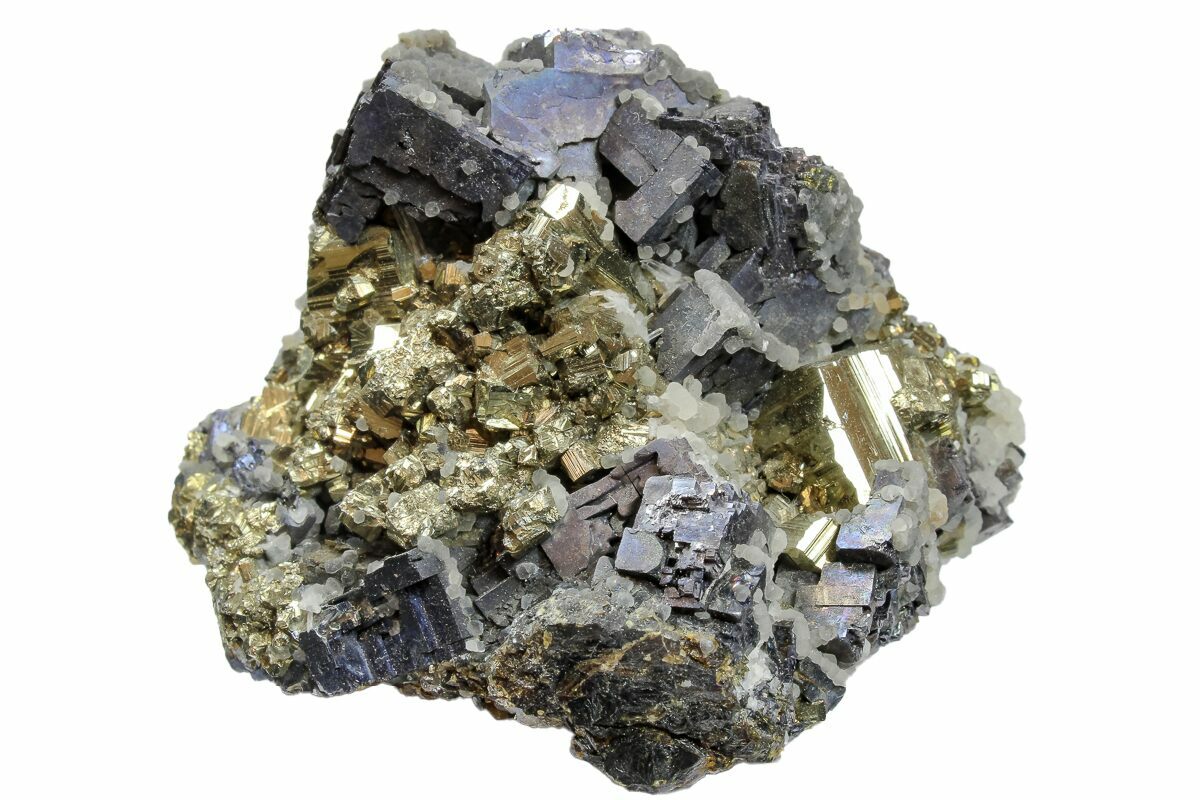
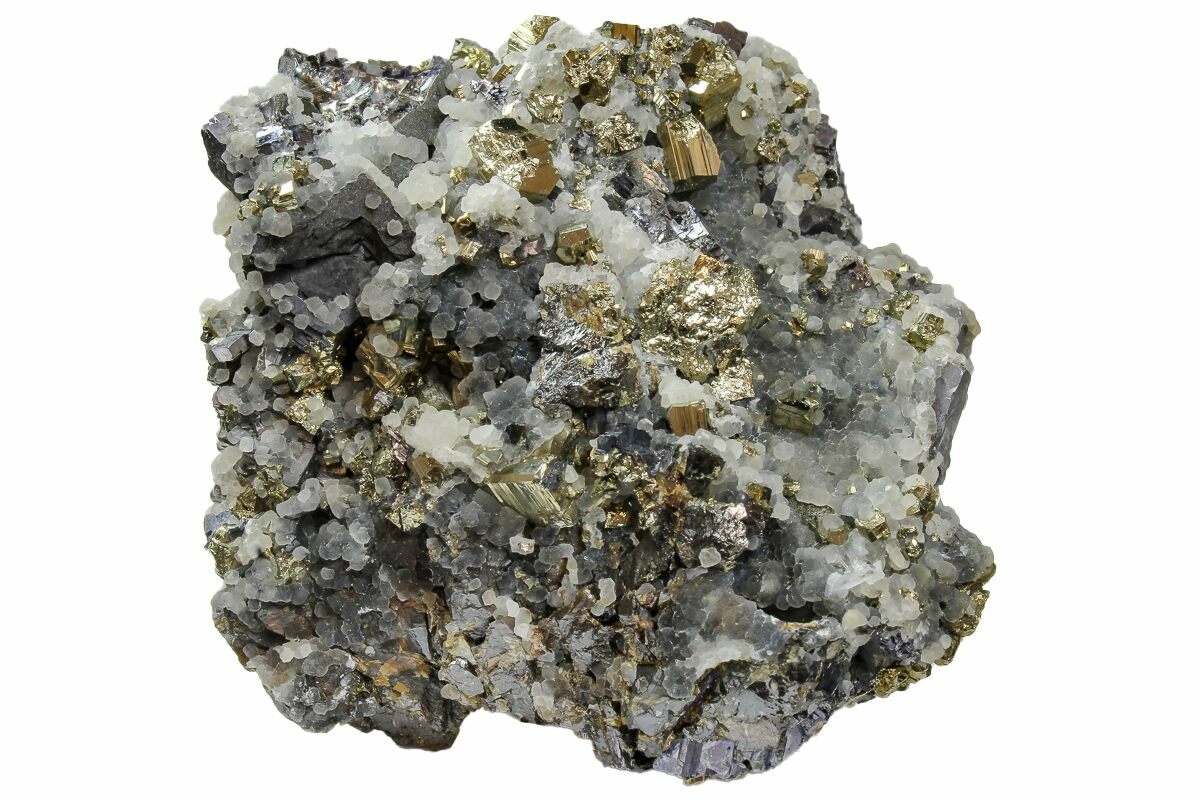
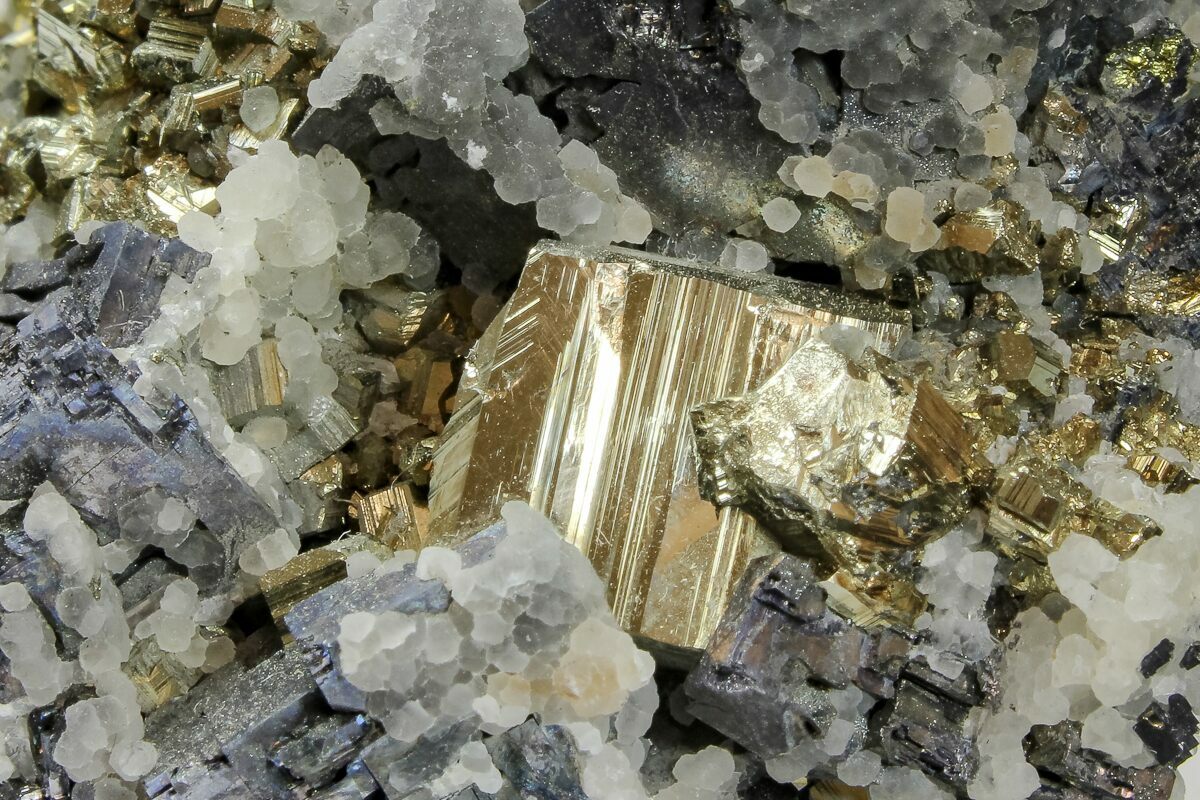
This is a beautiful specimen that contains an association of chalcopyrite, galena, pyrite and calcite crystals. It comes from the Huanzala Mine in Peru and the entire specimen measures 2.1" long.
About Galena
Galena is a lead-based mineral and the primary ore of lead, and has been used for its lead content for thousands of years. Galena typically displays a gray metallic luster and forms cubes or octahedral crystals. The chemical composition of galena is PbS.
While galena will not pose a health hazard by sitting on the shelf or even from casual handling, we suggest washing hands following handling due to the mineral's lead content.
Galena is a lead-based mineral and the primary ore of lead, and has been used for its lead content for thousands of years. Galena typically displays a gray metallic luster and forms cubes or octahedral crystals. The chemical composition of galena is PbS.
While galena will not pose a health hazard by sitting on the shelf or even from casual handling, we suggest washing hands following handling due to the mineral's lead content.
About Pyrite
Pyrite, or iron pyrite, is best known as “Fool’s Gold” thanks to its bright metallic luster and pale brass-yellow color, which can easily be mistaken for real gold in poor lighting. With the chemical formula FeS₂, pyrite is the most abundant sulfide mineral on Earth and forms in an impressive range of geological environments.
One of pyrite’s defining features is its remarkable diversity of crystal habits—over 20 documented forms—making it one of the most morphologically varied minerals known. It commonly occurs as sharp cubes, octahedra, and pyritohedra, but also forms pentagonal dodecahedra, penetration twins, striated combinations, and complex modified forms prized by collectors. It can develop as massive veins, nodules, botryoidal growths, and fine druzy coatings that shimmer brilliantly under light. Whether glittering in tiny clusters or displayed as perfectly geometric crystals, pyrite showcases an extraordinary range of natural architecture and visual appeal.
Pyrite, or iron pyrite, is best known as “Fool’s Gold” thanks to its bright metallic luster and pale brass-yellow color, which can easily be mistaken for real gold in poor lighting. With the chemical formula FeS₂, pyrite is the most abundant sulfide mineral on Earth and forms in an impressive range of geological environments.
One of pyrite’s defining features is its remarkable diversity of crystal habits—over 20 documented forms—making it one of the most morphologically varied minerals known. It commonly occurs as sharp cubes, octahedra, and pyritohedra, but also forms pentagonal dodecahedra, penetration twins, striated combinations, and complex modified forms prized by collectors. It can develop as massive veins, nodules, botryoidal growths, and fine druzy coatings that shimmer brilliantly under light. Whether glittering in tiny clusters or displayed as perfectly geometric crystals, pyrite showcases an extraordinary range of natural architecture and visual appeal.
What Is Chalcopyrite?
Chalcopyrite is a brass-yellow colored mineral and an important copper ore. When weathered, chalcopyrite loses its metallic luster, turning a gray-green color. When exposed to acids, the tarnish can develop a red, blue, or purple iridescence: this acid-treated material is often sold under the name peacock ore.
Chalcopyrite is a brass-yellow colored mineral and an important copper ore. When weathered, chalcopyrite loses its metallic luster, turning a gray-green color. When exposed to acids, the tarnish can develop a red, blue, or purple iridescence: this acid-treated material is often sold under the name peacock ore.
About Calcite Crystals
Calcite crystals are a form of calcium carbonate (CaCO₃) known for their diverse shapes, transparency, and vibrant range of colors. They typically form in rhombohedral, scalenohedral, or prismatic shapes, often with well-defined, sharp edges and glossy surfaces. Calcite crystals are often translucent or transparent, sometimes displaying a double refraction effect where objects viewed through the crystal appear doubled. They can appear in various colors—white, clear, yellow, pink, blue, green, and orange—depending on impurities or trace minerals.
A notable characteristic of calcite is its reaction with weak acids like vinegar, which causes it to effervesce, or fizz, as it releases carbon dioxide. This property makes calcite crystals a key tool in geological identification and studies. Calcite forms in many environments, from sedimentary rocks like limestone and marble to hydrothermal veins.
Calcite crystals are a form of calcium carbonate (CaCO₃) known for their diverse shapes, transparency, and vibrant range of colors. They typically form in rhombohedral, scalenohedral, or prismatic shapes, often with well-defined, sharp edges and glossy surfaces. Calcite crystals are often translucent or transparent, sometimes displaying a double refraction effect where objects viewed through the crystal appear doubled. They can appear in various colors—white, clear, yellow, pink, blue, green, and orange—depending on impurities or trace minerals.
A notable characteristic of calcite is its reaction with weak acids like vinegar, which causes it to effervesce, or fizz, as it releases carbon dioxide. This property makes calcite crystals a key tool in geological identification and studies. Calcite forms in many environments, from sedimentary rocks like limestone and marble to hydrothermal veins.
SPECIES
Chalcopyrite, Pyrite, Galena & Calcite
LOCATION
Huanzala Mine, Bolognesi, Peru
SIZE
2.1" wide
CATEGORY
ITEM
#169650


