 Reviews

Pyrite — Mineral & Crystal Guide
Pyrite is one of the most instantly recognizable minerals on Earth—and one of the most misunderstood. Its bright, metallic luster and golden color have fooled prospectors for thousands of years, earning it the enduring nickname “fool’s gold.” But dismissing pyrite as a mere impostor does it a disservice. Few minerals rival pyrite in its combination of beauty, crystallographic precision, geological importance, and historical impact.
Chemically iron sulfide (FeS₂), pyrite forms in an extraordinary range of environments: crystallizing from hydrothermal fluids, precipitating in sedimentary basins, growing during metamorphism, and even replacing soft tissues and shells during fossilization. Its crystals can be razor-sharp cubes with mirror-like faces, complex multifaceted forms that appear machined, or flattened discs—pyrite suns—that resemble ancient cosmic symbols. Some crystals are so perfect they look artificial, while others record subtle biological and chemical processes at microscopic scales.
Beyond its appearance, pyrite is a linchpin of Earth’s iron and sulfur cycles. It influences groundwater chemistry, governs the mobility of metals, preserves fossils, and drives some of the most dramatic environmental reactions associated with mining. Pyrite’s story is not just one of glittering crystals, but of fire, water, microbes, and deep time.
Properties of Pyrite
Chemical Formula: FeS₂ (iron disulfide)
Mineral Class: Sulfide
Crystal System: Isometric (cubic)
Crystal Habits: Cubes, octahedrons, pyritohedrons, combinations; massive, granular, radiating, framboidal, discoidal (“suns”)
Color: Pale brass-yellow to golden
Luster: Metallic
Streak: Greenish-black to brownish-black
Hardness: 6–6.5 (Mohs scale)
Fracture: Conchoidal to uneven
Magnetism: Non-magnetic (may become weakly magnetic after heating or alteration)
Commonly Associated Minerals: Quartz, calcite, fluorite, galena, sphalerite, chalcopyrite, marcasite, barite, dolomite, arsenopyrite
Pyrite crystallizes in the isometric (cubic) crystal system, yet it displays one of the greatest ranges of crystal shapes of any common mineral. This diversity arises from how sulfur atoms pair within the structure and how subtle changes in temperature, chemistry, pressure, and growth rate affect which crystal faces dominate during growth.
Although pyrite’s atomic structure is fundamentally cubic, well over 30 visually distinct crystal “shapes” are recognized in practice, even though they all derive from the same underlying cubic atomic framework. These include single-crystal forms, modified combinations, and complex aggregates shaped by geological environment.
Cubes — Nature’s Precision Blocks
Cubic pyrite is the most balanced expression of the mineral’s isometric crystal system, forming when growth proceeds at nearly identical rates along all three crystallographic axes. This requires exceptionally stable conditions, including steady temperature and pressure, uniform fluid chemistry, and a consistent supply of iron and sulfur. Environments such as slowly evolving hydrothermal veins or chemically uniform sedimentary settings favor this symmetry, especially when pH, redox conditions, and sulfur activity remain constant and competing elements are scarce.
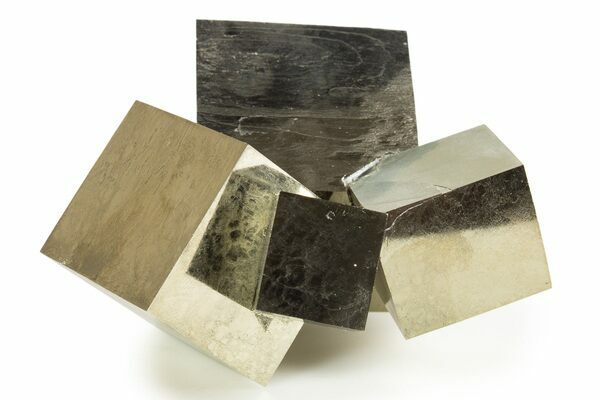
A cluster of natural pyrite cubes from Navajún, Spain.
Equally important is slow crystal growth. When atoms attach gradually, iron and sulfur settle into their most energetically efficient positions, producing razor-sharp edges, perfectly flat faces, and mirror-like luster. Rapid growth tends to distort crystals, but long-lived stability—sometimes lasting thousands to millions of years—allows pyrite cubes to develop their iconic, almost artificial precision, making them among the most prized crystal forms in mineralogy.
Pyritohedrons — The Signature Pyrite Form
The pyritohedron consists of twelve pentagonal faces and is one of the most diagnostic shapes of pyrite. It forms when growth rates differ slightly between faces, often due to variations in sulfur availability. Many cubic crystals display fine striations that record oscillation between cube and pyritohedral growth during crystallization.
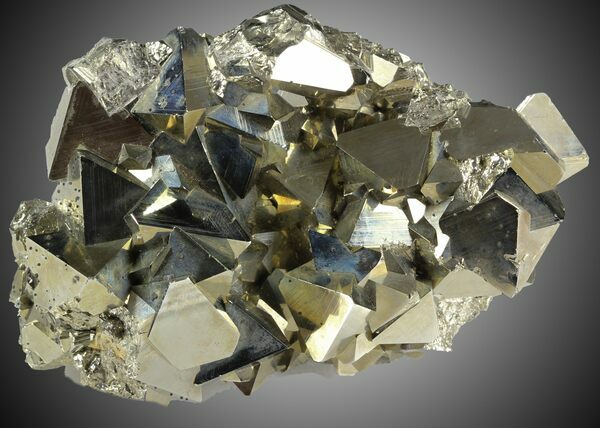
Pyritohedral pyrite crystals from the Macaranda Mine in Peru
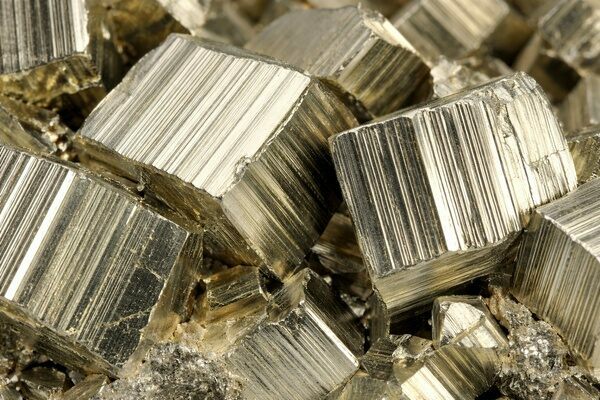
Well defined striations on pyrite crystals.
Octahedrons — Sharp and Uncommon
Octahedral pyrite forms when diagonal faces grow faster than cubic ones, usually under fluctuating hydrothermal conditions. These crystals tend to be less common but visually striking.
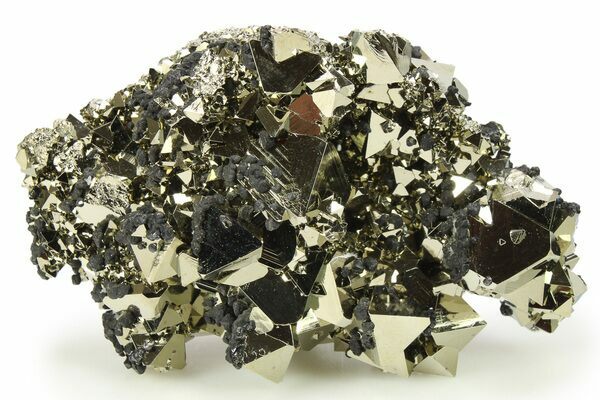
Octahedral pyrite crystals from the Huanzala Mine in Peru
Combination Crystals — Controlled Chaos
Many pyrite crystals are hybrids—cubes modified by pyritohedral or octahedral faces. Small shifts in chemistry during growth can dramatically change external shape, producing countless unique crystal expressions from the same basic structure.
Framboidal Pyrite — Microbial Architecture
Framboidal pyrite forms microscopic, raspberry-like spheres composed of countless tiny crystals. These aggregates typically develop in oxygen-poor sediments where sulfate-reducing bacteria mediate chemical reactions. Framboids are critical indicators of ancient ocean chemistry and biological activity.
Pyrite Suns — Radiating Discs from Sedimentary Compression
Pyrite suns are flattened, discoidal aggregates with radiating crystal growth, most famously found in coal-bearing strata. Rather than growing freely in open space, pyrite nucleates within compacted clay layers and expands outward as thin blades. Burial pressure flattens the growing aggregate, producing the iconic sun-like form. These are diagenetic structures, recording both chemical conditions and physical compression during sediment burial.
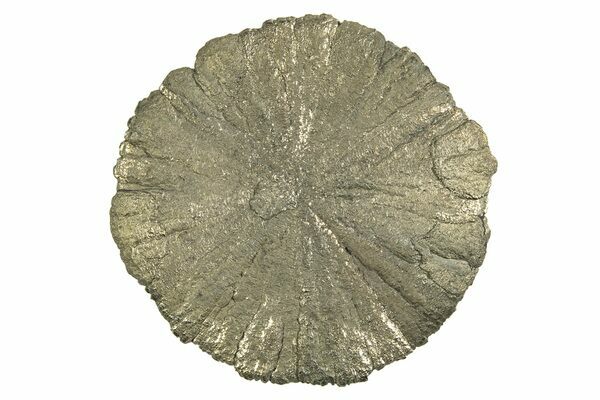
A pyrite sun from Sparta, Illinois
Pyrite is one of the most important regulators of iron and sulfur on Earth. Vast quantities of both elements are locked into pyrite within sedimentary rocks, hydrothermal systems, and metamorphic terrains. When pyrite forms, it removes iron and sulfur from circulation; when it breaks down, it releases them in chemically aggressive forms.
In oxygen-poor marine and freshwater sediments, pyrite commonly forms through microbial activity. Sulfate-reducing bacteria convert sulfate into sulfide, which reacts with dissolved iron to precipitate pyrite. This process has regulated seawater sulfur concentrations for billions of years.
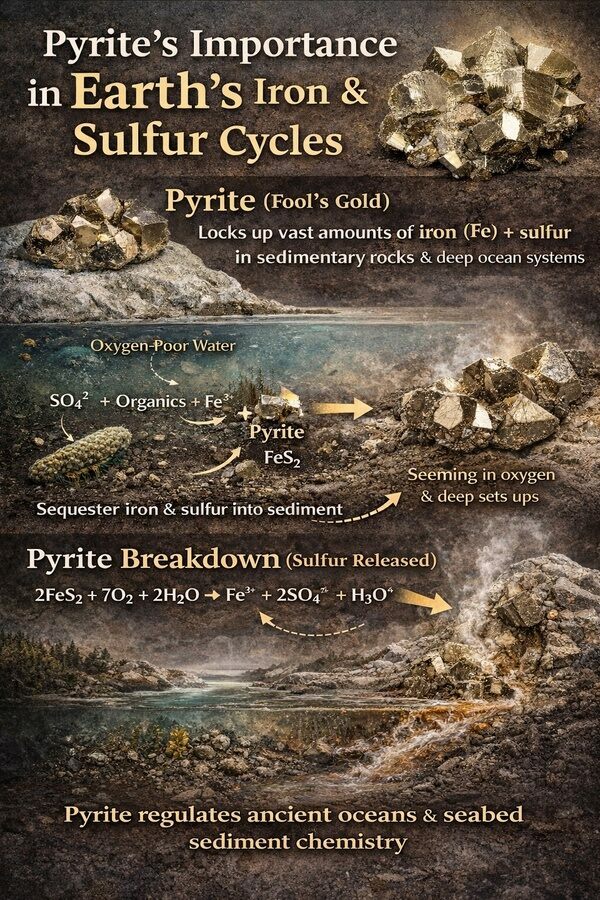
Infographic: Pyrite and Earths Iron & Sulfur Cycles
When exposed to oxygen and water, pyrite oxidation reverses this process dramatically. The reaction releases iron, sulfate, and acidity, driving acid mine drainage—one of the most severe environmental legacies of mining. Streams affected by pyrite oxidation often turn orange from iron oxides and become biologically hostile due to low pH and dissolved metals.
Even outside mining environments, slow pyrite oxidation influences groundwater chemistry, mobilizes trace metals, and alters aquifers. Conversely, pyrite formation can trap toxic metals, acting as a natural geochemical sink. Few minerals exert such a continuous and powerful influence on Earth’s surface chemistry.
Pyrite plays a remarkable role in fossilization through pyritization. In oxygen-poor environments, iron- and sulfur-rich waters permeate buried remains. As microbes break down organic matter, chemical conditions favor pyrite precipitation, replicating shells, bones, and even soft tissues molecule by molecule.
Pyritized fossils often preserve extraordinary detail—shell ornamentation, trilobite eye facets, plant veins—rarely retained by other mineralization processes. Some of the finest soft-bodied fossil preservation on Earth owes its existence to pyrite.
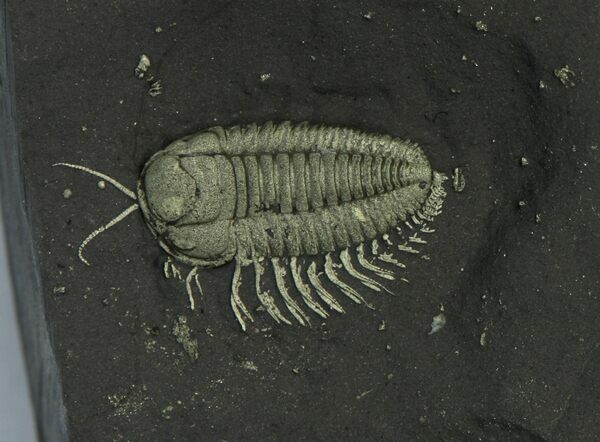
A pyrite replaced Triarthrus trilobite from New York showing soft-bodied preservation>
Yet pyrite can also threaten fossils. When exposed to air and humidity, it oxidizes, producing sulfuric acid and iron sulfates that cause cracking and disintegration, a process known as pyrite decay. For museums and collectors, pyritized fossils are both spectacular and fragile.
Navajún — Famous for nearly flawless cubic crystals grown under remarkably stable conditions.
Huanzala Mine — Known for large, bold crystals associated with quartz and base-metal sulfides.
Elba Island — A historic pyrite district mined since antiquity.
Illinois Basin — Classic source of flattened pyrite suns in coal seams.
Long before pyrite was ever mistaken for gold, it was valued for something far more essential: fire. Prehistoric humans learned that striking pyrite against flint produced sparks capable of igniting tinder, making it a foundational mineral in early survival technology. Archaeological finds show pyrite nodules deliberately collected and transported, indicating that early humans recognized its utility tens of thousands of years ago. In this sense, pyrite helped bridge the gap between natural landscapes and controlled human environments, enabling cooking, warmth, protection, and social development.
The mineral’s name comes from the Greek pyr, meaning fire, and ancient civilizations understood its fiery nature well. Greek and Roman authors described pyrite as a stone that “contained fire within it,” and it was mined not only for ignition but also for pigments and early metallurgical experimentation. Romans exploited pyrite-rich deposits extensively, particularly on Elba Island, where it was associated with iron ores. Finely ground pyrite was sometimes used in pigments and cosmetics, while its golden luster gave it symbolic associations with the sun, divinity, and vitality—even as its tendency to tarnish made it a metaphor for illusion and false wealth.
During the Middle Ages, pyrite occupied an uneasy space between utility and suspicion. Its resemblance to gold made it infamous among miners and prospectors, reinforcing the idea that nature could deceive the unwary. At the same time, experienced miners learned an important lesson: pyrite often occurred alongside valuable metal sulfides. Rather than being dismissed outright, it became a pathfinder mineral, signaling the possible presence of copper, lead, silver, or gold nearby. Alchemists, fascinated by transformation, saw pyrite as a symbol of hidden potential—something outwardly familiar that concealed a different internal truth.
The Industrial Revolution marked pyrite’s most transformative chapter. Vast quantities of pyrite were mined not for iron or appearance, but as a primary source of sulfur. Sulfuric acid produced from pyrite roasting became the backbone of industrial society, used in fertilizer production, petroleum refining, explosives, dyes, paper processing, textiles, metallurgy, and chemical synthesis. In fact, sulfuric acid production was once considered a direct measure of a nation’s industrial power. Entire mining districts were developed around pyrite extraction, reshaping economies and landscapes on a global scale.
Pyrite also played a quieter but crucial role in scientific advancement. Chemists used it to study oxidation and acid formation, while geologists recognized it as a key recorder of environmental conditions. Its presence in sedimentary rocks revealed ancient oxygen-poor oceans, while framboidal pyrite provided evidence of early microbial life. In paleontology, pyrite’s ability to replace biological material revolutionized understanding of fossil preservation, capturing delicate anatomical details that would otherwise have been lost to time.
Today, pyrite’s uses are more limited but no less significant. It is still employed as a source of sulfur in some regions, studied extensively in environmental science for its role in acid mine drainage, and prized by collectors for its geometric beauty. Museums and researchers carefully manage pyritized fossils, balancing their extraordinary detail against the risks of long-term instability. In education and outreach, pyrite remains one of the most effective minerals for demonstrating crystallography, geochemistry, and the complex interactions between geology and life.

Chemically iron sulfide (FeS₂), pyrite forms in an extraordinary range of environments: crystallizing from hydrothermal fluids, precipitating in sedimentary basins, growing during metamorphism, and even replacing soft tissues and shells during fossilization. Its crystals can be razor-sharp cubes with mirror-like faces, complex multifaceted forms that appear machined, or flattened discs—pyrite suns—that resemble ancient cosmic symbols. Some crystals are so perfect they look artificial, while others record subtle biological and chemical processes at microscopic scales.
Beyond its appearance, pyrite is a linchpin of Earth’s iron and sulfur cycles. It influences groundwater chemistry, governs the mobility of metals, preserves fossils, and drives some of the most dramatic environmental reactions associated with mining. Pyrite’s story is not just one of glittering crystals, but of fire, water, microbes, and deep time.
Properties of Pyrite
Chemical Formula: FeS₂ (iron disulfide)
Mineral Class: Sulfide
Crystal System: Isometric (cubic)
Crystal Habits: Cubes, octahedrons, pyritohedrons, combinations; massive, granular, radiating, framboidal, discoidal (“suns”)
Color: Pale brass-yellow to golden
Luster: Metallic
Streak: Greenish-black to brownish-black
Hardness: 6–6.5 (Mohs scale)
Fracture: Conchoidal to uneven
Magnetism: Non-magnetic (may become weakly magnetic after heating or alteration)
Commonly Associated Minerals: Quartz, calcite, fluorite, galena, sphalerite, chalcopyrite, marcasite, barite, dolomite, arsenopyrite
Crystal Forms of Pyrite — Geometry Born from Chemistry
Pyrite crystallizes in the isometric (cubic) crystal system, yet it displays one of the greatest ranges of crystal shapes of any common mineral. This diversity arises from how sulfur atoms pair within the structure and how subtle changes in temperature, chemistry, pressure, and growth rate affect which crystal faces dominate during growth.
Although pyrite’s atomic structure is fundamentally cubic, well over 30 visually distinct crystal “shapes” are recognized in practice, even though they all derive from the same underlying cubic atomic framework. These include single-crystal forms, modified combinations, and complex aggregates shaped by geological environment.
Cubes — Nature’s Precision Blocks
Cubic pyrite is the most balanced expression of the mineral’s isometric crystal system, forming when growth proceeds at nearly identical rates along all three crystallographic axes. This requires exceptionally stable conditions, including steady temperature and pressure, uniform fluid chemistry, and a consistent supply of iron and sulfur. Environments such as slowly evolving hydrothermal veins or chemically uniform sedimentary settings favor this symmetry, especially when pH, redox conditions, and sulfur activity remain constant and competing elements are scarce.
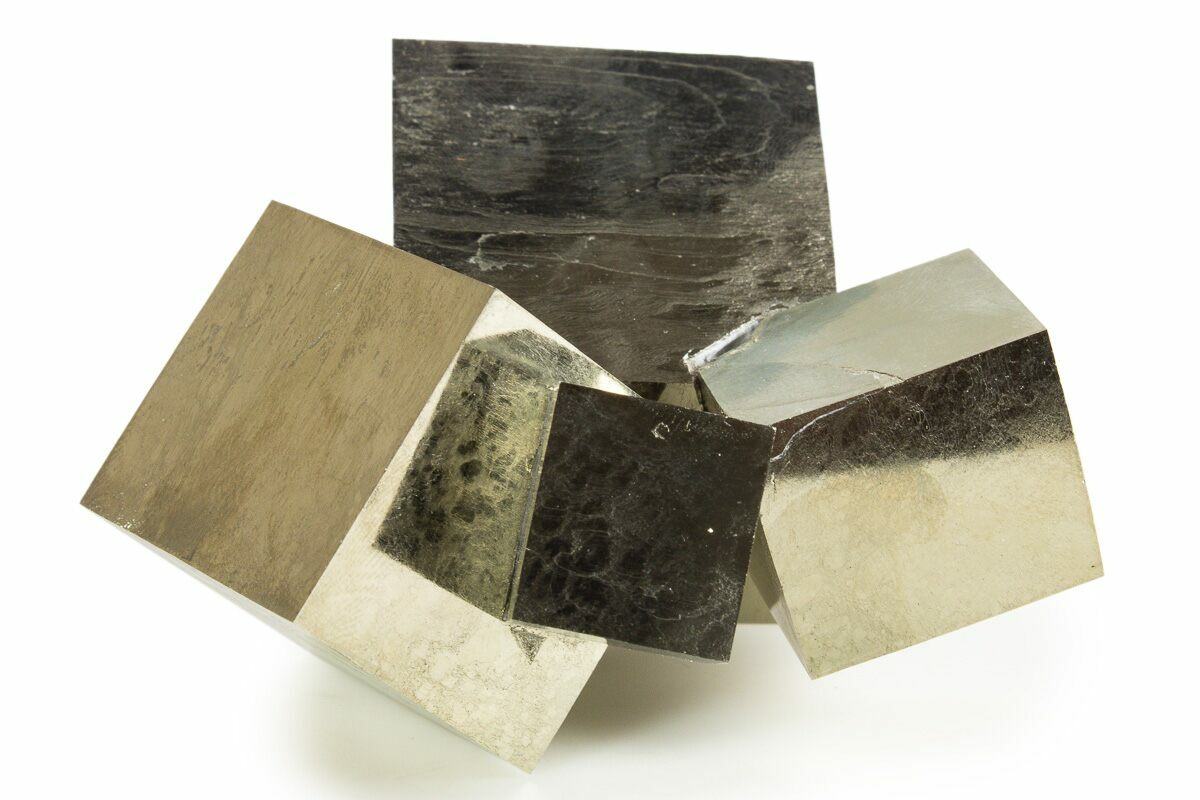
A cluster of natural pyrite cubes from Navajún, Spain.
Equally important is slow crystal growth. When atoms attach gradually, iron and sulfur settle into their most energetically efficient positions, producing razor-sharp edges, perfectly flat faces, and mirror-like luster. Rapid growth tends to distort crystals, but long-lived stability—sometimes lasting thousands to millions of years—allows pyrite cubes to develop their iconic, almost artificial precision, making them among the most prized crystal forms in mineralogy.
Pyritohedrons — The Signature Pyrite Form
The pyritohedron consists of twelve pentagonal faces and is one of the most diagnostic shapes of pyrite. It forms when growth rates differ slightly between faces, often due to variations in sulfur availability. Many cubic crystals display fine striations that record oscillation between cube and pyritohedral growth during crystallization.
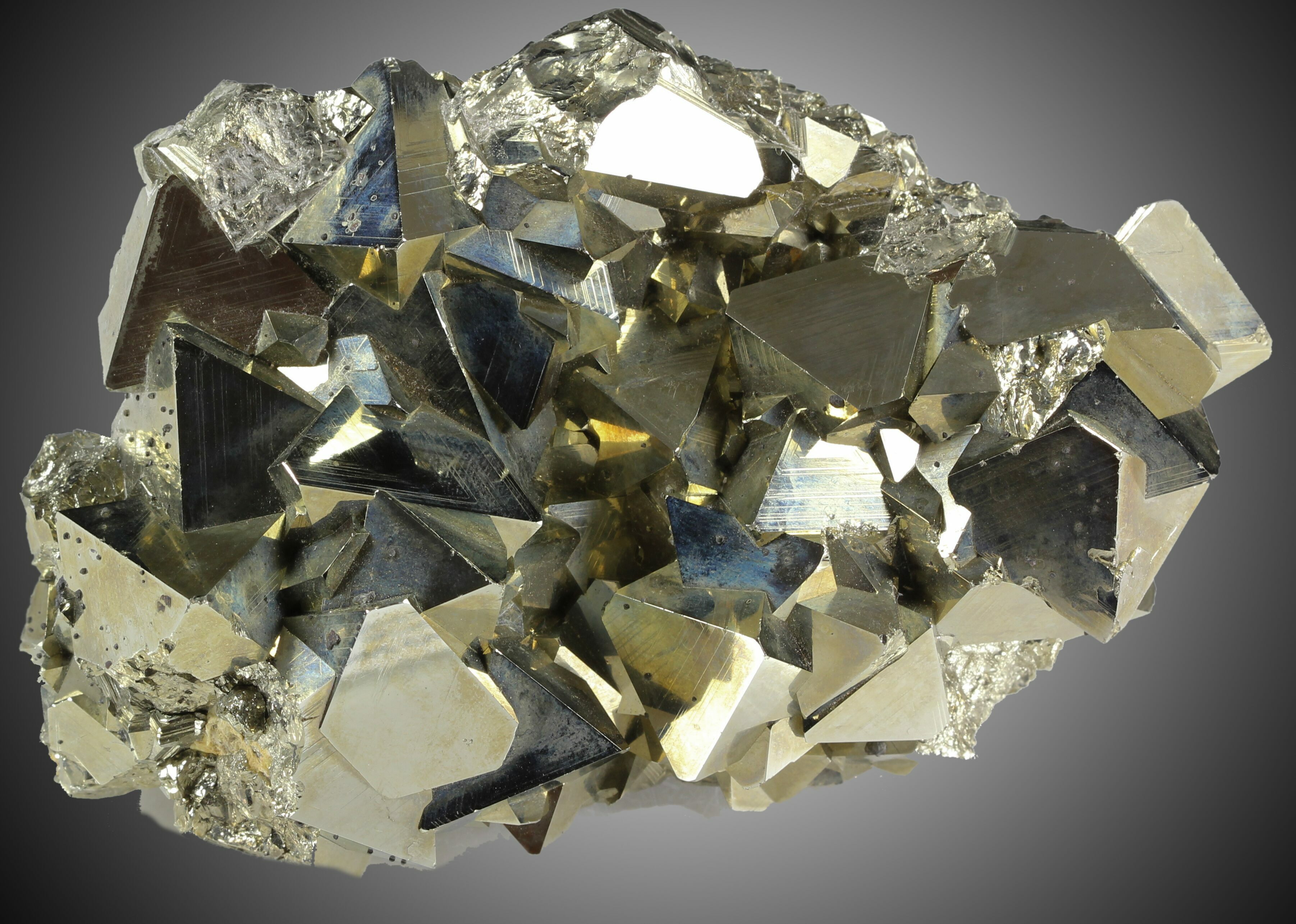
Pyritohedral pyrite crystals from the Macaranda Mine in Peru
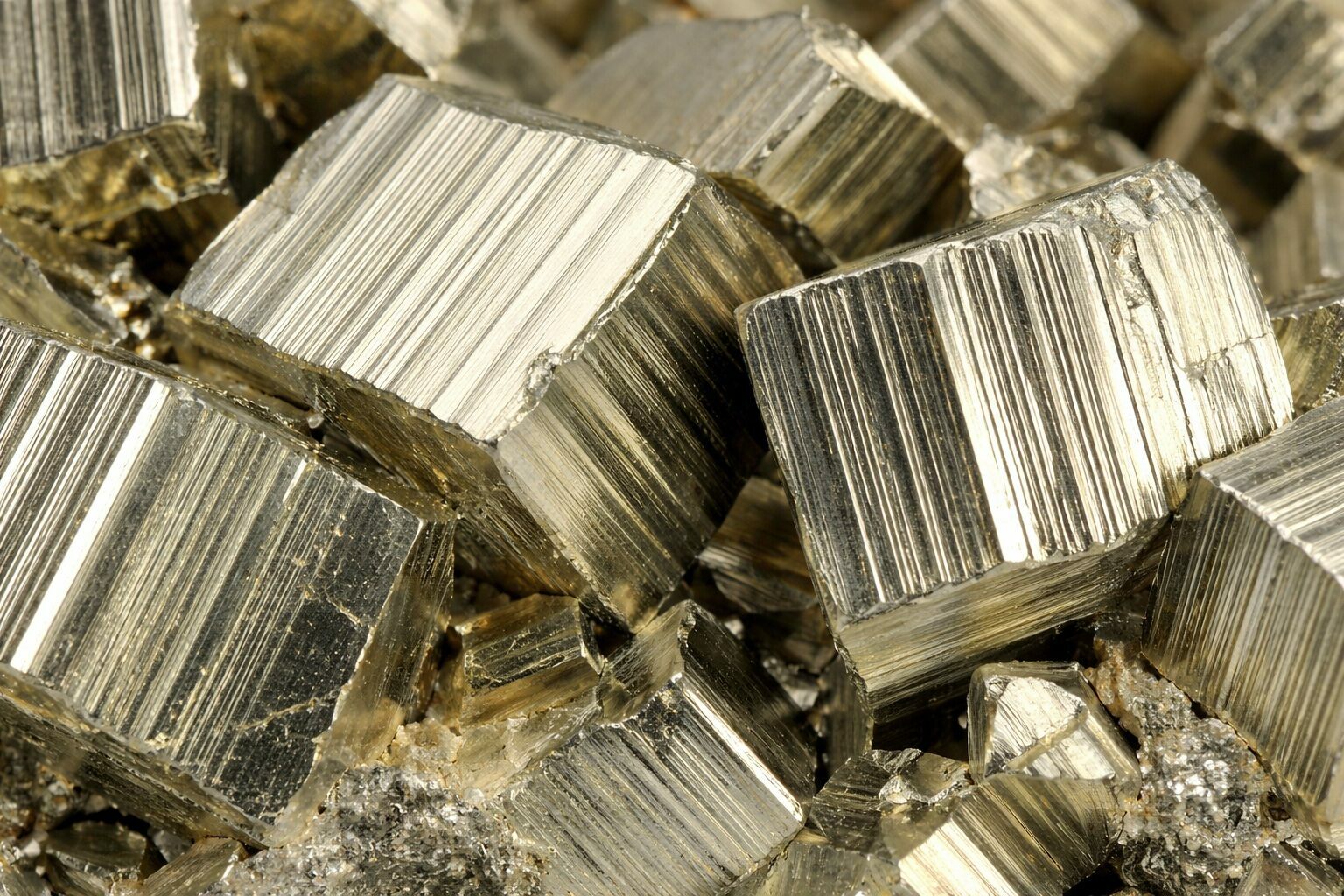
Well defined striations on pyrite crystals.
Octahedrons — Sharp and Uncommon
Octahedral pyrite forms when diagonal faces grow faster than cubic ones, usually under fluctuating hydrothermal conditions. These crystals tend to be less common but visually striking.
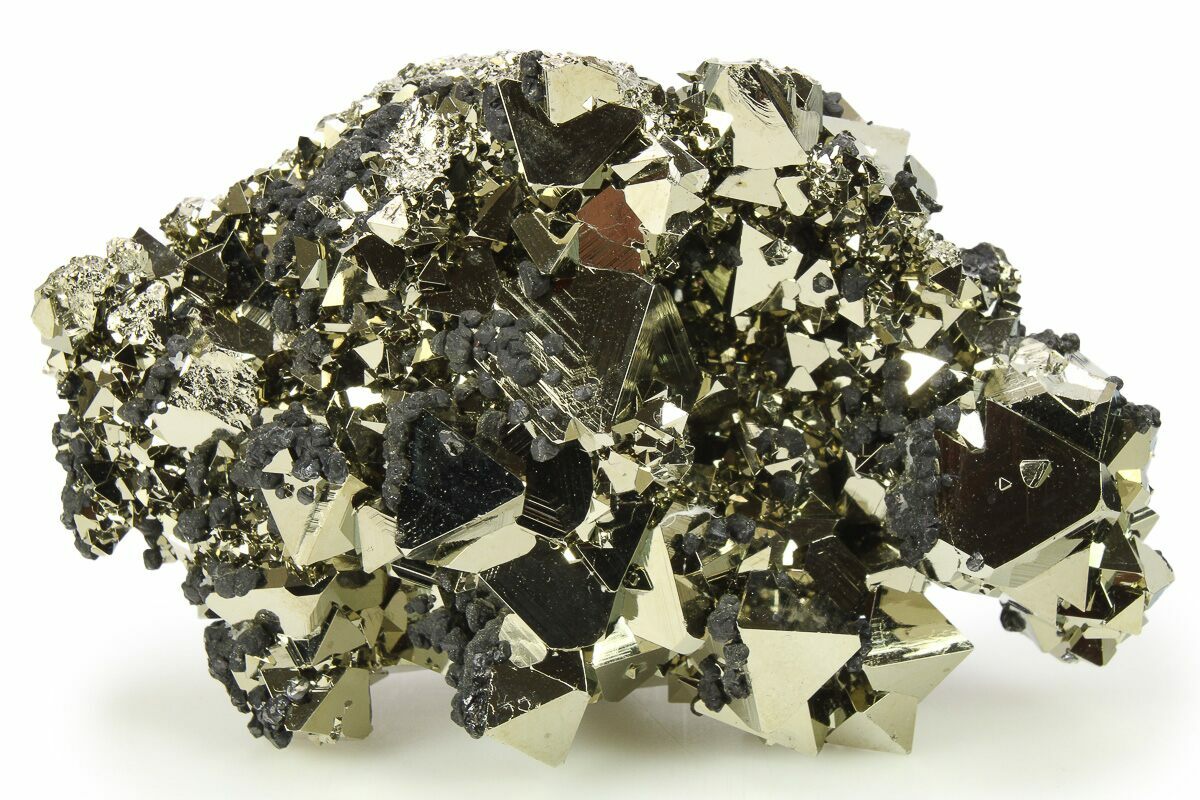
Octahedral pyrite crystals from the Huanzala Mine in Peru
Combination Crystals — Controlled Chaos
Many pyrite crystals are hybrids—cubes modified by pyritohedral or octahedral faces. Small shifts in chemistry during growth can dramatically change external shape, producing countless unique crystal expressions from the same basic structure.
Framboidal Pyrite — Microbial Architecture
Framboidal pyrite forms microscopic, raspberry-like spheres composed of countless tiny crystals. These aggregates typically develop in oxygen-poor sediments where sulfate-reducing bacteria mediate chemical reactions. Framboids are critical indicators of ancient ocean chemistry and biological activity.
Pyrite Suns — Radiating Discs from Sedimentary Compression
Pyrite suns are flattened, discoidal aggregates with radiating crystal growth, most famously found in coal-bearing strata. Rather than growing freely in open space, pyrite nucleates within compacted clay layers and expands outward as thin blades. Burial pressure flattens the growing aggregate, producing the iconic sun-like form. These are diagenetic structures, recording both chemical conditions and physical compression during sediment burial.
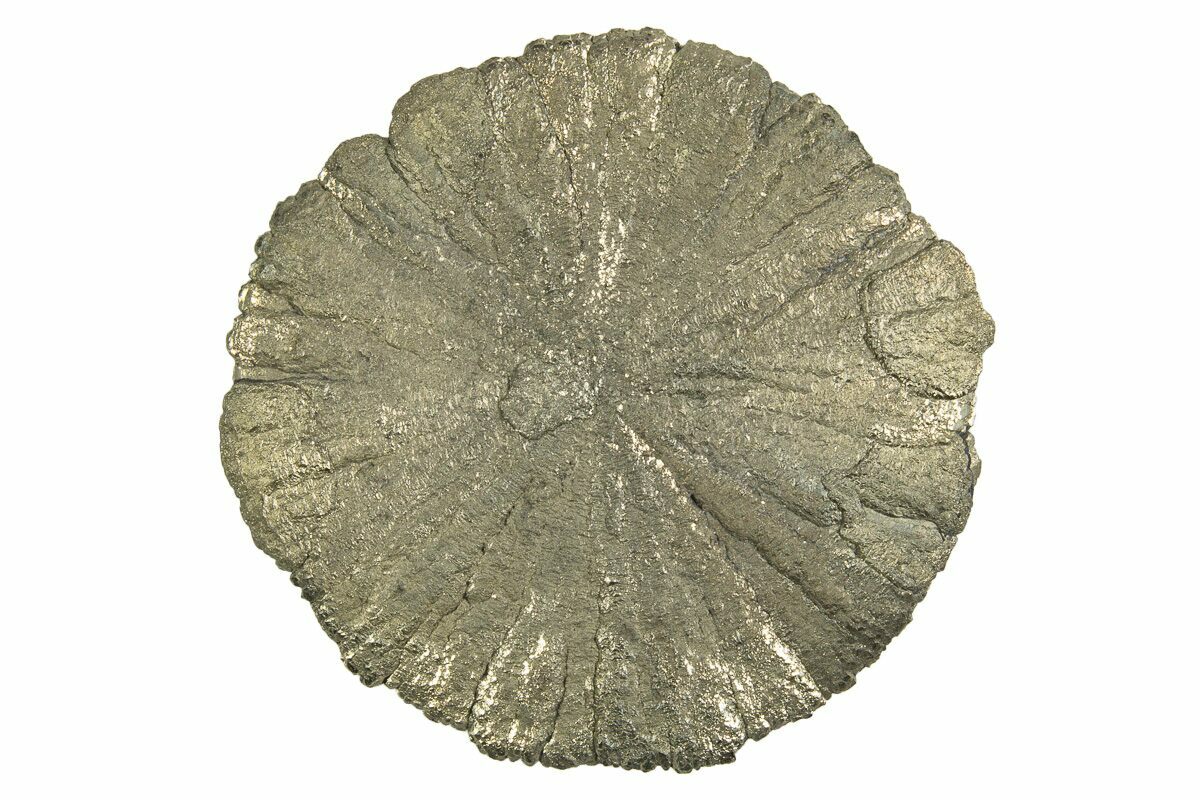
A pyrite sun from Sparta, Illinois
Pyrite and Earth’s Iron & Sulfur Cycles
Pyrite is one of the most important regulators of iron and sulfur on Earth. Vast quantities of both elements are locked into pyrite within sedimentary rocks, hydrothermal systems, and metamorphic terrains. When pyrite forms, it removes iron and sulfur from circulation; when it breaks down, it releases them in chemically aggressive forms.
In oxygen-poor marine and freshwater sediments, pyrite commonly forms through microbial activity. Sulfate-reducing bacteria convert sulfate into sulfide, which reacts with dissolved iron to precipitate pyrite. This process has regulated seawater sulfur concentrations for billions of years.
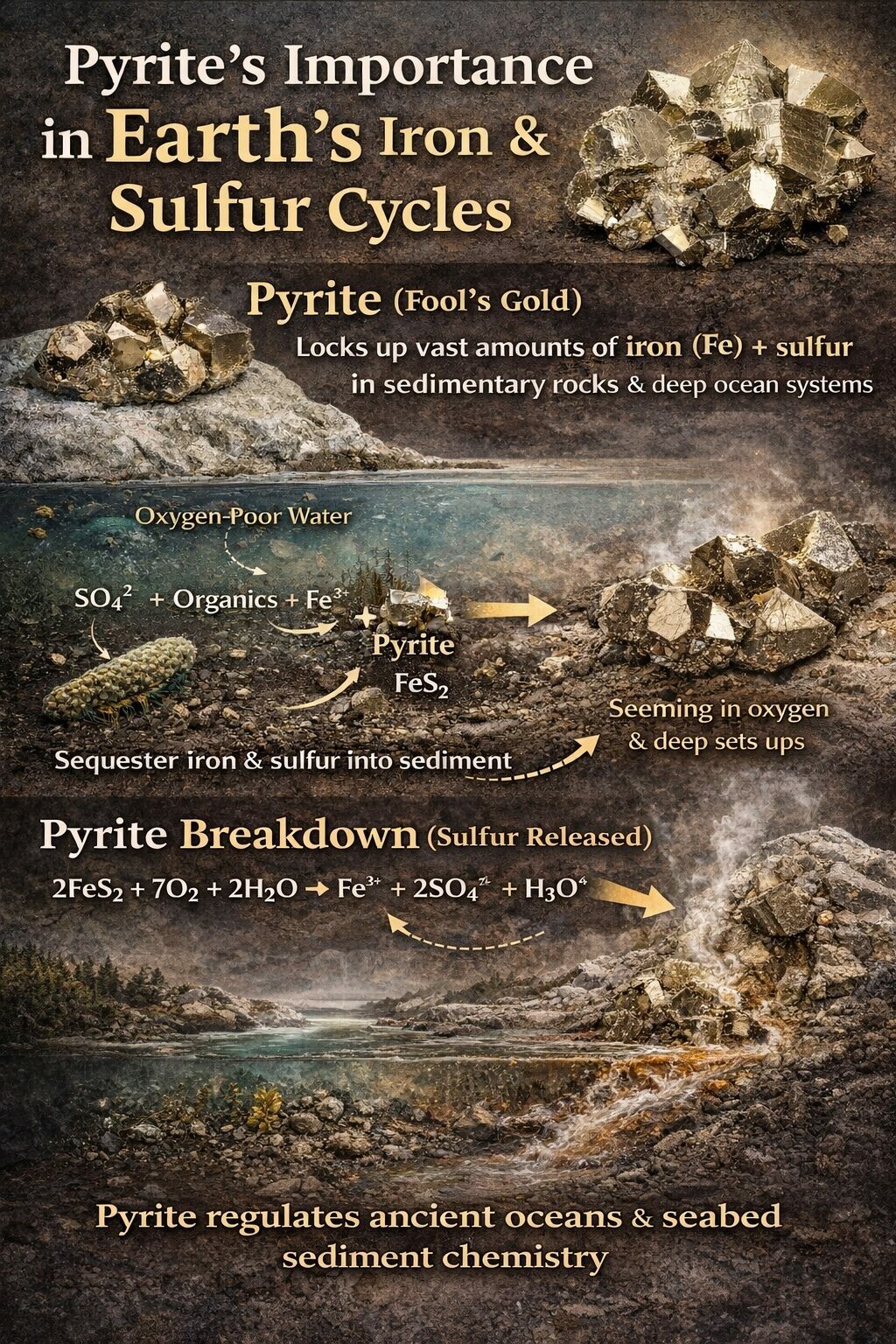
Infographic: Pyrite and Earths Iron & Sulfur Cycles
When exposed to oxygen and water, pyrite oxidation reverses this process dramatically. The reaction releases iron, sulfate, and acidity, driving acid mine drainage—one of the most severe environmental legacies of mining. Streams affected by pyrite oxidation often turn orange from iron oxides and become biologically hostile due to low pH and dissolved metals.
Even outside mining environments, slow pyrite oxidation influences groundwater chemistry, mobilizes trace metals, and alters aquifers. Conversely, pyrite formation can trap toxic metals, acting as a natural geochemical sink. Few minerals exert such a continuous and powerful influence on Earth’s surface chemistry.
Pyrite Replacement in Fossils — Stone That Imitates Life
Pyrite plays a remarkable role in fossilization through pyritization. In oxygen-poor environments, iron- and sulfur-rich waters permeate buried remains. As microbes break down organic matter, chemical conditions favor pyrite precipitation, replicating shells, bones, and even soft tissues molecule by molecule.
Pyritized fossils often preserve extraordinary detail—shell ornamentation, trilobite eye facets, plant veins—rarely retained by other mineralization processes. Some of the finest soft-bodied fossil preservation on Earth owes its existence to pyrite.
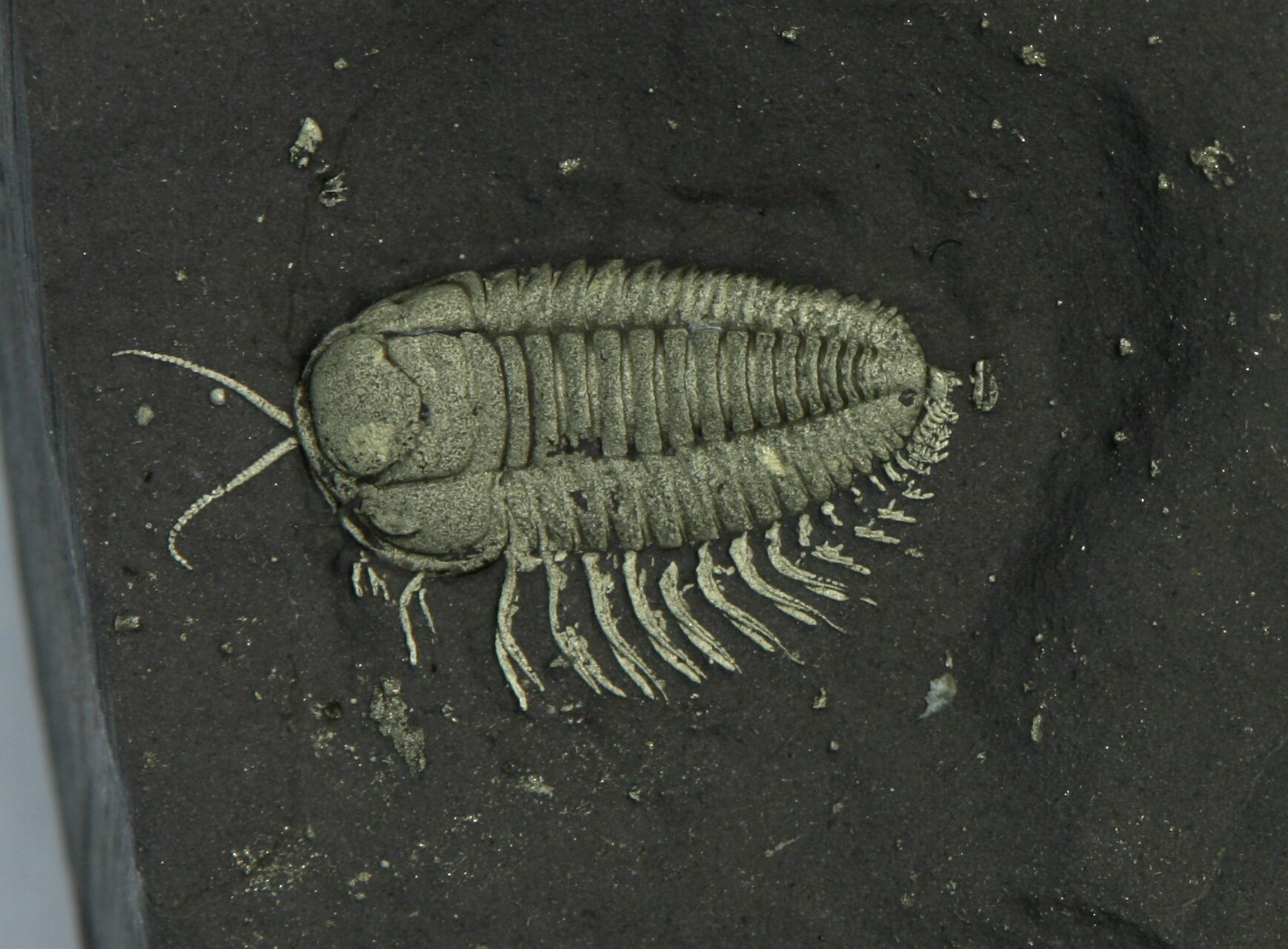
A pyrite replaced Triarthrus trilobite from New York showing soft-bodied preservation>
Yet pyrite can also threaten fossils. When exposed to air and humidity, it oxidizes, producing sulfuric acid and iron sulfates that cause cracking and disintegration, a process known as pyrite decay. For museums and collectors, pyritized fossils are both spectacular and fragile.
Famous Pyrite Localities Around the World
Navajún — Famous for nearly flawless cubic crystals grown under remarkably stable conditions.

Huanzala Mine — Known for large, bold crystals associated with quartz and base-metal sulfides.
Elba Island — A historic pyrite district mined since antiquity.
Illinois Basin — Classic source of flattened pyrite suns in coal seams.
Pyrite Through History — Fire, Faith, Industry, and Science
Long before pyrite was ever mistaken for gold, it was valued for something far more essential: fire. Prehistoric humans learned that striking pyrite against flint produced sparks capable of igniting tinder, making it a foundational mineral in early survival technology. Archaeological finds show pyrite nodules deliberately collected and transported, indicating that early humans recognized its utility tens of thousands of years ago. In this sense, pyrite helped bridge the gap between natural landscapes and controlled human environments, enabling cooking, warmth, protection, and social development.
The mineral’s name comes from the Greek pyr, meaning fire, and ancient civilizations understood its fiery nature well. Greek and Roman authors described pyrite as a stone that “contained fire within it,” and it was mined not only for ignition but also for pigments and early metallurgical experimentation. Romans exploited pyrite-rich deposits extensively, particularly on Elba Island, where it was associated with iron ores. Finely ground pyrite was sometimes used in pigments and cosmetics, while its golden luster gave it symbolic associations with the sun, divinity, and vitality—even as its tendency to tarnish made it a metaphor for illusion and false wealth.
During the Middle Ages, pyrite occupied an uneasy space between utility and suspicion. Its resemblance to gold made it infamous among miners and prospectors, reinforcing the idea that nature could deceive the unwary. At the same time, experienced miners learned an important lesson: pyrite often occurred alongside valuable metal sulfides. Rather than being dismissed outright, it became a pathfinder mineral, signaling the possible presence of copper, lead, silver, or gold nearby. Alchemists, fascinated by transformation, saw pyrite as a symbol of hidden potential—something outwardly familiar that concealed a different internal truth.
The Industrial Revolution marked pyrite’s most transformative chapter. Vast quantities of pyrite were mined not for iron or appearance, but as a primary source of sulfur. Sulfuric acid produced from pyrite roasting became the backbone of industrial society, used in fertilizer production, petroleum refining, explosives, dyes, paper processing, textiles, metallurgy, and chemical synthesis. In fact, sulfuric acid production was once considered a direct measure of a nation’s industrial power. Entire mining districts were developed around pyrite extraction, reshaping economies and landscapes on a global scale.
Pyrite also played a quieter but crucial role in scientific advancement. Chemists used it to study oxidation and acid formation, while geologists recognized it as a key recorder of environmental conditions. Its presence in sedimentary rocks revealed ancient oxygen-poor oceans, while framboidal pyrite provided evidence of early microbial life. In paleontology, pyrite’s ability to replace biological material revolutionized understanding of fossil preservation, capturing delicate anatomical details that would otherwise have been lost to time.
Today, pyrite’s uses are more limited but no less significant. It is still employed as a source of sulfur in some regions, studied extensively in environmental science for its role in acid mine drainage, and prized by collectors for its geometric beauty. Museums and researchers carefully manage pyritized fossils, balancing their extraordinary detail against the risks of long-term instability. In education and outreach, pyrite remains one of the most effective minerals for demonstrating crystallography, geochemistry, and the complex interactions between geology and life.


