 Reviews

This Specimen has been sold.
3.4" Pink/Orange Bladed Barite On Galena - Morocco
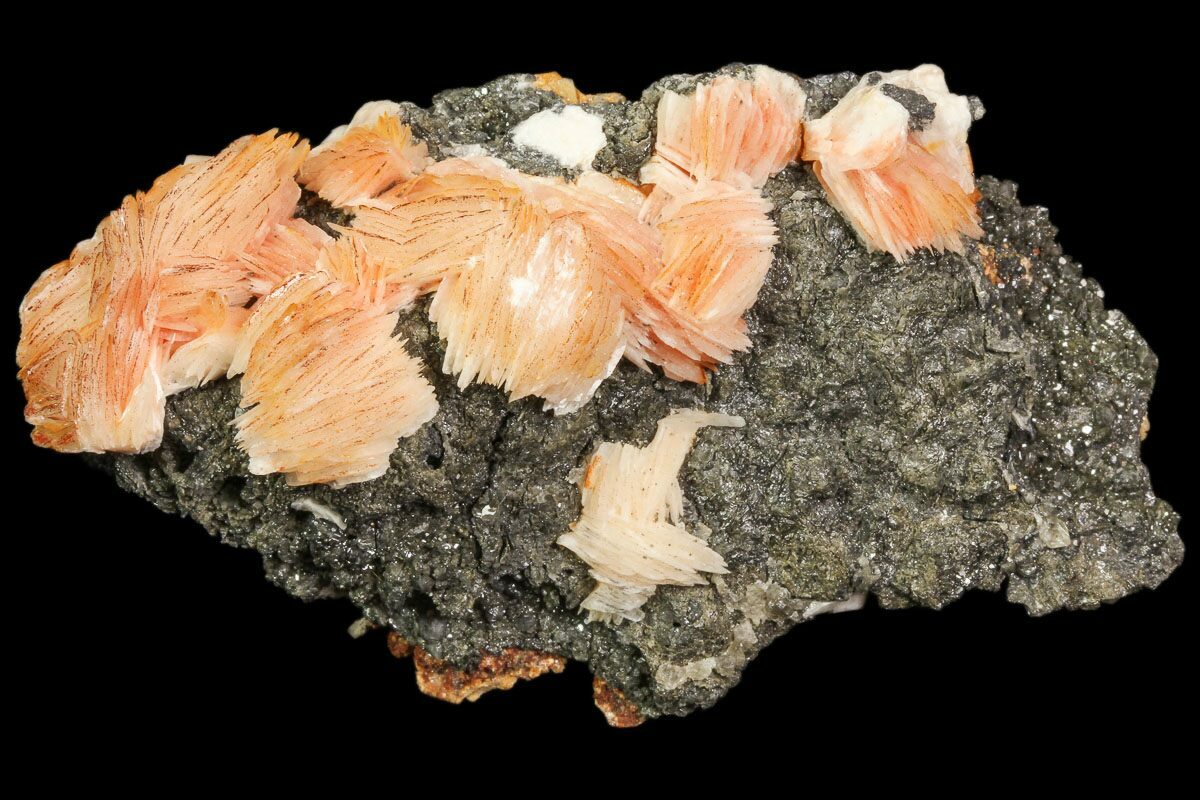
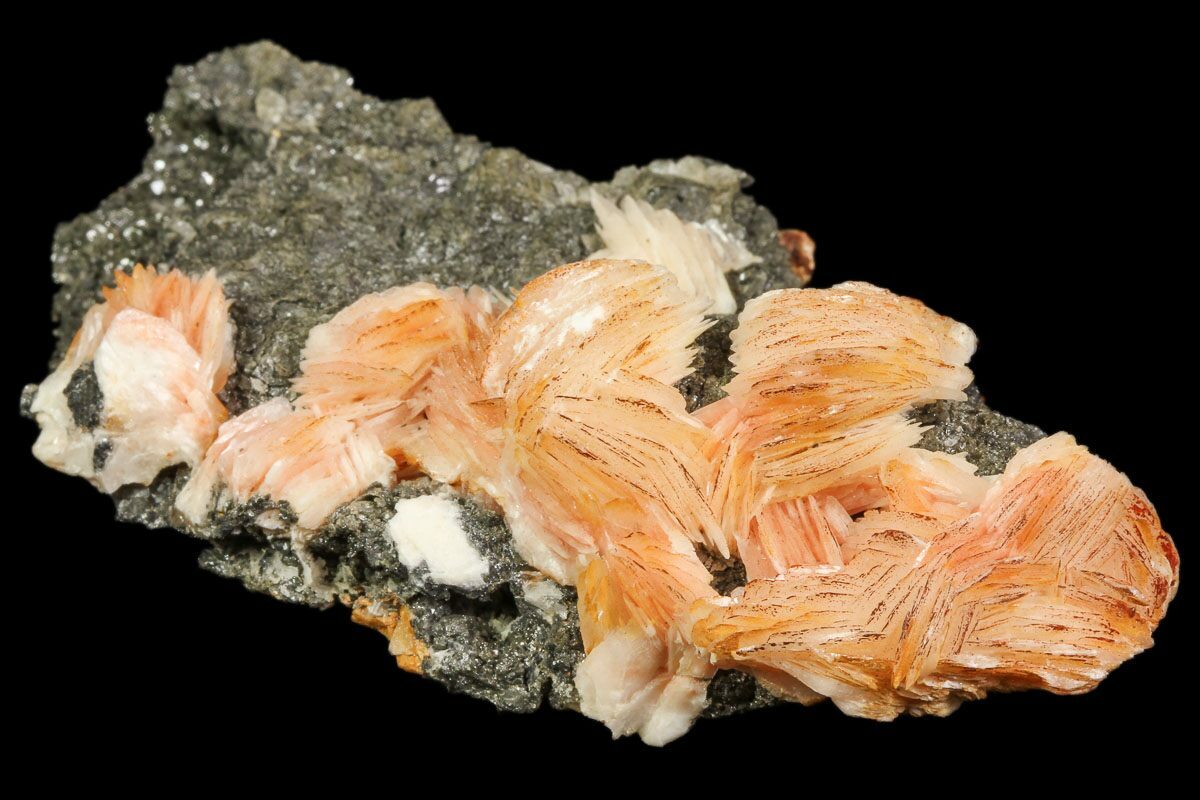
This is a beautiful, sparkly specimen of pink/orange bladed barite on a bed of galena with some tiny cerussite crystals
About Cerussite
Cerussite is a lead-carbonate mineral with the chemical formula PbCO3, and is an important ore of lead. It is a common weathering product of galena, explaining why it is typically extracted from oxidized zones of lead ore deposits. It can form into a variety of different structures, sometimes in fibrous patterns and other times in granular aggregations, though it generally forms vitreous pseudo-hexagonal crystals. Its colors vary depending on composition and structure: it is most commonly colorless, white, grey and green-tinted.
Cerussite is a lead-carbonate mineral with the chemical formula PbCO3, and is an important ore of lead. It is a common weathering product of galena, explaining why it is typically extracted from oxidized zones of lead ore deposits. It can form into a variety of different structures, sometimes in fibrous patterns and other times in granular aggregations, though it generally forms vitreous pseudo-hexagonal crystals. Its colors vary depending on composition and structure: it is most commonly colorless, white, grey and green-tinted.
About Galena
Galena is a lead-based mineral and the primary ore of lead, and has been used for its lead content for thousands of years. Galena typically displays a gray metallic luster and forms cubes or octahedral crystals. The chemical composition of galena is PbS.
While galena will not pose a health hazard by sitting on the shelf or even from casual handling, we suggest washing hands following handling due to the mineral's lead content.
Galena is a lead-based mineral and the primary ore of lead, and has been used for its lead content for thousands of years. Galena typically displays a gray metallic luster and forms cubes or octahedral crystals. The chemical composition of galena is PbS.
While galena will not pose a health hazard by sitting on the shelf or even from casual handling, we suggest washing hands following handling due to the mineral's lead content.
About Barite (Baryte)
Barite is a barium sulfate mineral (BaSO₄) known for its high specific gravity, which makes it unusually heavy for a non-metallic mineral. Typically forming in tabular or bladed crystals, barite can also appear in massive, fibrous, or nodular habits. Its colors range from colorless and white to shades of blue, yellow, gray, or brown, often influenced by trace impurities. Barite commonly forms in hydrothermal veins, sedimentary rocks, and as a gangue mineral in lead-zinc ore deposits. It is widely used in industrial applications, especially as a weighting agent in drilling muds for oil and gas exploration. Its striking crystal formations and vivid hues also make it a popular mineral for collectors.
Barite is a barium sulfate mineral (BaSO₄) known for its high specific gravity, which makes it unusually heavy for a non-metallic mineral. Typically forming in tabular or bladed crystals, barite can also appear in massive, fibrous, or nodular habits. Its colors range from colorless and white to shades of blue, yellow, gray, or brown, often influenced by trace impurities. Barite commonly forms in hydrothermal veins, sedimentary rocks, and as a gangue mineral in lead-zinc ore deposits. It is widely used in industrial applications, especially as a weighting agent in drilling muds for oil and gas exploration. Its striking crystal formations and vivid hues also make it a popular mineral for collectors.
SPECIES
Barite & Galena
LOCATION
Mibladen, Morocco
SIZE
3.4" long, 1.9" wide
CATEGORY
ITEM
#82354