 Reviews

This Specimen has been sold.


3.9" Vibrant Red Realgar & Pyrite on Quartz Crystal Cluster - Peru
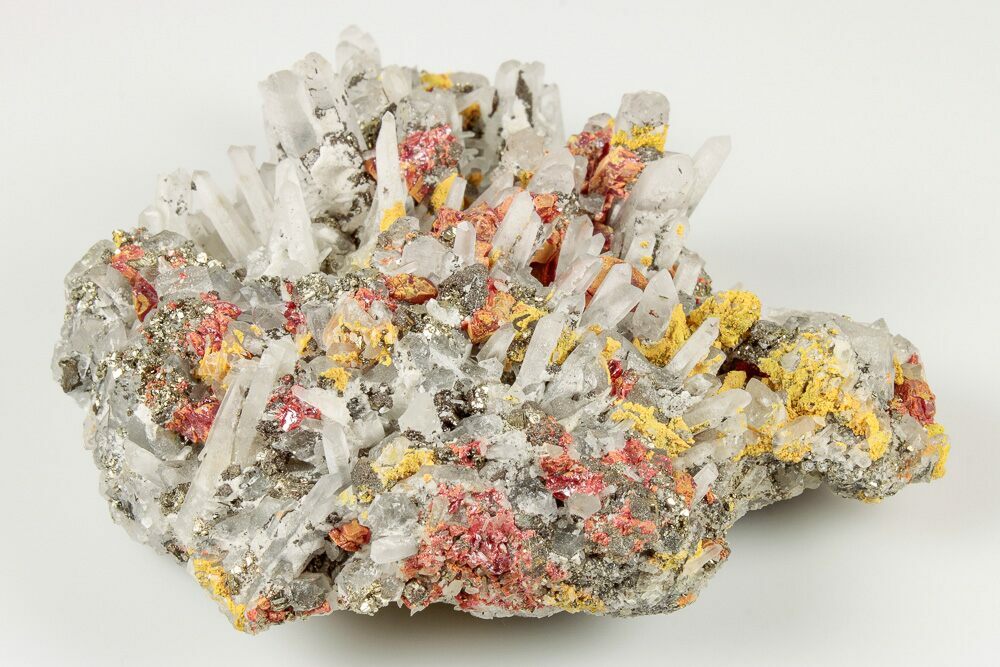
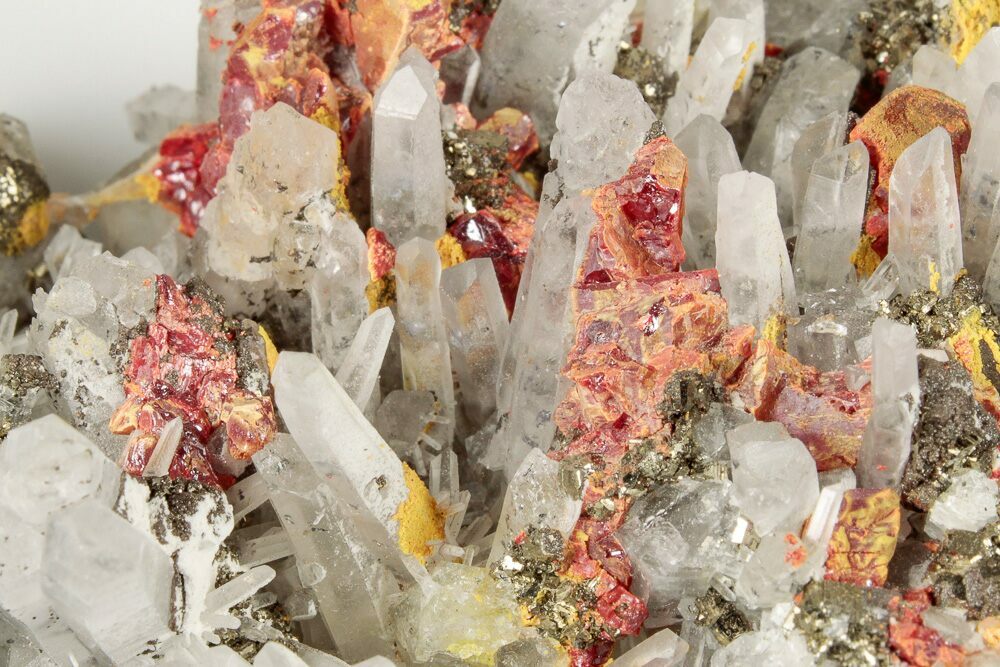
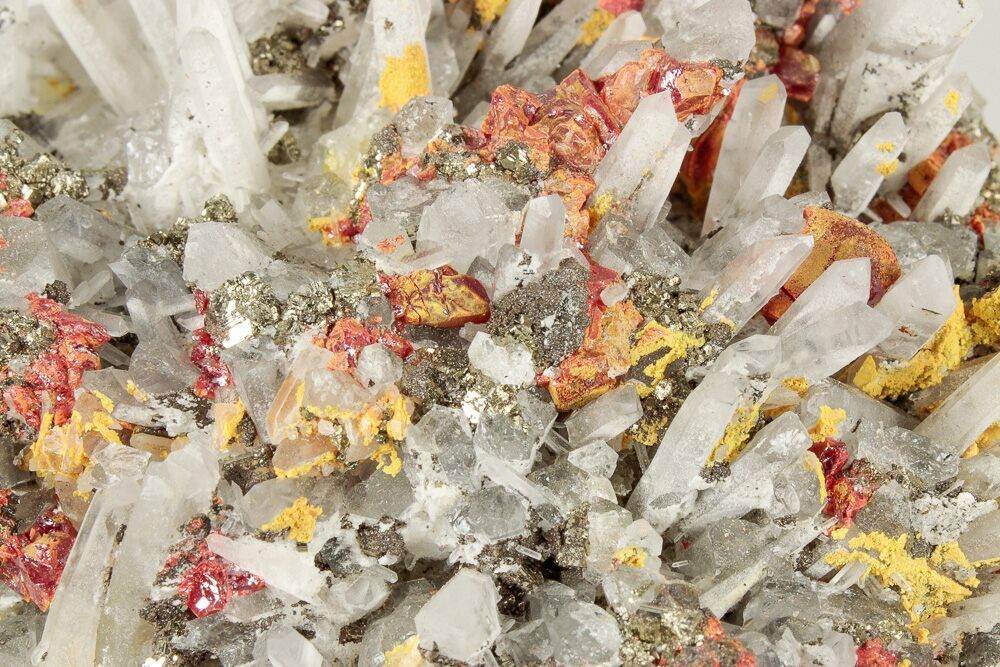
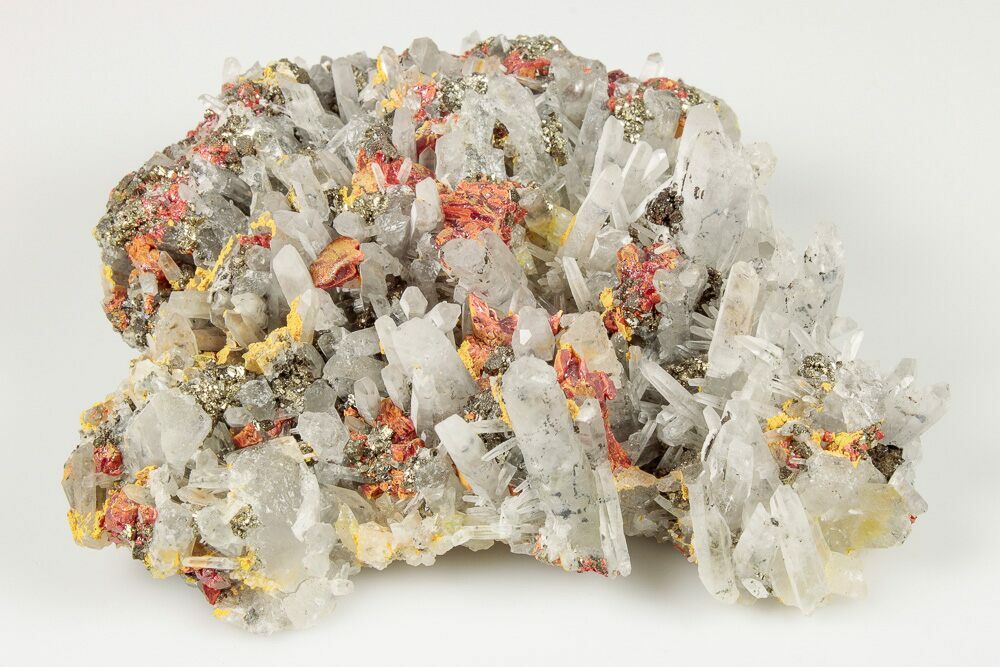
This fantastic specimen contains beautiful red realgar crystals and pyrite crystals clinging to an aggregation of quartz, collected from the Palomo Mine in Perú.
It comes with an acrylic display stand.
It comes with an acrylic display stand.
About Realgar
Realgar is an arsenic sulfide mineral with the chemical formula of AsS. Realgar is known for its lustrous red hue, and pristine specimens can be transparent with sharp crystals. The crystal structure is typically stubby and prismatic, though botryoidal and earthy clumps can form as well.
Following prolonged/repeated periods of time under light, realgar will alter to pararealgar. If further left exposed, the pararealgar will crumble to a yellow dust. This mineral instability is particularly troublesome for museums where consistent light exposure has caused specimens to crumble over time. However, short, periodic exposure to light shouldn't alter realgar specimens.
Realgar contains a significant amount of poisonous arsenic, making it somewhat toxic. Therefore, we recommend washing your hands following handling.
Realgar is an arsenic sulfide mineral with the chemical formula of AsS. Realgar is known for its lustrous red hue, and pristine specimens can be transparent with sharp crystals. The crystal structure is typically stubby and prismatic, though botryoidal and earthy clumps can form as well.
Following prolonged/repeated periods of time under light, realgar will alter to pararealgar. If further left exposed, the pararealgar will crumble to a yellow dust. This mineral instability is particularly troublesome for museums where consistent light exposure has caused specimens to crumble over time. However, short, periodic exposure to light shouldn't alter realgar specimens.
Realgar contains a significant amount of poisonous arsenic, making it somewhat toxic. Therefore, we recommend washing your hands following handling.
About Quartz
Quartz is the name given to silicon dioxide (SiO2) and is the second most abundant mineral in the Earth's crust. Quartz crystals generally grow in silica-rich environments--usually igneous rocks or hydrothermal environments like geothermal waters--at temperatures between 100°C and 450°C, and usually under very high pressure. In either case, crystals will precipitate as temperatures cool, just as ice gradually forms when water freezes. Quartz veins are formed when open fissures are filled with hot water during the closing stages of mountain formation: these veins can be hundreds of millions of years old.
Quartz is the name given to silicon dioxide (SiO2) and is the second most abundant mineral in the Earth's crust. Quartz crystals generally grow in silica-rich environments--usually igneous rocks or hydrothermal environments like geothermal waters--at temperatures between 100°C and 450°C, and usually under very high pressure. In either case, crystals will precipitate as temperatures cool, just as ice gradually forms when water freezes. Quartz veins are formed when open fissures are filled with hot water during the closing stages of mountain formation: these veins can be hundreds of millions of years old.
About Pyrite
Pyrite, or iron pyrite, is best known as “Fool’s Gold” thanks to its bright metallic luster and pale brass-yellow color, which can easily be mistaken for real gold in poor lighting. With the chemical formula FeS₂, pyrite is the most abundant sulfide mineral on Earth and forms in an impressive range of geological environments.
One of pyrite’s defining features is its remarkable diversity of crystal habits—over 20 documented forms—making it one of the most morphologically varied minerals known. It commonly occurs as sharp cubes, octahedra, and pyritohedra, but also forms pentagonal dodecahedra, penetration twins, striated combinations, and complex modified forms prized by collectors. It can develop as massive veins, nodules, botryoidal growths, and fine druzy coatings that shimmer brilliantly under light. Whether glittering in tiny clusters or displayed as perfectly geometric crystals, pyrite showcases an extraordinary range of natural architecture and visual appeal.
Pyrite, or iron pyrite, is best known as “Fool’s Gold” thanks to its bright metallic luster and pale brass-yellow color, which can easily be mistaken for real gold in poor lighting. With the chemical formula FeS₂, pyrite is the most abundant sulfide mineral on Earth and forms in an impressive range of geological environments.
One of pyrite’s defining features is its remarkable diversity of crystal habits—over 20 documented forms—making it one of the most morphologically varied minerals known. It commonly occurs as sharp cubes, octahedra, and pyritohedra, but also forms pentagonal dodecahedra, penetration twins, striated combinations, and complex modified forms prized by collectors. It can develop as massive veins, nodules, botryoidal growths, and fine druzy coatings that shimmer brilliantly under light. Whether glittering in tiny clusters or displayed as perfectly geometric crystals, pyrite showcases an extraordinary range of natural architecture and visual appeal.
SPECIES
Realgar, Pyrite & Quartz
LOCATION
Palomo Mine, Castrovirreyna Province, Huancavelica, Peru
SIZE
3.9 x 3.4"
CATEGORY
ITEM
#195769


