 Reviews

This Specimen has been sold.


3" Epidote, Calcite and Magnetite Crystal Association - Peru
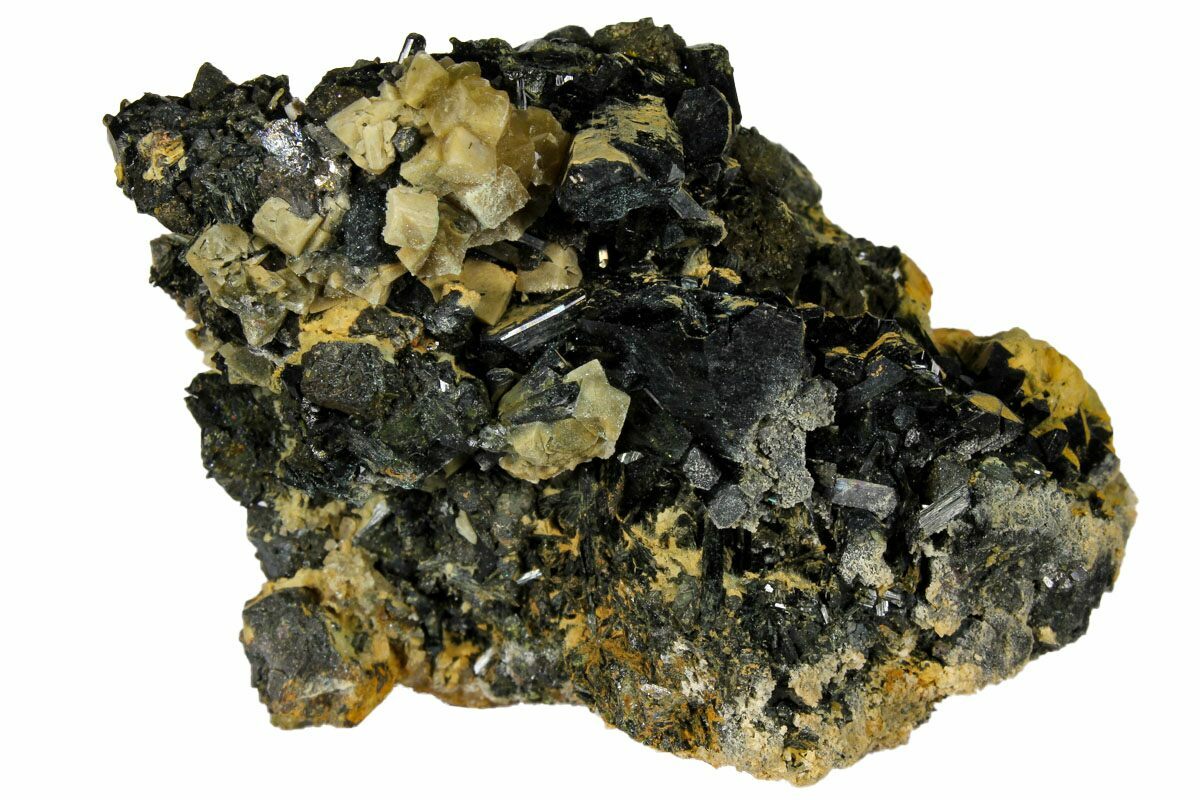
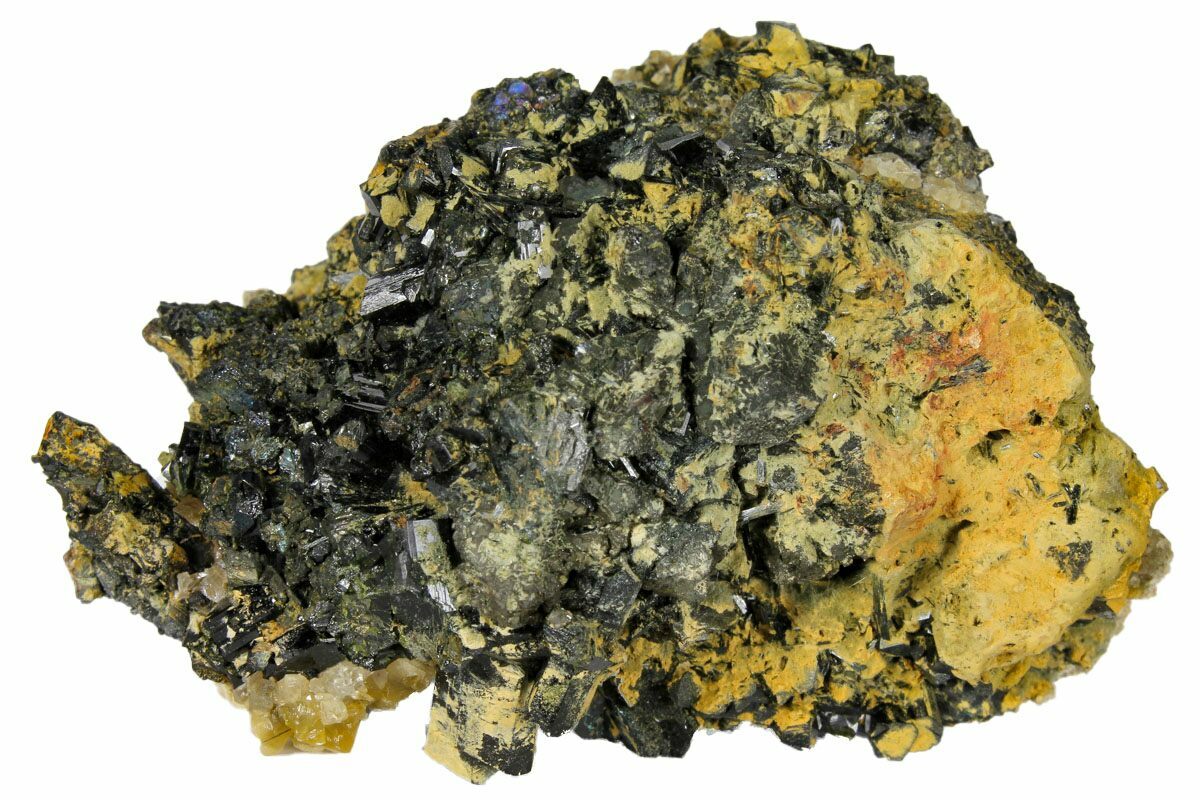
This is a beautiful association of quartz, calcite and magnetic magnetite crystals that was collected from the Cañete Province of Peru.
About Epidote
Epidote is a striking and often green mineral known for its complex crystal structure and vitreous luster. It is a calcium aluminum iron silicate that commonly forms in metamorphic rocks, particularly in regions that have undergone low to medium-grade metamorphism. The color of epidote typically ranges from pistachio green to dark green, although it can occasionally appear yellowish-green or even brown due to varying iron content.
Epidote crystals can appear in prismatic, slender forms or as aggregates, and they often exhibit striations along their length. The mineral’s translucent to transparent appearance and high refractive index give it an attractive, glassy shine.
It is commonly associated with minerals such as quartz, feldspar, and garnet, often forming in metamorphic rocks like schist and gneiss. It can also be found in skarn deposits alongside minerals like calcite, diopside, and amphiboles. These associations can provide insights into the geologic history and metamorphic conditions of the region. Epidote is found in locations worldwide, with notable sources including Austria, Norway, Pakistan, and parts of the United States. Collectors prize epidote for its unique green hues and well-formed crystal clusters.
Epidote is a striking and often green mineral known for its complex crystal structure and vitreous luster. It is a calcium aluminum iron silicate that commonly forms in metamorphic rocks, particularly in regions that have undergone low to medium-grade metamorphism. The color of epidote typically ranges from pistachio green to dark green, although it can occasionally appear yellowish-green or even brown due to varying iron content.
Epidote crystals can appear in prismatic, slender forms or as aggregates, and they often exhibit striations along their length. The mineral’s translucent to transparent appearance and high refractive index give it an attractive, glassy shine.
It is commonly associated with minerals such as quartz, feldspar, and garnet, often forming in metamorphic rocks like schist and gneiss. It can also be found in skarn deposits alongside minerals like calcite, diopside, and amphiboles. These associations can provide insights into the geologic history and metamorphic conditions of the region. Epidote is found in locations worldwide, with notable sources including Austria, Norway, Pakistan, and parts of the United States. Collectors prize epidote for its unique green hues and well-formed crystal clusters.
About Magnetite
Magnetite is a naturally occurring iron oxide mineral with the chemical formula Fe₃O₄. It is one of the most magnetic minerals found on Earth, a property that has made it historically significant in the development of early navigation tools like the compass. Magnetite typically forms in igneous and metamorphic rocks, and its crystals often appear as octahedrons or granular masses with a metallic luster and a deep black to dark gray color.
The mineral is composed of both ferrous (Fe²⁺) and ferric (Fe³⁺) iron, giving it its strong magnetic characteristics and distinguishing it from other iron oxides such as hematite. It has a Mohs hardness of 5.5–6.5 and a high specific gravity, making it quite dense. Magnetite is an important iron ore and is widely mined for use in steel production.
Besides its industrial value, magnetite is also of interest to collectors due to its striking appearance and magnetic properties. Large or well-formed octahedral crystals are particularly sought after.
Magnetite is a naturally occurring iron oxide mineral with the chemical formula Fe₃O₄. It is one of the most magnetic minerals found on Earth, a property that has made it historically significant in the development of early navigation tools like the compass. Magnetite typically forms in igneous and metamorphic rocks, and its crystals often appear as octahedrons or granular masses with a metallic luster and a deep black to dark gray color.
The mineral is composed of both ferrous (Fe²⁺) and ferric (Fe³⁺) iron, giving it its strong magnetic characteristics and distinguishing it from other iron oxides such as hematite. It has a Mohs hardness of 5.5–6.5 and a high specific gravity, making it quite dense. Magnetite is an important iron ore and is widely mined for use in steel production.
Besides its industrial value, magnetite is also of interest to collectors due to its striking appearance and magnetic properties. Large or well-formed octahedral crystals are particularly sought after.
About Calcite Crystals
Calcite crystals are a form of calcium carbonate (CaCO₃) known for their diverse shapes, transparency, and vibrant range of colors. They typically form in rhombohedral, scalenohedral, or prismatic shapes, often with well-defined, sharp edges and glossy surfaces. Calcite crystals are often translucent or transparent, sometimes displaying a double refraction effect where objects viewed through the crystal appear doubled. They can appear in various colors—white, clear, yellow, pink, blue, green, and orange—depending on impurities or trace minerals.
A notable characteristic of calcite is its reaction with weak acids like vinegar, which causes it to effervesce, or fizz, as it releases carbon dioxide. This property makes calcite crystals a key tool in geological identification and studies. Calcite forms in many environments, from sedimentary rocks like limestone and marble to hydrothermal veins.
Calcite crystals are a form of calcium carbonate (CaCO₃) known for their diverse shapes, transparency, and vibrant range of colors. They typically form in rhombohedral, scalenohedral, or prismatic shapes, often with well-defined, sharp edges and glossy surfaces. Calcite crystals are often translucent or transparent, sometimes displaying a double refraction effect where objects viewed through the crystal appear doubled. They can appear in various colors—white, clear, yellow, pink, blue, green, and orange—depending on impurities or trace minerals.
A notable characteristic of calcite is its reaction with weak acids like vinegar, which causes it to effervesce, or fizz, as it releases carbon dioxide. This property makes calcite crystals a key tool in geological identification and studies. Calcite forms in many environments, from sedimentary rocks like limestone and marble to hydrothermal veins.
SPECIES
Epidote, Calcite & Magnetite
LOCATION
Cerro San Cristobal, Cañete Province, Lima Department, Peru
SIZE
3" wide
CATEGORY
ITEM
#132647


