 Reviews

This Specimen has been sold.


4.8" Apophyllite Crystals after Chabazite with Stilbite - India
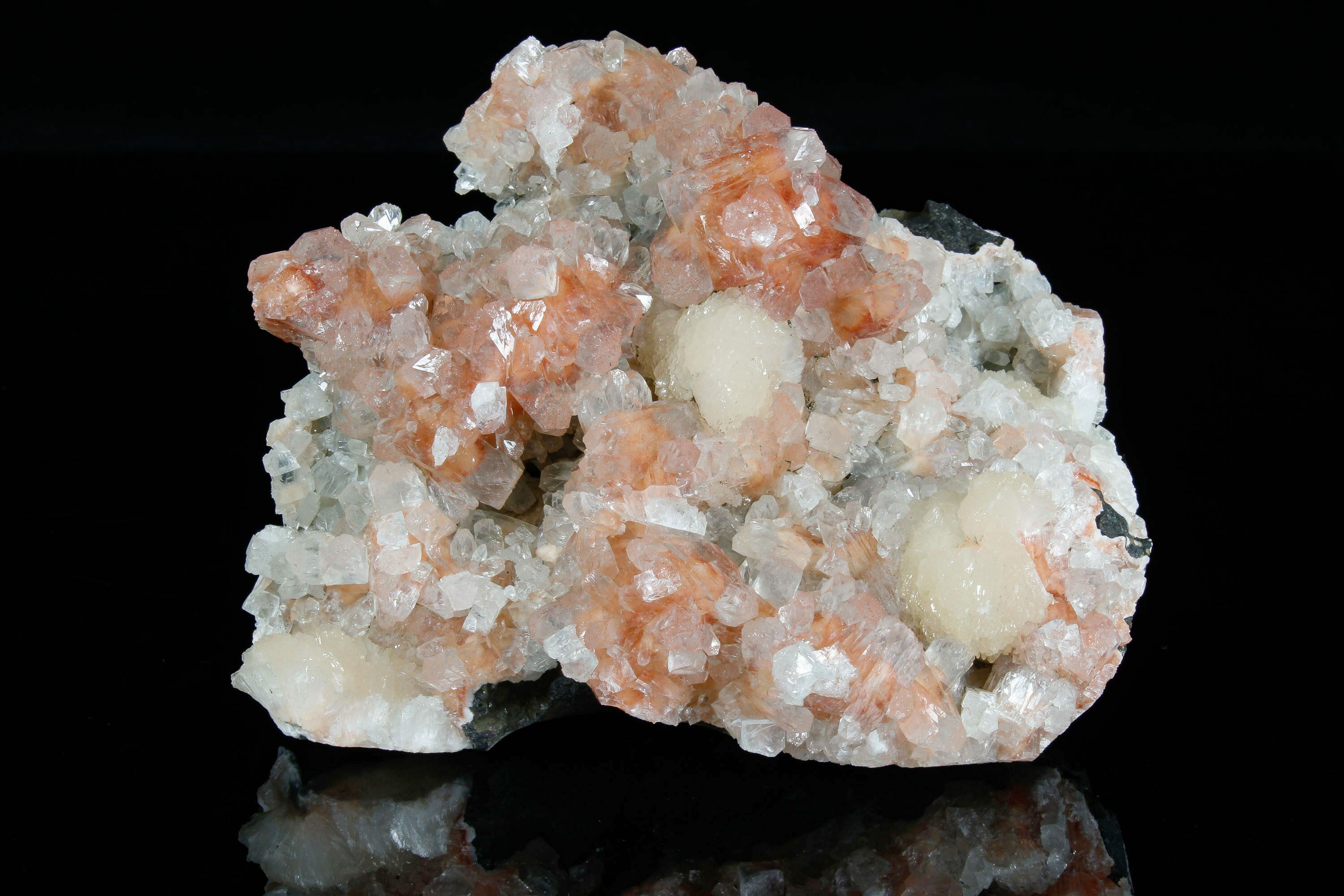
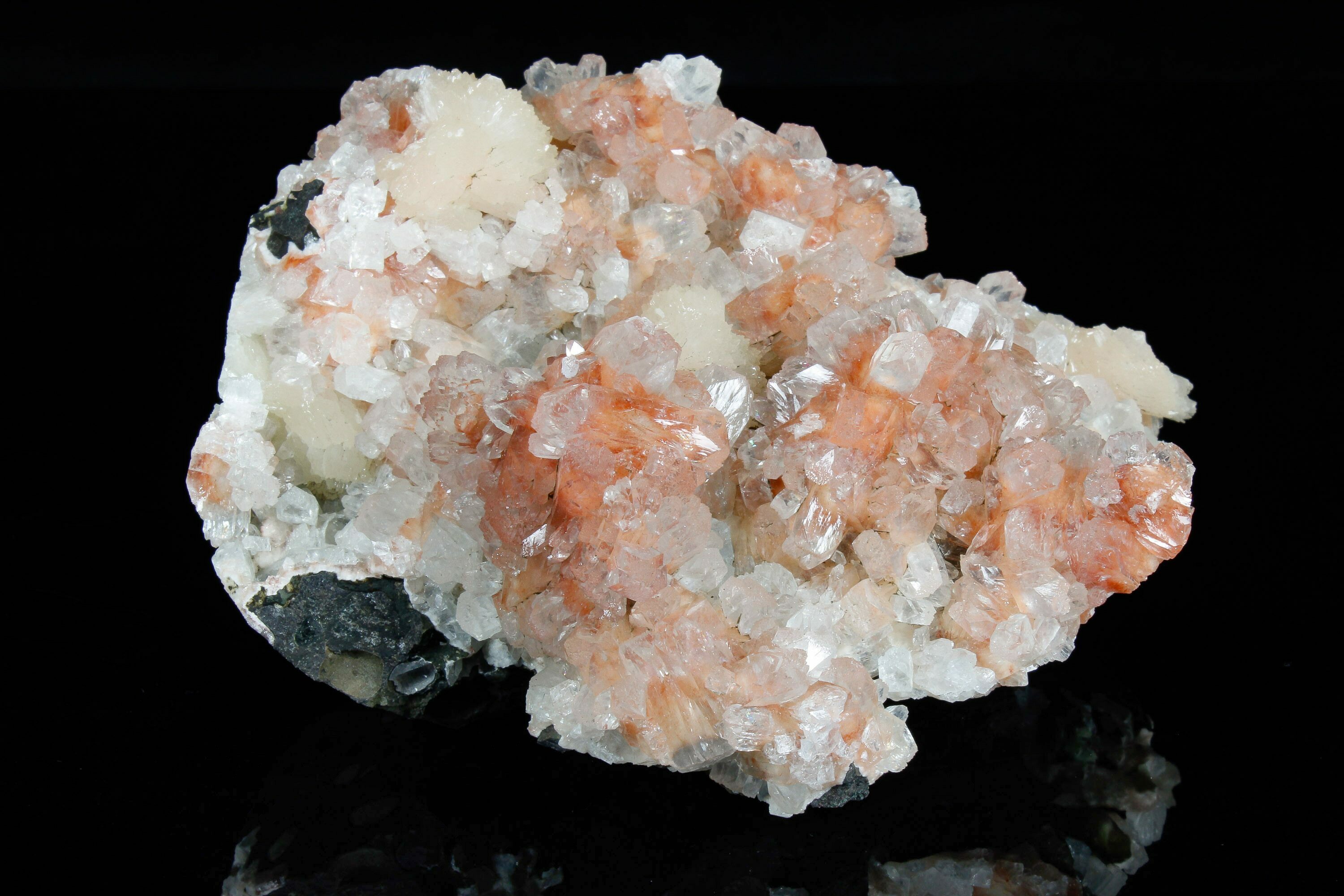
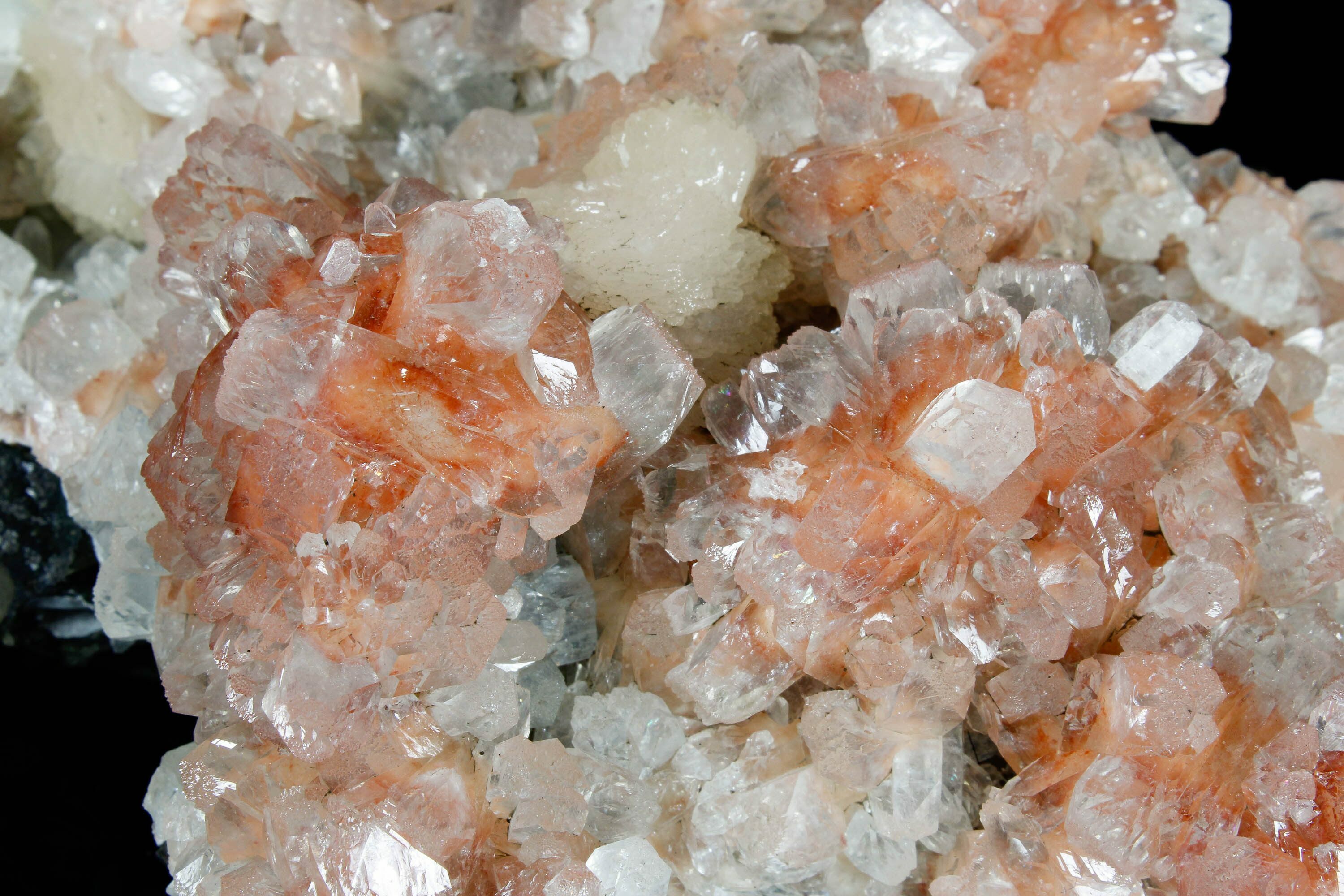
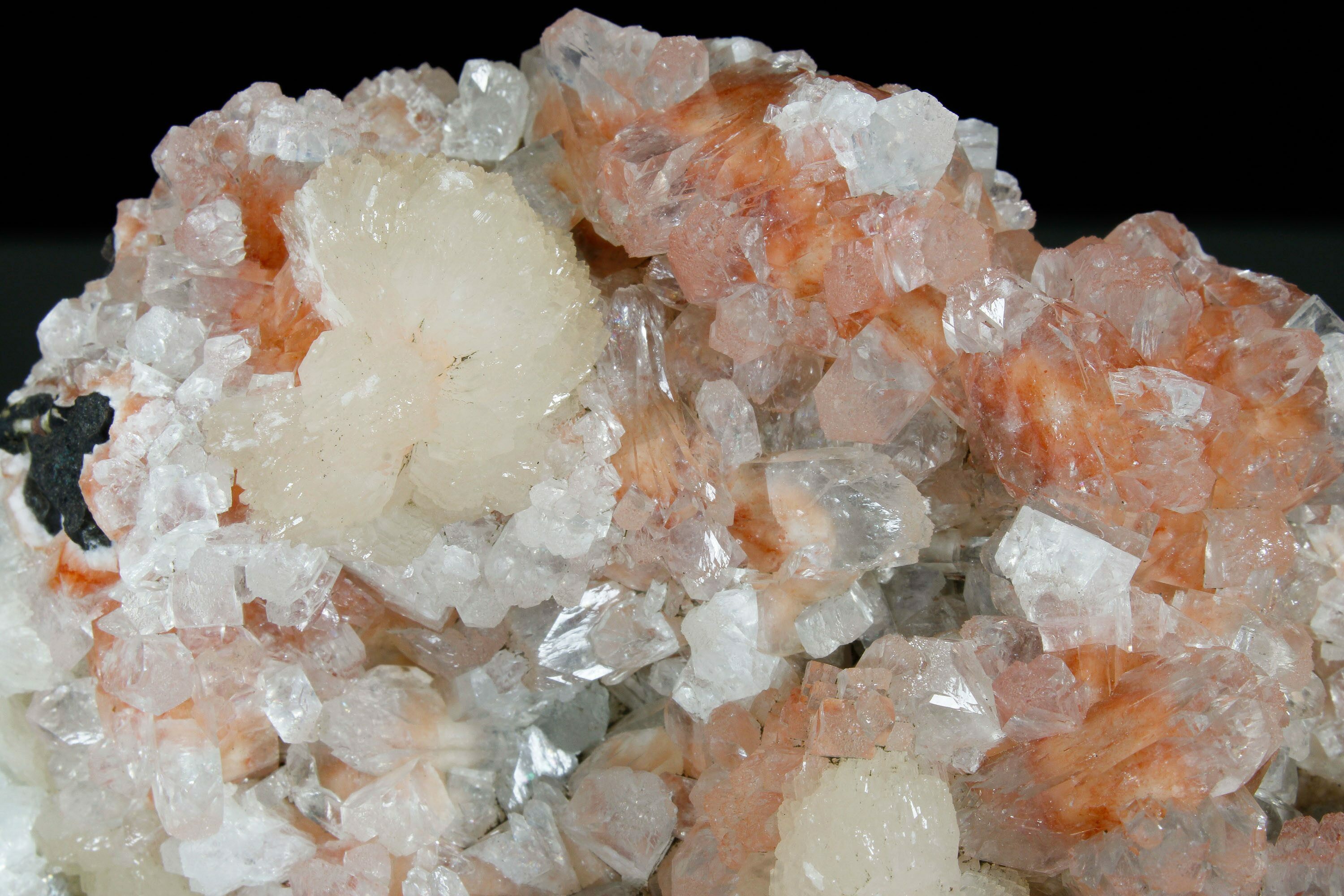
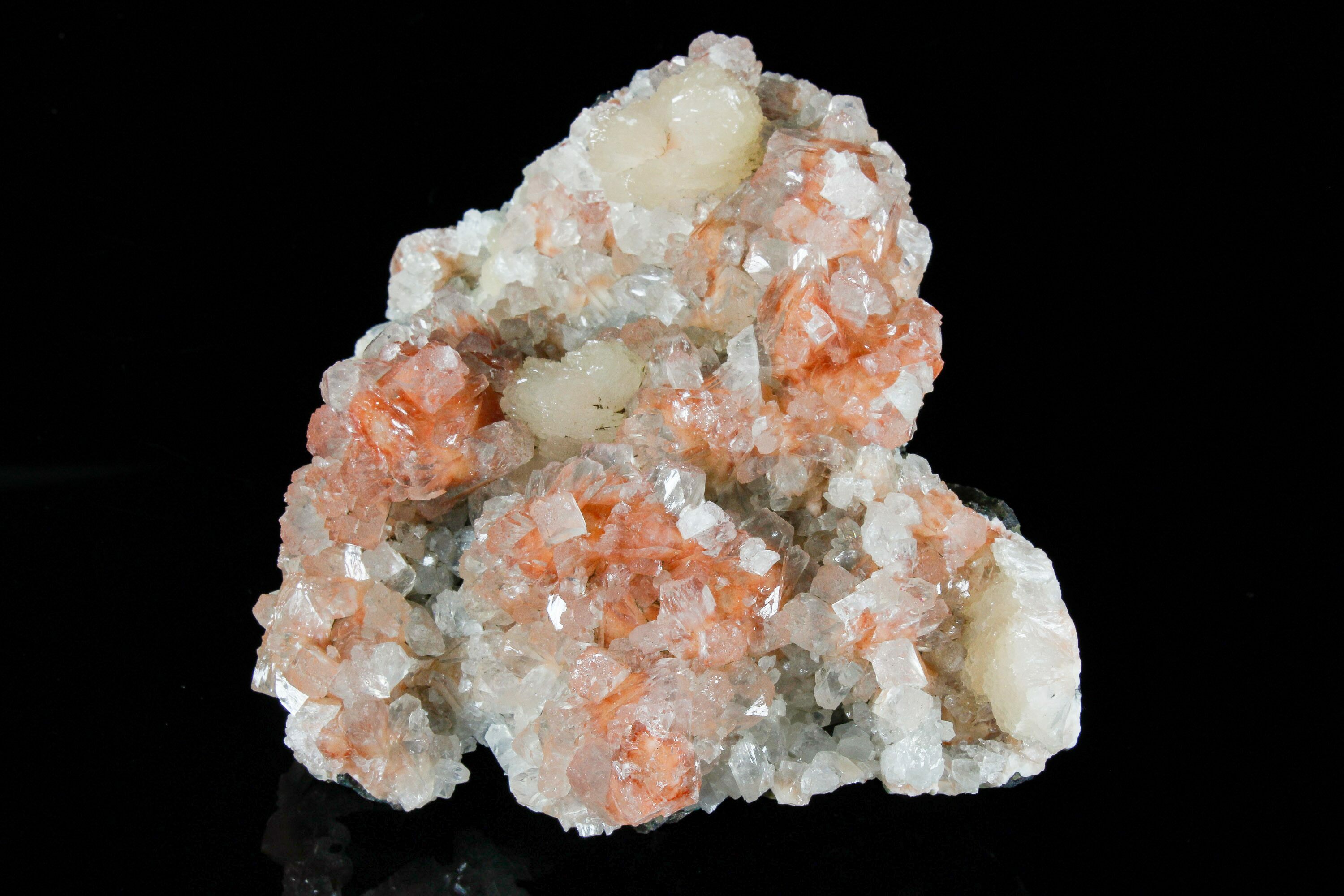
This is a 4.8" wide association of clear apophyllite after red chabazite crystals. Interspersed are peach stilbite crystals that provide a nice color break in the specimen. Apophyllite after chabazite is a rather uncommon find in the natural world, making this piece quite a jewel in any collector's cabinet. The specimen was collected in Maharashtra, India.
Comes with an acrylic display stand to assist with presentation.
Comes with an acrylic display stand to assist with presentation.
About Apophyllite & Stilbite From India
This specimen originates from the Deccan Traps near Pune in western India—one of the world’s largest igneous provinces and an immense volcanic formation created by ancient lava flows. During quarrying or well-digging, miners occasionally break into hidden cavities within the basalt, revealing spectacular pockets lined with zeolite minerals and associated species.
Stilbite is the most commonly encountered zeolite in these deposits, typically forming graceful bowtie, flower-like, or hourglass crystal clusters in a range of colors. The most sought-after examples display soft pink to peach hues. Closely associated with the zeolites is apophyllite, which commonly occurs in the same mineral pockets. Though not a zeolite itself, apophyllite forms striking crystals as either elongated prisms topped with sharp pyramids or near-cubic shapes. While relatively unknown outside mineral circles, both minerals are highly prized by collectors for their delicate pastel colors and elegant crystal habits.
This specimen originates from the Deccan Traps near Pune in western India—one of the world’s largest igneous provinces and an immense volcanic formation created by ancient lava flows. During quarrying or well-digging, miners occasionally break into hidden cavities within the basalt, revealing spectacular pockets lined with zeolite minerals and associated species.
Stilbite is the most commonly encountered zeolite in these deposits, typically forming graceful bowtie, flower-like, or hourglass crystal clusters in a range of colors. The most sought-after examples display soft pink to peach hues. Closely associated with the zeolites is apophyllite, which commonly occurs in the same mineral pockets. Though not a zeolite itself, apophyllite forms striking crystals as either elongated prisms topped with sharp pyramids or near-cubic shapes. While relatively unknown outside mineral circles, both minerals are highly prized by collectors for their delicate pastel colors and elegant crystal habits.
About Chabazite
Chabazite is an eye-catching mineral from the zeolite group, admired for its beautifully symmetrical crystal structure and pastel colors. Typically forming in rhombohedral or cubic-like crystals, chabazite often appears in hues of white, pink, orange, or light yellow. This mineral is primarily composed of hydrated calcium aluminum silicate, giving it a lightweight, porous structure that enables it to act as a natural ion-exchanger—a property commonly seen in zeolites.
Chabazite crystals have a vitreous to pearly luster, and their transparent to translucent appearance gives them an almost delicate, ethereal quality. With a hardness of about 4.5 to 5 on the Mohs scale, chabazite is moderately soft, making it suitable for display rather than wear. It typically forms in cavities within volcanic rocks like basalt and andesite, where it grows alongside other zeolite minerals such as heulandite, stilbite, and analcime. Some of the finest chabazite specimens come from Iceland, Italy, and India, renowned for their vivid color and well-formed crystals.
Chabazite is an eye-catching mineral from the zeolite group, admired for its beautifully symmetrical crystal structure and pastel colors. Typically forming in rhombohedral or cubic-like crystals, chabazite often appears in hues of white, pink, orange, or light yellow. This mineral is primarily composed of hydrated calcium aluminum silicate, giving it a lightweight, porous structure that enables it to act as a natural ion-exchanger—a property commonly seen in zeolites.
Chabazite crystals have a vitreous to pearly luster, and their transparent to translucent appearance gives them an almost delicate, ethereal quality. With a hardness of about 4.5 to 5 on the Mohs scale, chabazite is moderately soft, making it suitable for display rather than wear. It typically forms in cavities within volcanic rocks like basalt and andesite, where it grows alongside other zeolite minerals such as heulandite, stilbite, and analcime. Some of the finest chabazite specimens come from Iceland, Italy, and India, renowned for their vivid color and well-formed crystals.
SPECIES
Apophyllite, Chabazite & Stilbite
LOCATION
Maharashtra, India
SIZE
4.8 x 4"
CATEGORY
ITEM
#176824