 Reviews

This Specimen has been sold.


Gorgeous, 2.3" Dioptase, Shattuckite & Calcite Association - Congo
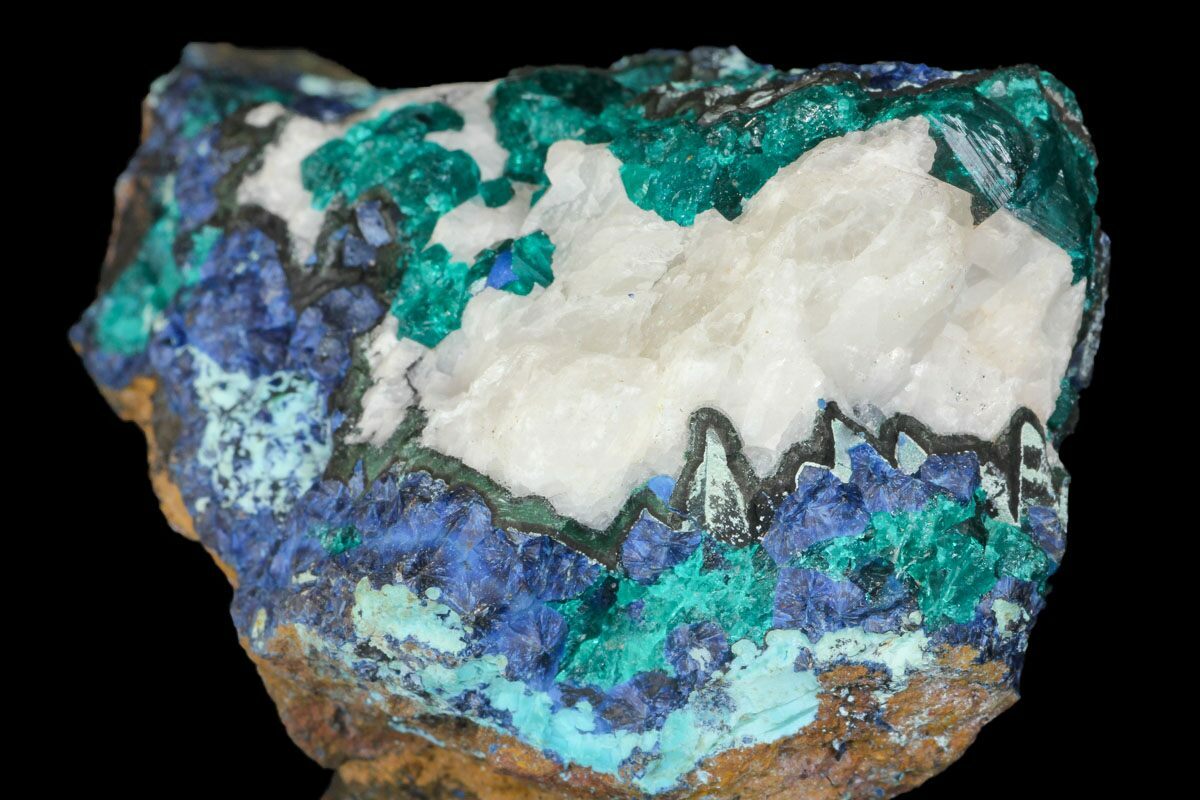
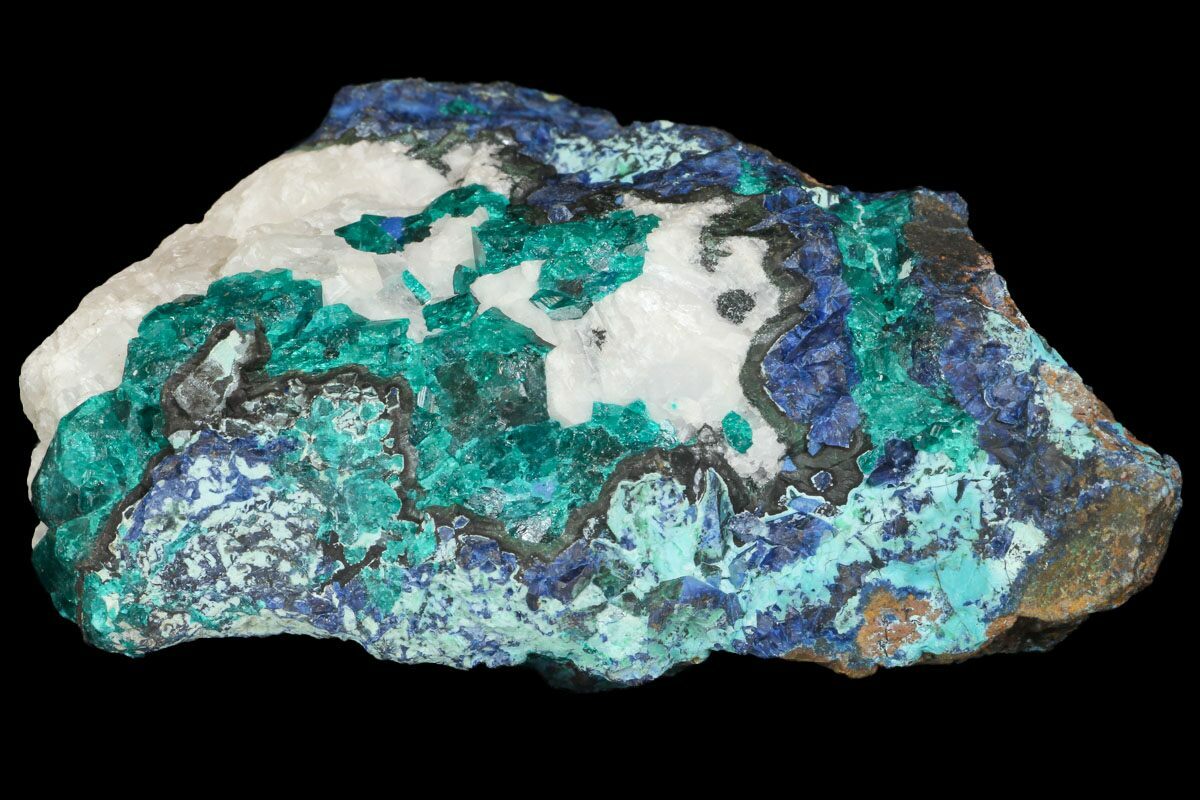
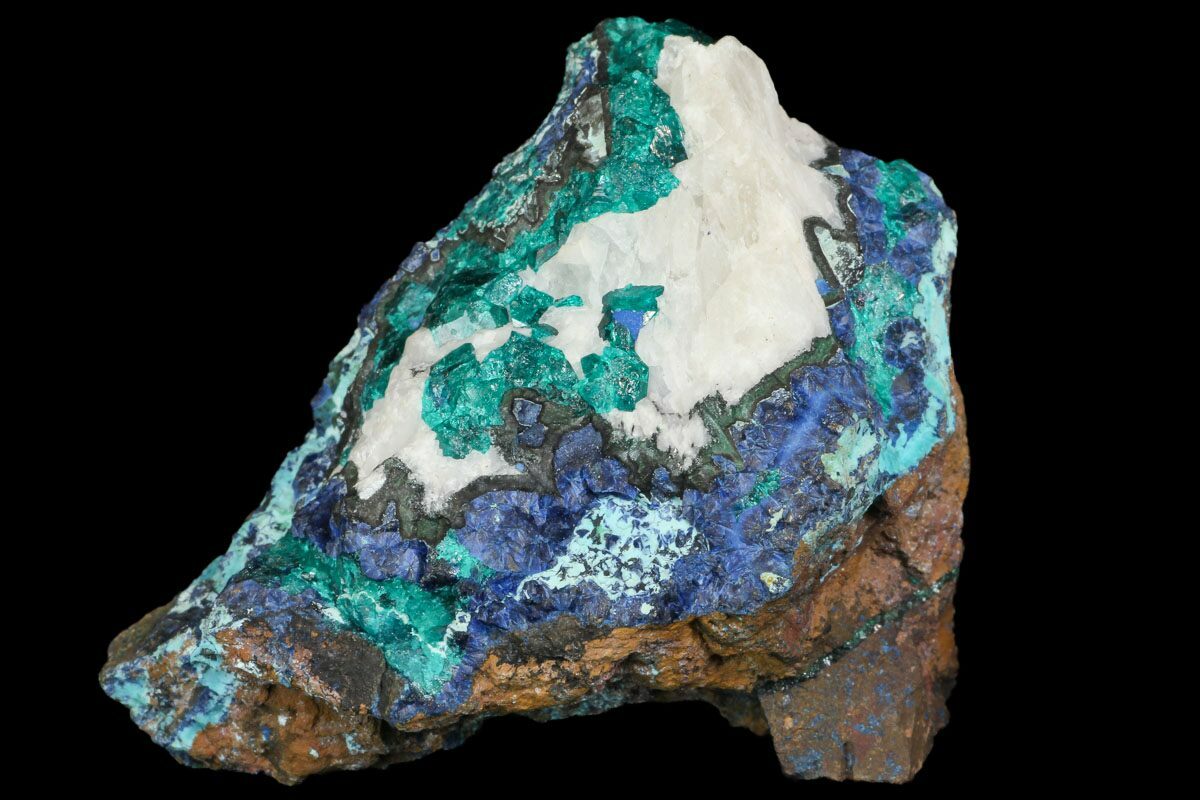
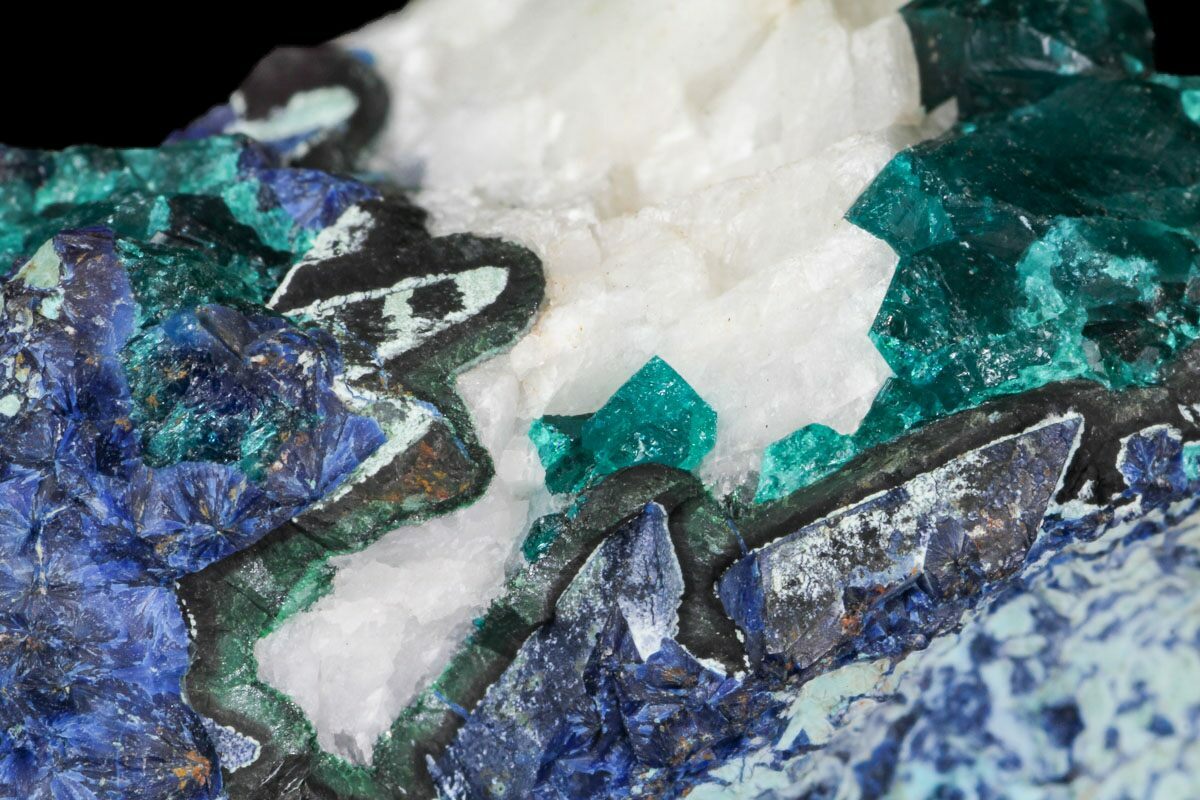
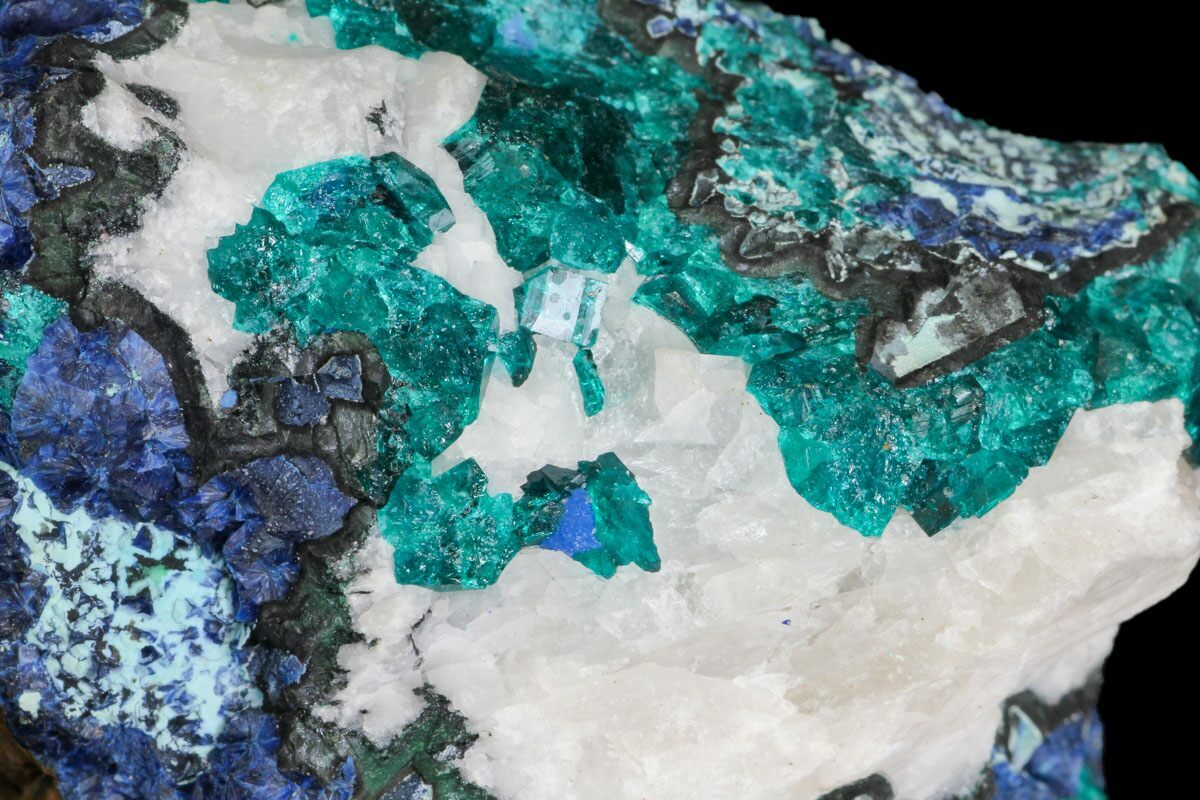
This is a 2.3" wide association of calcite, royal to light-blue shattuckite and dioptase that was collected from the Tantara Mine in the Democratic Republic of Congo. This specimen is unique in that it features a double pseudomorph. The blue, scalenohedral crystals are shattuckite after dioptase after calcite. These pseudomorphs can be seen in the cropped in photos above.
About Calcite Crystals
Calcite crystals are a form of calcium carbonate (CaCO₃) known for their diverse shapes, transparency, and vibrant range of colors. They typically form in rhombohedral, scalenohedral, or prismatic shapes, often with well-defined, sharp edges and glossy surfaces. Calcite crystals are often translucent or transparent, sometimes displaying a double refraction effect where objects viewed through the crystal appear doubled. They can appear in various colors—white, clear, yellow, pink, blue, green, and orange—depending on impurities or trace minerals.
A notable characteristic of calcite is its reaction with weak acids like vinegar, which causes it to effervesce, or fizz, as it releases carbon dioxide. This property makes calcite crystals a key tool in geological identification and studies. Calcite forms in many environments, from sedimentary rocks like limestone and marble to hydrothermal veins.
Calcite crystals are a form of calcium carbonate (CaCO₃) known for their diverse shapes, transparency, and vibrant range of colors. They typically form in rhombohedral, scalenohedral, or prismatic shapes, often with well-defined, sharp edges and glossy surfaces. Calcite crystals are often translucent or transparent, sometimes displaying a double refraction effect where objects viewed through the crystal appear doubled. They can appear in various colors—white, clear, yellow, pink, blue, green, and orange—depending on impurities or trace minerals.
A notable characteristic of calcite is its reaction with weak acids like vinegar, which causes it to effervesce, or fizz, as it releases carbon dioxide. This property makes calcite crystals a key tool in geological identification and studies. Calcite forms in many environments, from sedimentary rocks like limestone and marble to hydrothermal veins.
About Shattuckite
Shattuckite is a scarce copper mineral highly regarded for its vivid blue color. It is named after the Shattuck Mine in Bisbee, Arizona, where this mineral was first discovered. It crystallizes in the orthorhombic–dipyramidal crystal system and usually occurs in a granular massive form or as fibrous acicular crystals.
Shattuckite is a scarce copper mineral highly regarded for its vivid blue color. It is named after the Shattuck Mine in Bisbee, Arizona, where this mineral was first discovered. It crystallizes in the orthorhombic–dipyramidal crystal system and usually occurs in a granular massive form or as fibrous acicular crystals.
About Dioptase
Dioptase is a showstopper in the mineral world—an electrifying copper silicate known for its mesmerizing, emerald-green color that seems to glow from within. Its vivid hues rival even the finest emeralds, but it’s the crystal clarity and intense brilliance that make collectors’ hearts race. Found in arid, copper-rich environments like the deserts of Namibia and Kazakhstan, dioptase forms stunning prismatic crystals that sparkle like tiny green beacons against contrasting matrix rock. While too soft for most jewelry, it’s a favorite among mineral collectors and museums for its sheer visual impact. Dioptase isn’t just a mineral—it’s nature’s answer to green fire in crystal form.
Dioptase is a showstopper in the mineral world—an electrifying copper silicate known for its mesmerizing, emerald-green color that seems to glow from within. Its vivid hues rival even the finest emeralds, but it’s the crystal clarity and intense brilliance that make collectors’ hearts race. Found in arid, copper-rich environments like the deserts of Namibia and Kazakhstan, dioptase forms stunning prismatic crystals that sparkle like tiny green beacons against contrasting matrix rock. While too soft for most jewelry, it’s a favorite among mineral collectors and museums for its sheer visual impact. Dioptase isn’t just a mineral—it’s nature’s answer to green fire in crystal form.
SPECIES
Dioptase, Shattuckite & Calcite
LOCATION
Tantara Mine, Shinkolobwe, Katanga Province, DR Congo
SIZE
2.3 x 1.8"
CATEGORY
ITEM
#146749


