 Reviews


2.25" Rare Dinosaur (Hypsilophodon) Bone Assemblage w/ Vertebrae


British dinosaur material is fairly hard to acquire and there is remarkably little of it on the market. This is a nicely preserved, 2.25" wide assemblage of bones from the ornithischian dinosaur, Hypsilophodon foxii. It was collected from the "Hypsilophodon" Beds on the Isle of Wight in England. The bones have been exposed from the rock, with portions of rock remaining in place to hold them all together.
Comes with a riker display case.
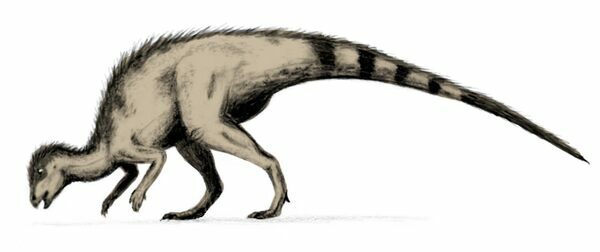
Hypsilophodon is an ornithischian dinosaur genus from the Early Cretaceous period of England.
Its first remains were found in 1849; the type species, Hypsilophodon foxii, was named in 1869. Abundant fossil discoveries were made on the Isle of Wight, giving a good impression of the species' anatomy. It was a small, bipedal animal with a herbivorous or possibly omnivorous diet. Hypsilophodon reached up to 1.8 meters (5.9 feet) in length, weighed about 20 kilograms (45 pounds), and was an agile runner. It had a pointed head equipped with a sharp beak used to bite off plant material, much like modern day parrots.
Comes with a riker display case.
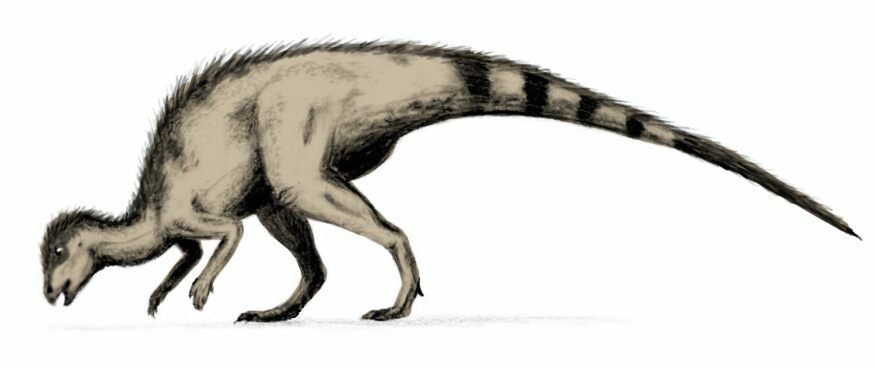
Hypsilophodon is an ornithischian dinosaur genus from the Early Cretaceous period of England.
Its first remains were found in 1849; the type species, Hypsilophodon foxii, was named in 1869. Abundant fossil discoveries were made on the Isle of Wight, giving a good impression of the species' anatomy. It was a small, bipedal animal with a herbivorous or possibly omnivorous diet. Hypsilophodon reached up to 1.8 meters (5.9 feet) in length, weighed about 20 kilograms (45 pounds), and was an agile runner. It had a pointed head equipped with a sharp beak used to bite off plant material, much like modern day parrots.
About Isle Of Wight Fossil Deposits
The Isle of Wight, located off the southern coast of England, is one of the world’s most renowned fossil sites, particularly for dinosaur discoveries from the Early Cretaceous period, roughly 125 million years ago. The island’s rich fossil deposits are found mainly along its southern and eastern coastlines, where eroding cliffs and beaches reveal layers of sedimentary rock full of prehistoric treasures. The geology consists of formations like the Wessex Formation, known for preserving dinosaur bones, footprints, and plant fossils, and the Vectis Formation, which includes both terrestrial and freshwater deposits, suggesting a mix of environments from ancient floodplains to lakes and swamps.
Some of the most notable finds on the Isle of Wight include fossils of large herbivorous dinosaurs such as Iguanodon, as well as predators like Neovenator and Baryonyx. These discoveries have contributed significantly to our understanding of Early Cretaceous ecosystems and dinosaur diversity in Europe. Fossils of fish, turtles, crocodiles, and pterosaurs have also been uncovered, alongside fossilized plants, creating a picture of a lush, semi-tropical landscape that once covered the area. Today, the Isle of Wight attracts paleontologists and enthusiasts alike, with its beaches providing a rich hunting ground for fossils that continue to emerge from the cliffs, especially after storms or heavy rains.
The Isle of Wight, located off the southern coast of England, is one of the world’s most renowned fossil sites, particularly for dinosaur discoveries from the Early Cretaceous period, roughly 125 million years ago. The island’s rich fossil deposits are found mainly along its southern and eastern coastlines, where eroding cliffs and beaches reveal layers of sedimentary rock full of prehistoric treasures. The geology consists of formations like the Wessex Formation, known for preserving dinosaur bones, footprints, and plant fossils, and the Vectis Formation, which includes both terrestrial and freshwater deposits, suggesting a mix of environments from ancient floodplains to lakes and swamps.
Some of the most notable finds on the Isle of Wight include fossils of large herbivorous dinosaurs such as Iguanodon, as well as predators like Neovenator and Baryonyx. These discoveries have contributed significantly to our understanding of Early Cretaceous ecosystems and dinosaur diversity in Europe. Fossils of fish, turtles, crocodiles, and pterosaurs have also been uncovered, alongside fossilized plants, creating a picture of a lush, semi-tropical landscape that once covered the area. Today, the Isle of Wight attracts paleontologists and enthusiasts alike, with its beaches providing a rich hunting ground for fossils that continue to emerge from the cliffs, especially after storms or heavy rains.
$345
SPECIES
Hypsilophodon foxii

LOCATION
Brook Bay, Isle of Wight, England
FORMATION
Wealdon Clay - Wessex Formation
SIZE
2.25 x 1.6"
CATEGORY
SUB CATEGORY
ITEM
#352103
We guarantee the authenticity of all of our specimens.


