 Reviews


This Specimen has been sold.


3.45" Iridescent Nautilus (Eutrephoceras) w/ Baculite - South Dakota
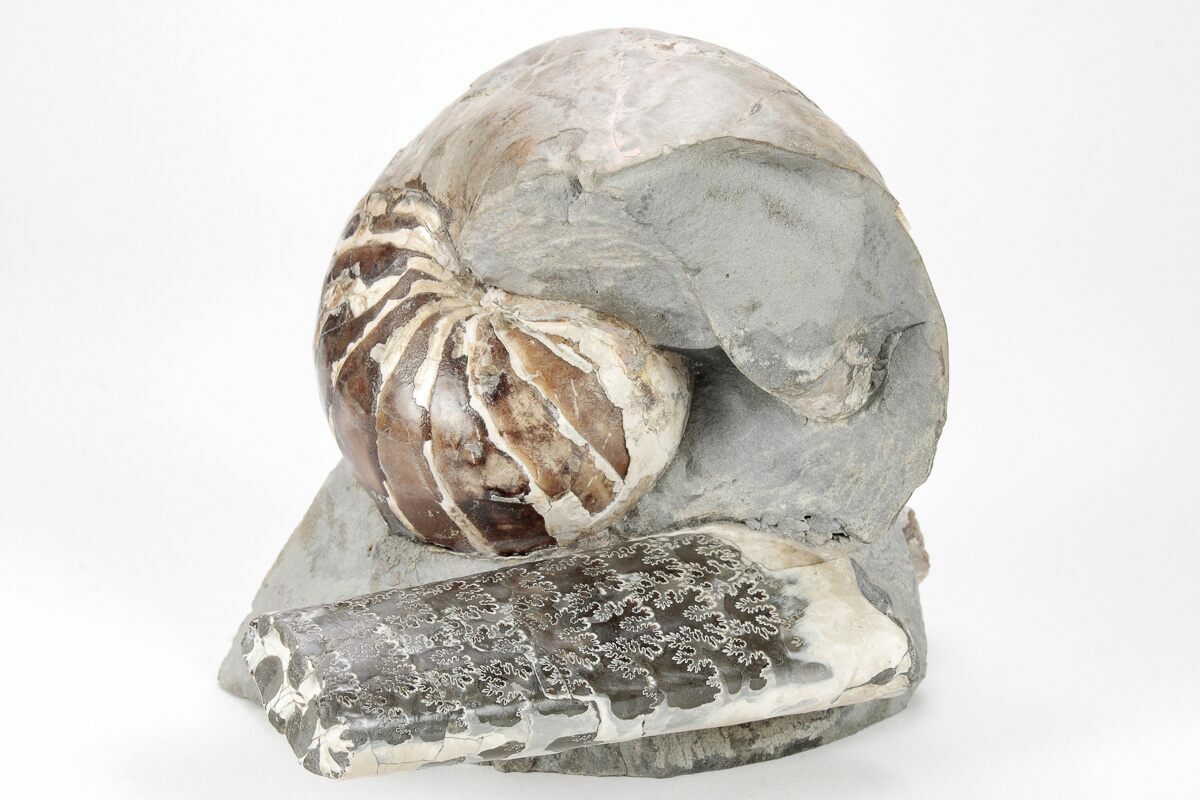
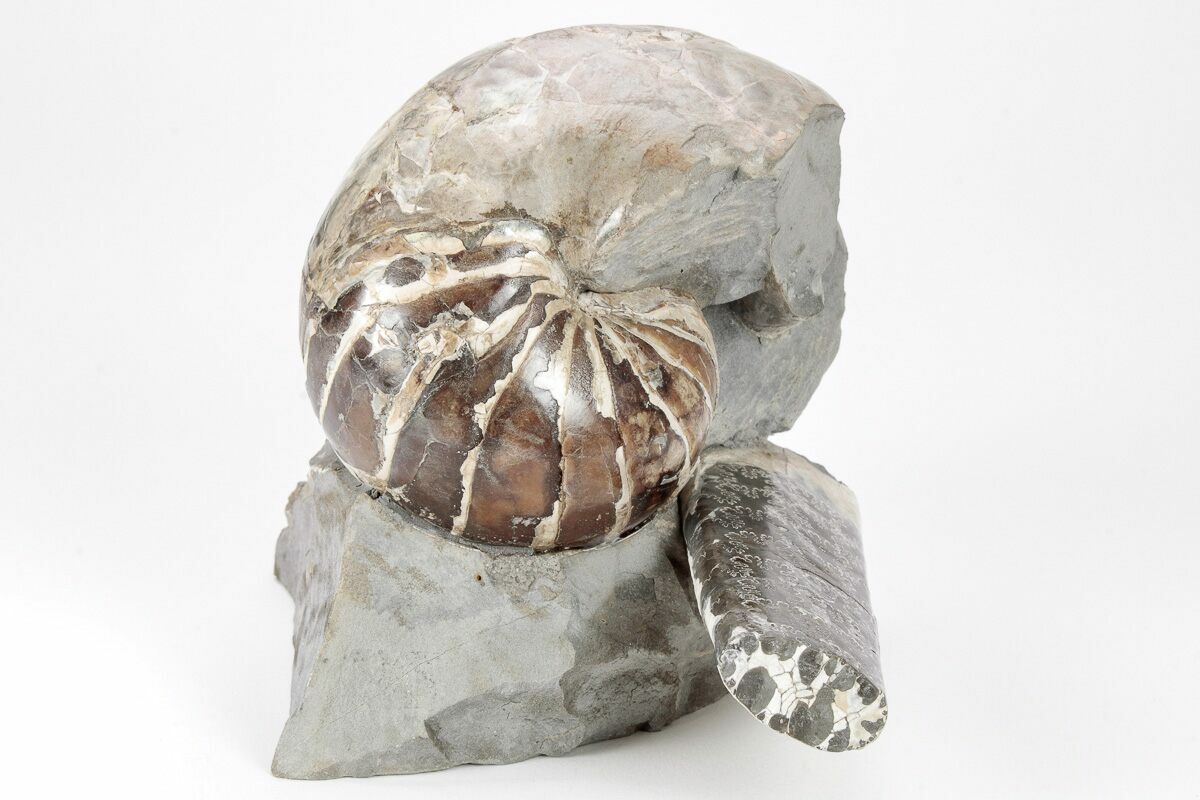
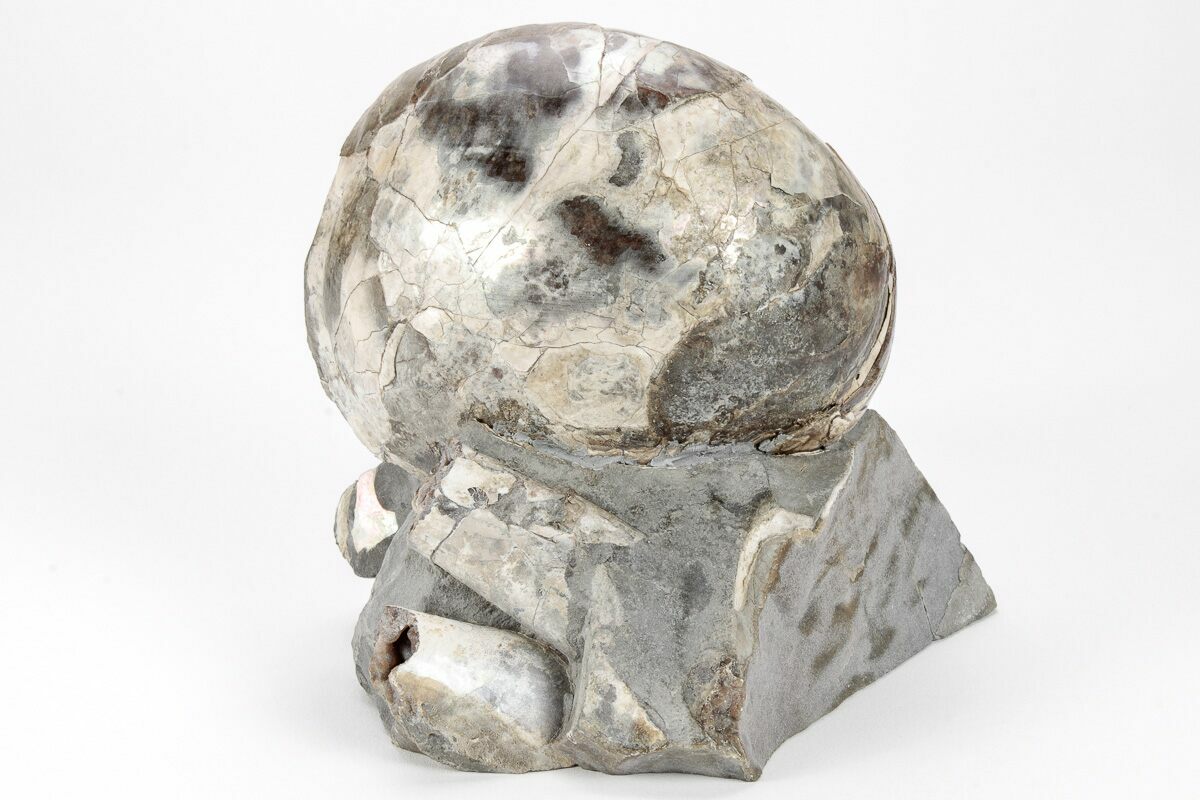
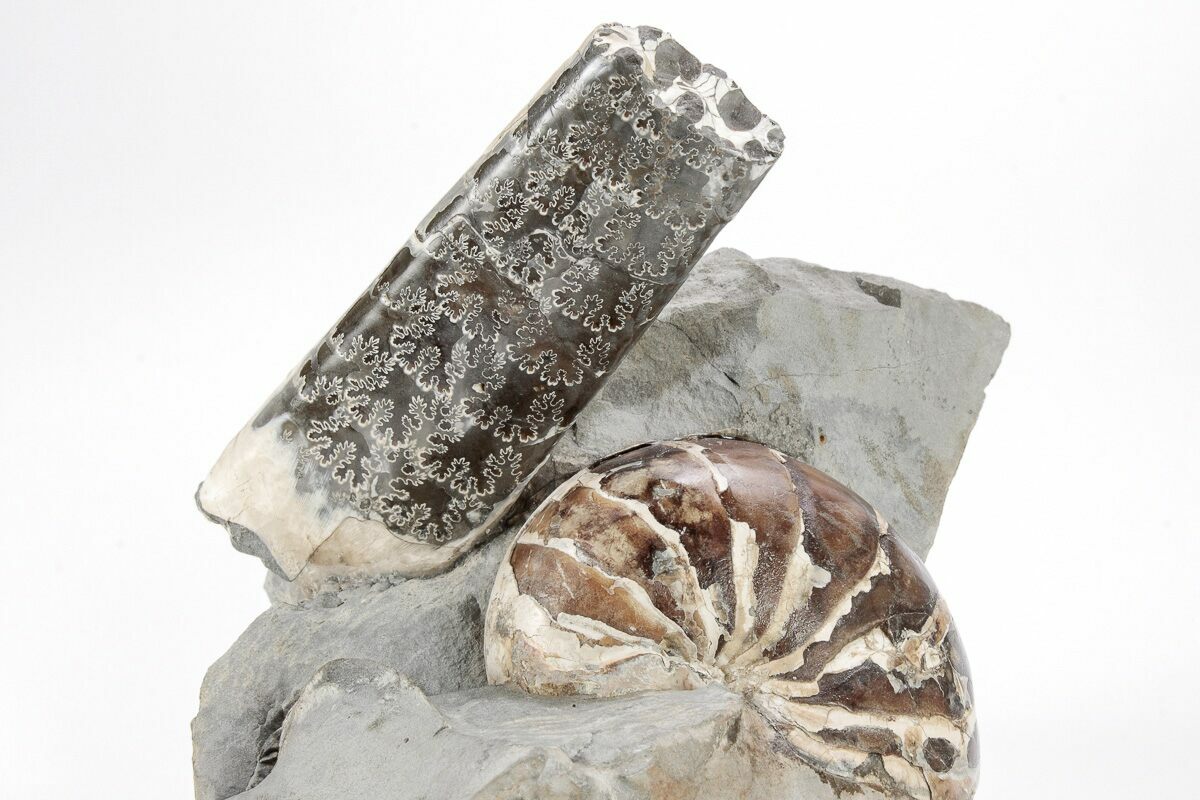
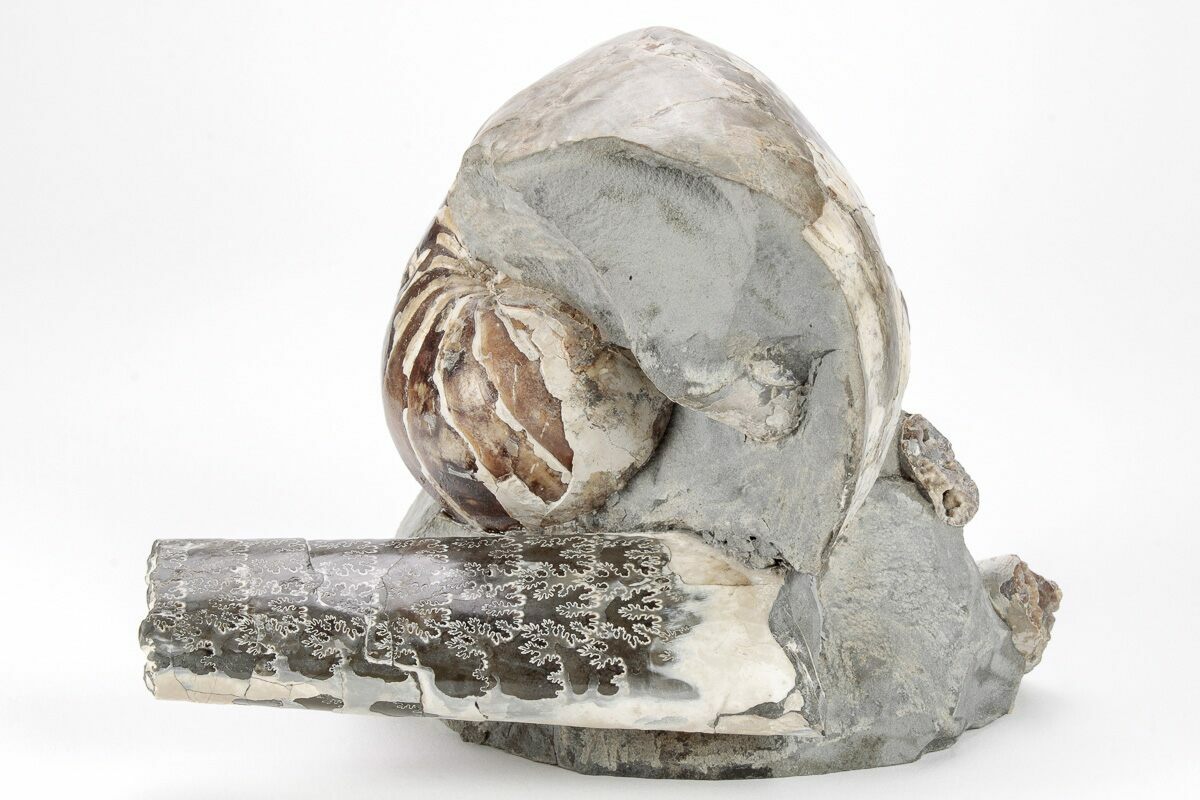
This is a beautiful, iridescent, fossil Nautilus (Eutrephoceras nebrascensis) from the Pierre Shale of South Dakota. It was prepared free of the hard concretion it was found in and was then remounted to it. The nautilus was found in association with one well preserved, partial Baculites ammonite and other smaller partials of the same genus. The base of the rock was cut flat for convenient, aesthetic display.
About Nautilus Fossils
Nautilus is a classic shelled cephalopod with a fossil history spanning more than 500 million years. Fossil nautilus shells are instantly recognizable by their tightly coiled, chambered structure, created as the animal grew and adjusted buoyancy using a central siphuncle. These fossils often preserve beautiful suture patterns, internal chambers, and sometimes even traces of original nacre. Found in marine deposits worldwide and frequently mineralized with calcite or chalcedony, fossil Nautilus specimens provide a striking glimpse into ancient seas and showcase one of the most enduring designs in natural history.
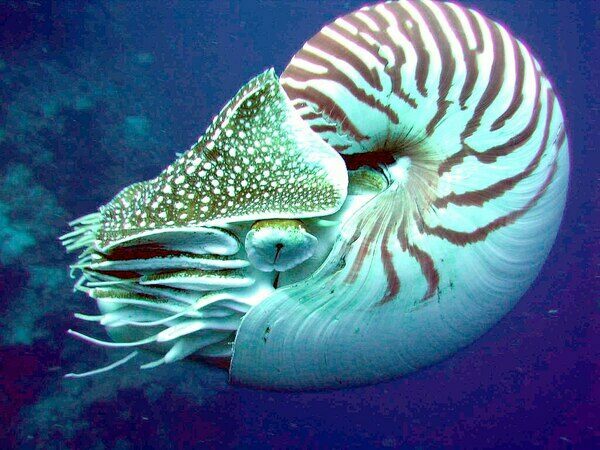
A picture of a modern day Nautilus.
Nautilus is a classic shelled cephalopod with a fossil history spanning more than 500 million years. Fossil nautilus shells are instantly recognizable by their tightly coiled, chambered structure, created as the animal grew and adjusted buoyancy using a central siphuncle. These fossils often preserve beautiful suture patterns, internal chambers, and sometimes even traces of original nacre. Found in marine deposits worldwide and frequently mineralized with calcite or chalcedony, fossil Nautilus specimens provide a striking glimpse into ancient seas and showcase one of the most enduring designs in natural history.
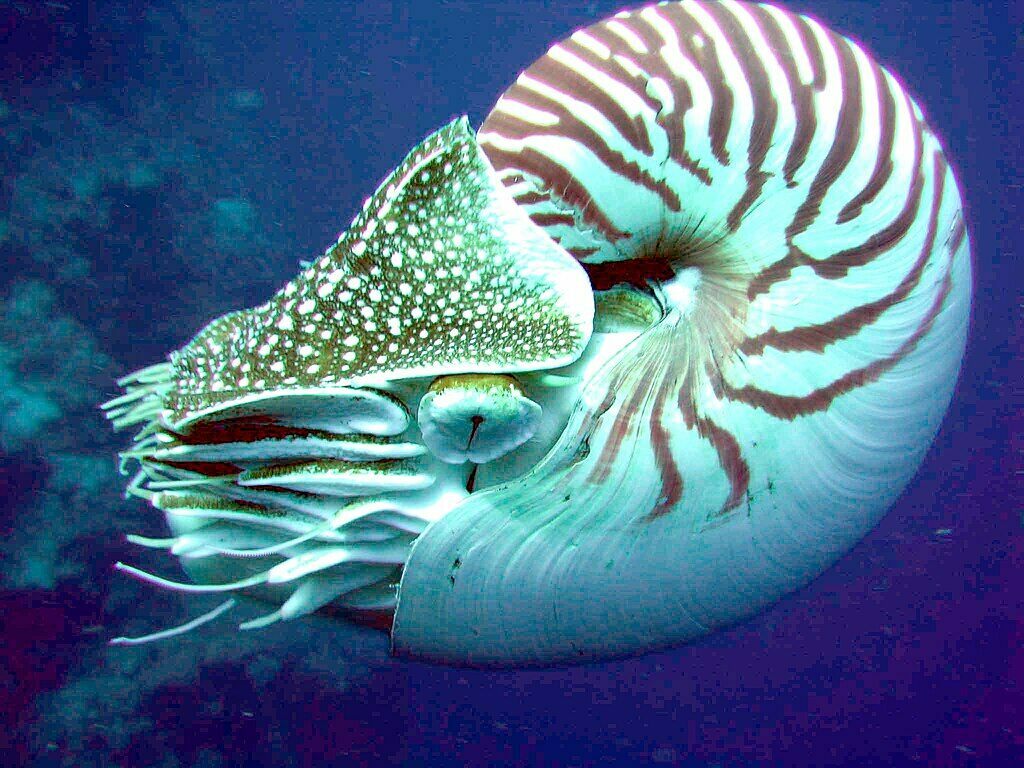
A picture of a modern day Nautilus.
About These Ammonites
These 70-million-year-old Cretaceous ammonite fossils come from a time when South Dakota was submerged beneath the Western Interior Seaway, a warm, shallow inland ocean that once stretched from the Arctic to the Gulf of Mexico. Ammonites were extinct marine cephalopods related to modern squid, octopus, and cuttlefish, but unlike their soft-bodied relatives, they lived inside coiled, chambered shells. As the animal grew, it added new chambers, using them to regulate buoyancy and move efficiently through the ancient seas. Their abundance and rapid evolution make ammonites some of the most important index fossils for dating marine rocks.
After death, these ammonites settled into seafloor sediments where mineral-rich waters slowly formed concretions around the shells, protecting them from crushing and decay for tens of millions of years. When these stone nodules are split open today, the fossils are revealed locked inside and must be carefully hand-prepared to remove the surrounding rock. This delicate, time-consuming process—often done with air scribes and fine tools—can take many hours per specimen, gradually exposing the shell’s ribs, sutures, and natural curvature. The finished fossils are striking remnants of South Dakota’s ancient ocean, preserving a moment from a world that vanished long before dinosaurs walked on land.
These 70-million-year-old Cretaceous ammonite fossils come from a time when South Dakota was submerged beneath the Western Interior Seaway, a warm, shallow inland ocean that once stretched from the Arctic to the Gulf of Mexico. Ammonites were extinct marine cephalopods related to modern squid, octopus, and cuttlefish, but unlike their soft-bodied relatives, they lived inside coiled, chambered shells. As the animal grew, it added new chambers, using them to regulate buoyancy and move efficiently through the ancient seas. Their abundance and rapid evolution make ammonites some of the most important index fossils for dating marine rocks.
After death, these ammonites settled into seafloor sediments where mineral-rich waters slowly formed concretions around the shells, protecting them from crushing and decay for tens of millions of years. When these stone nodules are split open today, the fossils are revealed locked inside and must be carefully hand-prepared to remove the surrounding rock. This delicate, time-consuming process—often done with air scribes and fine tools—can take many hours per specimen, gradually exposing the shell’s ribs, sutures, and natural curvature. The finished fossils are striking remnants of South Dakota’s ancient ocean, preserving a moment from a world that vanished long before dinosaurs walked on land.
SPECIES
Eutrephoceras nebrascensis & Baculites sp.

LOCATION
Meade County, South Dakota
FORMATION
Pierre Shale - Baculites compressus/B. cuneatus Zone
SIZE
Nautilus: 3.45" wide, Ammonite: 3.6" long, Entire specimen: 5 x 3.8"
CATEGORY
ITEM
#209678
We guarantee the authenticity of all of our specimens.


