 Reviews


This Specimen has been sold.


7.5" Fossil Plesiosaur Humerus Bone - Asfla, Morocco
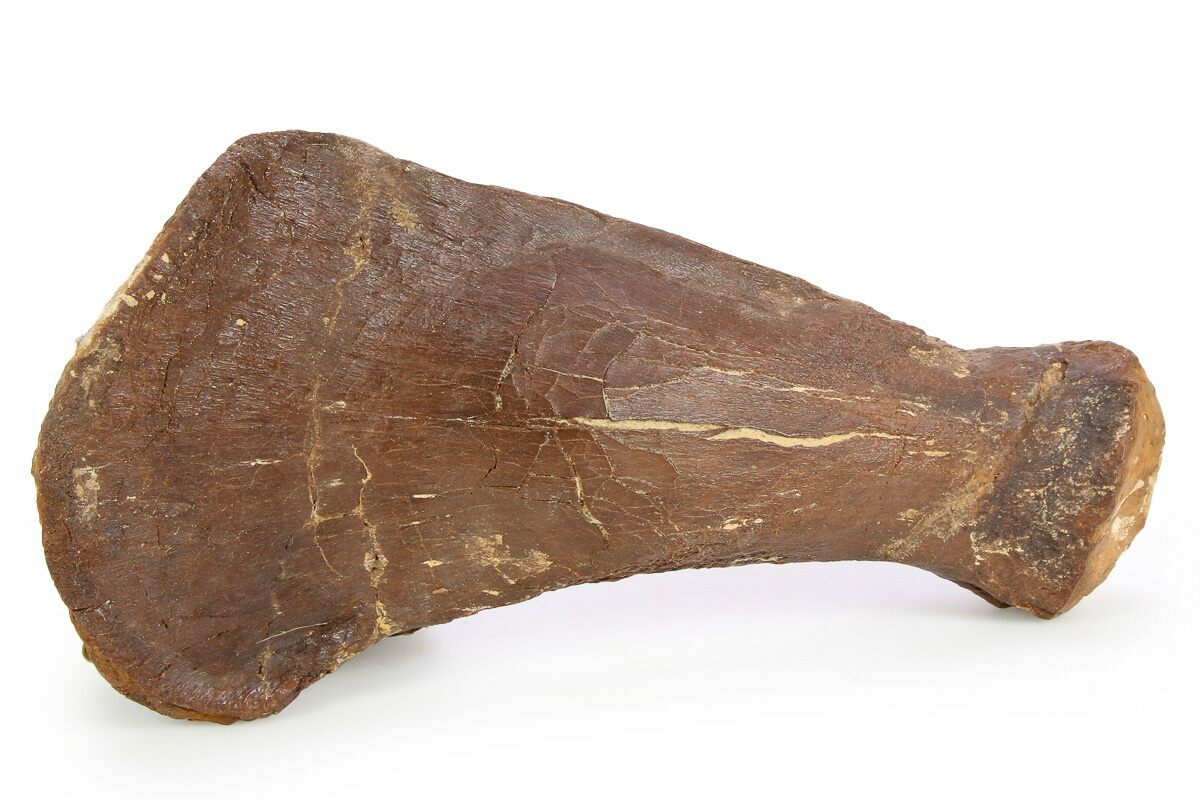
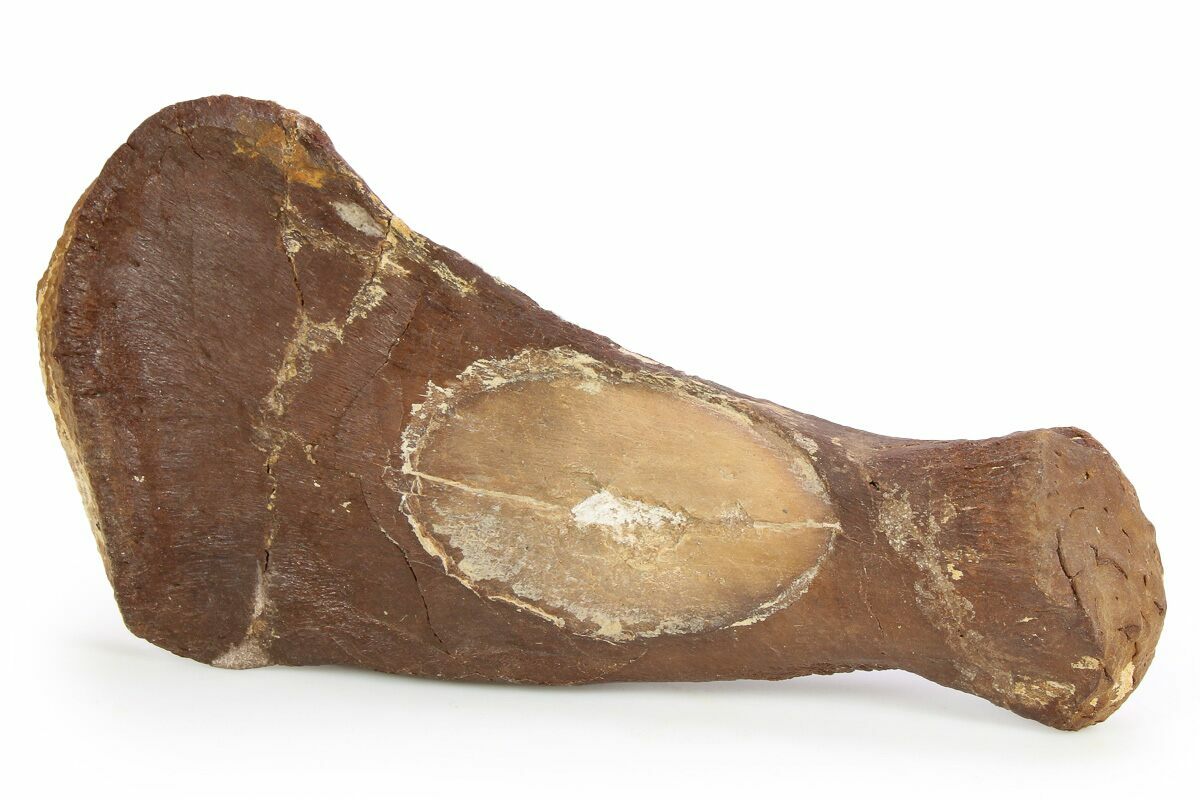
This is a humerus bone from a plesiosaur, collected from a location near Goulmima, Morocco. It is Upper Cretaceous (Early Turonian Stage) in age, or approximately 89 million years old. There is an unusual oval shaped impression on one side of the humerus.
It comes with an acrylic display stand.
There are two repaired cracks through the humerus.
It comes with an acrylic display stand.
There are two repaired cracks through the humerus.
About Plesiosaurs
Plesiosaurs were a diverse group of marine reptiles that lived during the Jurassic and Cretaceous periods, thriving in Earth’s oceans for more than 135 million years. Although they lived alongside dinosaurs, plesiosaurs were not dinosaurs; instead, they were fully aquatic reptiles adapted for life in open water. Their most recognizable features included broad, streamlined bodies, four powerful flippers used for underwater “flight,” and a wide range of neck lengths. Fossils of plesiosaurs have been found on every continent, including Antarctica, showing that they inhabited oceans across the globe.
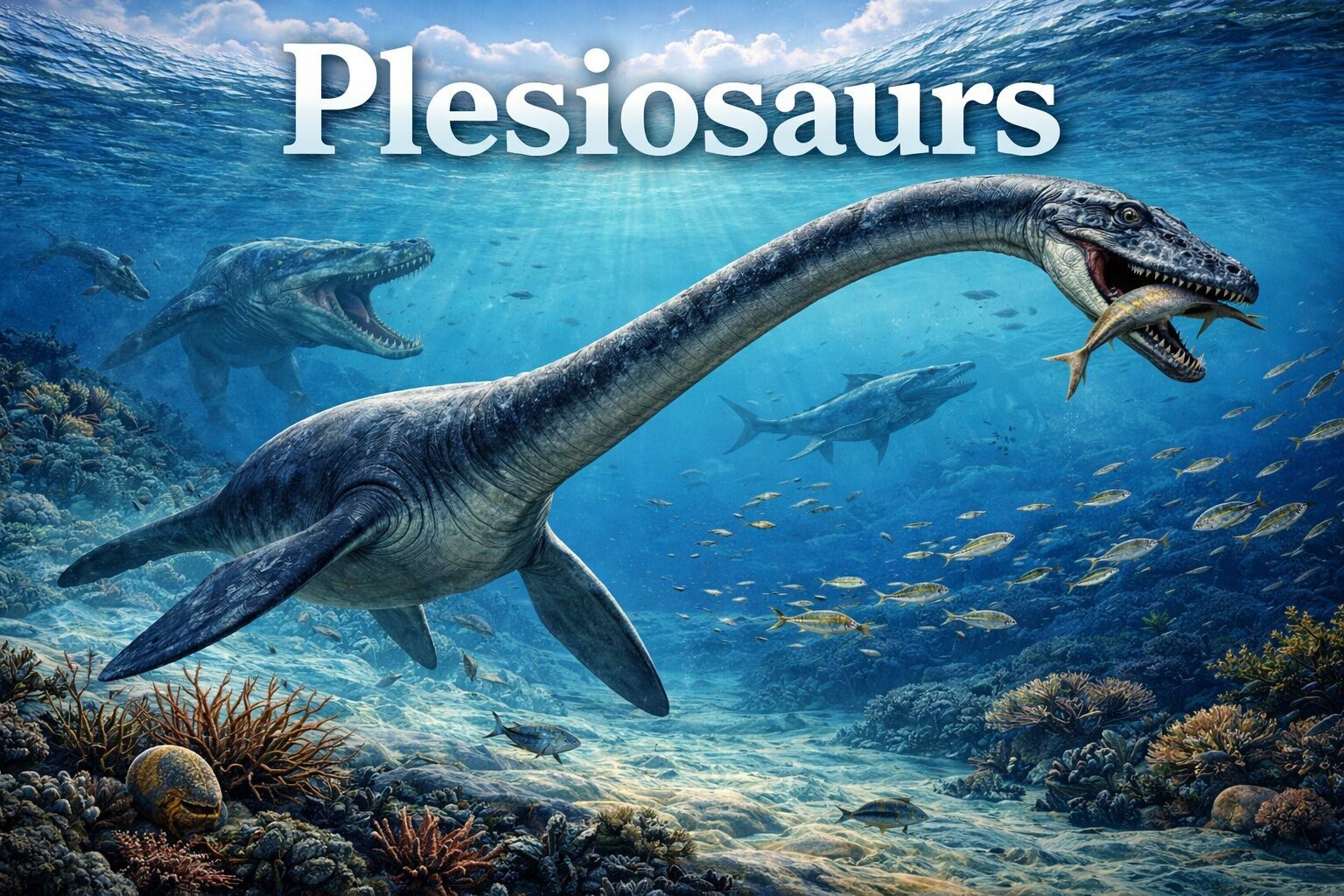
This group included two main body types that filled very different ecological roles. Long-necked plesiosaurs had small heads and slender teeth suited for catching fish and squid, likely relying on stealth and precise strikes. Short-necked plesiosaurs, known as pliosaurs, evolved massive skulls and powerful jaws and became apex predators capable of hunting large prey, including other marine reptiles. Together, these forms made plesiosaurs one of the most successful and adaptable marine reptile groups in Earth’s history, dominating prehistoric seas until their extinction at the end of the Cretaceous.
Plesiosaurs were a diverse group of marine reptiles that lived during the Jurassic and Cretaceous periods, thriving in Earth’s oceans for more than 135 million years. Although they lived alongside dinosaurs, plesiosaurs were not dinosaurs; instead, they were fully aquatic reptiles adapted for life in open water. Their most recognizable features included broad, streamlined bodies, four powerful flippers used for underwater “flight,” and a wide range of neck lengths. Fossils of plesiosaurs have been found on every continent, including Antarctica, showing that they inhabited oceans across the globe.
This group included two main body types that filled very different ecological roles. Long-necked plesiosaurs had small heads and slender teeth suited for catching fish and squid, likely relying on stealth and precise strikes. Short-necked plesiosaurs, known as pliosaurs, evolved massive skulls and powerful jaws and became apex predators capable of hunting large prey, including other marine reptiles. Together, these forms made plesiosaurs one of the most successful and adaptable marine reptile groups in Earth’s history, dominating prehistoric seas until their extinction at the end of the Cretaceous.
SPECIES
Unidentified Plesiosaur

LOCATION
Asfla, Near Goulmima, Morocco
SIZE
Humerus: 7.5 x 3.6"
CATEGORY
SUB CATEGORY
ITEM
#252374
We guarantee the authenticity of all of our specimens.


