 Reviews


This Specimen has been sold.


Double Spiny Quadrops Trilobite Specimen - Ofaten, Morocco


This is a spectacular double specimen of one of our favorite species of trilobites, the very alien-looking Quadrops flexuosa. These bizarre trilobites have a distinctive four-forked protrusion coming off of the front of their heads which is where the genus gets its name. They are not only rare trilobites, but extremely difficult and time-consuming to prepare, due to the hardness of the rock in which they're found and the the many free-standing spines.
There is about 5-6% total shell restoration to this pair; the pleural spines on the smaller ones are almost all restored, as are some of the spine tips on both.
There is about 5-6% total shell restoration to this pair; the pleural spines on the smaller ones are almost all restored, as are some of the spine tips on both.
About Trilobites
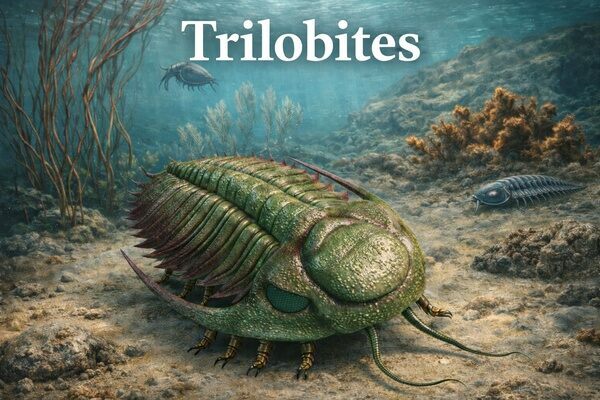
Trilobites were a very diverse group of extinct marine arthropods. They first appeared in the fossil record in the Early Cambrian (521 million years ago) and went extinct during the Permian mass extinction (250 million years ago). They were one of the most successful of the early animals on our planet: over 25,000 species have been described, filling nearly every evolutionary niche. Due in large part to their hard exoskeletons (shells), they left an excellent fossil record.
Trilobites were a very diverse group of extinct marine arthropods. They first appeared in the fossil record in the Early Cambrian (521 million years ago) and went extinct during the Permian mass extinction (250 million years ago). They were one of the most successful of the early animals on our planet: over 25,000 species have been described, filling nearly every evolutionary niche. Due in large part to their hard exoskeletons (shells), they left an excellent fossil record.
SPECIES
Quadrops flexuosa

LOCATION
Ofaten, Morocco
FORMATION
El Otfal Formation
SIZE
3.5" & 2" long (if outstretched), Rock 6.4 x 4.2"
CATEGORY
SUB CATEGORY
ITEM
#255575
We guarantee the authenticity of all of our specimens.


