 Reviews


Five Trilobites (Four Species) in Association - Jorf, Morocco


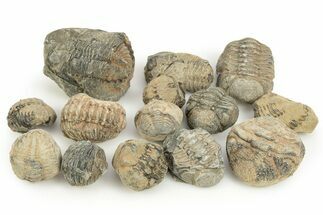
This is a really cool association of five trilobites representing four different species of trilobites quarried near Jorf, Morocco. The largest is a 1.8" long Struveaspis, preserved alongside an additional Struveaspis, a 1.2" long Cyphaspides pankowskiorum, a 1.65" long Austerops, and a 1.2" long morocops.
It comes with an acrylic display stand. There is about 1-2% restoration per specimen as each trilobite has repaired cracks through it. The Morocops is on its natural rock but has been added to the larger section of rock that already contained the two Struveaspis trilobites and the Austerops. The Cyphaspides has also been composited onto the rock.
This particular species of Cyphaspides was described in 2019, a link to the paper is below.
Species of the Devonian aulacopleurid trilobite Cyphaspides from southeastern Morocco
It comes with an acrylic display stand. There is about 1-2% restoration per specimen as each trilobite has repaired cracks through it. The Morocops is on its natural rock but has been added to the larger section of rock that already contained the two Struveaspis trilobites and the Austerops. The Cyphaspides has also been composited onto the rock.
This particular species of Cyphaspides was described in 2019, a link to the paper is below.
Species of the Devonian aulacopleurid trilobite Cyphaspides from southeastern Morocco
Trilobites are collected from a 15-meter-thick section about 6kilometers northwest of Jorf, Morocco. Unlike many other localities, these rocks do not have distinct deposition layers, but rather are massive. They likely represent a gigantic "mud mound" that formed at the base of a volcanic island due to mud slides. The rock is very silicified, almost like a chert, and can be quite colorful. The actual shells on the trilobites are translucent: the trilobite tends to be the color of the rock it sits on.
Because the rock contains a large amount of silica, it is extremely hard, and preparing trilobites from the site is difficult since the rock does not separate well from the shell. Within the 15-meter section, only about two meters have been heavily collected, so occasionally this site will produce some extremely rare and one-of-a-kind specimens collected in float from the other layers.
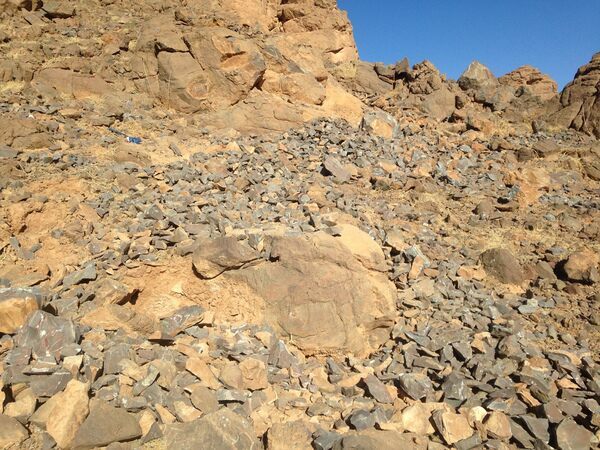
A view of the collecting locality northwest of Jorf, Morocco
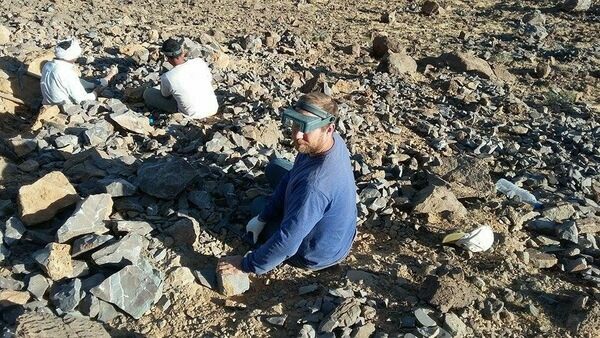
Collecting trilobites at the Jorf locality in 2015
Because the rock contains a large amount of silica, it is extremely hard, and preparing trilobites from the site is difficult since the rock does not separate well from the shell. Within the 15-meter section, only about two meters have been heavily collected, so occasionally this site will produce some extremely rare and one-of-a-kind specimens collected in float from the other layers.
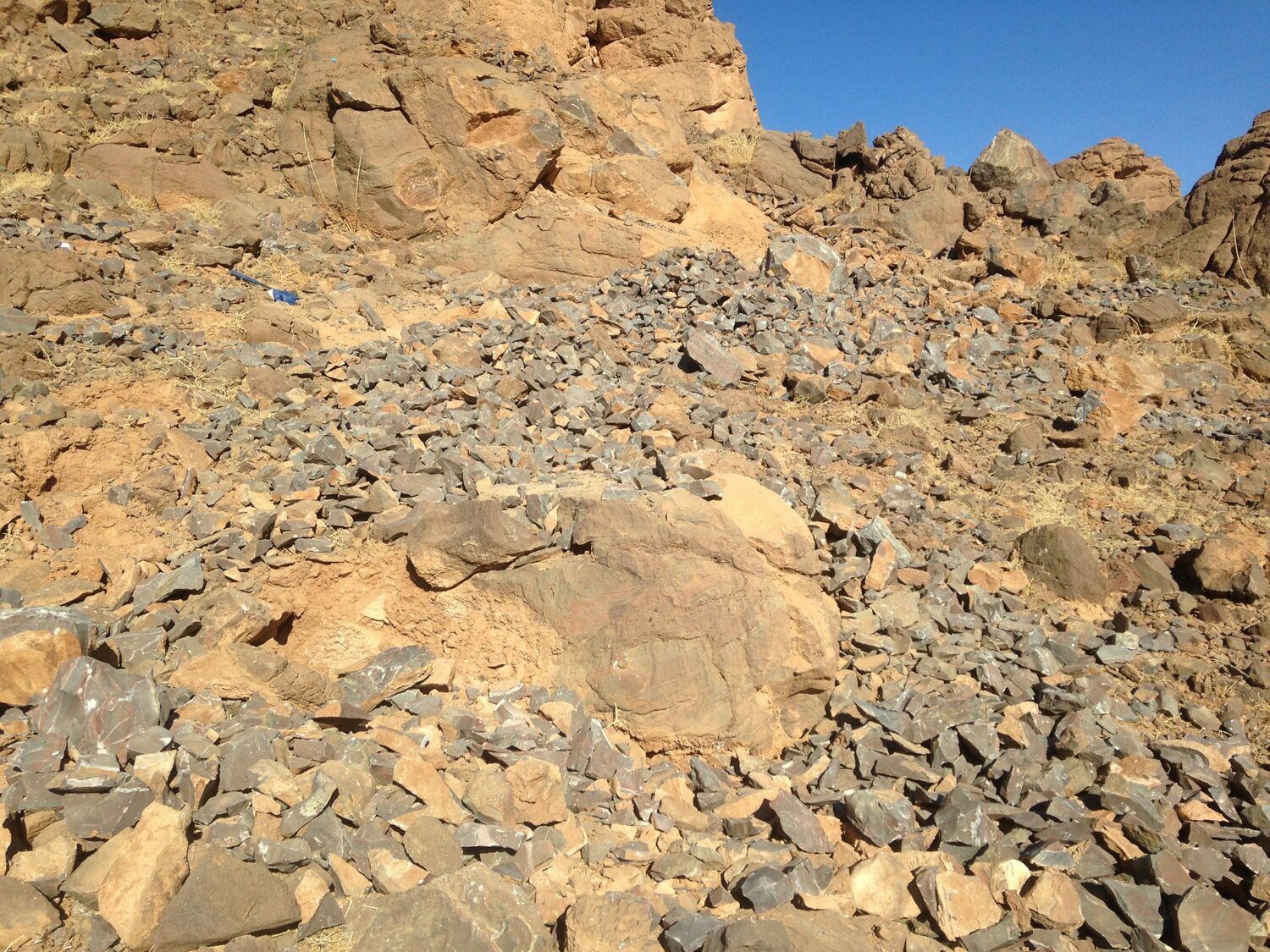
A view of the collecting locality northwest of Jorf, Morocco
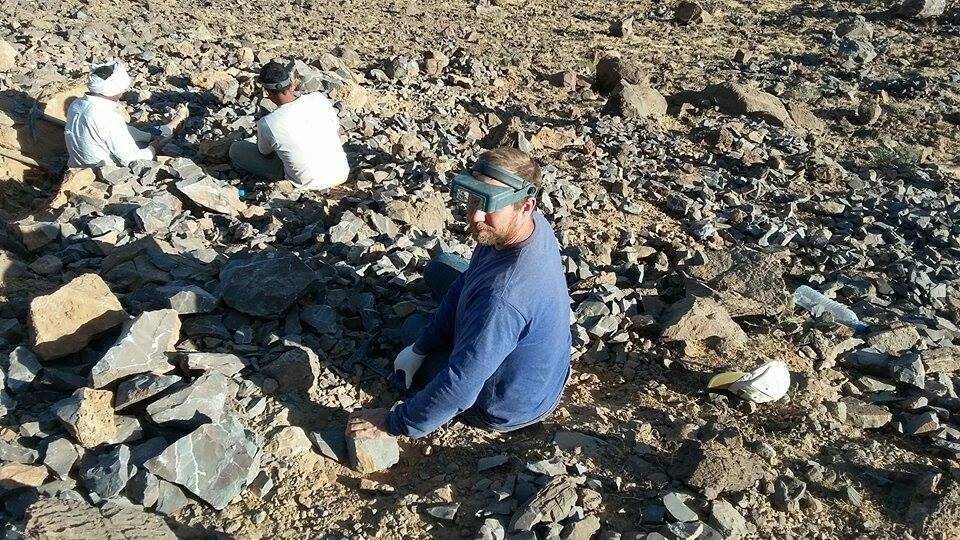
Collecting trilobites at the Jorf locality in 2015
About Trilobites
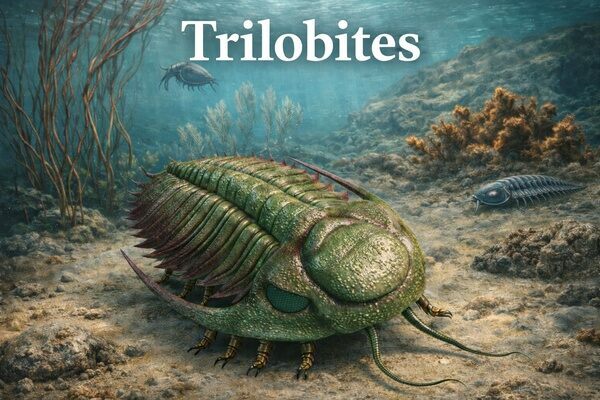
Trilobites were a very diverse group of extinct marine arthropods. They first appeared in the fossil record in the Early Cambrian (521 million years ago) and went extinct during the Permian mass extinction (250 million years ago). They were one of the most successful of the early animals on our planet: over 25,000 species have been described, filling nearly every evolutionary niche. Due in large part to their hard exoskeletons (shells), they left an excellent fossil record.
Trilobites were a very diverse group of extinct marine arthropods. They first appeared in the fossil record in the Early Cambrian (521 million years ago) and went extinct during the Permian mass extinction (250 million years ago). They were one of the most successful of the early animals on our planet: over 25,000 species have been described, filling nearly every evolutionary niche. Due in large part to their hard exoskeletons (shells), they left an excellent fossil record.
$2,250
SPECIES
Cyphaspides pankowskiorum, Struveaspis sp. (x2), Austerops sp. & Morocops sp.

LOCATION
Jorf, Morocco
FORMATION
Bou Tchrafine Formation
SIZE
Largest trilobite: 1.8" long, Rock: 6 x 4.6"
CATEGORY
SUB CATEGORY
ITEM
#334862
We guarantee the authenticity of all of our specimens.