 Reviews


This Specimen has been sold.
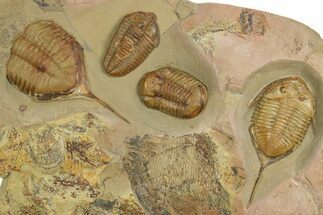
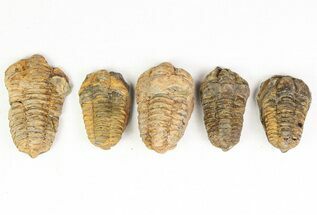
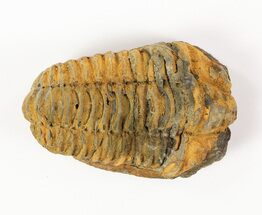
Lines of Twelve Lonchodomas Trilobites - Migrating Behavior?


This is a really cool trilobite plate. It contains two perpendicular lines of twelve Lonchodomas trilobites (and one Colpocoryphe) from the Lower Fezouata Formation of Morocco. It has been hypothesized that the lines of trilobites from this locality might represent migratory behavior. A paper was published a couple years back, describing similar fossils from this same locality.
480-million-year-old trilobite ‘traffic jams’ may reveal ancient migratory behavior
The rock measures 13 x 7" with the largest trilobite being 2.7" long. Total restoration on this piece is less than 1% with just a few touchups on the trilobite spines.
Lonchodomas, formerly Ampyx, has a distinctive, elongated rostrum and sweeping genal spines, which may have both helped to deter predators as well as providing more surface area to keep it on top of the mud.
480-million-year-old trilobite ‘traffic jams’ may reveal ancient migratory behavior
The rock measures 13 x 7" with the largest trilobite being 2.7" long. Total restoration on this piece is less than 1% with just a few touchups on the trilobite spines.
Lonchodomas, formerly Ampyx, has a distinctive, elongated rostrum and sweeping genal spines, which may have both helped to deter predators as well as providing more surface area to keep it on top of the mud.
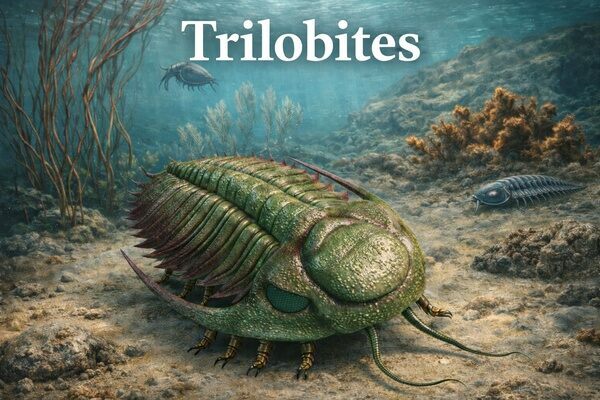
About Trilobites
Trilobites were a very diverse group of extinct marine arthropods. They first appeared in the fossil record in the Early Cambrian (521 million years ago) and went extinct during the Permian mass extinction (250 million years ago). They were one of the most successful of the early animals on our planet: over 25,000 species have been described, filling nearly every evolutionary niche. Due in large part to their hard exoskeletons (shells), they left an excellent fossil record.
Trilobites were a very diverse group of extinct marine arthropods. They first appeared in the fossil record in the Early Cambrian (521 million years ago) and went extinct during the Permian mass extinction (250 million years ago). They were one of the most successful of the early animals on our planet: over 25,000 species have been described, filling nearly every evolutionary niche. Due in large part to their hard exoskeletons (shells), they left an excellent fossil record.
SPECIES
Lonchodomas sp & Colpocoryphe sp.
AGE

LOCATION
Ouled Slimane, Zagora area, Morocco
FORMATION
Lower Fezouata Formation
SIZE
Rock 13 x 7" , Longest Trilobite 2.7"
CATEGORY
SUB CATEGORY
ITEM
#312824
We guarantee the authenticity of all of our specimens.