 Reviews


This Specimen has been sold.


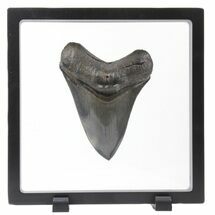
Nice 2.45" Rooted Mosasaur (Eremiasaurus) Tooth

This is a beautiful rooted tooth of the Mosasaur, Eremiasaurus heterodontus from the Upper Cretaceous phosphate deposits in the Oulad Abdoun Basin of Morocco. Real rooted Mosasaur teeth are not common finds, and nearly all of the "rooted" teeth you see for sale have fake roots. This tooth is a 2.45" in length with the crown being about 1.1" long.
These teeth are collected as a byproduct of the massive phosphate mining operations near Khouribga. The locals collected the teeth and other fossils saving them from certain destruction by rock crusher.
These teeth are collected as a byproduct of the massive phosphate mining operations near Khouribga. The locals collected the teeth and other fossils saving them from certain destruction by rock crusher.
About Mosasaurs
Mosasaurs were large, carnivorous marine reptiles that lived during the Late Cretaceous Period, approximately 90 to 66 million years ago. Though often mistaken for dinosaurs, they were actually more closely related to modern monitor lizards, including the Komodo dragon. Over time, their ancestors transitioned from land to sea, evolving paddle-like flippers, streamlined bodies, and powerful tails that made them highly efficient swimmers. Some species developed crescent-shaped, shark-like tail fins that allowed for strong, sustained propulsion through open water. Sizes varied widely, with many species measuring 20 to 30 feet long, while the largest—such as Mosasaurus hoffmannii—may have exceeded 50 feet in length.
As apex predators, mosasaurs occupied the top of the marine food chain. Their long jaws were lined with sharp, conical teeth ideal for gripping slippery prey, and fossil evidence shows they fed on fish, sharks, ammonites, seabirds, and even other mosasaurs. Despite their fully aquatic lifestyle, mosasaurs were air-breathing reptiles and had to surface regularly, much like modern whales. They thrived in oceans around the world until the Cretaceous–Paleogene extinction event 66 million years ago, which wiped out the dinosaurs and many marine reptiles, bringing the age of mosasaurs to an end.
Mosasaurs were large, carnivorous marine reptiles that lived during the Late Cretaceous Period, approximately 90 to 66 million years ago. Though often mistaken for dinosaurs, they were actually more closely related to modern monitor lizards, including the Komodo dragon. Over time, their ancestors transitioned from land to sea, evolving paddle-like flippers, streamlined bodies, and powerful tails that made them highly efficient swimmers. Some species developed crescent-shaped, shark-like tail fins that allowed for strong, sustained propulsion through open water. Sizes varied widely, with many species measuring 20 to 30 feet long, while the largest—such as Mosasaurus hoffmannii—may have exceeded 50 feet in length.
As apex predators, mosasaurs occupied the top of the marine food chain. Their long jaws were lined with sharp, conical teeth ideal for gripping slippery prey, and fossil evidence shows they fed on fish, sharks, ammonites, seabirds, and even other mosasaurs. Despite their fully aquatic lifestyle, mosasaurs were air-breathing reptiles and had to surface regularly, much like modern whales. They thrived in oceans around the world until the Cretaceous–Paleogene extinction event 66 million years ago, which wiped out the dinosaurs and many marine reptiles, bringing the age of mosasaurs to an end.

SPECIES
Eremiasaurus heterodontus (Mosasaur)

LOCATION
Oulad Abdoun Basin, Morocco
FORMATION
Phosphate Deposits
SIZE
2.45" long
CATEGORY
SUB CATEGORY
ITEM
#35757
We guarantee the authenticity of all of our specimens.